
What is excess in insurance?
Everything you need to know about insurance excess, from what it means to choosing the right amount.


Everything you need to know about insurance excess, from what it means to choosing the right amount.
Insurance excess is the amount of money you pay upfront towards any claim before your insurance company covers the rest. Think of it as your contribution when things go wrong. Understanding how excess works can save you a fair bit of cash and hassle down the line. Let’s break it down in plain English.
 TL;DR
TL;DR
Think of it as your contribution to the cost when something goes wrong.
Insurance excess is the amount of money you choose when purchasing a policy that will be subtracted from any future claims payouts.
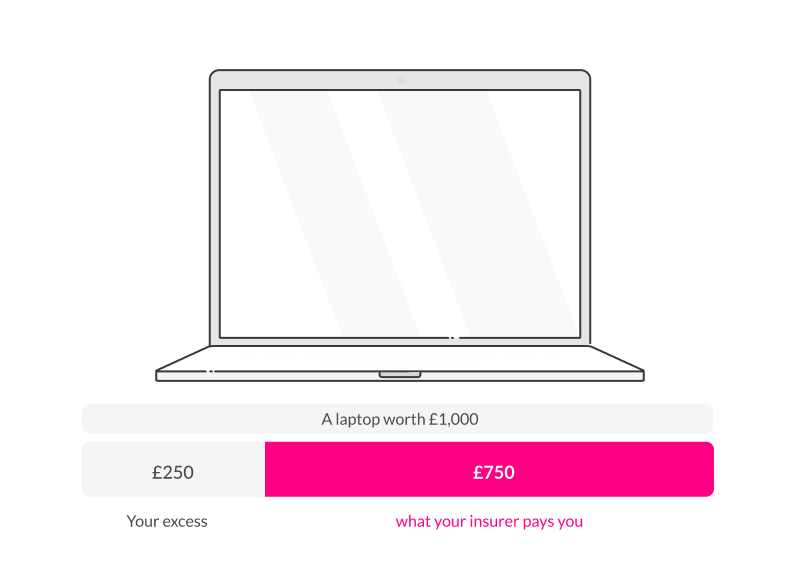
Let’s say your £1,000 laptop was stolen and your excess was £250. If your claim is approved, your insurance company would pay you £750 when you get reimbursed.
At Lemonade, you can choose your contents insurance excess from £100 to £500 (£100, £150, £250, £400, or £500). Think of excess as your participation in any damage or loss – you’re saying “I commit £X to any approved claim for future losses or damages, and my insurance company will cover the rest.”
There are two main types of insurance excess you’ll come across in your policy documents:
This is the minimum excess amount your insurance company insists you pay. It’s non-negotiable – a bit like queuing for the bus, you’ve just got to do it. The compulsory excess varies depending on:
Here’s where you get some choice in the matter. A voluntary excess is an additional amount you agree to pay on top of your compulsory excess. Why would you want to pay more? Because choosing a higher voluntary excess typically means a lower premium.
Let’s say your car insurance policy has a £200 compulsory excess. You could add a £300 voluntary excess, giving you a total excess of £500. In return, your insurance company will reduce your monthly or annual premium because you’re taking on more of the financial risk yourself.

Different types of insurance have their own excess rules and amounts, so it’s worth understanding how each one works.
Car insurance is probably where you’ll encounter excess most often. Your car insurance policy will typically have different excess amounts for different types of claims:
If you’re in a crash and it’s your fault, you’ll pay your total excess. But here’s the thing – if the accident isn’t your fault and the other party’s insurer accepts liability, you shouldn’t have to pay excess at all.
Home insurance splits into buildings and contents cover, each with their own excess amounts:
Travel insurance excess varies enormously depending on your policy and the type of claim:
Private health insurance policies often work differently, with excess being an annual amount rather than per-claim:
Several things influence how much excess you’ll pay:
Young drivers typically face higher compulsory excess because they represent higher risk. Once you’ve got a few years of claim-free driving under your belt, your excess options usually improve.
Live somewhere with higher crime rates or more frequent weather damage? Your excess might be higher to reflect the increased likelihood of insurance claims.
Comprehensive cover usually offers lower excess options than basic policies. You’re paying more for the privilege of paying less when things go wrong – makes sense, right?
Multiple claims in recent years? Don’t be surprised if insurers want you to have higher excess or limit your voluntary excess options.
Getting your excess right is about balancing your insurance premium costs with what you can afford to pay if disaster strikes. Here’s how to work it out:
Only choose a higher voluntary excess if you can comfortably afford to pay the total excess amount. There’s no point saving £20 a month on premiums if you can’t find £500 when you need to make a claim.
Drive a lot for work? Live in a dodgy area? You might want to keep your excess lower because you’re more likely to need to claim. Conversely, if you’re a careful driver with a garage and good security, a higher excess might make financial sense.
Work out how long it would take for your premium savings to cover the additional voluntary excess. If you add £200 to your voluntary excess and save £50 per year, it’ll take four years to break even – only worthwhile if you don’t claim in that period.
You’ll typically pay your excess:
The timing varies by insurance company and claim type, so check your policy documents for the specific process.
Making a claim with Lemonade is dead simple – no lengthy phone calls or paperwork. Here’s how it works:
Your car gets damaged in a car park. The total cost of repairs comes to £1,200. Your car insurance policy has:
You’d receive: £1,200 – £400 = £800 from your insurer, and you’d pay the £400 excess directly to the repairer or insurer.
The beauty of the Lemonade app? You can start and finish your entire claim whilst you’re still standing next to your damaged car. No waiting on hold or endless forms, just quick, honest claims handling.
Some insurers offer excess protection or excess waiver insurance as an add-on. This covers your excess if you need to claim, typically costing £20-£50 annually.
When it might be worth it:
When to skip it:
Smart excess management can save you money and prevent nasty surprises when you need to claim.
Document everything when you take out your insurance policy. Make sure you understand your excess amounts and keep this information somewhere safe.
Your circumstances change, and so should your excess. If you’ve built up savings or your income’s improved, you might want to increase voluntary excess for lower premiums.
When getting insurance quotes, try different voluntary excess amounts to see how much you could save. Sometimes the premium reduction doesn’t justify the higher excess.
Remember that some policies have different excess amounts for different types of claims. A windscreen claim might have £25 excess, while accidental damage could be £300.
Avoid these pitfalls that could leave you out of pocket or unable to claim when you need it most.
Don’t choose a voluntary excess amount you can’t afford. If you can’t pay your excess, you can’t make a claim – defeating the point of having insurance.
Some claims involve multiple excess payments. If both your buildings and contents insurance need to pay out after a flood, you’ll pay excess on both policies.
Some policies have additional excess for specific circumstances – young drivers, certain postcodes, or high-value items. Make sure you understand all potential excess charges.
Your compulsory excess might increase with age (in a good way – it usually decreases), or your insurer might change terms at renewal.
Understanding your insurance excess is crucial for smart insurance decisions. Balance affordable premiums with manageable excess amounts, don’t just chase the cheapest premium if you can’t afford the excess when claiming.
Excess isn’t an extra fee, it’s how you and your insurer share risk. Choose wisely to save money whilst getting the protection you need.
Remember: insurance policies can be complex, and this guide covers general principles. Always check your specific policy documents and speak to your insurance provider if you’re unsure about anything. The Financial Conduct Authority (FCA) regulates insurance in the UK and provides additional consumer protection guidance.
Yes, you can usually change your excess at renewal time or when switching insurers. Some insurers allow mid-policy changes for a small admin fee. Increasing your voluntary excess lowers your premium, whilst decreasing it raises your monthly cost. At Lemonade, you can adjust your contents insurance excess (£100-£500) through the app when making policy changes. Only choose an excess you can afford to pay when claiming.
You typically don’t pay excess when the accident isn’t your fault and the other party accepts liability (motor insurance), when using certain approved repairers for specific claims, if you have excess protection cover, for some emergency callouts (locksmith, plumber) on home policies, or certain windscreen repairs depending on your policy. Rules vary by insurer and policy type, so always check your specific terms and conditions.
If your excess is higher than the claim amount, you won’t receive any payout. For example, if repairing your phone costs £80 but your excess is £150, you’d pay the full £80 yourself with no insurance payout. This is why balancing your excess with potential claim values is important, a £500 excess might not make sense if you frequently claim for smaller items.
Yes, many policies have varying excess amounts by claim type. Windscreen damage might have £25-£75 excess, whilst theft claims could be higher, especially for valuable items. Flood damage sometimes carries additional excess on top of your standard amount. Your policy schedule will list all different excess amounts that apply to your specific cover.
Share


Please note: Lemonade articles and other editorial content are meant for educational purposes only, and should not be relied upon instead of professional legal, insurance or financial advice. The content of these educational articles does not alter the terms, conditions, exclusions, or limitations of policies issued by Lemonade, which differ according to your state of residence. While we regularly review previously published content to ensure it is accurate and up-to-date, there may be instances in which legal conditions or policy details have changed since publication. Any hypothetical examples used in Lemonade editorial content are purely expositional. Hypothetical examples do not alter or bind Lemonade to any application of your insurance policy to the particular facts and circumstances of any actual claim.