
How Much Does Contents Insurance Cost?
Hint: Contents insurance costs much less than you think.


Hint: Contents insurance costs much less than you think.
We’re going to take a deep dive into how much a contents insurance policy costs-but first, a quick refresher on what that policy actually does.
Think of contents insurance as a safety net. In short, your policy offers you financial help if certain bad things happen to you or your stuff: from burglary to vandalism, fire and water damage, and much more. In exchange, you pay monthly payments (your ‘premium’) to your insurance company.
How is Lemonade able to offer competitive prices? We lower fraud costs by aligning interests through our Giveback program and reduce expenses using cutting-edge technology. The experience is affordable, intuitive, and delightful.
 At a glance

There are 3 main factors that can determine your contents insurance cost. Let’s walk through them one by one.
When it comes to content cover, one size does not fit all. With a Lemonade policy, you can adjust your contents insurance policy based on your personal needs and lifestyle. As you might expect, your monthly contents insurance premium may change according to the value of the actual contents that it’s protecting.
The average cost of a contents insurance policy is £57 per year, according to Money Supermarket.
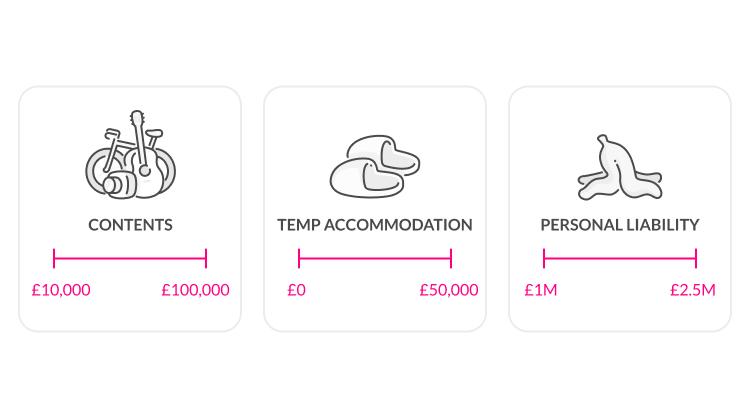
At Lemonade, a basic contents insurance policy starts at £4 a month and we offer contents cover ranging from £10,000 to £100,000.
What does this mean? Well, your policy has 3 areas of cover-we’ll describe each in more detail a bit further along in this article.
Contents (your personal property), temporary accommodation, and personal liability. When customising your policy you’ll be asked to pick cover amounts for these categories based on your own needs-as in, how much stuff you actually own, as well as how much protection you’d need from a temporary loss of accommodation (if you’re unable to stay at your place due to a covered peril), or certain types of lawsuits.
But how does this affect your insurance premium?
If you decide your personal belongings are worth around £40,000, you’ll most likely pay more than if your stuff was worth £20,000. It makes sense to take an accurate accounting of the value of your stuff, and then choose an appropriate amount of cover. A low amount of cover means a lower premium-savings in the short term, hooray!-but you’ll likely regret that decision if it’s not enough to properly protect everything you own. Increasing your temporary accommodation and personal liability cover amounts will also raise your rate. That shouldn’t be shocking: You’re getting more, so you can expect to pay a bit more too.
Purchasing an add-on is a bit like plonking on that factor 50 suncream-it gives you a bit of extra cover if the heat gets turned up. At Lemonade we have four add-ons that are personalised for your life: Theft & Loss; Legal Protection; Accidental Damage; and Accidental Damage to Mobile Devices.
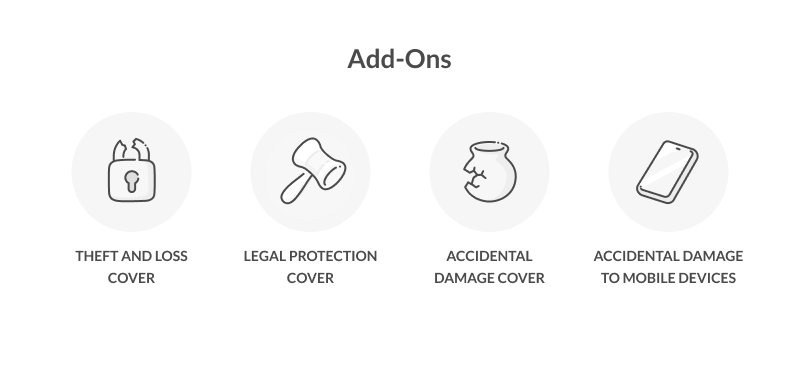
Like many useful things, they’ll raise your cost slightly. But these add-ons may well be worth it when your mobile phone screen breaks, or if you trip onto your laptop while holding a glass of red.
An excess is an amount of money (that you choose when purchasing a policy) that will be subtracted from any future insurance claims payouts. So if your £1,000 watch was stolen, and your excess was £250, your insurance company would likely pay you £750 under a covered claim. Think of an excess as your participation in the damage or loss. You’re saying, “I commit X pounds to any claim, and my insurance company will cover the rest.”
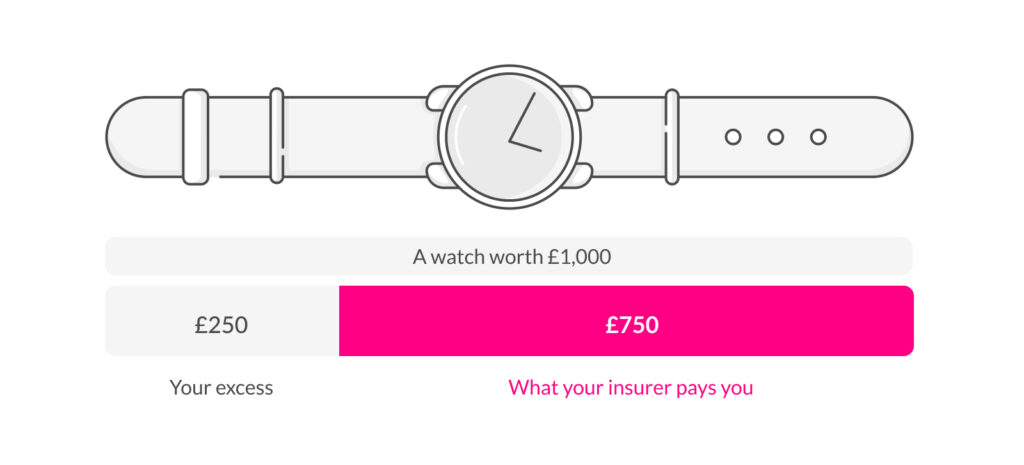
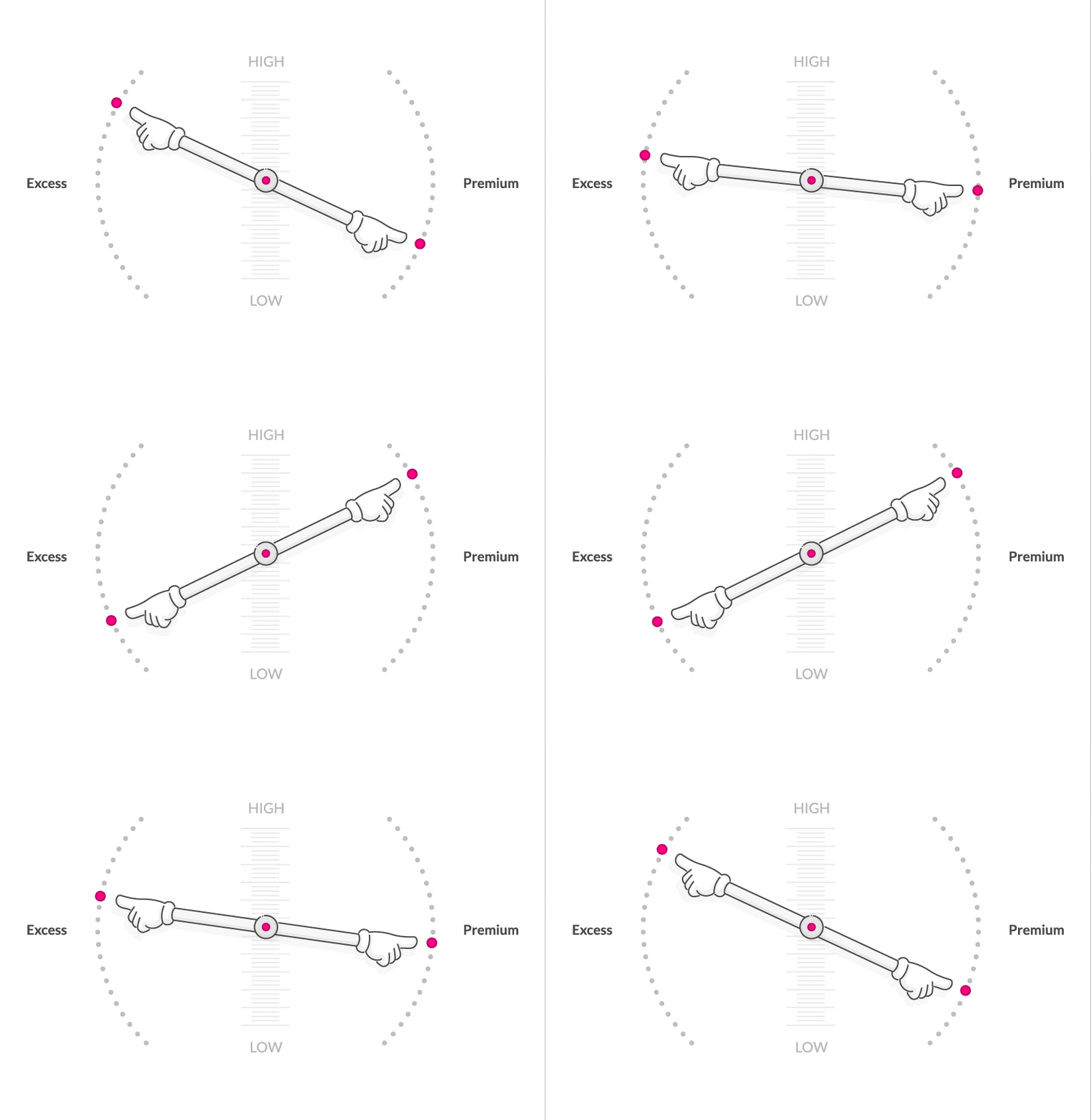
The higher your excess is, the lower your premium could be- but keep in mind that a higher excess also means you’ll pay more out-of-pocket in the event of a claim.
It’s important to know that you can’t make an insurance claim for anything lower than your excess. If the replacement cost of your item is lower than your excess, there’s no point in making a claim since your insurance company won’t be able to reimburse you.
Let’s say you signed up for your contents insurance with a £250 excess-again, that’s how much you’ve agreed to contribute towards your claims-and your £175 noise cancelling earphones were stolen while you fell asleep on the Northern Line. Because the value of your headphones is lower than your excess, you wouldn’t be compensated for the loss.
If you own items valued at over £2,000 apiece, they’re also covered by your contents insurance- but you’ll want to add some additional cover in your insurance policy. This is called high-value item cover.
This extra cover makes a lot of sense for high-value items like: watches, musical instruments, certain paintings, sculptures, artworks, and jewellery-amongst other things. While your base policy will offer some protection for these items in a covered claim, adding them as high-value items increases the amount you could be compensated above the built-in £2K limit, up to the full worth of your engagement ring or Fender guitar.
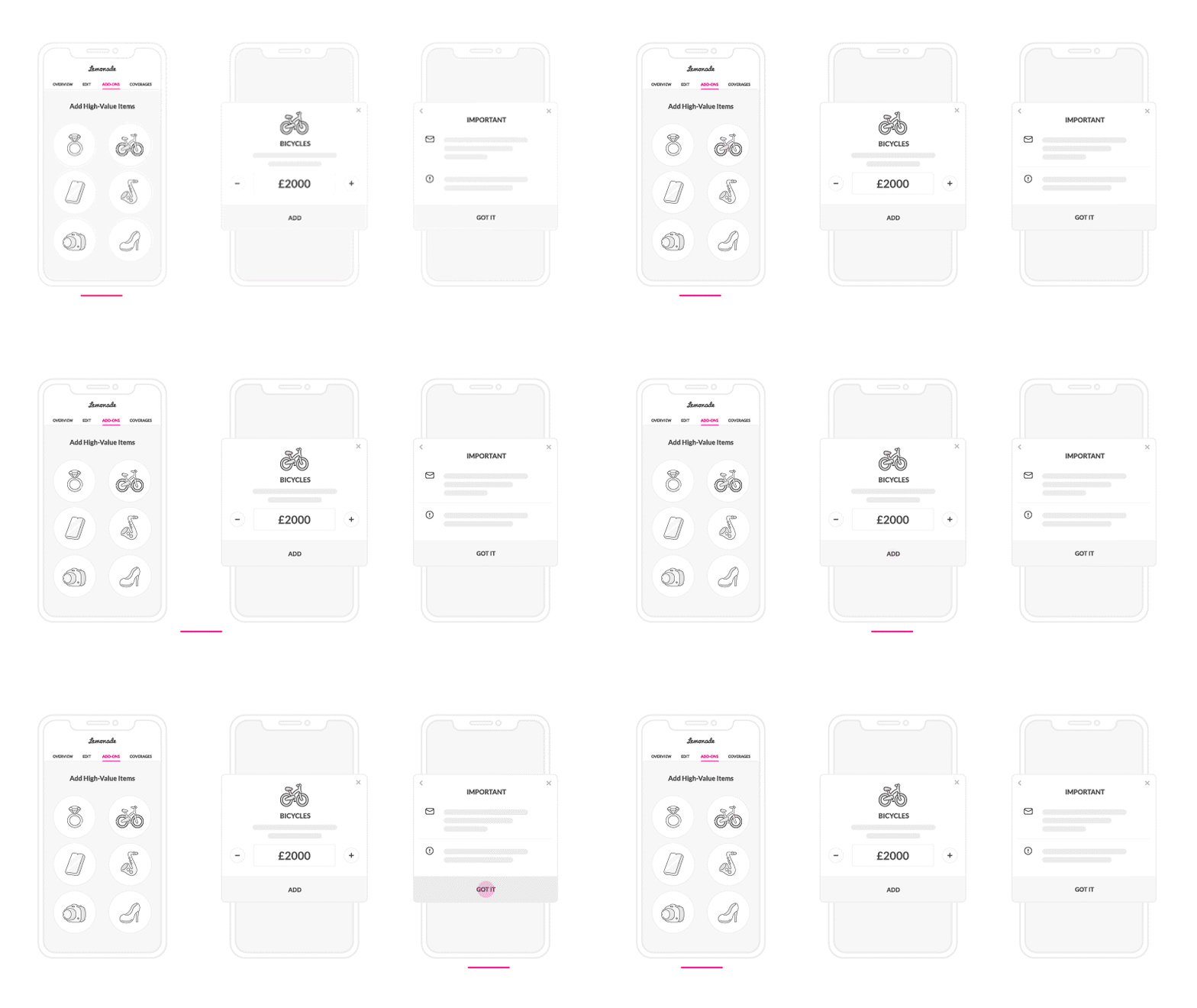
Adding this additional cover is simple, and can be done via the Lemonade app-though you’ll likely need to provide appraisal documentation or other proof of purchase for specific high-value belongings. Spoiler alert: High-value cover will also increase the cost of your monthly premium.
Everyone wants to save money. Here are some ways to lower your premium without completely sacrificing the protection you’ll get.
There are more reasons to buy a contents insurance policy than you probably thought. Again a typical insurance policy covers three main areas. Let’s break it down.
This category of cover helps you pay for losses to your property (a laptop, a couch, a necklace) caused by a whole range of different scenarios, from fires, lightning, smoke, explosion, burglary, robbery, and vandalism to civil unrest, windstorms, hail, earthquakes, flooding, collision by vehicles, aircraft, falling objects, and water damage.
This portion of your policy may kick in to cover the additional living expenses you would face if your home is temporarily unlivable due to a covered peril. So, if an electric fire or water damage from a burst pipe forces you out of your flat, your policy can help cover the cost of a hotel and some additional expenses.
This component of your contents insurance policy gives you valuable legal protections. If one of your friends gets hurt in your flat, goes to the hospital, and then decides to sue you (nice mate, right?), your liability cover will kick in for both medical payments and legal fees.
A basic contents insurance policy will cover theft from your actual home, but not theft that occurs away from home. For that, you’d need Lemonade’s Theft and Loss add-on.
Again, your basic policy does cover you for burglary, robbery, or vandalism at home-things involving illegal entry into your place. But if you want protection against theft that might happen on the train, or at your favourite cafe, you’ll want this important add-on.
Unfortunately, contents insurance cover isn’t the be-all and end-all. It doesn’t cover every type of damage or loss you might encounter in your daily life. For instance, your policy won’t cover:
Rule of thumb: If it’s not a listed peril on your policy, it’s not a covered loss. So make sure to read your policy closely!
So you’ve now seen the benefits of picking up some contents insurance. But what coverage amounts should you choose?
When you sign up for contents insurance you’ll be asked to pick coverage amounts for your policy’s three coverage areas.
Again, let’s go nice and easy, category by category.
Look around your house or flat, and mentally calculate the value of all your stuff. Include clothing, and furniture, but also your bicycle, jewellery, electronic gadgets, books, and other valuables.
Here’s a helpful exercise to follow:
1. Spend an afternoon slowly walking around your place, and take a video of everything you have
2. Make a list of your most expensive items and estimate how much they cost
3. Figure out how much your bulk items (like clothes) are worth
4. Add this up to determine how much cover you’ll need
Always round up to the nearest £10,000. So, let’s say you have roughly £18,000 worth of items-pick £20,000 for your contents cover.
Standard policies start with £10,000 of contents. Upping your cover to £30,000 is usually the safer thing to do, and it likely won’t cause your premium to skyrocket.
If you’ve got specific, expensive items-like a diamond ring, a camera, a Gibson guitar, a fancy Bianchi bike, or certain types of fine art-you can add additional cover for these high-value belongings.
Temp accommodation covers your living expenses if you’re ever forced out of your home due to a covered peril.
So, if a fire wreaks havoc on your apartment, your policy may help cover the costs of a hotel room and additional expenses (such as food and laundry). At Lemonade, you can set a temp accommodation limit anywhere between £0 and £50,000. The best way to work this out is to consider all of the expenses you might rack up beyond your normal daily budget (such as a place to stay, food, laundry, your commute) if your home were to become unlivable for an extended period of time.
If someone gets hurt on your property and decides to take legal action, the Personal Liability portion of your policy may help cover damages you’re legally required to pay. At Lemonade you can pick a personal liability cover limit of anywhere between £1M and £2.5M.
To figure out the right amount of personal liability cover that fits your needs, you’ll need to consider how much of a hazard you are to the outside world in your day-to-day life. It really all boils down to your level of risk. Do you have a dog, who is normally friendly, but one day might bite a stranger? Do you host smashing parties where someone might be apt to get literally smashed? Have you got an inflatable pool in the garden?
Sometimes the numbers make more sense when you put a person behind them. Here are four realistic scenarios to help you see where you might land, and why.
Meet Priya. She’s 27, renting a studio flat in Manchester, and she’s been putting off getting contents insurance for two years because she assumed it would be expensive and complicated.
Here’s what she actually owns, once she thinks about it properly:
All in, she estimates she’s got about £14,000 worth of belongings.
She rounds up to £20,000 of contents cover, sensible since she knows she’ll have forgotten a few things. Here’s how she sets up her policy:
Her Lemonade premium? Around £5–£6 a month. That’s less than a couple of coffees. The penny-drop moment was realising that her MacBook alone, if stolen or accidentally damaged, would cost more to replace than a full year of premiums. She signs up in 10 minutes through the app and doesn’t think about it again until she needs to.
The Nguyens have three kids, a busy house in Birmingham, and a lot of stuff. Once they do the room-by-room exercise, here’s what they’re working with:
They land on roughly £42,000 in total, which surprises them a bit, honestly. They round up to £50,000 of contents cover, which sits comfortably within Lemonade’s range.
Here’s how they configure their policy:
Their monthly premium comes to around £12–£15 depending on the excess they choose. Split across the household, it’s genuinely not much for what they’re protecting. When their youngest eventually tips a glass of squash into the Dell laptop, they’re glad they chose the Accidental Damage add-on.
Marcus lives in a one-bedroom flat in East London. On paper, he doesn’t own much: minimalist flat, not much furniture. But he’s a photographer and watch enthusiast. Here’s what he actually owns:
His total contents value sits at around £22,000, but here’s the thing: almost everything he owns costs more than £2,000 individually. A standard policy without named items would leave him significantly exposed.
Here’s how he builds his policy:
His premium is higher than someone with a simpler set of belongings, but it’s proportionate to what he’s protecting.
The lesson here: it’s not just about total cover amount. It’s about making sure expensive individual items are actually listed. If you own a £3,200 Sony body and your policy has a £2,000 single-item limit, you’re not fully covered, even if your total cover amount looks right on paper.
Chloe is in her second year at university, renting a room in a shared house in Leeds. Here’s what she’s got:
All in, probably around £4,000–£5,000 worth of stuff.
She checks her parents’ home insurance policy first. Some policies do extend cover to a student child’s belongings at university, but usually with a sub-limit of £3,000–£5,000, and often with exclusions on electronics. Her parents’ policy has a £3,000 sub-limit. Given her MacBook Air alone is £900, that might just about cover her, but there’s no Theft and Loss cover for her iPhone when she’s out.
Here’s how she sets up her own Lemonade policy:
It’s not a huge amount of stuff, but losing a MacBook Air mid-term without any financial cushion would be genuinely disruptive. Her monthly premium costs her less than a round at the student union. Sorted.
We hope by now you’ve got a handle on what contents insurance actually does-and perhaps you’ve been pleasantly surprised to learn that the monthly rates aren’t likely to bankrupt you. The nice thing about carrying a policy is that once you’ve signed up, you can essentially set it and forget it-until life throws you one of those inevitable curveballs, and your contents cover steps in to help save the day.
At Lemonade, a basic contents insurance policy starts at just £4 a month. That’s £48 a year — below the market average — for genuine, comprehensive cover. The exact price you pay will shift depending on how much cover you select, what add-ons you choose, your excess amount, and a few other factors we cover in detail above.
The short version: contents insurance doesn’t have to cost much. But it’s worth making sure whatever you pay for actually covers everything you own.
For a typical 1-bedroom flat, contents insurance is usually one of the more affordable policies you’ll buy. If you’re a renter with around £15,000-£20,000 worth of belongings (laptop, telly, clothes, bike, kitchen kit), you’re likely looking at a monthly premium in the region of £4-£8 with Lemonade, depending on your excess and any add-ons.
A good rule of thumb: do a quick mental walkthrough of every room, jot down your most valuable items, and round up to the nearest £10,000. It takes about 20 minutes and it makes sure your premium makes sense for your actual life.
Yes, your postcode is one of the factors that can affect your premium. Insurers look at local crime rates – particularly burglary, when working out the risk of covering your belongings. If you’re in an area with higher theft statistics, you may pay a slightly higher rate than someone in a quieter postcode.
A few things will reliably bring your premium down without gutting your cover:
The cheapest policy isn’t always the best, but a well-matched policy can absolutely be affordable.
Standard contents policies have a single-item limit – at Lemonade, that’s £2,000. If you own something worth more than that, you’ll want to add it as a named high-value item to make sure you’re fully covered.
Items worth scheduling individually include watches, jewellery, musical instruments, artwork, high-end cameras and lenses, and specialist bikes. If you’re unsure whether something qualifies, the Lemonade app makes it easy to add or update high-value items at any time, no need to call anyone.
Annual is almost always cheaper. Paying monthly can cost around 9% more over the year, insurers treat it like a credit arrangement and fold in the extra cost quietly.
At Lemonade, paying annually can get you a discount. If cashflow is tight and monthly works better, that’s fine — just know it’s the pricier option in the long run.
Higher excess = lower premium. You’re agreeing to cover more of any claim yourself, so the insurer charges you less.
The trade-off is real: if you do need to claim, you’ll pay more out of pocket. Set your excess at an amount you could actually afford on a bad day — not just one that looks good when you’re signing up.
Please note: Lemonade articles and other editorial content are meant for educational purposes only, and should not be relied upon instead of professional legal, insurance or financial advice. The content of these educational articles does not alter the terms, conditions, exclusions, or limitations of policies issued by Lemonade, which differ according to your state of residence. While we regularly review previously published content to ensure it is accurate and up-to-date, there may be instances in which legal conditions or policy details have changed since publication. Any hypothetical examples used in Lemonade editorial content are purely expositional. Hypothetical examples do not alter or bind Lemonade to any application of your insurance policy to the particular facts and circumstances of any actual claim.