
Valuables Insurance: Everything You Need to Know
How to protect your jewellery, cameras, and high-value items worth over £2,000.


How to protect your jewellery, cameras, and high-value items worth over £2,000.
Valuables insurance is specialist cover that protects your high-value personal belongings – think engagement rings, expensive cameras, mobile phones or musical instruments. It fills the gaps left by standard home contents insurance, which typically only covers individual items up to around £2,000.
Here’s everything you need to know about protecting your most treasured possessions.
 At a glance
Valuables insurance is specialist cover designed to protect your priciest possessions, from wedding rings and professional cameras to vintage guitars and family heirlooms.
Most home contents insurance policies have limits on how much they’ll pay out for individual items – typically around £2,000 per item. If you own anything worth more than this, you’ll need additional protection to ensure you’re covered for the item’s full replacement value. This is called scheduled personal possessions cover in insurance speak.
You can either add this protection to your current home insurance policy as an extra, or purchase a separate standalone policy specifically designed for high-value belongings like watches, artwork, bicycles, and other collectibles.
Here’s the thing: Most people are underinsured when it comes to their valuable items without realising it. Your standard home insurance policy provides a decent level of cover for everyday belongings, but it’s got limits.
Most home contents insurance policies have what’s called a ‘single article limit’. This means there’s a maximum amount they’ll pay out for any individual item. If that limit is £2,000 and your engagement ring is worth £4,000, you’re only covered for half its value.
Standard contents cover typically only protects your belongings whilst they’re in your home. But what happens when you’re wearing that precious piece of jewellery out and about? Or when you take your expensive camera on holiday? Many valuable items need protection wherever you go.
Regular home insurance might not cover accidental damage to your valuables. Ever knocked your engagement ring against something hard and chipped the stone? That peace of mind comes with proper valuables insurance.
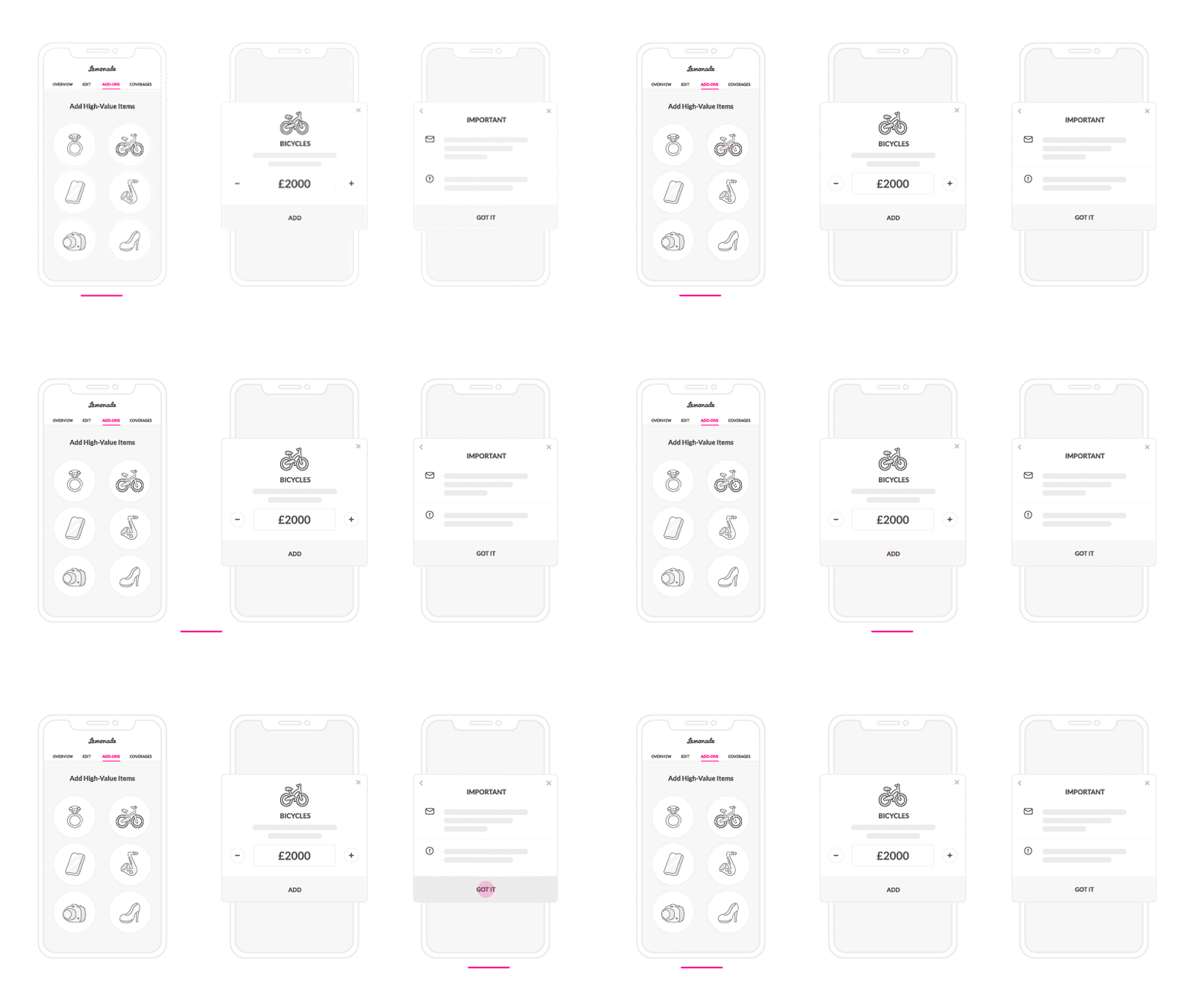
The beauty of valuables insurance is its flexibility. For a slightly extra cost, you can add additional cover for your high-value items up to £10,000 per item, including:
A lot of these items might already have cover of £2,000 on your base policy, but scheduling your high-value items increases the amount of cover above £2,000, up to the full worth of the item.
Before you get too excited, there are some limitations:
The Financial Conduct Authority (FCA) regulates insurance companies in the United Kingdom, so there are guidelines about what can and cannot be covered under personal insurance policies.
As a rough guide, you might pay anywhere from 0.5% to 2% of your item’s value annually for cover. So that £5,000 engagement ring could cost between £25 and £100 per year to insure.
The cost varies depending on several factors:
| Factor | Impact on cost |
|---|---|
| Item value | Higher value = higher premium |
| Location | Urban areas typically cost more |
| Security measures | Alarms and safes can reduce costs |
| Claims history | Clean record = lower premiums |
| Item type | Jewellery often costs more than electronics |
There are two main routes to getting your precious items covered, let’s break down your options:
When getting a home insurance quote, you can also explore jewellery insurance and other valuables cover options. Many insurance brokers can help you compare different insurance products to find the right level of cover.
This is often the most common route. Many insurance companies offer valuables insurance as an add-on to your existing home contents insurance.
When you first get your Lemonade policy, you’ll be given the option to secure 14 days of temporary extra cover for your items by declaring them on your quote.
Getting a professional valuation for add-ons: For many high-value items added to your home insurance policy, especially jewellery and antiques, you’ll need a professional valuation from a qualified valuer. This isn’t just a formality, it ensures you’re covered for the right amount and helps speed up any future insurance claim.
If you have particularly high-value items or your current insurer doesn’t offer adequate cover, you might consider specialist insurance from dedicated providers. These often offer:
Documentation requirements vary by provider – some specialist insurers may accept receipts or their own valuation process, while others still require professional appraisals.
When required, a proper valuation should include:
Most insurance companies require valuations to be updated every 3-5 years to reflect current market values.
Not all valuables insurance policies are created equal – here’s what to prioritise when shopping around:
If you travel with your valuable items, make sure your policy covers them anywhere in the world. Some policies only cover items in the UK, whilst others offer global protection.
Look for policies that offer ‘new for old’ replacement rather than paying out the depreciated value. This means if your 5-year-old camera gets stolen, you’ll get enough money to buy a brand new equivalent model.
Check whether accidental damage is covered. Some policies only cover theft, whilst comprehensive cover includes accidental loss and damage.
If the worst happens and you need to make an insurance claim for a valuable item, here’s what typically happens:
| Document type | Purpose | Examples |
|---|---|---|
| Proof of ownership | Shows the item belongs to you | Receipts, bank statements |
| Proof of value | Establishes replacement cost | Valuation, jeweller’s certificate |
| Proof of incident | Confirms what happened | Police reports, witness statements |
| Photos | Visual evidence of the item | Recent photos showing condition |
The key to a smooth claims process is keeping good records. Store copies of receipts, valuations, and photographs somewhere safe (perhaps digitally in the cloud).
Insurance is essential, but keeping your valuables safe from the get-go is even better:
Valuables insurance isn’t just about ticking boxes – it’s about protecting personal possessions that matter to you. Whether it’s your engagement ring with deep sentimental value, vintage guitar, or family heirloom, these items deserve proper protection.
The cost is usually modest compared to what you’re protecting, and the peace of mind? Priceless. Your standard home insurance covers everyday belongings well enough, but high-value items need that extra level of cover.
Take time to review what you own, check your current policy documents, and get quotes from reputable insurance providers. Don’t wait until it’s too late, your treasured possessions are more than just things, they’re part of your story.
Yes, but you’ll need proof of current value, typically through a professional valuation. The insurance payout will be based on current second-hand replacement cost, not new retail prices. Your insurance provider will need to see documentation proving both ownership and value.
This is why regular valuations are important. If your item has appreciated significantly and you haven’t updated your cover, you might be underinsured. Most insurers recommend revaluing items every 3-5 years to ensure adequate protection.
Yes, but you’ll need to prove ownership and establish current value through a professional valuation. For inherited pieces, this usually means getting an appraisal from a qualified valuer who can assess the item’s current market worth.
Most insurers set minimum values, typically around £1,000-£2,000. Items below this threshold are usually adequately covered by standard home contents insurance, so separate valuables insurance wouldn’t be necessary.
If your valuables are covered as an add-on to your home insurance policy, claims may affect your overall premium at renewal. However, with standalone valuables insurance, claims typically won’t impact your main home insurance.
Share


Please note: Lemonade articles and other editorial content are meant for educational purposes only, and should not be relied upon instead of professional legal, insurance or financial advice. The content of these educational articles does not alter the terms, conditions, exclusions, or limitations of policies issued by Lemonade, which differ according to your state of residence. While we regularly review previously published content to ensure it is accurate and up-to-date, there may be instances in which legal conditions or policy details have changed since publication. Any hypothetical examples used in Lemonade editorial content are purely expositional. Hypothetical examples do not alter or bind Lemonade to any application of your insurance policy to the particular facts and circumstances of any actual claim.