
Understanding Luxating Patella in Cats
A slipping kneecap sounds alarming. Here's what it means for your cat.

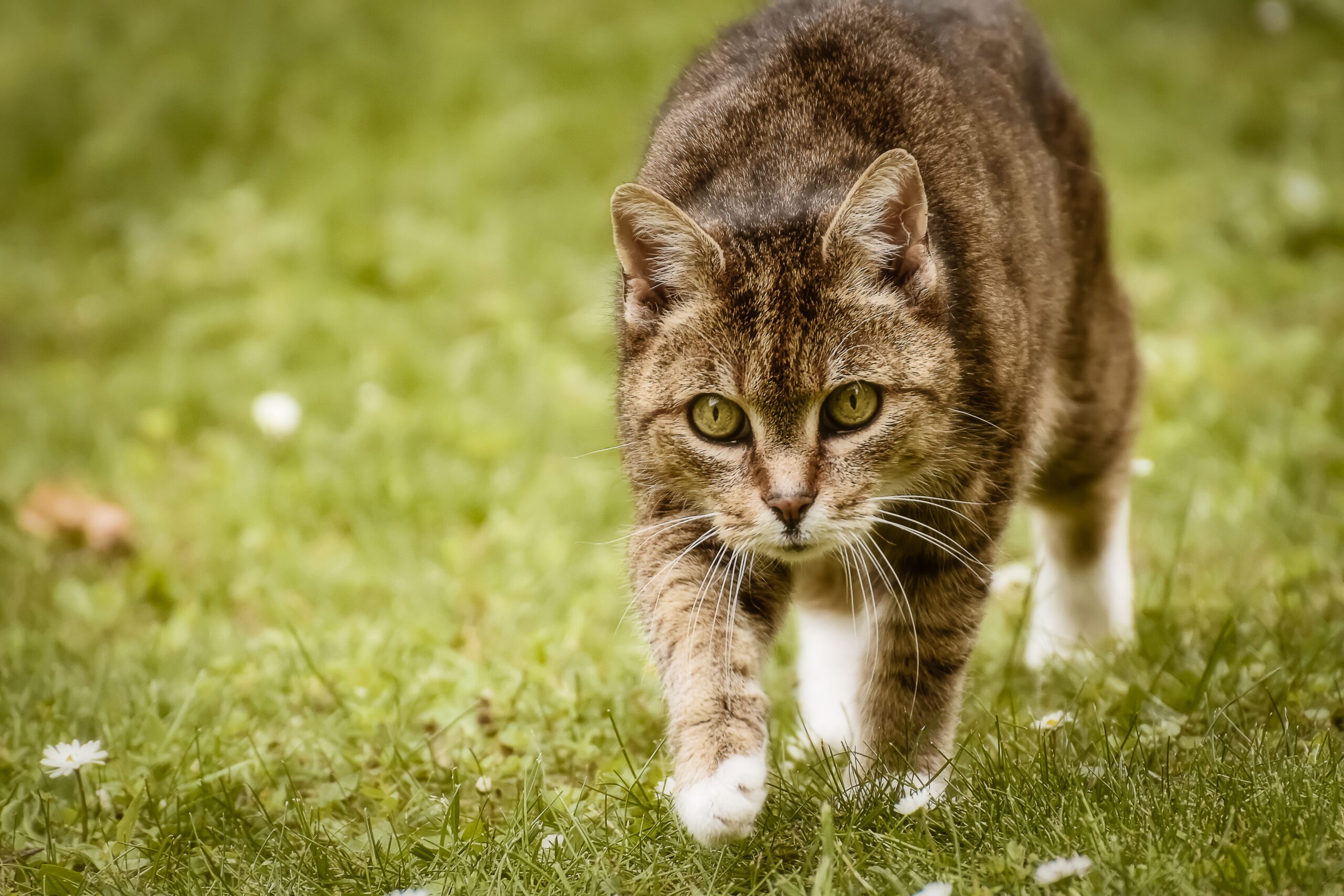
A slipping kneecap sounds alarming. Here's what it means for your cat.
 Reviewed by Dr. Stephanie LiffLast Updated:
If you’ve noticed your cat skipping a step, shaking out a back leg, or occasionally walking like something’s just a little off, there’s a good chance you’ve already been Googling. A luxating patella in cats is exactly what it sounds like: the kneecap (patella) slips out of the groove it’s supposed to sit in, causing anything from a brief hitch in your cat’s stride to real, lasting lameness. It’s extremely rare in cats, but it can be one reason a cat’s gait suddenly seems different. It sounds alarming, but knowing what you’re dealing with makes all the difference.
 TL;DR
TL;DR
Patellar luxation is rare in cats, but when it does happen, it affects the kneecap and the structures that keep it in place. Your cat’s kneecap sits inside a channel called the trochlear groove, which runs along the end of the femur (the thigh bone). Tendons and ligaments keep it tracking smoothly as the leg bends and straightens. When those structures are misaligned, the kneecap pops out of that groove, and that’s patellar luxation.
In cats, the kneecap most often slips inward, toward the body. That’s called medial luxation, and it’s the more common direction. Less frequently, it slips outward (lateral luxation). The condition can be congenital, meaning a kitten is born with the structural misalignment, or it can develop gradually due to the way bones in the femur and tibia (the lower leg bone) grow and align over time.
What you’ll actually see depends on how often the kneecap is slipping and whether it’s correcting itself. Common signs include:
The skipping step is often the first thing owners notice, and it’s easy to dismiss as a stumble. If you’re seeing it more than once, it’s worth a vet visit.
Vets grade patellar luxation on a scale of I to IV. If your vet just told you your cat has a “Grade III” luxating patella, here’s what that means and what comes next.
The kneecap slips out only occasionally, usually when the vet manually moves it during an exam, and it slides right back on its own. Your cat probably shows little to no symptoms day-to-day. Most Grade I cases are managed with monitoring and joint supplements rather than surgery.
The kneecap slips out more frequently, sometimes during normal activity, and may need a little help getting back in place (either the cat does it by extending the leg, or the vet does it manually). This is where you might start seeing the classic skip or leg-shake. Treatment here varies: some Grade II cats do well with conservative management, while others eventually need surgery, especially if symptoms are progressing.
The kneecap spends most of its time outside the groove and can be pushed back manually, but it won’t stay there on its own. Lameness is more consistent, and the leg may look visibly abnormal. Surgery is typically recommended at this grade to prevent further joint damage and to restore comfortable movement.
This is the most severe form. The kneecap is permanently out of position and cannot be manually repositioned. The trochlear groove is often severely underdeveloped or essentially flat, and the bones of the femur and tibia may be rotated or deformed. A cat with Grade IV luxating patella is usually in chronic pain and has significant trouble walking. Surgery is strongly indicated, and the procedure is more complex at this stage.
A vet can usually diagnose patellar luxation through a physical exam, feeling the kneecap and grading the luxation by hand. X-rays give a clearer picture of bone alignment, the depth of the trochlear groove, and whether there’s any joint damage or arthritis developing alongside it.
Treatment depends heavily on the grade:
Recovery after surgery typically takes six to eight weeks, with restricted activity, pain management, and follow-up exams to confirm healing. Physical therapy or rehabilitation exercises may be part of the recovery plan for higher-grade cases.
Surgery for patellar luxation in cats generally runs between $1,500 and $4,000 per leg, depending on the grade, the complexity of the procedure, your location, and the specialist involved. If both legs are affected (which does happen), that cost can double. Add in pre-surgical diagnostics, anesthesia, post-op medications, and follow-up care, and the total can climb quickly.
A brace is sometimes mentioned as an alternative to surgery, but it’s worth being realistic: braces for cats are difficult to fit well, and most veterinary orthopedic specialists don’t consider them a reliable long-term solution for Grade III or IV luxation. They may have a limited role in very specific cases, but they don’t correct the underlying structural problem.
Orthopedic conditions like patellar luxation are exactly the kind of thing pet insurance is built for, but timing matters. If your cat is already showing symptoms, the condition would be considered pre-existing, meaning it won’t be covered under a new policy. That applies to any signs that showed up before your policy start date or during your waiting period.
There’s an important nuance worth understanding here: patellar luxation is considered a bilateral condition, meaning it can affect both legs. If your cat develops a luxating patella in one leg before your policy starts, and then the other leg is affected after all waiting periods have passed, that second leg would still be considered pre-existing and wouldn’t be eligible for coverage. It’s one of those details that catches people off guard, and it’s exactly why enrolling before any symptoms appear matters so much.
If you enroll your cat in a Lemonade pet insurance policy before any signs appear, patellar luxation would be treated like any other covered condition. That means diagnostics, surgery, anesthesia, and follow-up care could all be eligible for reimbursement, subject to your plan’s deductible, co-insurance, and annual limit. One thing worth knowing: patellar luxation falls under orthopedic conditions, which carry a 30-day waiting period before coverage kicks in, so enrolling early gives that clock the most time to run.
Given that a single leg surgery can run into the thousands, having coverage in place well before any symptoms show up is what makes it actually work for you when you need it.
A luxating patella diagnosis can feel like a lot to take in, especially if your cat seemed totally fine until recently. The good news is that this condition is well understood, the grading system gives you and your vet a clear framework for deciding what to do next, and treatment at every level is available. Whether that means supplements and monitoring or a surgical fix, your cat has options.
If your cat is healthy, now is a great time to look into a Lemonade pet insurance policy, before any symptoms make coverage more complicated.
Many cats with Grade I or Grade II patellar luxation live comfortably with monitoring, weight management, and joint supplements. Higher grades, especially Grade III and IV, typically cause enough discomfort and lameness that surgery is recommended to restore quality of life.
It often is. Many cats are born with the structural misalignment in the trochlear groove, femur, or tibia that leads to patellar luxation. It can also develop as a result of how the bones grow, even if it wasn’t obvious at birth.
Recovery typically takes six to eight weeks and involves restricted activity, pain medication, and follow-up vet visits. Some cats, especially those with higher-grade luxation, may also benefit from rehabilitation exercises to rebuild strength.
Your vet will grade it during a physical exam by feeling how easily the kneecap slips and whether it returns to place on its own. X-rays help confirm the grade and check for any related bone or joint changes.
Braces are rarely a reliable long-term solution for cats, particularly at higher grades. Most veterinary orthopedic specialists recommend surgery for Grade III and IV cases because a brace doesn’t correct the underlying structural problem.
A few quick words, because we <3 our lawyers: This post is general in nature, and any statement in it doesn’t alter the terms, conditions, exclusions, or limitations of the policies issued, which differ according to your state of residence. You’re encouraged to discuss your specific circumstances with your own professional advisors. The purpose of this post is merely to provide you with info and insights you can use to make such discussions more productive! Naturally, all comments by, or references to, third parties represent their own views, and Lemonade assumes no responsibility for them. Coverage may not be available in all states. Please note that statements about coverages, policy management, claims processes, Giveback, and customer support apply to policies underwritten by Lemonade Insurance Company or Metromile Insurance Company, a Lemonade company, sold by Lemonade Insurance Agency, LLC. The statements do not apply to policies underwritten by other carriers.
Please note: Lemonade articles and other editorial content are meant for educational purposes only, and should not be relied upon instead of professional legal, insurance or financial advice. The content of these educational articles does not alter the terms, conditions, exclusions, or limitations of policies issued by Lemonade, which differ according to your state of residence. While we regularly review previously published content to ensure it is accurate and up-to-date, there may be instances in which legal conditions or policy details have changed since publication. Any hypothetical examples used in Lemonade editorial content are purely expositional. Hypothetical examples do not alter or bind Lemonade to any application of your insurance policy to the particular facts and circumstances of any actual claim.