
What Every Cat Owner Should Know About Periodontal Disease
Bad breath and red gums are just the start. Here's what periodontal disease looks like in cats.

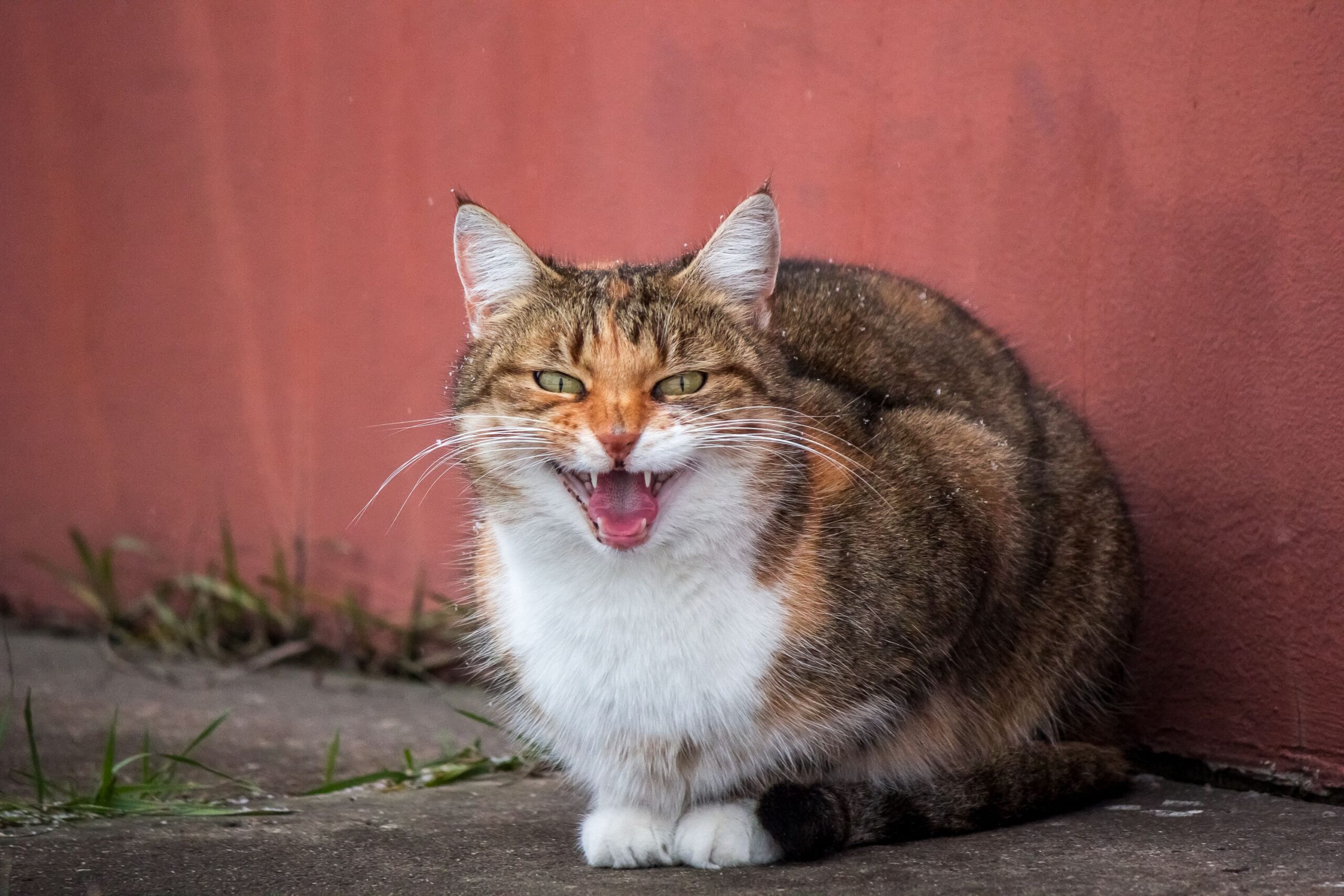
Bad breath and red gums are just the start. Here's what periodontal disease looks like in cats.
If your cat has bad breath that could clear a room, red or puffy gums, or a vet who just flagged dental disease on their chart, here’s what’s likely going on: periodontal disease, or gum disease caused by plaque and tartar that works its way below the gumline and quietly damages the teeth and surrounding tissue. It’s one of the most common health issues vets see in cats, and most show signs by age three or four.
The good news? Caught early, it’s very manageable.
 TL;DR
TL;DR
Periodontal disease is an infection and inflammation of everything that holds your cat’s teeth in place: the gums, the ligaments connecting teeth to the jaw, and the jawbone itself. It starts simply enough. Bacteria in your cat’s mouth form a soft, sticky film on the teeth called plaque. Leave that plaque alone long enough and it hardens into tartar, which is much tougher to remove and starts working its way below the gumline where you can’t see it.
Once bacteria get into that space under the gums, the body tries to fight back, and it’s actually that immune response, that ongoing inflammation, that does most of the damage over time. It gradually breaks down the gum tissue, bone, and ligaments that keep teeth anchored and stable. In more advanced cases, it can also trigger something called tooth resorption, a painful process where the tooth structure itself starts to break down from the inside out. It’s as uncomfortable as it sounds, and cats are notoriously good at hiding it.
Periodontal disease moves through four stages, each progressively harder to reverse. Here’s what you might actually notice at home at each one:
One thing worth knowing: cats are remarkably good at hiding discomfort. Even with severe periodontal disease, many cats keep eating and grooming as if everything is fine. Visible signs alone aren’t always a reliable way to gauge how serious things have gotten, which is why regular vet checkups matter so much.
Plaque is the root cause, and honestly, plaque is just a fact of life for most cats. It starts forming the moment bacteria meet teeth, and without regular removal it hardens into tartar and the cycle begins. That said, some cats are more vulnerable than others:
You can’t eliminate plaque entirely, but you can slow its buildup significantly, and that makes a real difference in how quickly the disease progresses. The most effective habits to build:
Prevention is always easier than treatment. A cat whose teeth are cleaned professionally every year and brushed regularly at home is far less likely to need extractions down the road. It’s one of those areas where a small consistent effort genuinely pays off.
A professional dental cleaning for cats, sometimes called a COHAT (comprehensive oral health assessment and treatment), is a much bigger deal than a human teeth cleaning. Here’s what actually happens:
Your cat goes under general anesthesia for the entire procedure. This isn’t optional, and it’s not a shortcut. It’s the only way to safely examine every tooth, probe below the gumline, and take full-mouth X-rays. Anesthesia-free dental cleanings only clean visible surfaces and miss the damage happening below the gumline, which is exactly where the disease lives.
Full-mouth dental X-rays let the vet see bone loss, tooth root problems, and tooth resorption that are completely invisible to the naked eye. More than half of dental disease findings in cats are only detectable on X-ray, which is why skipping this step means a lot of the real damage goes undetected.
The vet uses an ultrasonic scaler, essentially a very precise vibrating tool, to break up and remove tartar above and below the gumline. After scaling, the tooth surfaces are polished to smooth out any microscopic scratches that could let plaque reattach faster.
If any teeth are too damaged to save, the vet will extract them during the same procedure. This sounds alarming, but cats adapt remarkably well to missing teeth. Removing a painful, infected tooth almost always improves their quality of life significantly.
Costs vary depending on your location, your vet, and the severity of disease. As a general range in 2026, a routine COHAT with anesthesia and X-rays typically runs $400 to $800. If extractions are needed, costs can climb to $1,000 to $2,500 or more, especially for multiple teeth or surgical extractions. Stage 3 and 4 cases with significant bone loss sit at the higher end of that range.
Yes, but the right coverage depends on which dental add-on you have. A base accident and illness policy alone won’t cover dental illness, so adding dental coverage is worth thinking about sooner rather than later.
Lemonade offers two dental coverage options depending on your location:
Dental Care add-on: The most comprehensive option. Covers dental illness treatment and routine cleanings, has no deductible, and uniquely, covers pre-existing dental conditions. Only available to add while your cat is between 0 and 3 years old.
Dental Illness add-on: Covers treatments, diagnostics, and medications related to dental illness, including extractions and periodontal disease treatment. Doesn’t include routine cleanings on its own. To cover routine dental cleanings, you’d need to pair this with the Preventative+ add-on. Pre-existing dental conditions are not covered, and a deductible applies.
The earlier you enroll and add dental coverage, the more it can do for you.
Periodontal disease is one of the most common things vets find in cats, and one of the most underdiscussed by owners, partly because it develops quietly and cats rarely complain. But it’s also one of the most preventable conditions with the right routine. If your cat’s breath has been telling you something is off, or if their last vet visit flagged early dental disease, now’s the time to ask about a professional cleaning and talk to your vet about a home care plan.
And if they’re still young and healthy, that’s actually the best time to look into pet insurance coverage, so you’re prepared if things change.
The most common signs include bad breath (halitosis), red or swollen gums, drooling, difficulty chewing, pawing at the mouth, and dropping food. That said, many cats hide their discomfort well, so a lack of obvious symptoms doesn’t mean their teeth are healthy.
Stage 1 (gingivitis) is fully reversible with a professional dental cleaning and good home care. Stages 2 through 4 involve bone and tissue loss that can’t be undone, but treatment can stop the progression and relieve pain.
Most vets recommend annual dental cleanings for adult cats, though cats with a history of dental disease or faster plaque buildup may need them more frequently. Your vet can advise based on your cat’s specific oral health.
The procedure itself is done under anesthesia, so your cat won’t feel it. There’s typically some soreness during recovery, managed with pain medication from your vet. Most cats feel noticeably better once a painful or infected tooth is gone.
Lemonade’s cat insurance can help cover treatment for periodontal disease, including exams, dental X-rays, and related care, as long as the condition isn’t pre-existing at the time of enrollment. Enrolling before symptoms appear gives your cat the best coverage position.
A few quick words, because we <3 our lawyers: This post is general in nature, and any statement in it doesn’t alter the terms, conditions, exclusions, or limitations of the policies issued, which differ according to your state of residence. You’re encouraged to discuss your specific circumstances with your own professional advisors. The purpose of this post is merely to provide you with info and insights you can use to make such discussions more productive! Naturally, all comments by, or references to, third parties represent their own views, and Lemonade assumes no responsibility for them. Coverage may not be available in all states. Please note that statements about coverages, policy management, claims processes, Giveback, and customer support apply to policies underwritten by Lemonade Insurance Company or Metromile Insurance Company, a Lemonade company, sold by Lemonade Insurance Agency, LLC. The statements do not apply to policies underwritten by other carriers.
Please note: Lemonade articles and other editorial content are meant for educational purposes only, and should not be relied upon instead of professional legal, insurance or financial advice. The content of these educational articles does not alter the terms, conditions, exclusions, or limitations of policies issued by Lemonade, which differ according to your state of residence. While we regularly review previously published content to ensure it is accurate and up-to-date, there may be instances in which legal conditions or policy details have changed since publication. Any hypothetical examples used in Lemonade editorial content are purely expositional. Hypothetical examples do not alter or bind Lemonade to any application of your insurance policy to the particular facts and circumstances of any actual claim.