
What Does a Veterinary Technician Do?
Vet tech duties, salary, credentials, job outlook, and how to become a veterinary technician.

Vet tech duties, salary, credentials, job outlook, and how to become a veterinary technician.
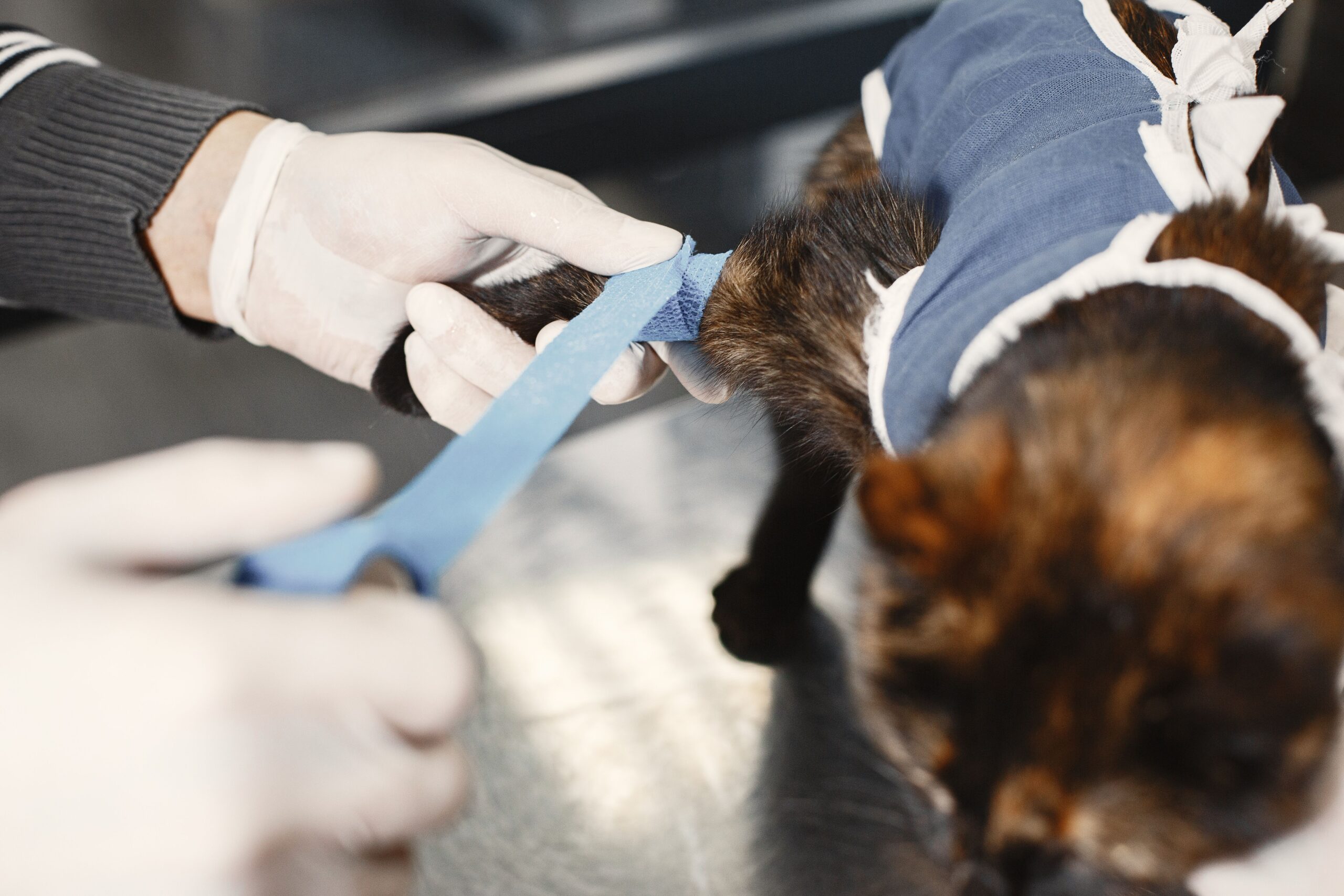
Think of a veterinary technician the way you’d think of an RN in a hospital. They’re not the doctor, but they’re doing most of the hands-on clinical work, and honestly, the whole operation wouldn’t run without them. A vet tech draws blood, places IV catheters, monitors anesthesia, takes radiographs, cleans teeth, runs lab work, and explains discharge instructions to a worried pet owner, often all before noon.
If you’re weighing a vet tech career, curious what the job actually looks like day to day, or trying to figure out if this is the right path for you, here’s the honest picture. Not the brochure version. The real one.
 TL;DR
TL;DR
A vet tech’s job description covers a lot of ground. On any given day, you might be monitoring a dog under general anesthesia, running a urinalysis in the in-house lab, positioning a fractious cat for a radiograph, scaling tartar during a dental prophy, placing an IV catheter in a dehydrated kitten, and walking a client through post-op instructions for their pet’s recent spay. That’s not an exaggeration, that’s a Tuesday.
It’s a role that rewards people who like variety, who want to actually use their clinical knowledge, and who get satisfaction from being the person who holds things together when the day gets complicated. If that sounds like you, keep reading.
The key distinction from a vet assistant: Vet techs are credentialed clinicians. A vet assistant typically has on-the-job training and handles restraint and basic care. A vet tech has a degree, passed a licensing exam, and can perform skilled clinical procedures. A veterinarian diagnoses, prescribes, and performs surgery. The vet tech is the layer in between, doing the clinical heavy lifting.
One of the most underappreciated things about this credential is how portable it is. The VTNE and your state license don’t lock you into one kind of practice. Here’s a snapshot of the environments vet techs actually work in:
The most common setting: dogs, cats, and the occasional rabbit or guinea pig. General practice, emergency and critical care, and specialty hospitals all fall here. If you trained in a small animal program, this is likely where you’ll start, but it’s far from your only option.
Reptiles, birds, small mammals, and in some cases large zoo species. This track requires specific experience and often additional training, but for the right person it’s genuinely unlike anything else in the field. Exotic practice tends to be smaller and more specialized, so getting your foot in the door matters early.
Horse practice, farm calls, and ambulatory work. The physical demands are different, the equipment is different, and the pace is different. Large animal techs often work outdoors, travel between farms, and develop a specific set of hands-on skills that don’t translate directly from small animal work, and vice versa.
Cattle, swine, poultry, and mixed-species agricultural settings. High demand, often rural, and increasingly well-compensated. If you grew up around agriculture or have an interest in herd health and production medicine, this is a track worth exploring early in your training.
Working with injured or orphaned wild animals through rehabilitation centers, wildlife agencies, or conservation organizations. Paid positions in this space are competitive and often require volunteering first, but for techs drawn to native species and conservation work, it’s a real career path.
High-volume spay/neuter, population health, intake exams, and disease management across large animal populations. Shelter medicine has its own board certification now (ABVP Shelter Medicine Practice), and it attracts techs who want to combine clinical work with animal welfare impact.
Academic institutions, pharmaceutical companies, and research organizations all employ credentialed vet techs. The work is procedure-heavy and highly regulated, and it suits people who are drawn to precision, protocol, and the science side of veterinary medicine.
The credential you earn is the same regardless of which direction you go. What changes is the species, the setting, and the day-to-day rhythm. If you’re not sure which environment fits you best, use your clinical rotations and any externship opportunities to explore more than one before you commit.
Let’s be straight about this, because you deserve to know before you commit two to four years and real money to a program.
This job is physically demanding. You’re on your feet all day, lifting patients, restraining animals that don’t want to be restrained, and working through lunch when the schedule fills up. Compassion fatigue is real, it’s common, and it catches a lot of people off guard because they came in with so much genuine love for animals. That love doesn’t go away, but it needs protecting. The techs who last in this career are the ones who figure out how to protect it.
You’ll assist with euthanasia. You’ll have cases that don’t go the way anyone hoped, and you’ll carry some of them home with you whether you mean to or not. And you’ll do all of this while managing a salary that doesn’t always reflect the clinical complexity of what you’re doing.
None of that is a reason to walk away. It’s just the full picture. The people who thrive here aren’t the ones who were never affected by hard days. They’re the ones who found ways to process them, lean on their team, and keep showing up.
“When I first started, I thought euthanasia would be the part of the job I simply couldn’t handle. My views quickly changed. I now see it as a final gift we can give to our patients: we can help the process go as smoothly as possible, offer support to pet parents, and end suffering. It’s always hard, but I find comfort in knowing they’re at peace.”
-Shelby R, Lemonade Pet Claims Advocate, Registered Veterinary Technician (10 years)
That’s not a coping mechanism. It’s a meaningful reframe that doesn’t make the hard days easy. It makes them bearable, and purposeful.
Before you apply to programs, give yourself an honest score (1 = not really me, 3 = very much me) on each of the following:
If you scored 12–15: Strong signals to explore further. Look up AVMA-CVTEA accredited programs near you, shadow a vet tech for a day, and start the application process.
If you scored 8–11: Worth a closer look at what pulled your score down. If it was the emotional weight, that’s something you can build coping strategies for, and most good programs will help you do exactly that. If it was the science or the multitasking, be honest about whether that’s something you want to grow into or a genuine mismatch. Both answers are valid.
If you scored 7 or below: This doesn’t mean animals aren’t your thing. It might mean a different role, such as shelter work, animal behavior, or veterinary practice management, is a better fit.
Remember, there’s no wrong answers here, only honest ones.
The credentialing pathway is more structured than people expect, but it’s also genuinely achievable. Here’s how it works.
You need to complete a veterinary technology program accredited by the American Veterinary Medical Association’s Committee on Veterinary Technician Education and Activities (AVMA-CVTEA). Most are two-year associate of applied science (AAS) programs, though bachelor’s options exist. Online veterinary technician programs are available, but they still require hands-on clinical hours, typically completed at an approved local site.
The Veterinary Technician National Examination (VTNE) is the national licensing exam. It covers everything from pharmacology and anesthesia to clinical pathology and dentistry. Passing it is required in virtually every state. It’s a real exam that takes real preparation, but it’s designed to test what you’ll have spent two years learning.
Depending on your state, you’ll be called a Certified Veterinary Technician (CVT), Registered Veterinary Technician (RVT), or Licensed Veterinary Technician (LVT). Different titles, same credential. Some states also call the role a veterinary nurse, though this term isn’t yet standardized across the US.
Once credentialed and working, experienced techs can pursue a Veterinary Technician Specialist (VTS) designation in areas like emergency and critical care (ECC), anesthesia, dentistry, behavior, or internal medicine. It requires years of documented experience, case logs, and a specialty exam. It’s the vet tech equivalent of a nursing specialty certification, and it comes with a meaningful salary bump. It’s also proof that this career has a ceiling worth working toward.
According to the Bureau of Labor Statistics (BLS), the median annual wage for veterinary technologists and technicians is $47,380. Entry-level positions will run lower; specialty-certified techs and those in high cost-of-living metro areas will run higher. It’s not a high-paying field by healthcare standards, and glossing over that wouldn’t be doing you any favors.
What it is, though, is a career with real momentum. The BLS projects employment in this field to grow 9% from 2025 to 2035, much faster than the average for all occupations, driven by rising pet ownership, expanding veterinary services, and greater access to advanced animal care. The field has more open positions than credentialed people to fill them, and that gap creates real leverage for techs who are good at what they do.
Vet techs are often the first person in the room when a pet owner gets a number they weren’t expecting. You’re standing there when the estimate lands, when the diagnosis is hard, and when the owner is quietly doing the math in their head. That moment is clinical, not administrative, and how you handle it affects whether the pet gets the care it needs.
Understanding how pet insurance actually works makes you better at your job in a few specific ways:
Here’s what that looks like when it actually works:
“When a Labrador I cared for was diagnosed with a treatable form of lymphoma, having insurance completely transformed a heartbreaking conversation into a realistic treatment plan. Instead of cost deciding her fate, her family was able to pursue specialty oncology care and treat her through remission. She had many more happy, healthy years with her family.”
– Amber S, Lemonade Pet Claims Advocate, Former Veterinary Technician (25 years)
And it’s not only long-term cases where it makes the difference:
“We had a cat come in after ingesting a metal twist tie. She needed an endoscopy, and we needed to move fast. Because she had an insurance policy, we could act quickly: the procedure worked, she avoided surgery entirely, and she made a full recovery.”
– Jennifer B, Lemonade Pet Claims Advocate, Veterinary Technician (14 years)
Those aren’t edge cases. They’re the conversations happening in practices every day, and techs who understand the insurance side of them are truly useful in those moments.
A note on Lemonade Pet: every claims advocate on the Lemonade Pet team is a former vet tech. That’s not a coincidence. When a Lemonade Pet policyholder files a claim, the person reviewing it on the other side has placed IV catheters, monitored anesthesia, and had the exact same conversations with worried pet owners that you’ll be having. That clinical context matters, and it shows up in how claims get handled.
“I spent years working directly in the clinic and knew I wanted my next step to still honor that same mission. Transitioning to Lemonade allowed me to use my clinical background from a new angle, continuing to advocate for families and make a real impact on their lives.”
– Amber S, Lemonade Pet Claims Advocate, Former Veterinary Technician (25 years)
Lemonade Pet covers accidents, illnesses, and optional preventative care, built by people who understand what the clinical side of that actually looks like.
The vet techs who find the most meaning in this career tend to be the ones who show up prepared for the full scope of the job: the clinical complexity, the emotional weight, and the moments where being genuinely knowledgeable makes a real difference for a pet and their owner. It’s a hard job. It’s also one where you can walk out at the end of a long day knowing you actually did something. If that sounds like you, it’s worth taking seriously.
Now go find a vet tech to shadow.
A few quick words, because we <3 our lawyers: This post is general in nature, and any statement in it doesn’t alter the terms, conditions, exclusions, or limitations of the policies issued, which differ according to your state of residence. You’re encouraged to discuss your specific circumstances with your own professional advisors. The purpose of this post is merely to provide you with info and insights you can use to make such discussions more productive! Naturally, all comments by, or references to, third parties represent their own views, and Lemonade assumes no responsibility for them. Coverage may not be available in all states. Please note that statements about coverages, policy management, claims processes, Giveback, and customer support apply to policies underwritten by Lemonade Insurance Company or Metromile Insurance Company, a Lemonade company, sold by Lemonade Insurance Agency, LLC. The statements do not apply to policies underwritten by other carriers.
Please note: Lemonade articles and other editorial content are meant for educational purposes only, and should not be relied upon instead of professional legal, insurance or financial advice. The content of these educational articles does not alter the terms, conditions, exclusions, or limitations of policies issued by Lemonade, which differ according to your state of residence. While we regularly review previously published content to ensure it is accurate and up-to-date, there may be instances in which legal conditions or policy details have changed since publication. Any hypothetical examples used in Lemonade editorial content are purely expositional. Hypothetical examples do not alter or bind Lemonade to any application of your insurance policy to the particular facts and circumstances of any actual claim.