
AI in Cars: The Features Already Driving With You
AI isn't the future of driving. It's already in your car right now. Here's where.

AI isn't the future of driving. It's already in your car right now. Here's where.
You’ve asked your car to call someone, watched it brake before you noticed the car ahead slow down, or seen your navigation quietly reroute you around a jam. That’s not magic. That’s AI, and it’s already been running in the background every time you drive.
 TL;DR
TL;DR
Most people think of AI in cars as a future thing, something reserved for self-driving prototypes. But AI car features are already built into millions of everyday vehicles on the road right now. You don’t need a Tesla or a luxury brand. The lane assist on a base-trim Honda, the emergency braking on a midrange Toyota, the Google Maps rerouting on your phone mount… that’s all AI. It’s in the car you’re already driving.
Here’s where it lives.
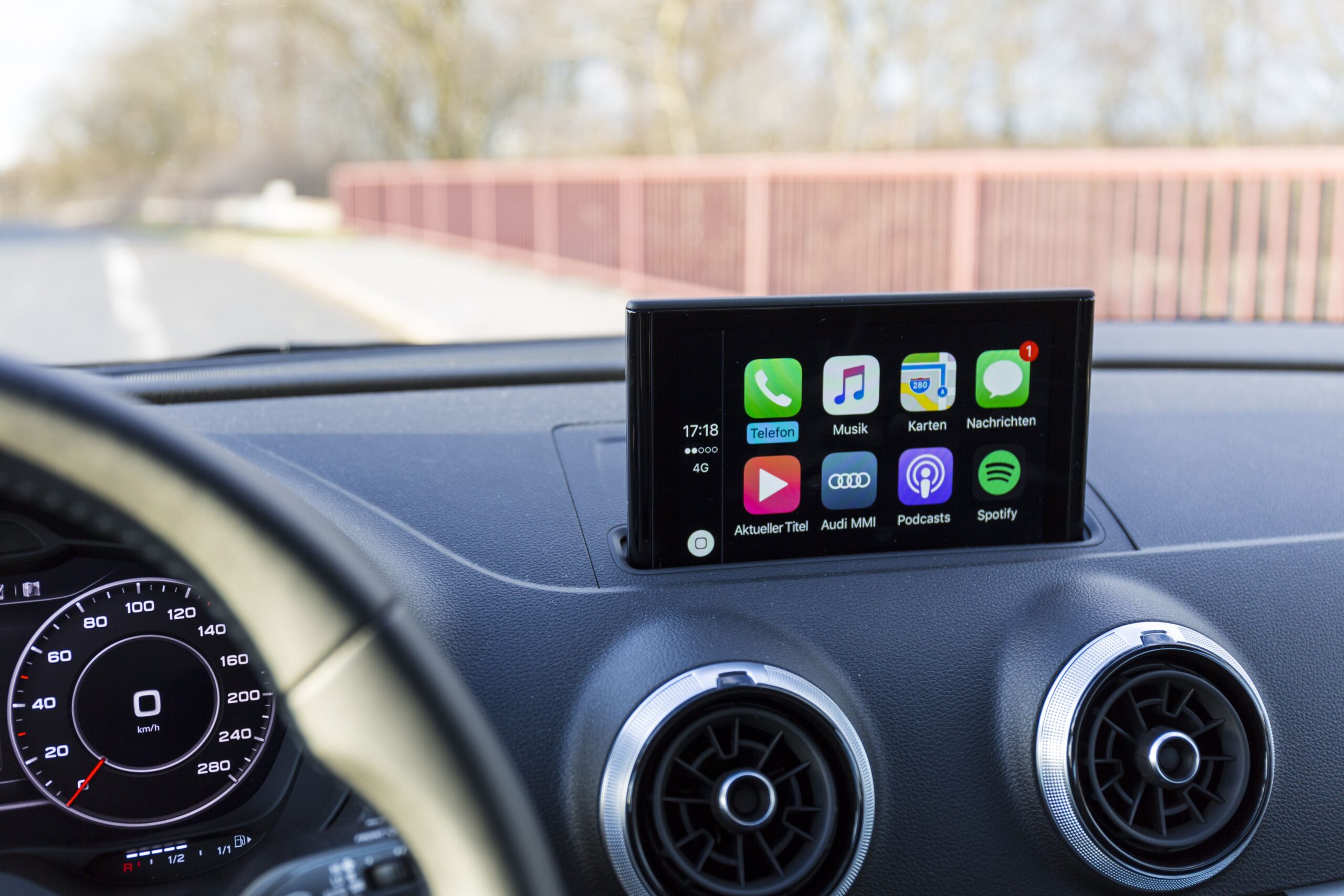
The most visible AI feature most drivers use daily. Whether it’s Siri via Apple CarPlay, Google Assistant through Android Auto, or Alexa Auto, these systems use natural language processing to understand what you’re actually saying, not just specific commands.
You can say “find me a gas station near the highway on my route” and the system figures out what you mean. You’re not programming a machine. You’re talking to one that listens.
Beyond convenience, the safety case is real. Keeping your eyes on the road and hands on the wheel is always the goal, and a well-trained voice assistant makes that easier.
Old GPS was a digital paper map. Modern navigation is a different animal. Apps like Google Maps and Waze use AI to process real-time traffic flow, incident reports, road closures, historical patterns, and weather, then constantly recalculate your best route.
Waze is already calculating an alternate path before you reach the slowdown, based on live data from other drivers. Google Maps predicts how traffic will evolve over the next hour so the ETA you see is a genuinely smart estimate, not a guess.
Less congestion means smoother driving and fewer hard-brake moments. Smart navigation quietly makes roads safer too.
Advanced driver assistance systems are the family of AI-powered safety features working in the background to prevent accidents. They’re covered in depth in our ADAS article, but here’s the short version of how AI powers each one:
These features work together as a coordinated system. And because they help you avoid accidents, they can help lower your insurance rate too. More on that below.
One of the more personal applications of AI in cars. A small infrared camera tracks your eyes, blink rate, and head position in real time. If it detects the patterns associated with drowsiness or distraction, it steps in with an alert before anything goes wrong.
Drowsy driving causes thousands of crashes every year and is notoriously hard to self-diagnose. The AI doesn’t get tired of watching.
For a full breakdown of how driver monitoring works and what it means for your privacy, check out our driver monitoring system article.
AI monitors your car’s health in real time, tracking data from the engine, battery, brakes, and fluid levels. Instead of waiting for a warning light or a breakdown, it flags patterns that suggest something is wearing down before it fails.
For EVs this is especially sophisticated. Battery management systems use AI to monitor cell health, temperature, and charge cycles, predicting range more accurately and flagging degradation early. The payoff for any car: fewer surprise breakdowns, lower repair costs, and a longer-lasting vehicle.
Higher-end vehicles are getting smarter about learning from you. Some systems recognize which driver is behind the wheel and automatically adjust seat position, mirrors, temperature, and media preferences. Over time, the car builds a profile of your typical routes and habits.
It’s still maturing, but it’s already live in vehicles from BMW, Mercedes-Benz, Volvo, and others. The experience: you get in, and the car has already done the adjusting.
Everything above is AI working alongside a human driver. Total self-driving, where the car handles everything without any human input, isn’t commercially available yet. Most cars today sit at a level where they assist with steering, braking, or acceleration, but the driver is always responsible.
The closest thing available to everyday drivers right now is Tesla’s Full Self-Driving. And because FSD miles are statistically twice as safe as manual miles, Lemonade built something around that. Tesla drivers in select states get 50% off every mile driven in FSD mode through Lemonade Autonomous Car insurance. It connects directly through the Tesla and Lemonade apps, no extra devices needed.
All those AI safety features aren’t just good for avoiding accidents. They’re changing how car insurance works.
Cars with advanced safety tech are statistically involved in fewer and less severe accidents, which means fewer claims. At Lemonade, driving a car equipped with automatic braking, blind spot monitoring, and lane-keeping assist can earn you a lower rate.
And Lemonade isn’t just built for modern cars. It’s built like one. AI powers Lemonade’s claims process, handling the paperwork faster and with less friction than traditional insurance. Because if your car is running on cutting-edge technology, the company insuring it should be too.
AI in cars isn’t coming. It’s here, running quietly through your daily commute, your highway drives, and your parallel parking attempts. You’re probably already benefiting from it without calling it AI. And when it comes to insuring a car packed with this kind of technology, it pays to have an insurer that actually keeps up. Get a quote from Lemonade and see what modern coverage looks like.
A few quick words, because we <3 our lawyers: This post is general in nature, and any statement in it doesn’t alter the terms, conditions, exclusions, or limitations of the policies issued, which differ according to your state of residence. You’re encouraged to discuss your specific circumstances with your own professional advisors. The purpose of this post is merely to provide you with info and insights you can use to make such discussions more productive! Naturally, all comments by, or references to, third parties represent their own views, and Lemonade assumes no responsibility for them. Coverage may not be available in all states. Please note that statements about coverages, policy management, claims processes, Giveback, and customer support apply to policies underwritten by Lemonade Insurance Company or Metromile Insurance Company, a Lemonade company, sold by Lemonade Insurance Agency, LLC. The statements do not apply to policies underwritten by other carriers.
Please note: Lemonade articles and other editorial content are meant for educational purposes only, and should not be relied upon instead of professional legal, insurance or financial advice. The content of these educational articles does not alter the terms, conditions, exclusions, or limitations of policies issued by Lemonade, which differ according to your state of residence. While we regularly review previously published content to ensure it is accurate and up-to-date, there may be instances in which legal conditions or policy details have changed since publication. Any hypothetical examples used in Lemonade editorial content are purely expositional. Hypothetical examples do not alter or bind Lemonade to any application of your insurance policy to the particular facts and circumstances of any actual claim.