
Is It Safe for Your Baby to Sleep in a Car Seat?
The short answer, the real risks, and what to do when you pull into the driveway.

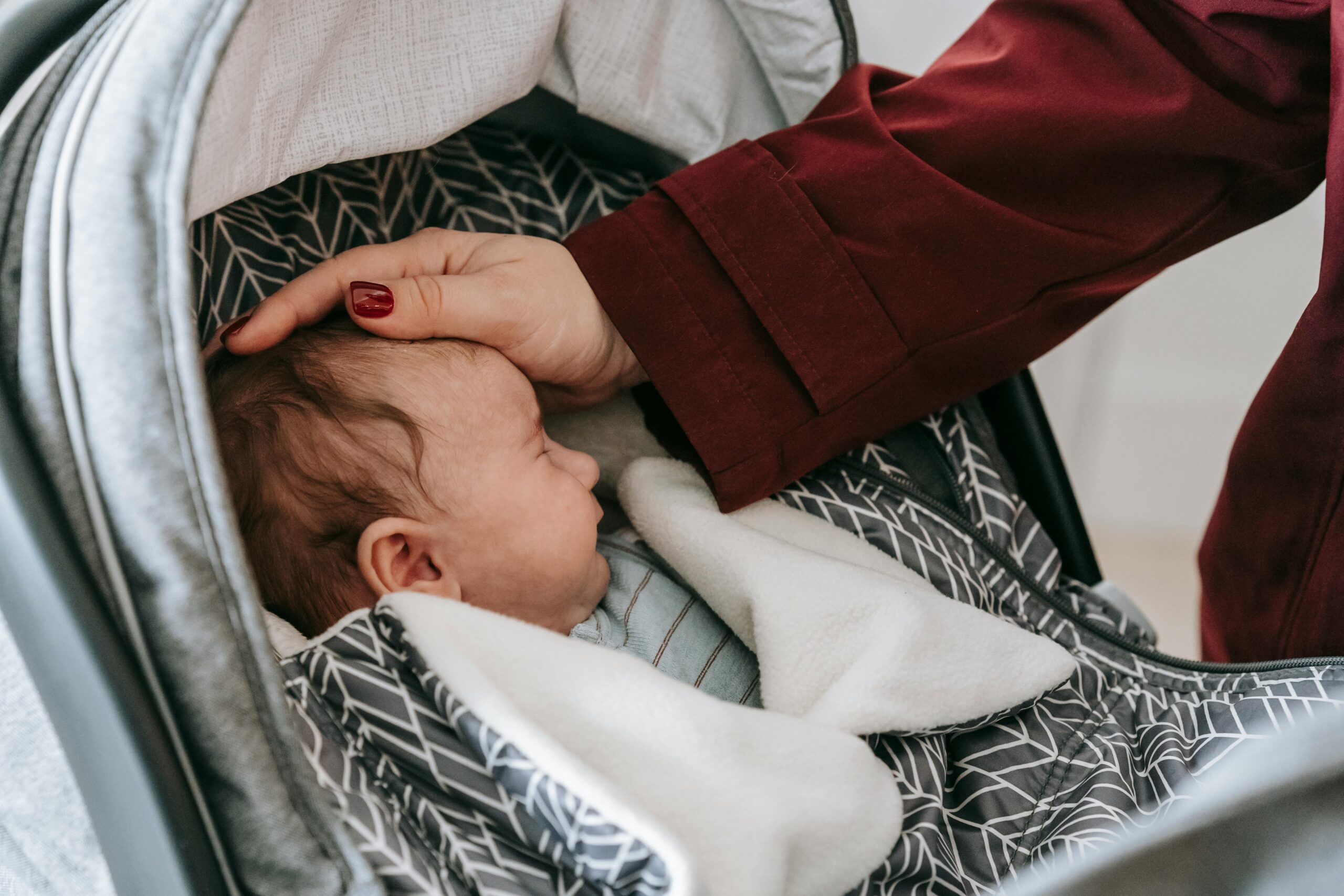
The short answer, the real risks, and what to do when you pull into the driveway.
Yes, a baby sleeping in a car seat during a car ride is generally safe, as long as the seat is correctly installed, set to the right recline angle, and your baby is properly harnessed. The part that needs your attention is what happens when the car stops. Here’s what you need to know.
 TL;DR
TL;DR
Positional asphyxia happens when a baby’s body position restricts their airway. In a car seat, the most common version is the chin-to-chest position: the head drops forward, the airway narrows, and the baby can’t get enough oxygen. Newborns and young infants are especially vulnerable because their neck muscles haven’t developed enough to hold their head up or reposition themselves if something feels wrong.
The risk goes up when:
Most infant car seats have a built-in angle indicator. For newborns, the seat should be at the most reclined position the manufacturer allows for their age and weight. This keeps the head from falling forward and maintains an open airway. Check your seat’s manual for the exact guidance, because specs vary by model.
When you move the seat from the car base to a stroller or carry it inside, the angle often shifts. It can become more upright than it was during the ride, which increases the chin-to-chest risk. This is one of the main reasons car seat sleep outside the car carries more risk than in-car sleep.
Babies shouldn’t spend more than 2 hours continuously in a car seat. For very young newborns, some experts recommend keeping it even shorter. The clock doesn’t reset just because the car stops. If your baby has been in the seat for 90 minutes and you pull into a rest stop, their body has still been in a semi-reclined, restricted position for 90 minutes.
On longer trips, build in actual breaks. Take your baby out of the seat entirely, let them lie flat, feed them if needed, then re-buckle when you’re ready to go.
Transfer them. As soon as it’s safely possible, move your sleeping baby to a firm, flat surface like a crib or bassinet. Yes, they might wake up. Yes, it’s frustrating. But leaving them in the car seat unattended, whether in the car or in the house, isn’t worth the risk.
A few things worth knowing:
The American Academy of Pediatrics is clear: car seats are not a safe sleep environment for routine infant sleep. Safe sleep means a firm, flat surface, on their back, with nothing loose in the sleep space. That also covers:
The rule of thumb: if it’s not a firm, flat surface with nothing around or under your baby, it’s not a safe sleep space.
If your baby was born premature or spent time in the NICU, the risk is even higher. Premature babies have less muscle tone than full-term newborns, and their airways are more easily compromised. Most NICUs perform a car seat tolerance screening before discharge for babies born before 37 weeks, monitoring for drops in oxygen or heart rate. If you’re unsure about car seat time limits for your baby specifically, call your pediatrician before any long trips.
Baby sleeping in the car seat on the way home from the grocery store? Totally fine. Baby left unattended in the car seat at home? That’s where it gets risky. The difference is supervision, time, and where the seat is sitting.
Transfer when you can, watch closely when you can’t, and keep coming back to the basics. You’re doing great.
And while you’re thinking about protecting your family, it’s worth looking at your broader coverage too. Lemonade offers both car insurance and term life insurance, straightforward, affordable, and easy to manage from your phone. Get a quote and check one more thing off the new parent list.
A few quick words, because we <3 our lawyers: This post is general in nature, and any statement in it doesn’t alter the terms, conditions, exclusions, or limitations of the policies issued, which differ according to your state of residence. You’re encouraged to discuss your specific circumstances with your own professional advisors. The purpose of this post is merely to provide you with info and insights you can use to make such discussions more productive! Naturally, all comments by, or references to, third parties represent their own views, and Lemonade assumes no responsibility for them. Coverage may not be available in all states. Please note that statements about coverages, policy management, claims processes, Giveback, and customer support apply to policies underwritten by Lemonade Insurance Company or Metromile Insurance Company, a Lemonade company, sold by Lemonade Insurance Agency, LLC. The statements do not apply to policies underwritten by other carriers.
Please note: Lemonade articles and other editorial content are meant for educational purposes only, and should not be relied upon instead of professional legal, insurance or financial advice. The content of these educational articles does not alter the terms, conditions, exclusions, or limitations of policies issued by Lemonade, which differ according to your state of residence. While we regularly review previously published content to ensure it is accurate and up-to-date, there may be instances in which legal conditions or policy details have changed since publication. Any hypothetical examples used in Lemonade editorial content are purely expositional. Hypothetical examples do not alter or bind Lemonade to any application of your insurance policy to the particular facts and circumstances of any actual claim.