
How Sleep Deprivation Affects Your Driving
The real risks of driving on no sleep, and what actually helps.

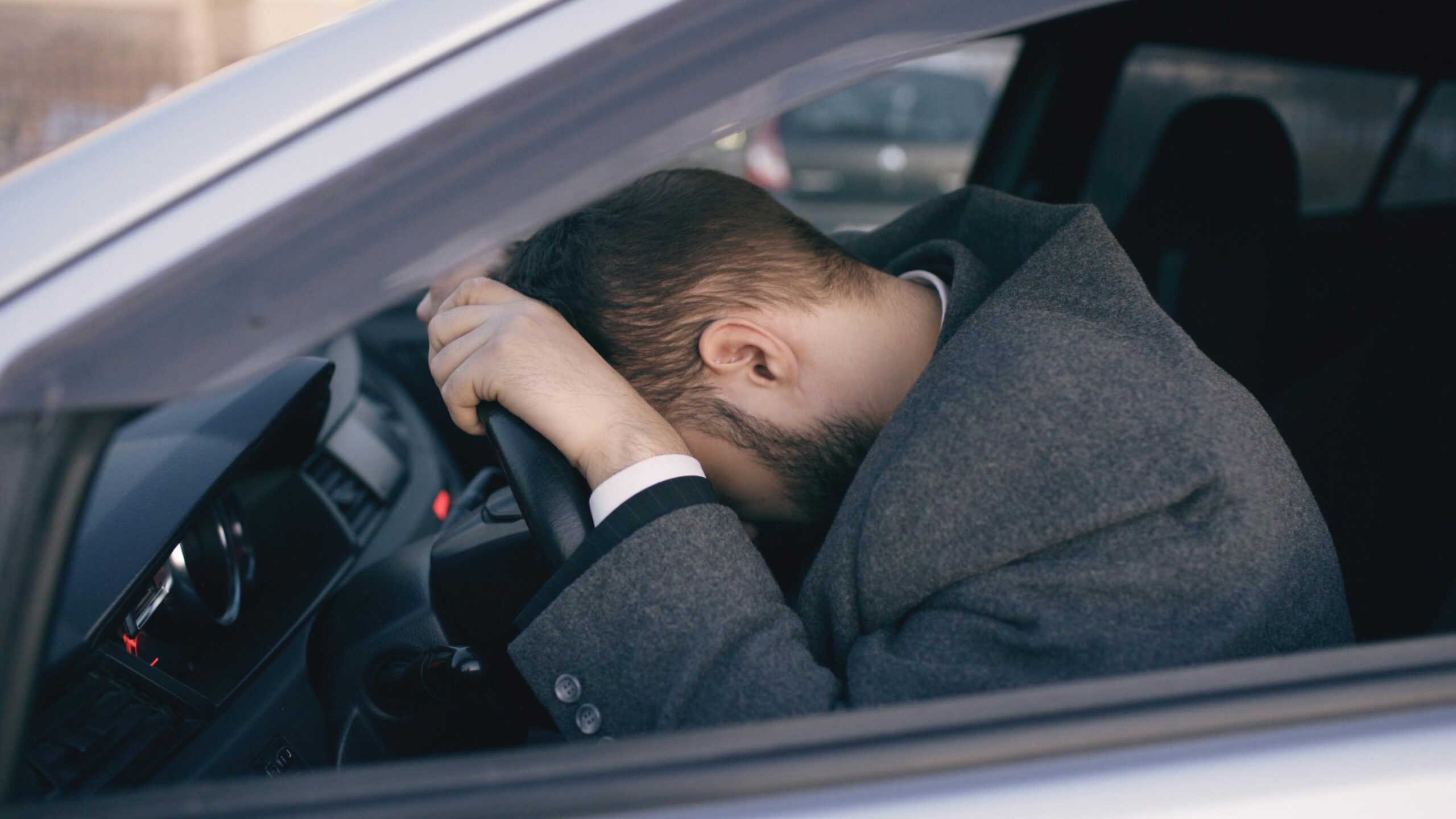
The real risks of driving on no sleep, and what actually helps.
Nobody becomes a new parent expecting to feel sharp behind the wheel. The night feeds, the cluster feeding, the endless broken sleep, it adds up fast… and the car still needs to get driven. What most people don’t realize is that driving on little sleep is as dangerous as driving drunk, and the hardest part is that exhaustion makes it nearly impossible to tell how impaired you actually are.
 TL;DR
TL;DR
Pretty dangerous. According to NHTSA, drowsy driving causes approximately 91,000 police-reported crashes, 50,000 injuries, and around 800 deaths each year in the U.S. And those figures are almost certainly an undercount. Unlike alcohol, sleepiness leaves no trace in a toxicology report, so investigators often can’t prove it after the fact.
A 2024 study by the AAA Foundation for Traffic Safety found that drowsy drivers may have been involved in 17.6% of all fatal crashes between 2017 and 2021, accounting for an estimated 29,834 deaths over that five-year period. That’s not a niche risk. It’s one of the most underreported dangers on the road.
The comparison isn’t just rhetorical. Research published in Occupational and Environmental Medicine found that sleep deprivation produces impairment that directly mirrors intoxication:
At that level, your reaction time slows dramatically, your judgment degrades, and your ability to track moving objects or maintain lane position falls apart. The difference? Someone who’s drunk usually knows they’re impaired. Someone who’s exhausted often convinces themselves they’re fine.
The newborn phase is a gauntlet. Sleep loss in the first year is significant and cumulative, it doesn’t just reset with one decent night. Stretched across weeks and months, the impairment compounds in ways that are hard to feel from the inside.
Here’s the part that catches people off guard: your brain adapts to feeling tired. It stops sending the same urgent signals it did on night three. But the functional impairment doesn’t go away. You just stop noticing it. That’s the trap. Postpartum sleep deprivation driving is especially risky because parents often feel like they’ve adjusted when, neurologically, they haven’t.
One habit that’s surprisingly common among new parents: driving the baby around to get them to sleep. It works. The baby conks out. But if you’re exhausted, you’ve just put a sleep-deprived driver behind the wheel at night with a fragile passenger, for a non-essential trip. That’s a risk that’s easy to skip with a stroller walk or a white noise machine instead.
Some warning signs are obvious. Others creep up on you. Here’s what to watch for before you get behind the wheel, and while you’re driving:
The most dangerous sign is one you might not even notice: microsleep.
Microsleep episodes are brief, involuntary blackouts that can last four to five seconds. Your eyes may stay open. You look awake. But your brain has essentially checked out.
At 55 mph, your car travels about 80 feet per second. A four to five second microsleep means you’ve covered more than 100 yards with no one in control of the car. These episodes often happen without any warning, and you may not even remember them afterward.
When you’re tired and need to get somewhere, the temptation is to reach for a quick fix. Most of them don’t work the way you think they do.
Caffeine can provide a short-term boost by blocking adenosine receptors in your brain. But it takes about 20–30 minutes to kick in, it doesn’t restore cognitive function, and it wears off. Once it does, the fatigue it was masking comes back hard. Caffeine is a temporary bridge, not a solution. And it doesn’t prevent microsleep.
Cold air and loud music create sensory stimulation that can keep you alert for a few minutes. But your body adapts quickly, and neither one addresses the underlying problem. They’re the equivalent of putting a cold compress on a broken leg.
The belief that you can willpower your way through exhaustion is probably the most dangerous myth of all. The impairment is physiological. You can’t decide your way out of slower reaction times. If your body needs sleep, it will take it, whether you’ve agreed to it or not.
There are really only a handful of things that genuinely reduce the risk of drowsy driving. None of them involve staying behind the wheel.
A 20-minute nap before a drive can significantly improve alertness and reduce impairment. It won’t make you fully rested, but it can help restore short-term function. If you’ve been up all night with a newborn and genuinely need to drive somewhere the next morning, even a short nap first makes a real difference.
If you notice drowsy driving warning signs while you’re already on the road, the right move is to pull over safely, lock the doors, and sleep for 15–20 minutes. A parking lot, a rest stop, a quiet side street, anywhere works. Driving another five miles to “just get home” is where accidents happen.
If you’re driving with a partner who’s less impaired, switch. This one’s simple and effective. For new parents, leaning on your co-parent, a family member, or a friend to handle the driving during the roughest weeks isn’t weakness. It’s the smart call.
This is underrated as an option. Ask yourself: does this trip actually have to happen right now? Rideshare apps exist. Grocery delivery exists. Telehealth exists. A lot of errands that feel urgent are things that can wait a few hours, or be handled without getting in the car at all. For sleep-deprived parents especially, building in this question as a habit can prevent a serious accident.
In some states, yes. And in all states, it can lead to serious charges depending on the outcome.
New Jersey was the first state to pass a law specifically criminalizing drowsy driving. Named after Maggie McDonnell, who was killed in 1997 by a driver who had been awake for 30 hours, Maggie’s Law makes it a criminal offense to drive while knowingly sleep deprived, defined as having been awake for 24 or more consecutive hours. If that impairment causes a fatal accident, it can be charged as vehicular homicide.
Even without a specific drowsy driving law, prosecutors in many states can charge a sleep-deprived driver with reckless driving if they can establish that the driver knew they were dangerously impaired and chose to get behind the wheel anyway. Crashes involving serious injury or death can carry significant criminal penalties, including fines, license suspension, and jail time. Currently, only New Jersey and Arkansas have laws expressly addressing drivers who cause injury or death while driving drowsy. The legal landscape is evolving, and more states are actively considering similar legislation.
Drowsy driving is preventable. Not every accident is. Whether it’s a late-night errand run or the morning pediatrician dash, Lemonade car insurance helps protect you and your most precious cargo on every trip. Get a quote in minutes.
Not really. Caffeine can provide a short-term alertness boost, but it takes 20-30 minutes to kick in, doesn’t restore cognitive function, and doesn’t prevent microsleep. It’s a temporary bridge, not a fix. A 20-minute nap is significantly more effective.
In New Jersey, yes: Maggie’s Law makes it a crime to drive after 24 or more consecutive hours without sleep if it causes a fatal crash. In other states, drowsy driving can still result in reckless driving charges, especially if it causes an accident with serious injuries or death.
Pull over somewhere safe and take a 15-20 minute nap. Avoid trying to push through or relying on caffeine or cold air to stay alert. If you have a passenger, swap drivers. If the trip isn’t essential, consider delaying it until you’ve rested.
A few quick words, because we <3 our lawyers: This post is general in nature, and any statement in it doesn’t alter the terms, conditions, exclusions, or limitations of the policies issued, which differ according to your state of residence. You’re encouraged to discuss your specific circumstances with your own professional advisors. The purpose of this post is merely to provide you with info and insights you can use to make such discussions more productive! Naturally, all comments by, or references to, third parties represent their own views, and Lemonade assumes no responsibility for them. Coverage may not be available in all states. Please note that statements about coverages, policy management, claims processes, Giveback, and customer support apply to policies underwritten by Lemonade Insurance Company or Metromile Insurance Company, a Lemonade company, sold by Lemonade Insurance Agency, LLC. The statements do not apply to policies underwritten by other carriers.
Please note: Lemonade articles and other editorial content are meant for educational purposes only, and should not be relied upon instead of professional legal, insurance or financial advice. The content of these educational articles does not alter the terms, conditions, exclusions, or limitations of policies issued by Lemonade, which differ according to your state of residence. While we regularly review previously published content to ensure it is accurate and up-to-date, there may be instances in which legal conditions or policy details have changed since publication. Any hypothetical examples used in Lemonade editorial content are purely expositional. Hypothetical examples do not alter or bind Lemonade to any application of your insurance policy to the particular facts and circumstances of any actual claim.