

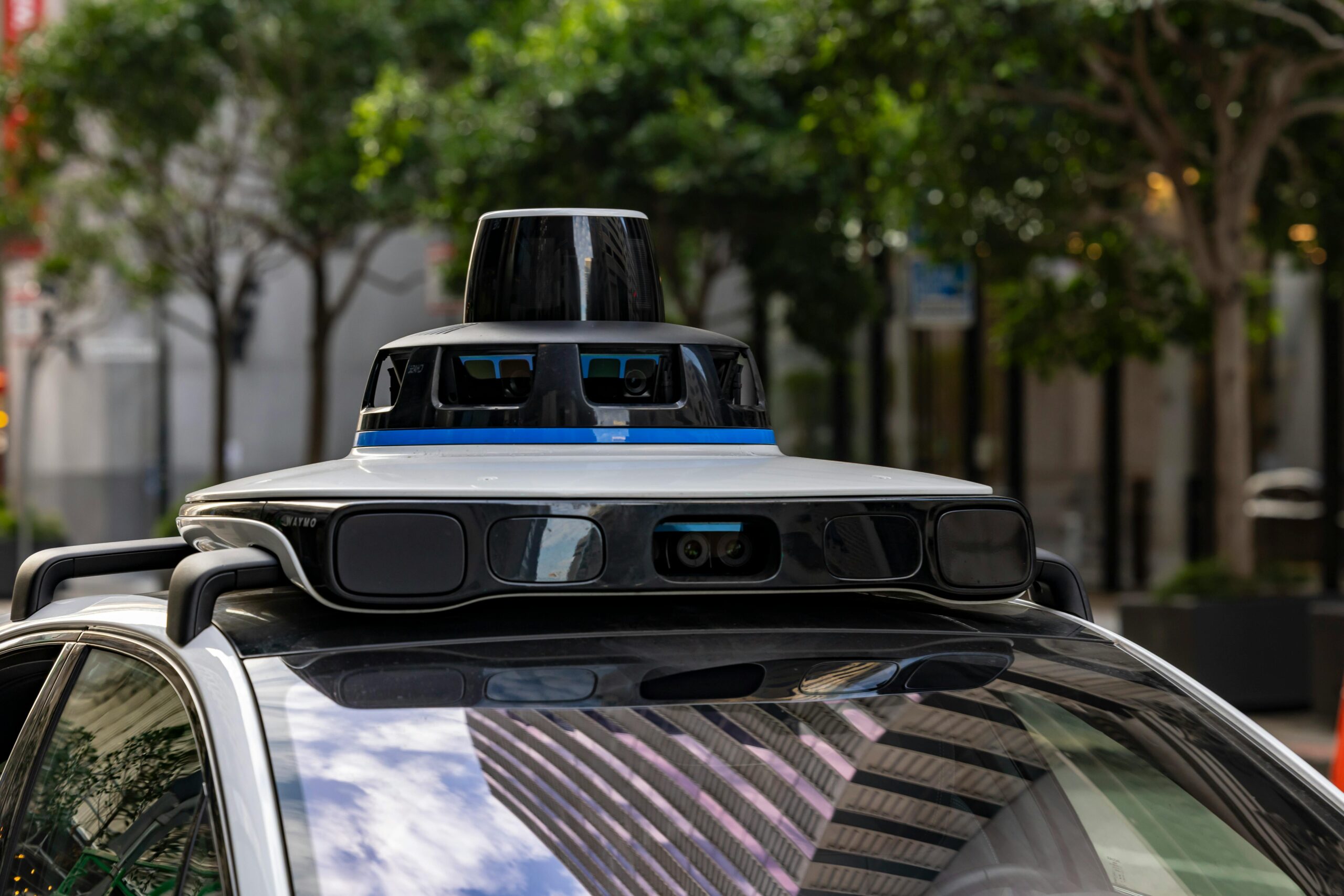
Self-driving cars work by combining sensors, cameras, and artificial intelligence to “see” the road and make driving decisions without human intervention.
The core technologies behind self-driving cars
Sensors: The car’s eyes and ears
Self-driving vehicles rely on multiple types of sensors working together:
Cameras capture what’s happening around the car: traffic lights, road signs, other vehicles, and pedestrians. They work like human eyes, identifying objects and reading visual information.
Radar bounces radio waves off objects to measure distance and speed. It’s especially good at detecting other cars and works well in bad weather conditions when cameras might struggle.
LiDAR (Light Detection and Ranging) uses laser beams to create detailed 3D maps of everything around the car. It’s incredibly precise at measuring distances and shapes, helping autonomous vehicles navigate complex environments.
GPS and mapping systems tell the car exactly where it is and provide detailed information about roadways, including lane markings and traffic patterns.
The AI brain: Processing it all
All this sensor data flows into powerful computers running artificial intelligence and neural networks. These systems process information in real-time, making thousands of calculations per second to:
- Identify objects (cars, pedestrians, cyclists, road signs)
- Predict what other road users might do next
- Plan the safest route and driving behavior
- Control steering, acceleration, and braking
The algorithms learn from millions of miles of driving data, getting better at handling everything from traffic jams to unexpected weather conditions.
Levels of automation: From driver assistance to full autonomy
The automotive industry uses SAE levels (defined by the Society of Automotive Engineers) to classify different levels of autonomy:
Level 0: No automation; you do all the driving
Level 1: Basic driver assistance like adaptive cruise control or automatic emergency braking
Level 2: Advanced Driver Assistance Systems (ADAS) that can handle steering and speed, but you must monitor everything. This includes Tesla’s FSD and similar systems from other automakers.
Level 3: The car can drive itself in specific conditions but needs you ready to take over
Level 4: Full automation in certain areas; like Tesla’s robotaxis operating in Austin
Level 5: Complete driving automation everywhere, no steering wheel needed
Most consumer self-driving cars today are Level 2, meaning they still require constant human oversight.
Real-world examples of self-driving technology
Tesla uses cameras and AI to power their Full Self-Driving system, which can navigate city streets, change lanes, and park automatically.
Waymo operates fully autonomous robotaxis in select cities, using a combination of LiDAR, cameras, and radar for Level 4 automation.
Traditional automakers like GM, Ford, and others offer various levels of driver assistance, from lane-keeping systems to more advanced autonomous driving features.
Are self-driving cars safe?
Yes, self-driving systems are designed to eliminate human error, which causes most motor vehicle accidents. They don’t get tired, distracted, or impaired, and they can react faster than any human driver, leading to safer roadways.
Tesla’s safety data demonstrates these benefits in practice. Their Full Self-Driving technology shows a 52% overall crash reduction compared to manual driving, with even more dramatic improvements on non-highway roads where FSD demonstrates a 63% reduction in crashes compared to human drivers.
However, cybersecurity and safety standards remain important considerations. The NHTSA (National Highway Traffic Safety Administration) continues developing regulations for autonomous vehicle technology as it evolves.
Challenges self-driving cars still face
Even the most advanced self-driving cars are adjusting to:
- Complex scenarios: Construction zones, emergency vehicles, or unusual road conditions
- Weather: Heavy rain, snow, or fog can interfere with sensors
- Edge cases: Situations the AI hasn’t encountered before in training
- Mixed traffic: Sharing roadways with human drivers who don’t always follow rules
How self-driving cars impact transportation
As autonomous driving technology improves, we’re seeing changes in:
Emissions: Automated vehicles can drive more efficiently, potentially reducing fuel consumption and environmental impact
Traffic flow: Self-driving cars can communicate with each other and transportation systems to reduce traffic jams
Safety: The goal is fewer accidents caused by human error, blind-spot issues, and other common driving mistakes. Tesla’s FSD data shows promising results, with a 52% overall crash reduction compared to manual driving. The safety improvements are even more dramatic on non-highway roads, where FSD demonstrates a 63% reduction in crashes compared to human drivers.
Accessibility: Driverless cars could provide mobility for people who can’t drive traditional vehicles
How does this impact insurance?
As self-driving technology advances, automotive engineers and insurance companies are rethinking coverage. At Lemonade, we’re ahead of the curve with Lemonade Autonomous Car insurance for Tesla drivers.
We offer 50% off every mile driven in FSD mode because the data shows those miles are twice as safe as manual driving. Our system connects directly to your Tesla to automatically track when you’re using self-driving features versus driving manually. And as FSD gets safer, our prices will get lower to reflect that.
The bottom line
Self-driving cars work through a sophisticated combination of sensors, AI, and real-time data processing that’s getting better every day. While fully autonomous vehicles aren’t quite ready for all roadways and weather conditions, the technology is advancing rapidly.
Whether you’re driving a Tesla with FSD or a traditional car with basic driver assistance features, having proper insurance coverage remains essential.See how Lemonade can protect you as automotive technology continues evolving.
A few quick words, because we <3 our lawyers: This post is general in nature, and any statement in it doesn’t alter the terms, conditions, exclusions, or limitations of policies issued by Lemonade, which differ according to your state of residence. You’re encouraged to discuss your specific circumstances with your own professional advisors. The purpose of this post is merely to provide you with info and insights you can use to make such discussions more productive! Naturally, all comments by, or references to, third parties represent their own views, and Lemonade assumes no responsibility for them. Coverage and discounts may not be available in all states.
Share


