
Kia EV6 vs Tesla Model Y: The Driver's Car vs. The Platform Play
One is built to be driven. The other is built to get smarter. Here's how to choose.

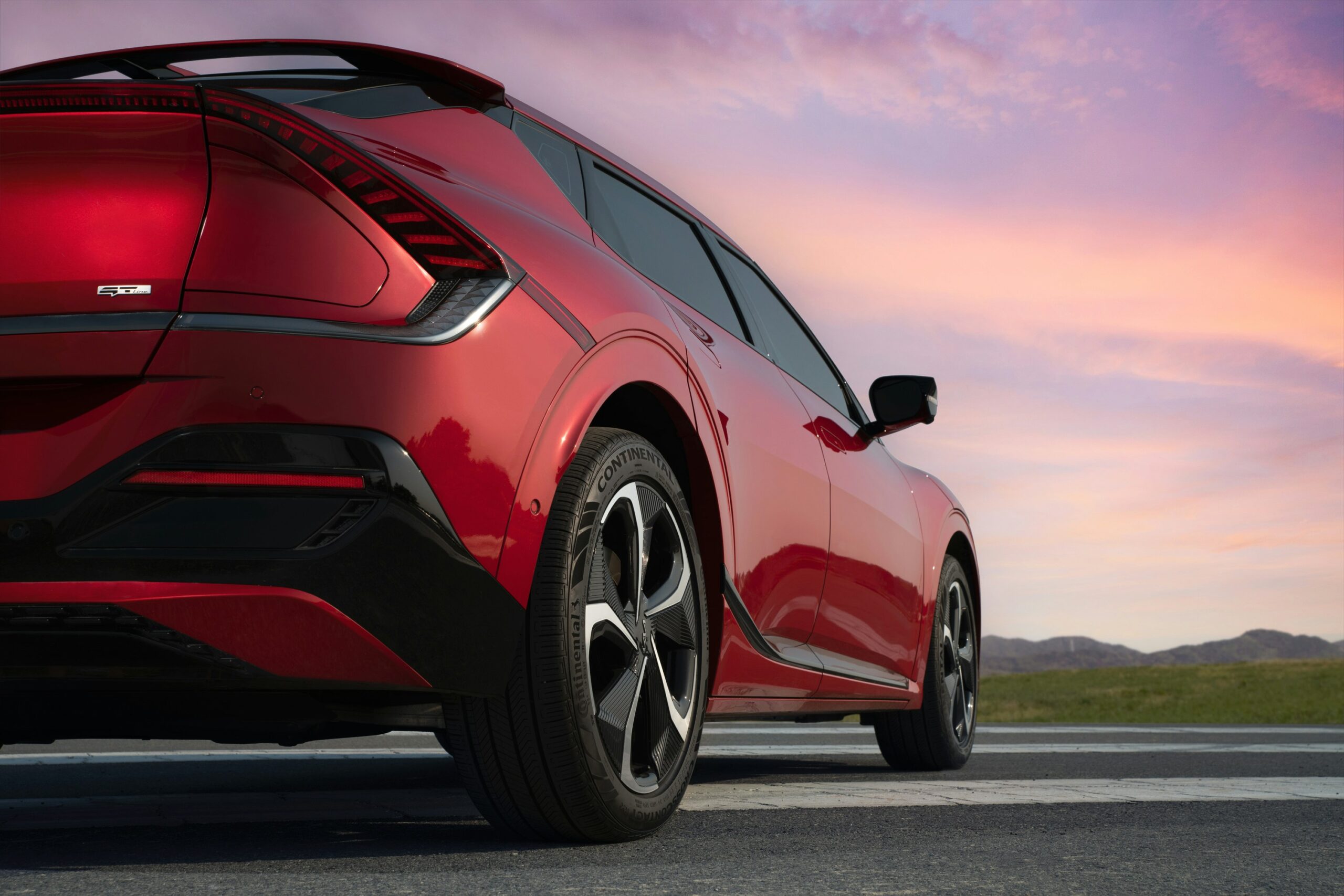
One is built to be driven. The other is built to get smarter. Here's how to choose.
Some tech products are great because of what they do right now. Others are great because of what they become over time. You already know which category you tend to buy into. You’ve made this call before, just not about a car.
The Kia EV6 and Tesla Model Y are both serious EVs at similar price points. But they’re built on different philosophies about what makes a car worth owning. The EV6 is a driver’s car first: tactile, fast-charging, and engineered to feel alive in your hands. The Model Y is a platform: software-driven, ecosystem-deep, and designed to compound in value the longer you own it.
Which one fits depends less on the spec sheet than on how you think about technology.
 TL;DR
TL;DR
Kia’s bet: Build a car that’s great to drive and backs it up with serious hardware. An 800V charging architecture that rivals anything on the market, a cockpit designed around the driver, and a warranty that signals long-term confidence in the product.
Tesla’s bet: The driving experience is just one variable, and not the most interesting one. What matters is the software layer: ADAS that improves with every release, a charging network that just works, and a product that’s meaningfully different a year after you buy it than it was on day one.
If you’ve ever chosen between a best-in-class tool and a best-in-class platform, you already know how this decision feels.
| Trim | Kia EV6 | Tesla Model Y |
|---|---|---|
| Base | ~$37,900 (Light RWD) | ~$39,990 (Standard RWD) |
| Mid | ~$44,800–$48,800 (Wind) | ~$45,990–$49,990 (Premium RWD/AWD) |
| Top | ~$53,000 (GT-Line AWD) | ~$57,990 (Performance AWD) |
At comparable trims, you’re paying similar money for two very different personalities. For the performance comparison below, we’re using the GT-Line AWD and Model Y Performance, the top trim from each brand currently on sale.
Note: the standalone EV6 GT appears unavailable for the 2026 model year. The GT-Line AWD is the highest-performance trim currently on sale.
| Kia EV6 GT-Line AWD | Tesla Model Y Performance | |
|---|---|---|
| Driver assistance system | Highway Driving Assist | Full Self-Driving (Supervised) |
| ADAS philosophy | Sensor-assisted driving | Camera-based neural net (Tesla Vision) |
| OTA updates | Limited | Full OTA, including ADAS improvements |
| NHTSA ADAS benchmark | Not tested | First to pass (2026) |
| Pre-collision airbag deployment | No | Yes, via Vision cameras (OTA) |
| CarPlay / Android Auto | Yes | No |
The EV6’s Highway Driving Assist is competent and confidence-inspiring on the motorway. But it’s a driver aid, not a learning system. It doesn’t improve between software pushes, and those pushes are infrequent compared to Tesla’s cadence.
Tesla’s FSD (Supervised) is in a different category, not because it’s perfect, but because it compounds. Every OTA update changes what the car can do, including things that weren’t possible when you bought it. The NHTSA certification and the pre-collision airbag deployment feature, which deploys before impact using Vision camera data, are both products of that compounding.
The EV6 is the better car for drivers who want to drive. The Model Y is the better platform for drivers who want the car to take over more over time.
| Safety Feature | Kia EV6 GT-Line AWD | Tesla Model Y Performance |
|---|---|---|
| Front, side, curtain airbags | Standard | Standard |
| Knee airbags | Driver | Driver & front passenger |
| Centre airbag (side-impact) | Yes | Yes |
| Pre-collision airbag deployment | No | Yes |
| Forward collision warning + AEB | Standard | Standard |
| Blind spot monitoring | Standard | Standard |
| Rear cross-traffic alert | Standard | Standard |
| Pedestrian / cyclist detection | Standard | Standard |
| Driver attention monitoring | Standard | Standard |
| Lane keep assist | Standard | Standard |
Both cars are well-equipped on the fundamentals. The meaningful gap is at the software edge. Tesla’s centre airbag and pre-collision airbag deployment are real advantages that didn’t exist at launch and arrived via OTA. That’s the compounding effect in practice.
| Spec | Kia EV6 GT-Line AWD | Tesla Model Y Performance |
|---|---|---|
| Range (EPA est.) | 270–295 mi (AWD) | 306 mi |
| Best range (any trim) | 319 mi (Long Range RWD) | 357 mi (Premium RWD) |
| 0–60 mph | ~5.0 sec | 3.3 sec |
| Charging architecture | 800V / up to 350 kW | 400V / up to 250 kW |
| Charging network | NACS (Superchargers + others) | Tesla Supercharger |
| Towing | 2,700 lbs | 3,500 lbs |
| CarPlay / Android Auto | Yes | No |
Some worth flagging:
Charging architecture: The EV6’s 800V system is legitimately impressive hardware. On a compatible 350kW charger, 10–80% in around 20 minutes is hard to beat. The catch is finding that charger consistently. Outside Tesla, public charging infrastructure is patchier. The Model Y’s Supercharger network doesn’t match the EV6’s peak speed, but it’s more consistent in practice, and consistency beats peak speed for most road trips.
Ecosystem: The EV6 supports CarPlay and Android Auto. The Model Y doesn’t. For anyone already deep in either ecosystem, this is a meaningful quality-of-life difference that doesn’t show up in performance specs.
What will this car be in three years?
Tesla has a clear answer. FSD improves with every release cycle. Features that didn’t exist at purchase arrive as OTA updates, no service visit, no hardware swap. The pre-collision airbag deployment is the sharpest example: a safety feature that existing owners received for free, after the fact. That pattern is the actual product.
Kia’s answer is more honest about what it is. The EV6 is a well-engineered car that will continue to be that car. Software updates are incremental. The 800V charging architecture is a genuine hardware advantage today, and it’ll still be one in three years.
Neither trajectory is wrong. One is a known quantity. The other is a bet on compounding.
Choosing the Model Y means opting into Tesla’s ecosystem: Supercharger network, Tesla app, Tesla navigation, no CarPlay. It’s mature, seamless, and deliberately closed.
Choosing the EV6 means more flexibility: CarPlay, Android Auto, NACS charging access including Superchargers, and a more conventional ownership experience. Less lock-in, less integration.
For a tech buyer, this is a familiar trade-off. The closed ecosystem usually wins on experience. The open one wins on flexibility and control.
Better safety systems and more capable ADAS change the real cost of ownership, not just in what you pay at the charger, but in repair bills and premiums when something goes wrong.
For Tesla FSD drivers, Lemonade Autonomous Car insurance offers 50% off every mile driven in FSD mode in select states, priced off Tesla’s own data showing FSD miles produce fewer incidents than human-driven ones.
The EV6 doesn’t have an equivalent yet. But the broader principle holds for both cars: the safety tech you invest in upfront affects what you pay to own the car long-term.
Buy the Kia EV6 if you want a car that’s satisfying to drive right now, with hardware-first charging capability, physical controls, CarPlay support, and a warranty that backs up the confidence.
Buy the Tesla Model Y if you want a platform that compounds: better ADAS over time, a charging network that removes the mental overhead from road trips, and the option to turn your daily commute into a lower insurance bill.
Neither is wrong. One is a great car. The other is a great platform that’s also a car. Pick the one that matches how you think, then make sure the insurance keeps up with it.
Yes. The 2025+ EV6 uses NACS, giving it full access to the Tesla Supercharger network. A meaningful upgrade from previous generations.
You need a Tesla with Hardware 4.0, FSD availability in your state, and to connect your Lemonade policy to your Tesla (with your permission). The discount applies to every mile driven in FSD mode.
It can. Better active safety systems reduce collision likelihood, which factors into how risk is priced. For Tesla FSD drivers specifically, Lemonade offers 50% off every mile driven autonomously. For the EV6, Lemonade prices based on how you actually drive, not broad demographic assumptions.
A few quick words, because we <3 our lawyers: This post is general in nature, and any statement in it doesn’t alter the terms, conditions, exclusions, or limitations of the policies issued, which differ according to your state of residence. You’re encouraged to discuss your specific circumstances with your own professional advisors. The purpose of this post is merely to provide you with info and insights you can use to make such discussions more productive! Naturally, all comments by, or references to, third parties represent their own views, and Lemonade assumes no responsibility for them. Coverage may not be available in all states. Please note that statements about coverages, policy management, claims processes, Giveback, and customer support apply to policies underwritten by Lemonade Insurance Company or Metromile Insurance Company, a Lemonade company, sold by Lemonade Insurance Agency, LLC. The statements do not apply to policies underwritten by other carriers.
Please note: Lemonade articles and other editorial content are meant for educational purposes only, and should not be relied upon instead of professional legal, insurance or financial advice. The content of these educational articles does not alter the terms, conditions, exclusions, or limitations of policies issued by Lemonade, which differ according to your state of residence. While we regularly review previously published content to ensure it is accurate and up-to-date, there may be instances in which legal conditions or policy details have changed since publication. Any hypothetical examples used in Lemonade editorial content are purely expositional. Hypothetical examples do not alter or bind Lemonade to any application of your insurance policy to the particular facts and circumstances of any actual claim.