
Rivian vs Tesla: Software Company or Adventure Machine?
Two electric brands. Two fundamentally different answers to what a car company should build.

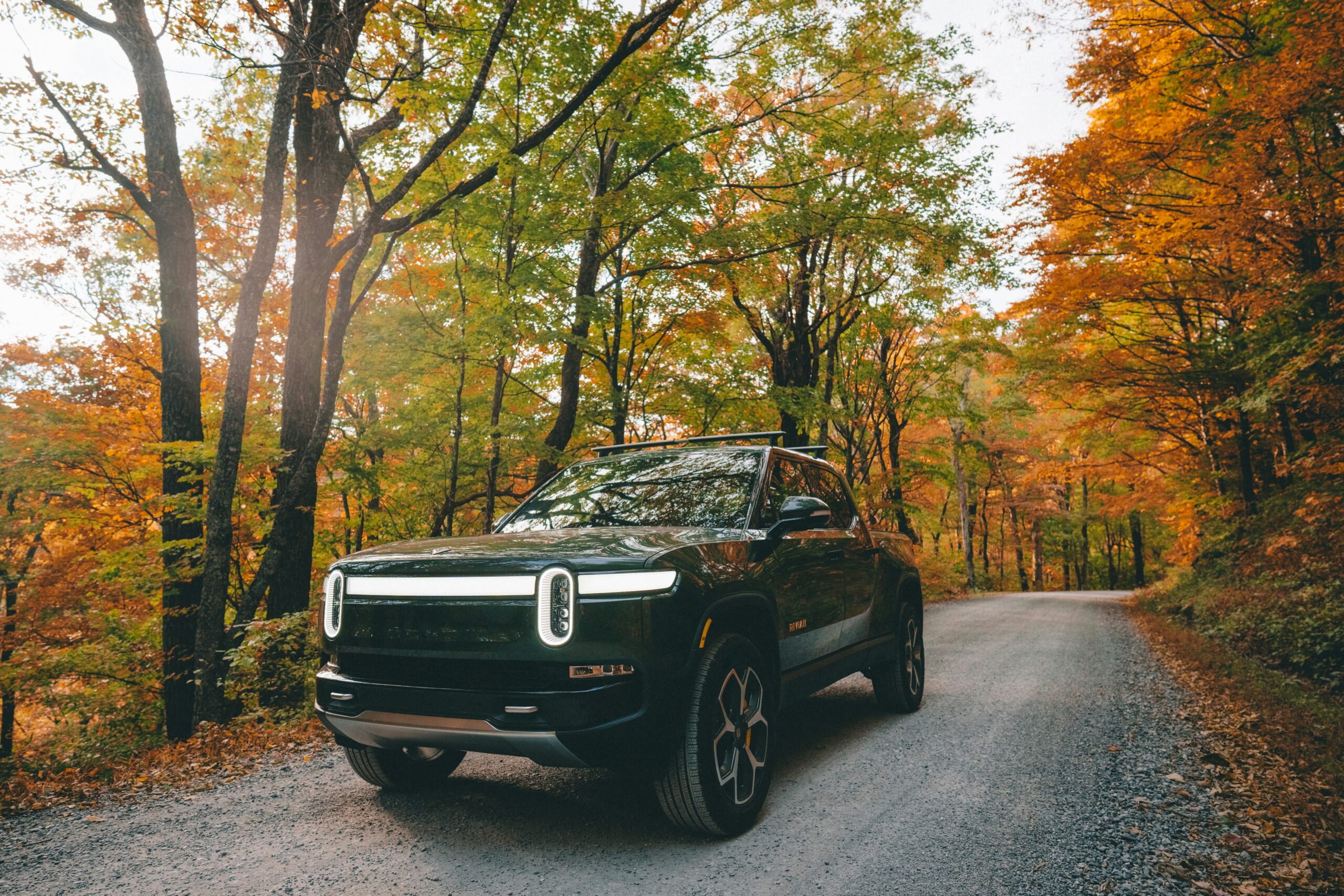
Two electric brands. Two fundamentally different answers to what a car company should build.
The best tech debates aren’t about which product is better. They’re about which philosophy is right. Software-first or hardware-first. Platform or tool. Ecosystem or independence.
Tesla is a software company that happens to make cars: a decade-plus of compounding OTA updates, the most mature autonomy stack on the market, and an ecosystem so integrated it’s almost invisible. Rivian is a hardware company that builds adventure vehicles, designed around a single question: what does an EV look like if it’s made for people who actually go places?
Choosing between them isn’t about range numbers. It’s about which philosophy matches how you think.
 TL;DR
TL;DR
Tesla’s bet: The car is a software platform. FSD compounds with every OTA update, the Supercharger network removes the mental overhead from road trips, and the ecosystem gets more valuable the longer you’re in it. Tesla has been refining this for over 14 years.
Rivian’s bet: You can’t retrofit hardware you never built in. Design the vehicle around the hardest use case, load it with sensors, give it the physical capability to go anywhere, and let the software grow into that foundation.
If you’ve followed the camera-only vs. radar debate, or argued about whether a closed ecosystem is worth the integration, you already understand the shape of this disagreement.
| Model | Body Style | Starting MSRP |
|---|---|---|
| Model 3 | Sedan | $36,990 |
| Model Y | Compact SUV | $39,990 |
| Cybertruck | Pickup truck | $69,990 |
| Model | Body Style | Starting MSRP |
|---|---|---|
| R1T | Pickup truck | ~$81,000 |
| R1S | 3-row SUV | ~$85,000 |
| R2 | Compact SUV | ~$53,990 (very limited) |
Tesla’s lineup is leaner than it’s been in years. Rivian’s is focused by design. If you want pricing breadth and body style options, Tesla gives you more to work with. If you want a truck or serious off-road SUV built around a single identity, Rivian’s focus becomes an advantage.
| Tesla | Rivian | |
|---|---|---|
| Sensor architecture | Tesla Vision (camera-only) | Cameras + radar |
| LiDAR | Not planned | Planned (aiming for late 2026 production) |
| OTA improvement cadence | Continuous | Incremental |
| Pre-collision airbag deployment | Yes, via Vision cameras | No |
| IIHS Top Safety Pick+ | Yes (Model 3, Model Y) | Yes (R1S 2026) |
| Autonomy level today | Level 2+ (FSD Supervised) | Level 2 (Autonomy Platform+) |
Tesla’s FSD is the most capable consumer autonomy product available today, and it keeps getting better without a service visit. The pre-collision airbag deployment feature, which uses cameras to detect a head-on collision and prepares the airbags and speeds deployment, arrived as an OTA update to existing cars. That’s the compounding effect made tangible.
Rivian’s radar-plus-camera architecture offers hardware redundancy that performs more reliably in low-visibility conditions, with LiDAR and deeper autonomy capability on the 2028 roadmap. Less mature today, but a more sensor-rich foundation to build on.
On passive safety, both brands are essentially equal. The difference is in where the intelligence lives.
Rivian built the R1T and R1S for the backcountry. Adaptive air suspension with up to 15 inches of ground clearance, multiple off-road drive modes, an onboard air compressor, water fording up to 43 inches on the R1S, and 7,700 lbs of towing. The Gear Tunnel with optional camp kitchen isn’t an afterthought. It’s the product thesis.
Tesla’s Cybertruck has real trail capability, but it’s the exception in Tesla’s lineup. The Model 3 and Model Y weren’t designed for this. If off-road matters, Rivian wins clearly.
| Vehicle | Max Range (EPA est.) |
|---|---|
| Rivian R1S Tri | 371 mi |
| Tesla Model 3 Premium RWD | 363 mi |
| Tesla Model Y Premium RWD | 357 mi |
| Rivian R1T Dual (Large pack) | 329 mi |
| Tesla Cybertruck AWD | 325 mi |
Range is competitive across both brands. The caveat for Rivian: off-road driving and loaded gear eat into range faster than highway cruising. The EPA number assumes a highway.
On charging, Tesla’s Supercharger network remains the gold standard for consistency and integration. Rivian’s NACS port now gives R1 owners direct Supercharger access, which has meaningfully closed the gap. Rivian’s own Adventure Network is well-regarded for placement in outdoor-oriented locations. The infrastructure difference is smaller than it used to be.
Consumer Reports’ most recent reliability survey ranked Tesla 9th out of 26 brands. Rivian ranked 26th.
Context: Rivian’s Gen 2 R1 platform, launched in 2024, addressed most of the early build quality complaints. Owners report a noticeably better experience than early adopters did. The trajectory is improving. Tesla’s ranking reflects over a decade of production maturity, though it’s not a flawless track record either.
If reliability is your top priority right now, the data favors Tesla.
Tesla is a closed ecosystem: no CarPlay, no Android Auto, Supercharger-native, Tesla app-dependent. Seamless, but you’re in it.
Rivian supports CarPlay and Android Auto, uses NACS for charging flexibility, and has a more open platform stance. Less integrated, more flexible.
Familiar trade-off. The closed ecosystem wins on experience. The open one wins on control.
Both brands carry higher repair costs than conventional vehicles. Sensors, batteries, and specialized parts push costs up even on minor incidents.
For Tesla FSD drivers, Lemonade Autonomous Car insurance offers 50% off every mile driven in FSD mode in select states. On vehicles at these price points, that discount has real weight.
Rivian doesn’t have an equivalent yet, but the principle holds across both brands: the safety tech you invest in upfront can affect what you pay to own the vehicle long-term.
Choose Tesla if you want the software platform that’s been compounding for over a decade, the most mature autonomy system available, and a charging network that makes long-distance driving genuinely effortless.
Choose Rivian if you want a vehicle engineered from the ground up for the places you actually want to go, with the hardware foundation to support serious autonomy over time. Buy the Gen 2 platform, and go in with realistic expectations on reliability.
Pick the philosophy that matches how you think, then make sure your coverage keeps up with it.
A few quick words, because we <3 our lawyers: This post is general in nature, and any statement in it doesn’t alter the terms, conditions, exclusions, or limitations of the policies issued, which differ according to your state of residence. You’re encouraged to discuss your specific circumstances with your own professional advisors. The purpose of this post is merely to provide you with info and insights you can use to make such discussions more productive! Naturally, all comments by, or references to, third parties represent their own views, and Lemonade assumes no responsibility for them. Coverage may not be available in all states. Please note that statements about coverages, policy management, claims processes, Giveback, and customer support apply to policies underwritten by Lemonade Insurance Company or Metromile Insurance Company, a Lemonade company, sold by Lemonade Insurance Agency, LLC. The statements do not apply to policies underwritten by other carriers.
Please note: Lemonade articles and other editorial content are meant for educational purposes only, and should not be relied upon instead of professional legal, insurance or financial advice. The content of these educational articles does not alter the terms, conditions, exclusions, or limitations of policies issued by Lemonade, which differ according to your state of residence. While we regularly review previously published content to ensure it is accurate and up-to-date, there may be instances in which legal conditions or policy details have changed since publication. Any hypothetical examples used in Lemonade editorial content are purely expositional. Hypothetical examples do not alter or bind Lemonade to any application of your insurance policy to the particular facts and circumstances of any actual claim.