

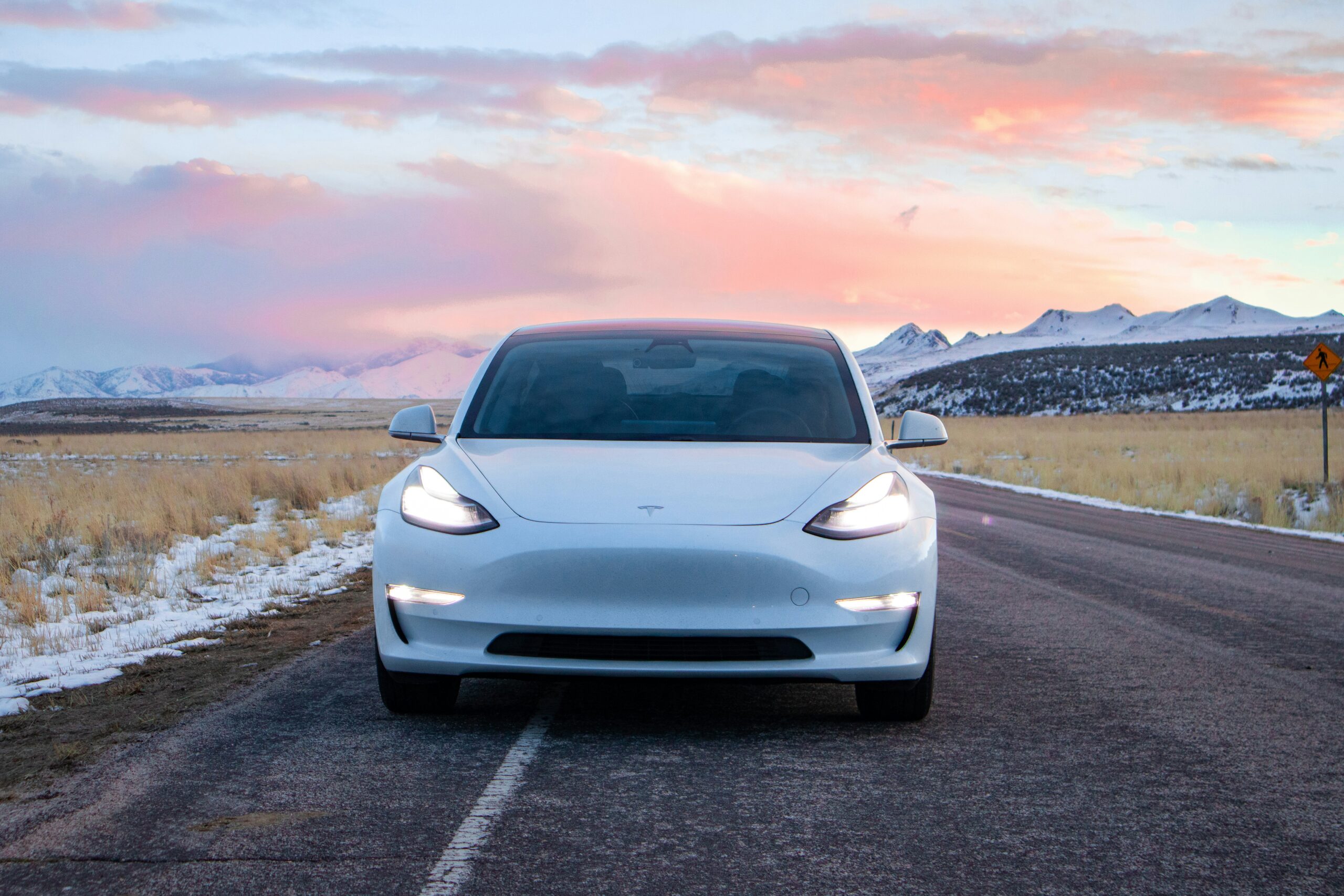
Tesla FSD (Full Self-Driving) is a Tesla feature that helps the car drive itself, things like steering, braking, turns, traffic lights, but the driver still has to pay attention. Despite its name, FSD is not fully autonomous, it’s a Level 2 system that requires constant human supervision and intervention when needed.
 TL;DR
TL;DR
- Tesla FSD (Full Self-Driving) is basically an advanced driver-assist mode on a Tesla. The car can handle most of the driving, but a human still has to supervise
- Requires active supervision: Drivers must stay alert and ready to take control, as it uses camera-first technology with neural networks
- Available as a subscription (~$99/month as of January, 2026) with regular software updates that improve performance over time
- Tesla owners with Lemonade save 50% on FSD-driven miles
Understanding Tesla’s self-driving system
Tesla FSD represents the company’s most advanced driver-assistance technology, but it’s important to understand what it actually does versus what the name suggests. The system is classified as SAE Level 2 automation, meaning it can control steering and acceleration/braking simultaneously but requires a human driver to remain engaged and monitor the environment at all times.
Unlike fully autonomous vehicles that might one day operate without any human input, Tesla FSD is designed to assist the human driver rather than replace them. This distinction is crucial for Tesla owners who need to understand their ongoing responsibility behind the driver’s seat.
Core FSD capabilities and features
Highway and freeway driving
Tesla FSD excels on highways through its Navigate on Autopilot feature. This advanced functionality can handle lane changes, freeway merges, and exits while the driver supervises. The system uses data from millions of Tesla vehicles to learn optimal routing and driving patterns on familiar routes.
The technology performs particularly well during highway commutes, reducing driver fatigue on long trips while maintaining smooth acceleration and braking patterns.
City street navigation
One of FSD’s most ambitious features is its ability to navigate city streets, handling intersections, traffic lights, and stop signs. The system recognizes traffic controls and responds appropriately, though this remains one of the more challenging aspects of the technology.
Urban driving requires the FSD software to process complex scenarios that don’t exist on freeways, from pedestrians to construction zones to unusual traffic patterns.
Parking and summoning features
FSD includes Autopark, which can identify suitable parking spots and maneuver the car into them. Smart Summon takes this further, allowing Tesla owners to call their car from across a parking lot using the Tesla app.
These features work best in parking lots with clear markings and minimal obstacles, though they continue to improve with software updates.
Lane changes and traffic management
The system can initiate lane changes when needed, whether for overtaking slower traffic or following a navigation route. FSD monitors surrounding traffic and calculates safe gaps before making moves.
Traffic light and stop sign control helps the car respond to traffic signals, though drivers must confirm actions in many situations.
How Tesla’s FSD technology works
Camera-first approach
Unlike some competitors who rely heavily on lidar, Tesla FSD uses a camera-first approach combined with neural networks. The system processes real-world visual data much like a human driver would, analyzing everything from lane markings to other vehicles to pedestrians.
This approach allows Tesla to collect massive amounts of driving data from its fleet, which feeds back into improving the neural networks that power FSD.
Fleet learning and software updates
Tesla vehicles constantly collect anonymized driving data that helps improve the FSD system for all users. This fleet learning approach means the technology gets smarter over time as it encounters more driving scenarios.
Software updates arrive over-the-air, adding new functionality and refining existing features without requiring a trip to a service center. Tesla owners often wake up to enhanced driving features delivered overnight.
Neural network processing
The heart of FSD is Tesla’s neural network technology, which processes visual input from the car’s cameras to make driving decisions. These networks are trained on millions of miles of real-world driving data.
The system continuously analyzes the environment, predicting what other vehicles, pedestrians, and objects might do next.
Real-world performance and limitations
Highway vs. city performance
Tesla FSD generally performs best on highways where traffic patterns are more predictable and road markings are clear. Many Tesla owners report high satisfaction with freeway driving assistance during their daily commutes.
City driving presents more challenges, with complex intersections, construction zones, and unusual traffic situations that can confuse the system. Performance varies significantly based on location and specific road conditions.
Driver supervision requirements
Despite its advanced capabilities, FSD requires constant driver attention. The system will disengage if it detects the driver isn’t paying attention, and drivers must be ready to take control immediately when needed.
This active supervision requirement means FSD is best viewed as an advanced driver-assistance feature rather than a way to multitask while driving.
Edge cases and limitations
FSD can struggle with unusual scenarios that weren’t well-represented in its training data, things like construction zones with unusual traffic patterns, or intersections with damaged traffic signals.
The system is designed to err on the side of caution, which sometimes means it may brake unnecessarily or require driver intervention in situations a human would handle easily.
FSD pricing
Tesla makes FSD accessible through a straightforward monthly subscription at $99 per month as of January 2026, regardless of whether your car has Basic Autopilot or Enhanced Autopilot. This flat rate means you can try FSD without the hefty upfront purchase price.
You can subscribe to FSD directly through the Tesla app or from your car’s touchscreen. After subscribing, your car will need a software update before FSD features become active. Only the Tesla account owner can purchase upgrades, and the subscription model lets you test FSD’s capabilities on your daily commutes before deciding if it’s worth the investment.
Lemonade Autonomous Car insurance
Lemonade Autonomous Car insurance is the first-to-market insurance innovation designed specifically for Tesla’s Full Self-Driving technology. You get 50% off every mile driven using FSD, because safer miles should cost less.
Here’s what makes it different:
- 50% off FSD-driven miles based on Tesla’s safety data showing 52% crash reduction
- Seamless Tesla integration using Tesla’s Fleet API, which gives Lemonade access to vehicle data with a customer’s permission. No devices or self-reporting needed
- Existing customers get the discount at policy renewal
- Only available for Teslas with Hardware 4 (or higher) and recent firmware
This isn’t just car insurance that happens to cover Teslas. Lemonade Autonomous Car insurance is built specifically for Tesla owners who want insurance as innovative as their car. Your Tesla’s advanced safety technology deserves insurance that recognizes and rewards it.
Making the most of your Tesla FSD investment
Here’s something many Tesla owners don’t realize: your advanced driving technology should be matched with equally advanced insurance. Traditional insurers don’t understand FSD or offer any benefits for using it. That’s where Lemonade comes in.
Get Lemonade Autonomous Car insurance and save 50% on every FSD-driven mile. Currently available in Arizona, with more states coming soon.
Tesla FSD FAQs
Is Tesla FSD actually fully self-driving?
No, despite the name, Tesla FSD is not fully autonomous. It’s an advanced driver-assistance system that requires constant human supervision and intervention when needed.
How much does Tesla FSD cost?
Tesla FSD is available as a monthly subscription of around $99/month (As of January, 2025). Pricing has changed over time as the technology has evolved, and is subject to change in the future.
Can I add FSD to my existing Tesla?
Yes, existing Tesla owners can add FSD through a monthly subscription depending on their vehicle’s hardware capabilities and Tesla’s current offerings.
Does Tesla FSD work in all weather conditions?
FSD performance can be affected by weather conditions like heavy rain, snow, or fog that limit camera visibility. The system may disengage or require more frequent human intervention in challenging weather.
Is Tesla FSD safer than human driving?
Tesla reports that FSD technology leads to a 52% overall crash reduction compared to manual driving. The technology is designed to enhance safety but requires human oversight to handle edge cases and unexpected situations.
A few quick words, because we <3 our lawyers: This post is general in nature, and any statement in it doesn’t alter the terms, conditions, exclusions, or limitations of policies issued by Lemonade, which differ according to your state of residence. You’re encouraged to discuss your specific circumstances with your own professional advisors. The purpose of this post is merely to provide you with info and insights you can use to make such discussions more productive! Naturally, all comments by, or references to, third parties represent their own views, and Lemonade assumes no responsibility for them. Coverage and discounts may not be available in all states.
Share


