


Short answer: yes, usually. If a windstorm, burglary, or errant baseball took out your window, your homeowners insurance has you covered as long as the damage wasn’t from wear and tear or neglect.Your windows fall under dwelling coverage (Coverage A), which is open peril. That means you’re covered for most causes of damage by default, unless your policy says otherwise.
Here’s everything you need to know.
 TL;DR
TL;DR
- As part of your dwelling coverage (Coverage A), windows are “open peril,” meaning you’re generally covered for damage unless the cause is explicitly excluded in your policy.
- Broken windows typically aren’t covered if they result from gradual events, like rot, wear-and-tear, or a general lack of maintenance.
- If your kid hits a baseball through your window, you’re typically covered due to window damage being open peril (but try to make sure they don’t do this!).
- You’re also covered under personal liability if you or someone else on your policy accidentally damages someone else’s window.
- Filing an insurance claim for a broken window only makes sense if the repair costs exceed your insurance deductible.
When does homeowners insurance cover broken windows?
Damages to the structure of your home, including windows, fall under the category of your homeowners insurance policy called “dwelling coverage,” or Coverage A. Along with the coverage for other structures on your property (things like detached garages, fences, and sheds-aka Coverage B), your dwelling coverage is open peril.
So whether the window that got damaged was part of your house itself or a detached garage, you’d be generally be covered for anything not specifically excluded in your homeowners policy.
Your homeowners insurance can even help pay for the damage you caused to others’ windows, thanks to your personal liability coverage.
That baseball your kid accidentally hit straight through your backyard neighbor’s kitchen window? Your liability coverage can help cover the costs (and hopefully help mend fences with you and your neighbors).
Now that we’ve covered some incidents during which broken windows would be covered by your homeowners policy, let’s take a look at how much of a reimbursement you can actually expect from your insurance provider.
Does a home warranty cover broken windows?
Home warranties generally won’t provide coverage for broken windows, since windows are part of the structure of your home (which, as we mentioned, your homeowners insurance covers.)
Warranties are meant to cover systems and appliances in your home, not your home’s structure.
How much does your homeowners insurance actually pay in case your window gets damaged?

The first thing you should consider before filing an insurance claim is your deductible. In case the window damage is minor and the repair costs are lower than your deductible, you’d have to pay them out-of-pocket. Think of it this way: If you’ve chosen a deductible of $1,000, and replacing your damaged window pane is only $500, your insurer won’t chip in at all.
But what if multiple windows are broken, and the total repair cost ends up being $3,000, or more?
In this case, if the damage happened to your house’s main structure, your dwelling coverage would kick in, and your insurer may compensate you up to your coverage limit. (They’d have to be some pretty extravagant windows if you ran up against that limit.) You’d still be responsible for the amount of your deductible, of course.
Did you know: If you’ve damaged someone else’s window, which would activate the personal liability portion of your homeowners’ policy, you usually don’t have to pay any deductible at all.
What does window repair or replacement typically cost?
Window repair and replacement costs vary widely depending on the type of window, the extent of the damage, and your location. Here’s a general breakdown to help you decide whether filing a claim makes sense:
| Repair Type | Typical Cost Range | Usually Covered? |
|---|---|---|
| Single-pane glass replacement | $80–$400 per window | Yes, if caused by a covered peril |
| Double-pane / insulated glass replacement | $150–$2,100 per window | Yes, if caused by a covered peril |
| Broken window seal repair | $75–$210 per window | Only if caused by a covered event |
| Storm damage to multiple windows | $2,000–$6,000+ total | Yes, windstorm is typically covered |
| Emergency board-up service | $90–$150 | Depends on your policy |
| Labor only | $70–$300 per window | Included in dwelling coverage payout |
As a rule of thumb: if your total repair or replacement cost is less than 1.5x your deductible, it likely makes more financial sense to pay out of pocket. Filing a claim can sometimes lead to a rate increase, and the math often won’t work in your favor on smaller jobs.
Real-world scenarios: when to file a claim vs. pay out of pocket
Sometimes the decision is straightforward. Other times, it helps to see the numbers side by side.
Scenario 1: Single broken window from a stray baseball
| Repair cost | ~$180 |
| Deductible | $1,000 |
| Insurer pays | $0 |
| Verdict | Pay out of pocket |
| Why | Your deductible exceeds the repair cost. The claim won’t pay out anything, handle it yourself and move on. |
Scenario 2: A windstorm breaks four windows
| Repair cost | ~$2,800 |
| Deductible | $1,000 |
| Insurer pays | ~$1,800 |
| Verdict | File a claim |
| Why | Windstorm damage is a covered peril, and $1,800 back in your pocket makes the claim worthwhile. |
Scenario 3: A break-in shatters a sliding glass door and two windows
| Repair cost | ~$4,500 |
| Deductible | $500 |
| Insurer pays | ~$4,000 |
| Verdict | File a claim |
| Why | Burglary is a covered peril. At this cost level, filing clearly makes financial sense. |
Scenario 4: Your neighbor’s kid breaks your window
| Repair cost | ~$180 |
| Deductible | $1,000 |
| Insurer pays | $0 (on your policy) |
| Verdict | Check your neighbor’s policy first |
| Why | Their personal liability coverage may pay for the damage directly, meaning you don’t have to file at all, and your claims history stays clean. |
When your homeowners insurance doesn’t cover broken windows
Generally, homeowners policies exclude coverage for broken windows if they were damaged due to gradual events, rot, or lack of maintenance.
- Wear and tear: If your windows simply broke because they’re old, you usually won’t be covered.
- Broken window seals: If your window seal is broken due to a lack of maintenance or general wear and tear, it won’t be covered. It’s a different story if the seal gets damaged during a break-in or an act of vandalism – those events would be covered by homeowners insurance.
Some general advice: even if it sounds like a drag, make sure to inspect your windows regularly to see if any damage or signs of wear and tear are developing over time. A simple maintenance job now can save you from replacing the whole thing later.
What to do in a case of a broken window?
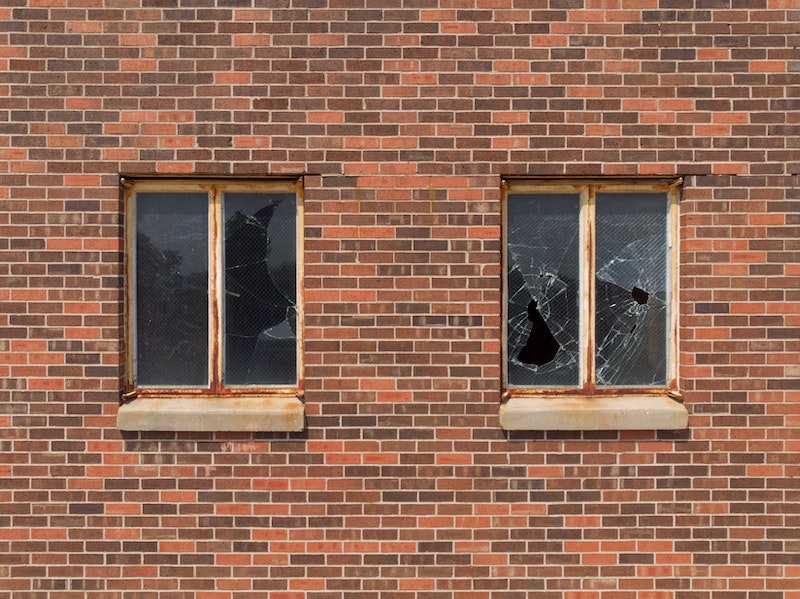
Here are some immediate action items for when you’re facing a broken window.
- Document the window damage in detail (for your insurance provider, not your private scrapbook. That’d be weird.). Don’t forget to take pictures and videos plus include evidence of any personal property that has been affected.
- Clean up the mess, especially any pieces of broken glass. Carefully collect the bigger pieces (with gloves) and vacuum the smaller shards.
- Close the window opening. We recommend using something like sturdy plastic bags to keep any potential rain and wind out. For cracks, simple masking or packing tape will do.
- Get in touch with your home insurance provider. They will likely send over a claims adjuster to survey the damage and help you contact the right people to repair the damage.
Before we go…
Now you know when to file and when to skip it. Next step: making sure you’ve got the right coverage in place. Get a Lemonade homeowners quote.
Does homeowners insurance cover broken window seals?
Generally, no. Broken window seals caused by wear and tear or age aren’t covered. However, if the seal was damaged as a result of a covered event, like a break-in or a storm, your homeowners insurance may cover the repair.
Does homeowners insurance cover broken windows from a car impact?
Yes, typically. If a car hits your home and breaks a window, the damage would fall under your dwelling coverage as an open peril event.
Depending on the circumstances, the driver’s car liability insurance may also cover the damage – so it’s worth exploring both options.
What does "open peril" mean for my windows?
It means your windows are covered for most types of damage by default. The only time you’re not covered is if the cause of damage is
specifically listed as an exclusion in your policy. So unless your policy says otherwise, you’re good.
Are windows on a detached garage or shed covered?
Yes. Detached structures like garages and sheds fall under Coverage B (other structures), which works the same way as your main dwelling coverage. It’s open peril, so the same rules apply – if it’s not excluded, it’s covered.
Does a home warranty cover a broken window?
Short answer: no. Home warranties cover things like your HVAC system or refrigerator. The physical structure of your home, including your windows, isn’t part of the deal. That’s what your homeowners insurance is for.
Reddit asked, we answered
Will my homeowner's claim cover window replacement?
Depends what broke the window. Storm damage, vandalism, and falling objects are typically covered. Normal wear, settling, or maintenance neglect aren’t. Document what caused the damage and file promptly. At Lemonade, glass damage claims from covered events can often be handled quickly through the app once we verify the cause of the break. Read the full thread on Reddit
Should I report a broken window at home?
First, figure out what caused it. If it broke from age, normal wear, or an accidental bump, it’s likely not a covered loss – so there’s nothing to file. That’s a repair to handle out of pocket. If a covered event caused it, like a storm, vandalism, or a falling branch – you do have options. But before you file, do the math. If the repair cost is close to your deductible, it’s probably not worth claiming. Small claims can lead to premium increases down the road, so minor damage is often worth self-retaining even when coverage technically applies. When the damage is significant and clearly exceeds your deductible, that’s when filing makes sense. Read the full thread on Reddit
A few quick words, because we <3 our lawyers: This post is general in nature, and any statement in it doesn’t alter the terms, conditions, exclusions, or limitations of the policies issued, which differ according to your state of residence. You’re encouraged to discuss your specific circumstances with your own professional advisors. The purpose of this post is merely to provide you with info and insights you can use to make such discussions more productive! Naturally, all comments by, or references to, third parties represent their own views, and Lemonade assumes no responsibility for them. Coverage may not be available in all states. Please note that statements about coverages, policy management, claims processes, Giveback, and customer support apply to policies underwritten by Lemonade Insurance Company or Metromile Insurance Company, a Lemonade company, sold by Lemonade Insurance Agency, LLC. The statements do not apply to policies underwritten by other carriers.