
Botfly on Dogs: Cuterebra Symptoms, Removal & Treatment
Cuterebra in dogs: symptoms, removal, and treatment.

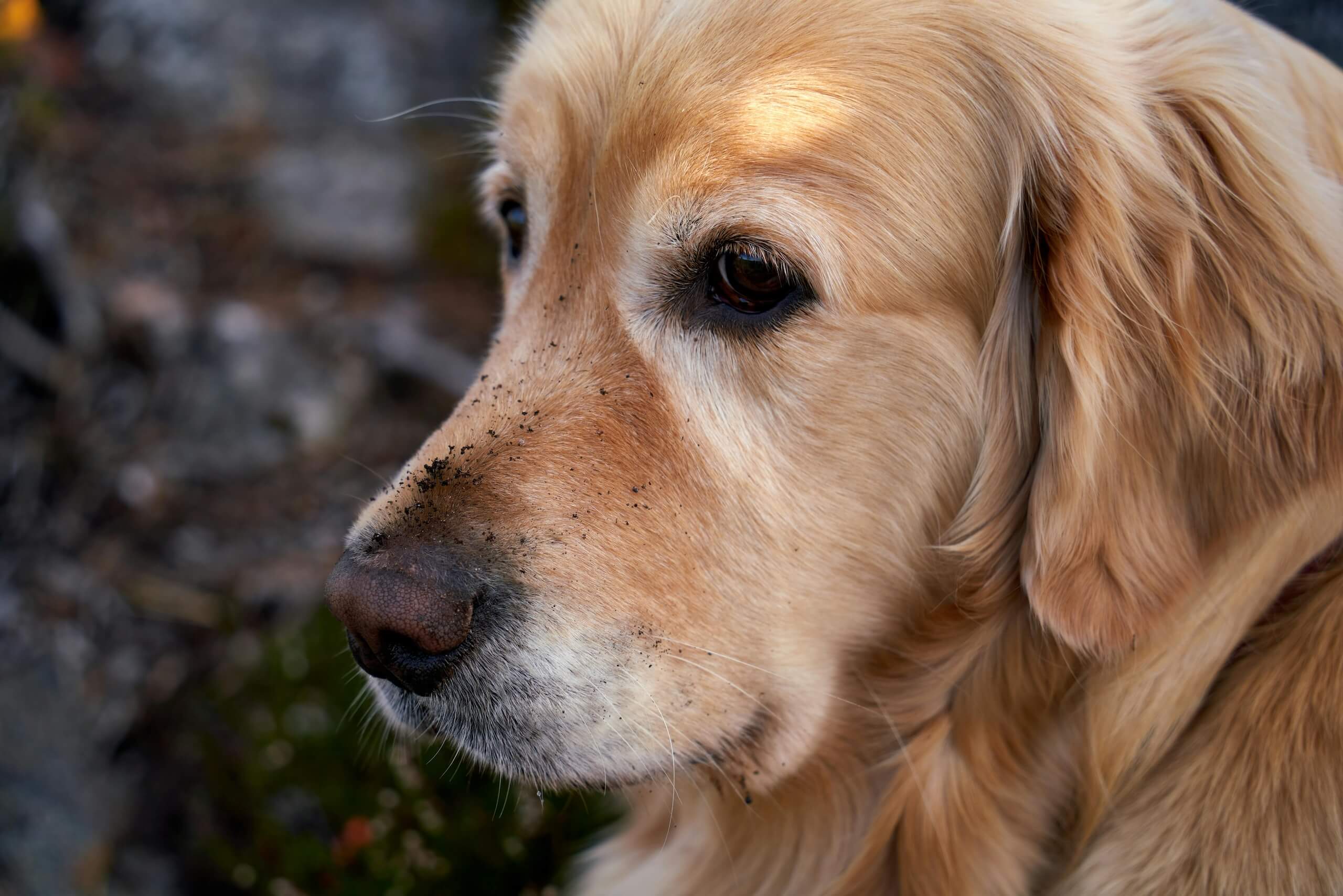
Cuterebra in dogs: symptoms, removal, and treatment.
You’re giving your dog a scratch behind the ears and you notice something strange: a firm lump under the skin with a tiny hole in the center. It almost looks like it’s breathing. If that’s what you’re seeing, there’s a good chance your dog has a botfly larva (also called a Cuterebra, a warble, or a wolf worm) living just beneath the surface.
It sounds alarming, but it’s treatable. Here’s what you need to know, and why what you do next really matters.
 TL;DR
TL;DR
A botfly infestation happens when a Cuterebra fly larva burrows into your dog’s skin and develops there. The Cuterebra fly is a large, bee-like, non-biting fly found across North America. It doesn’t bite your dog directly. Instead, it lays eggs near the entrances to rodent and rabbit burrows. When a dog sniffs around or passes close to those burrows, the eggs hatch on contact with body heat, and the tiny larvae crawl in through natural openings like the nose, mouth, eyes, or a small cut in the skin.
Once inside, the larva migrates to a spot just under the skin, usually on the head, neck, or face, and forms a small pocket. It creates a breathing hole (called a pore or warble hole) that you can see from the outside. Left completely alone, the larva would eventually exit on its own after about three to six weeks. But letting it run its course isn’t safe, and the risks of doing so are serious.
The most obvious sign is a lump on your dog’s skin with a small, dark hole at the top. You might even see the larva moving slightly inside it.
Botfly season runs roughly from late spring through early fall, peaking in summer. Dogs that spend time outdoors in wooded, grassy, or rural areas are most exposed, but any dog that roams near fields or wild spaces can encounter Cuterebra eggs.
Diagnosis is usually straightforward. Your vet will do a physical exam and look for the characteristic lump with a breathing pore. In most cases, they can actually see or feel the larva inside. No complicated tests are needed.
If your dog is showing neurological symptoms, your vet may recommend imaging like an MRI or CT scan to check whether a larva has migrated to the brain or spinal cord. That scenario is uncommon, but it’s important to rule out.
This is the most important thing to understand before you do anything.
You might find advice online to squeeze the lump or cover the breathing hole to suffocate the larva and force it out. Don’t do this. Here’s why.
The larva has small spines along its body that anchor it in place. If you squeeze or rupture the larva during removal, its contents spill into your dog’s body. That releases foreign proteins that your dog’s immune system treats as a major threat. The result can be anaphylaxis, a sudden, severe allergic reaction that can include facial swelling, vomiting, collapse, and difficulty breathing. Without immediate treatment, it can be life-threatening.
Even without a full anaphylactic reaction, a damaged or dying larva can trigger SIRS (systemic inflammatory response syndrome), a full-body inflammatory response similar to septic shock. SIRS can cause organ stress, prolonged illness, and a much harder recovery than a straightforward veterinary removal would have been.
What starts as a simple, low-risk procedure at the vet can become a serious emergency if handled incorrectly at home. The vet visit is worth it.
Veterinary removal is safe, quick, and highly effective when done correctly. Here’s what to expect:
Most dogs heal completely within 10 to 14 days in uncomplicated cases. The wound closes on its own in the majority of cases, and there’s rarely any lasting damage as long as the larva was removed intact. That said, the empty cyst can sometimes develop a secondary bacterial infection or abscess, which may extend recovery to several weeks. Your vet will monitor for this at any follow-up appointments.
There’s no vaccine or medication labeled to prevent Cuterebra infestations, so prevention comes down to managing your dog’s environment and habits during botfly season (late spring through early fall):
If you live in a high-risk area or your dog is a hunting breed or frequent digger, make skin checks part of your routine from June through October.
Botfly removal involves sedation, a procedure, medications, and sometimes follow-up care. That adds up.
If your dog develops a Cuterebra infestation after your Lemonade Pet policy is active, a base accident and illness policy can help cover eligible costs including the removal procedure, medications, and vet visits, as long as the condition isn’t pre-existing and develops after the 14-day illness waiting period has passed. If complications like anaphylaxis or SIRS develop, the emergency care associated with those conditions may also be eligible for coverage. Complications arising from a pre-existing condition would be excluded.
The key is having coverage in place before something like this happens. Once a condition is diagnosed or shows symptoms, it may be considered pre-existing and excluded from coverage going forward. If your dog is healthy right now, that’s the right time to look into a policy.
Finding a strange lump on your dog is unsettling, especially one with a visible hole. But a botfly infestation, as strange as it sounds, is very manageable with the right care. Call your vet as soon as you spot it, skip any DIY removal attempts, and let the professionals handle the extraction safely. With prompt treatment, your dog’s prognosis is excellent, and they’ll be back to their normal self within a couple of weeks.
It typically looks like a raised, firm lump under the skin with a small round hole at the top. The hole is a breathing pore created by the larva. You may see slight movement or discharge around the opening.
Your dog most likely sniffed or walked near a rodent or rabbit burrow where Cuterebra fly eggs were laid. The eggs hatch on contact with body heat, and the larvae enter through the nose, mouth, or a skin wound.
No. Squeezing or rupturing the larva can cause anaphylaxis (a severe allergic reaction) or SIRS, a dangerous full-body inflammatory response. Always have a vet perform the removal.
Most dogs recover fully within 10 to 14 days. The wound heals on its own in the majority of cases, and antibiotics help prevent any secondary infection in the area.
The infestation itself is rarely life-threatening when caught early and treated properly. The main danger comes from improper removal at home, which can cause serious complications like anaphylaxis or SIRS.
A few quick words, because we <3 our lawyers: This post is general in nature, and any statement in it doesn’t alter the terms, conditions, exclusions, or limitations of the policies issued, which differ according to your state of residence. You’re encouraged to discuss your specific circumstances with your own professional advisors. The purpose of this post is merely to provide you with info and insights you can use to make such discussions more productive! Naturally, all comments by, or references to, third parties represent their own views, and Lemonade assumes no responsibility for them. Coverage may not be available in all states. Please note that statements about coverages, policy management, claims processes, Giveback, and customer support apply to policies underwritten by Lemonade Insurance Company or Metromile Insurance Company, a Lemonade company, sold by Lemonade Insurance Agency, LLC. The statements do not apply to policies underwritten by other carriers.
Please note: Lemonade articles and other editorial content are meant for educational purposes only, and should not be relied upon instead of professional legal, insurance or financial advice. The content of these educational articles does not alter the terms, conditions, exclusions, or limitations of policies issued by Lemonade, which differ according to your state of residence. While we regularly review previously published content to ensure it is accurate and up-to-date, there may be instances in which legal conditions or policy details have changed since publication. Any hypothetical examples used in Lemonade editorial content are purely expositional. Hypothetical examples do not alter or bind Lemonade to any application of your insurance policy to the particular facts and circumstances of any actual claim.