
Does Your Dog Have Scoliosis?
Most dogs with scoliosis live full, comfortable lives. Here's what the condition means and when it needs attention.

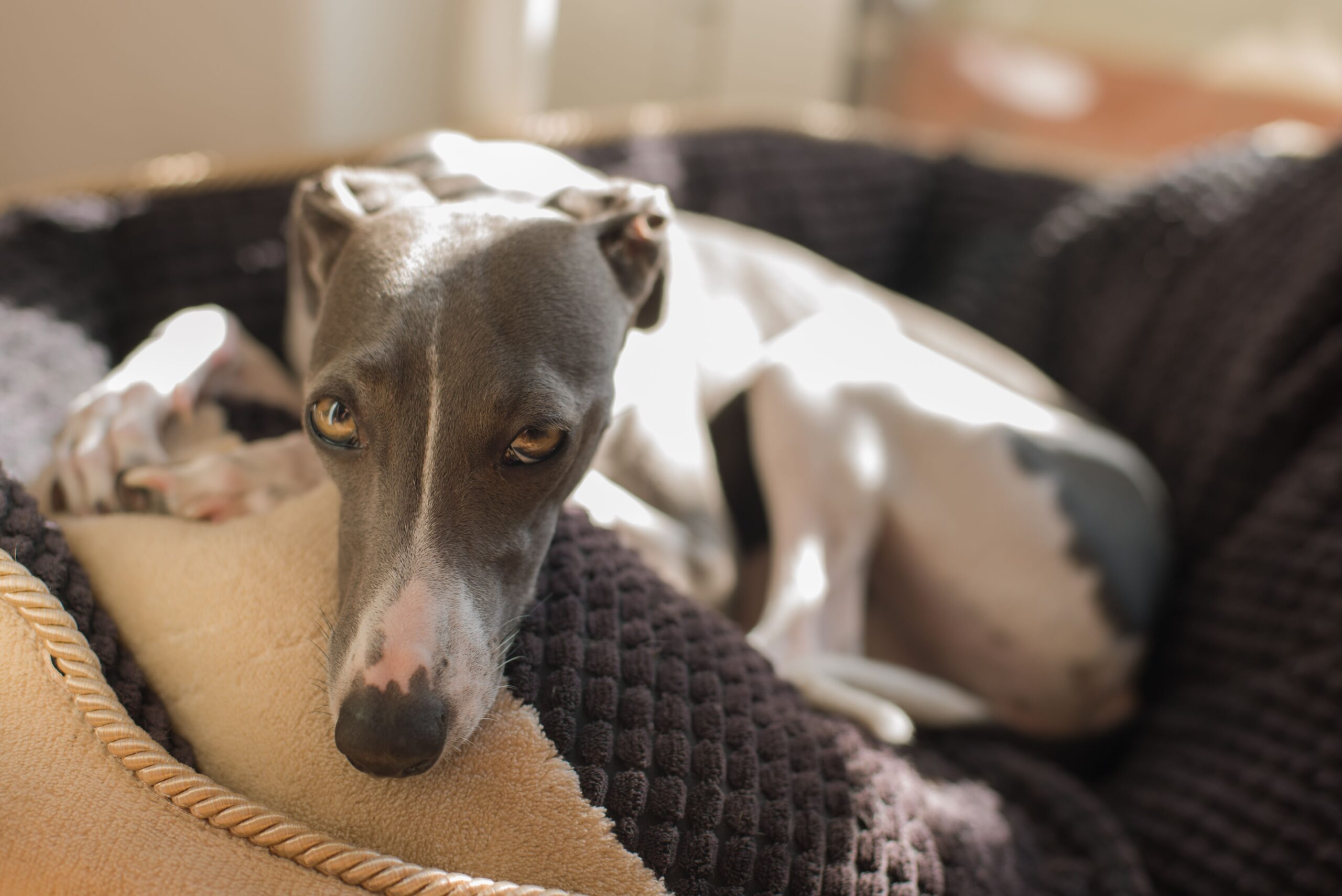
Most dogs with scoliosis live full, comfortable lives. Here's what the condition means and when it needs attention.
If you’ve noticed your dog’s spine curving sideways, or their posture looks a little twisted, it’s natural to feel unsettled. That sideways curve has a name: scoliosis. And while it sounds alarming, the reality for most dogs is more nuanced than a worst-case scenario.
Scoliosis in dogs is a lateral (side-to-side) curvature of the spine. It’s most often congenital, meaning it’s present from birth, and many dogs with a curved spine live full, comfortable lives with little to no intervention. That said, a new or worsening curve is worth taking seriously, because it can signal something that needs a vet’s attention.
 TL;DR
TL;DR
Yes, dogs can get scoliosis. It shows up in a couple of different ways.
The most common form is congenital, meaning the spine developed abnormally before birth. This is often linked to a condition called hemivertebrae, where one or more of the spinal bones form as a wedge shape instead of a normal rectangle. That wedge pushes the spine off-center, creating the curve you can see from the outside.
Screw-tailed breeds like Bulldogs, French Bulldogs, and Boston Terriers are especially prone to this, because the same genetic trait that creates their signature corkscrew tail can affect vertebrae elsewhere in the spine. For many of these dogs, the spinal deformity is mild and causes no problems at all.
Scoliosis can also develop later in life from a spinal injury, intervertebral disc disease (where the cushioning discs between spinal bones herniate or degenerate), or muscle problems that pull the spine out of alignment over time.
What you notice depends on whether the spinal curve is affecting the spinal cord or just the spine’s structure. Here’s what to look for:
A mild, stable curve with none of the neurological signs is very different from a curve that’s progressing or causing nerve problems. Wobbliness, weakness, and incontinence change the urgency significantly.
Not all spinal curves are scoliosis, and knowing the difference helps you describe what you’re seeing to your vet clearly.
A congenital curve that’s been stable since birth and isn’t pressing on the spinal cord is often not painful at all. Many dogs with mild hemivertebrae-related scoliosis live completely normal lives. The curve is just part of how they’re built.
A curve that’s new, worsening, or causing neurological signs is different. That kind of curve may be compressing the spinal cord or nerve roots, which can cause real discomfort and affect how your dog functions day to day.
The signs that move a situation from watch-and-wait to call-your-vet-today are: sudden wobbliness or weakness, loss of bladder or bowel control, a rapidly worsening curve, or any sign that your dog is in pain when their back is touched.
Your vet will start with a physical exam and a neurological assessment, checking reflexes and coordination. X-rays are the primary tool, giving a clear picture of the spine’s shape and revealing any vertebral malformations like hemivertebrae.
If there are neurological symptoms, your vet may recommend an MRI or CT scan to get a detailed view of the spinal cord and surrounding soft tissue. This is how vets determine whether the spinal cord is being compressed and how severely.
There’s no one-size-fits-all answer. Your vet will guide you based on what’s causing the curve and how your dog is actually functioning day to day.
For dogs with mild, stable, congenital scoliosis, life expectancy is generally normal. The curve is structural but not progressive, and it doesn’t shorten their life. They may need some accommodations, but they can thrive.
For dogs with severe spinal cord compression or scoliosis caused by an underlying progressive condition, the picture depends on how well that condition can be managed. Your vet is the right person to give you an honest prognosis once they know the full picture.
What matters most is catching changes early, keeping your dog comfortable, and adapting their environment to what they need.
Yes, scoliosis is eligible for coverage under a Lemonade Pet accident and illness policy, when the condition isn’t pre-existing. That means your dog shouldn’t be showing any signs or symptoms before your policy starts or during your waiting period.
Imaging like X-rays, MRI, and CT scans adds up fast, and that’s before factoring in any treatment or ongoing care. For dogs with scoliosis requiring physical therapy or rehabilitation, Lemonade Pet’s Physical Therapy add-on can help cover those sessions when they’re related to a covered condition. If you have a Bulldog, French Bulldog, Boston Terrier, or another breed prone to spinal issues, adding that coverage early, before any symptoms appear, is especially worth thinking about.
If you’ve noticed your dog’s spine curving sideways or their posture looking off, the most useful thing you can do right now is book a vet appointment and describe exactly what you’re seeing. Early assessment gives you the clearest path forward, whatever that turns out to be. And if your dog is currently healthy, now is a good time to make sure you have coverage in place before anything changes.
It depends on the cause and severity. A mild, stable congenital curve often causes no pain at all. A curve that’s compressing the spinal cord, or one caused by injury or disc disease, can cause real discomfort and should be assessed by a vet promptly.
Screw-tailed breeds like French Bulldogs, Bulldogs, and Boston Terriers are most commonly affected due to hemivertebrae, a vertebral malformation linked to the same gene that creates their characteristic tail shape.
Many dogs with mild, congenital scoliosis do live full, normal lives with little to no intervention. Dogs with more severe curves or neurological symptoms may need ongoing management, but quality of life can still be very good with the right support.
X-rays are the primary diagnostic tool and will show the shape and structure of the spine. If neurological symptoms like wobbliness, weakness, or incontinence are present, your vet may also recommend an MRI or CT scan to assess the spinal cord.
A few quick words, because we <3 our lawyers: This post is general in nature, and any statement in it doesn’t alter the terms, conditions, exclusions, or limitations of the policies issued, which differ according to your state of residence. You’re encouraged to discuss your specific circumstances with your own professional advisors. The purpose of this post is merely to provide you with info and insights you can use to make such discussions more productive! Naturally, all comments by, or references to, third parties represent their own views, and Lemonade assumes no responsibility for them. Coverage may not be available in all states. Please note that statements about coverages, policy management, claims processes, Giveback, and customer support apply to policies underwritten by Lemonade Insurance Company or Metromile Insurance Company, a Lemonade company, sold by Lemonade Insurance Agency, LLC. The statements do not apply to policies underwritten by other carriers.
Please note: Lemonade articles and other editorial content are meant for educational purposes only, and should not be relied upon instead of professional legal, insurance or financial advice. The content of these educational articles does not alter the terms, conditions, exclusions, or limitations of policies issued by Lemonade, which differ according to your state of residence. While we regularly review previously published content to ensure it is accurate and up-to-date, there may be instances in which legal conditions or policy details have changed since publication. Any hypothetical examples used in Lemonade editorial content are purely expositional. Hypothetical examples do not alter or bind Lemonade to any application of your insurance policy to the particular facts and circumstances of any actual claim.