
What Is Glycogen Storage Disease in Cats and Who's at Risk?
GSD IV is rare, serious, and breed-specific. Here's what owners and breeders need to know.

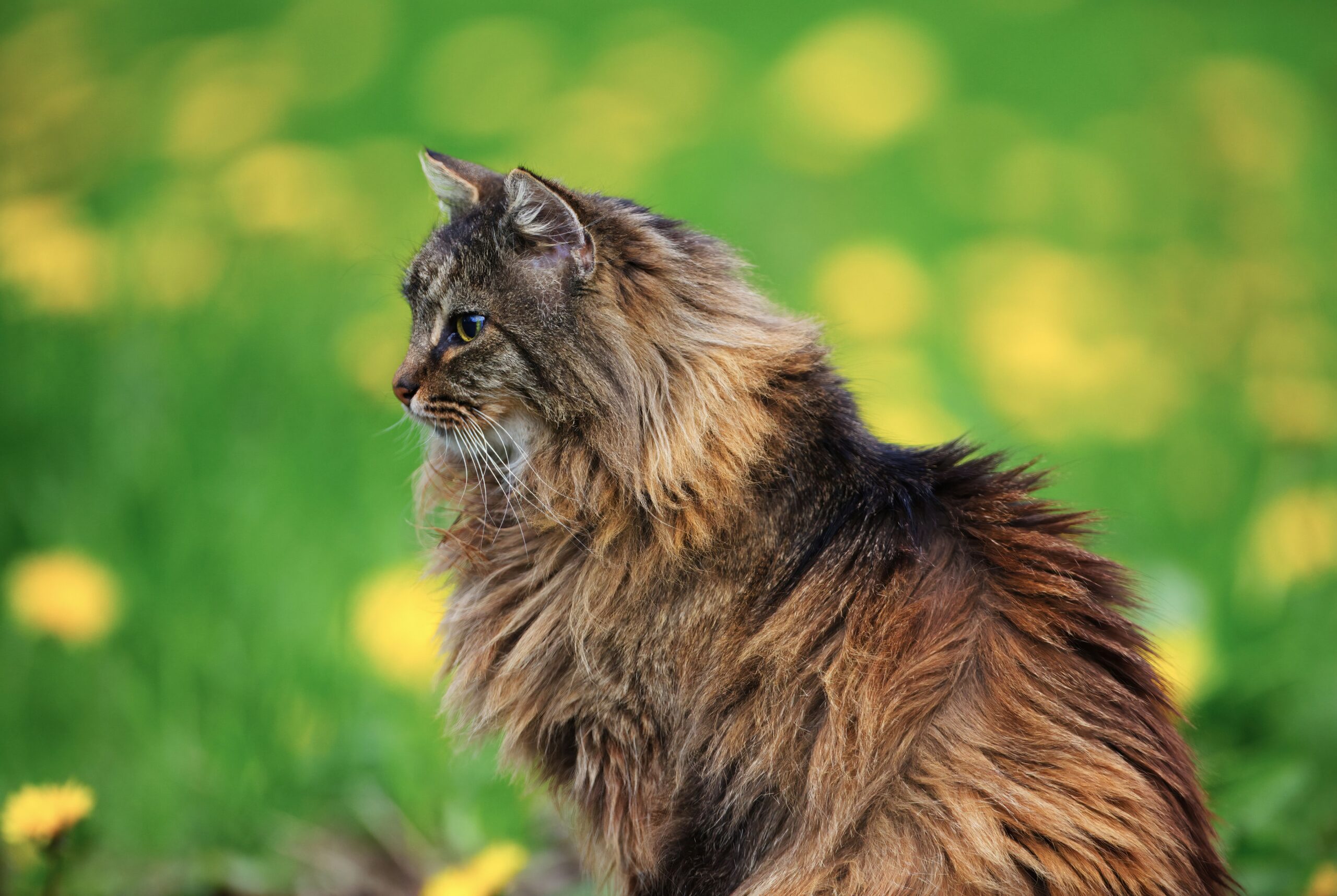
GSD IV is rare, serious, and breed-specific. Here's what owners and breeders need to know.
Glycogen storage disease type IV (GSD IV) is a rare but serious inherited condition found almost exclusively in Norwegian Forest cats. It’s caused by a faulty gene that prevents the body from processing stored energy correctly, and it’s always fatal. If you’re here because you’re adopting a Norwegian Forest cat and want to know what to watch for, or because your kitten has just been diagnosed and you need answers, this guide will walk you through everything clearly and honestly.
 TL;DR
TL;DR
Think of glycogen as your cat’s internal fuel reserve. When the body needs energy, it breaks that fuel down and releases it as glucose into the bloodstream. In a healthy cat, that process runs smoothly. In a cat with GSD IV, a key enzyme needed to make it work is missing or defective, so the fuel never gets processed correctly. Instead, it builds up in the wrong form inside cells, slowly damaging the muscles, heart, nervous system, and liver over time.
The faulty enzyme is produced by a gene called GBE1, and it’s this gene mutation that causes GSD IV. Without it working properly, the body essentially can’t access its own energy stores, and the buildup that results is what drives the disease.
GSD IV is found almost exclusively in Norwegian Forest cats. The breed carries a specific GBE1 mutation at a higher rate than any other cat breed, and if you own, breed, or are thinking about adopting one, this is worth knowing about. It has occasionally shown up in other breeds and mixed-breed cats, but those cases are rare.
The disease is inherited, and it follows what’s called an autosomal recessive pattern. In plain terms, that means a kitten needs to inherit a faulty copy of the GBE1 gene from both parents to actually develop GSD IV. Every cat falls into one of three categories:
Carriers are where things get tricky. A carrier cat looks and feels completely healthy, so without testing, there’s no way to know they’re carrying the gene. If two carriers breed, each kitten has a 25% chance of being affected, a 50% chance of being a carrier, and a 25% chance of being completely clear. That’s how GSD IV can quietly spread through a breeding population without anyone realizing it.
GSD IV shows up in two very different ways, and knowing both matters.
Some affected kittens are stillborn or die within the first few days of life. There’s often no visible abnormality, which makes it easy to attribute to other causes. If you’re a breeder who has experienced unexplained losses in a Norwegian Forest cat litter, GSD IV is worth investigating.
This is the harder scenario. Kittens who survive the neonatal period look completely normal for the first few months of life. They eat, they play, they seem healthy. It’s only around 5 months of age that the disease begins to show, by which point most families are already deeply attached. That’s one of the most painful aspects of this condition.
Signs appear around 5 months and worsen progressively. Most affected kittens don’t survive past their first year. Here’s what to watch for:
If you’re seeing any combination of these signs in a Norwegian Forest cat kitten around 4 to 5 months old, call your vet right away. This cluster of symptoms, in this breed, at this age, is a strong signal.
There are two ways GSD IV gets diagnosed: in a kitten who is already showing symptoms, and through proactive genetic testing before anything goes wrong. If you have a choice, the second path is always better.
If a kitten is already showing signs, your vet will likely recommend a combination of the following:
This is the option that prevents heartbreak. A simple cheek swab or blood sample sent to a veterinary genetics lab can tell you whether a cat is N/N (clear), N/GSD (carrier), or GSD/GSD (affected), before any symptoms ever appear. For breeders, testing both parents before breeding is the single most effective way to prevent affected kittens from being born. If you’re buying a kitten, asking the breeder for both parents’ GSD IV test results is a completely reasonable thing to do.
There’s no cure for GSD IV, and no treatment that stops or reverses it. Once a kitten is symptomatic, the condition is terminal. Most affected kittens begin showing signs around 5 months and don’t survive past their first year.
Supportive care, keeping your kitten comfortable, managing blood sugar through appropriate feeding, and minimizing stress, can help with quality of life in the time you have. Your vet is your best guide for making those decisions compassionately.
If you’re in this situation right now, please know: you didn’t do anything wrong. Carriers look completely healthy, and without testing, there’s no way to know. What matters most now is your kitten’s comfort, and the fact that you’re here trying to understand what’s happening already says a lot.
GSD IV in Norwegian Forest cats gets most of the attention, but it’s worth knowing that another form, glycogen storage disease type II (similar to Pompe disease in humans), has been documented in domestic shorthair cats. It involves a different enzyme deficiency and has shown up as unexplained heart failure in at least one documented case.
There’s no established genetic test for this form in cats, and it’s far less understood than GSD IV. But the takeaway is simple: glycogen storage disease isn’t exclusively a Norwegian Forest cat problem. If a cat of any breed is showing unexplained heart failure or muscle disease without a clear cause, it’s worth raising with your vet.
GSD IV is entirely preventable. Because it’s autosomal recessive, a kitten can only be affected if both parents carry the faulty gene. Responsible breeders test every breeding cat before pairing them, never breed two carriers together, and provide documented test results to buyers. Some work toward an entirely clear (N/N) breeding population over time, which eliminates the risk entirely.
If you’re buying a Norwegian Forest cat kitten, asking for both parents’ GSD IV test results is completely reasonable. A reputable breeder will welcome the question. If a breeder can’t or won’t provide them, that’s a red flag worth taking seriously.
Yes. A Lemonade Pet policy can help cover diagnostics and treatment for hereditary conditions like GSD IV, as long as the condition isn’t pre-existing. That means your cat shouldn’t be showing any signs or symptoms before your policy starts or during your waiting period.
Bloodwork, ECGs, specialist consultations, and supportive care can add up quickly. Getting coverage in place while your kitten is young and healthy is what makes it actually useful when you need it.
GSD IV is serious, but it’s also entirely preventable with the right testing and breeding decisions. If you’re buying a kitten, ask for the test results. If you’re a breeder, test your cats. And if you’re sitting with a kitten who is already sick, you’re not alone. Focusing on their comfort and quality of life is a genuinely loving thing to do.
And, if your cat is young and healthy right now, getting coverage in place before anything changes is one of the most practical things you can do.
Yes. Carrier cats (N/GSD genotype) do not develop GSD IV themselves and have completely normal health and life expectancy. The risk is only to their offspring if they’re bred with another carrier.
Yes. GSD IV genetic testing for the GBE1 mutation is available through veterinary genetic laboratories. It can be done with a simple cheek swab or blood sample and will identify a cat as N/N (clear), N/GSD (carrier), or GSD/GSD (affected).
Not at all. Hypoglycemia (low blood sugar) in kittens has many possible causes, including poor nutrition, infections, and other metabolic conditions. GSD IV is one possible cause, particularly in Norwegian Forest cat kittens showing other signs like muscle tremors and failure to thrive, but a vet workup is needed to determine the actual cause.
A few quick words, because we <3 our lawyers: This post is general in nature, and any statement in it doesn’t alter the terms, conditions, exclusions, or limitations of the policies issued, which differ according to your state of residence. You’re encouraged to discuss your specific circumstances with your own professional advisors. The purpose of this post is merely to provide you with info and insights you can use to make such discussions more productive! Naturally, all comments by, or references to, third parties represent their own views, and Lemonade assumes no responsibility for them. Coverage may not be available in all states. Please note that statements about coverages, policy management, claims processes, Giveback, and customer support apply to policies underwritten by Lemonade Insurance Company or Metromile Insurance Company, a Lemonade company, sold by Lemonade Insurance Agency, LLC. The statements do not apply to policies underwritten by other carriers.
Please note: Lemonade articles and other editorial content are meant for educational purposes only, and should not be relied upon instead of professional legal, insurance or financial advice. The content of these educational articles does not alter the terms, conditions, exclusions, or limitations of policies issued by Lemonade, which differ according to your state of residence. While we regularly review previously published content to ensure it is accurate and up-to-date, there may be instances in which legal conditions or policy details have changed since publication. Any hypothetical examples used in Lemonade editorial content are purely expositional. Hypothetical examples do not alter or bind Lemonade to any application of your insurance policy to the particular facts and circumstances of any actual claim.