
My Dog Won't Stop Scratching Their Ears, Could It Be Ear Mites?
Signs, diagnosis, and treatment options.

Signs, diagnosis, and treatment options.
If your dog has been shaking their head nonstop or scratching at their ears like something’s driving them crazy, you might be dealing with ear mites. It’s an unsettling thing to notice, but it’s also very treatable – and once you know what you’re looking at, you can move quickly.
This guide will help you figure out what’s going on, whether you need to get to the vet today or can wait for a regular appointment, and what treatment looks like once you have a diagnosis.
 TL;DR
TL;DR
Ear mites are tiny parasites, specifically a species called Otodectes cynotis, that live inside your dog’s ear canal. They feed on the wax and oils naturally found there and reproduce quickly. A small infestation can become a bigger problem fast if it goes untreated.
They’re more common in cats than dogs, but dogs absolutely get them, especially puppies, dogs who spend time around cats, and dogs who aren’t on a regular parasite prevention routine. They’re also highly contagious between animals, which is why treating every pet in your household at the same time matters so much.
The mites themselves are too small to see without a microscope, but the mess they leave behind is hard to miss.
The signs of ear mites in dogs are pretty hard to miss once you know what to look for. Here’s what you’ll likely notice:
Ear mites are uncomfortable, but they’re not an emergency. You don’t need to rush to urgent care in the middle of the night. That said, you shouldn’t leave it for weeks either.
Schedule a regular vet appointment soon if:
Move faster, or consider urgent care, if:
Ear mites and ear infections look nearly identical from the outside. Both cause head shaking, scratching, discharge, and odor. The coffee ground discharge is a strong indicator of mites, but it’s not a guaranteed diagnosis. This is why going straight to an over-the-counter product isn’t a great idea. Treating for mites when your dog actually has a bacterial or yeast infection won’t help, and could make things worse.
Ear mites spread through direct contact with an infected animal. A quick sniff or a play session is enough. Common routes include:
Dogs without monthly parasite prevention are at higher risk, and some preventatives also cover ear mites.
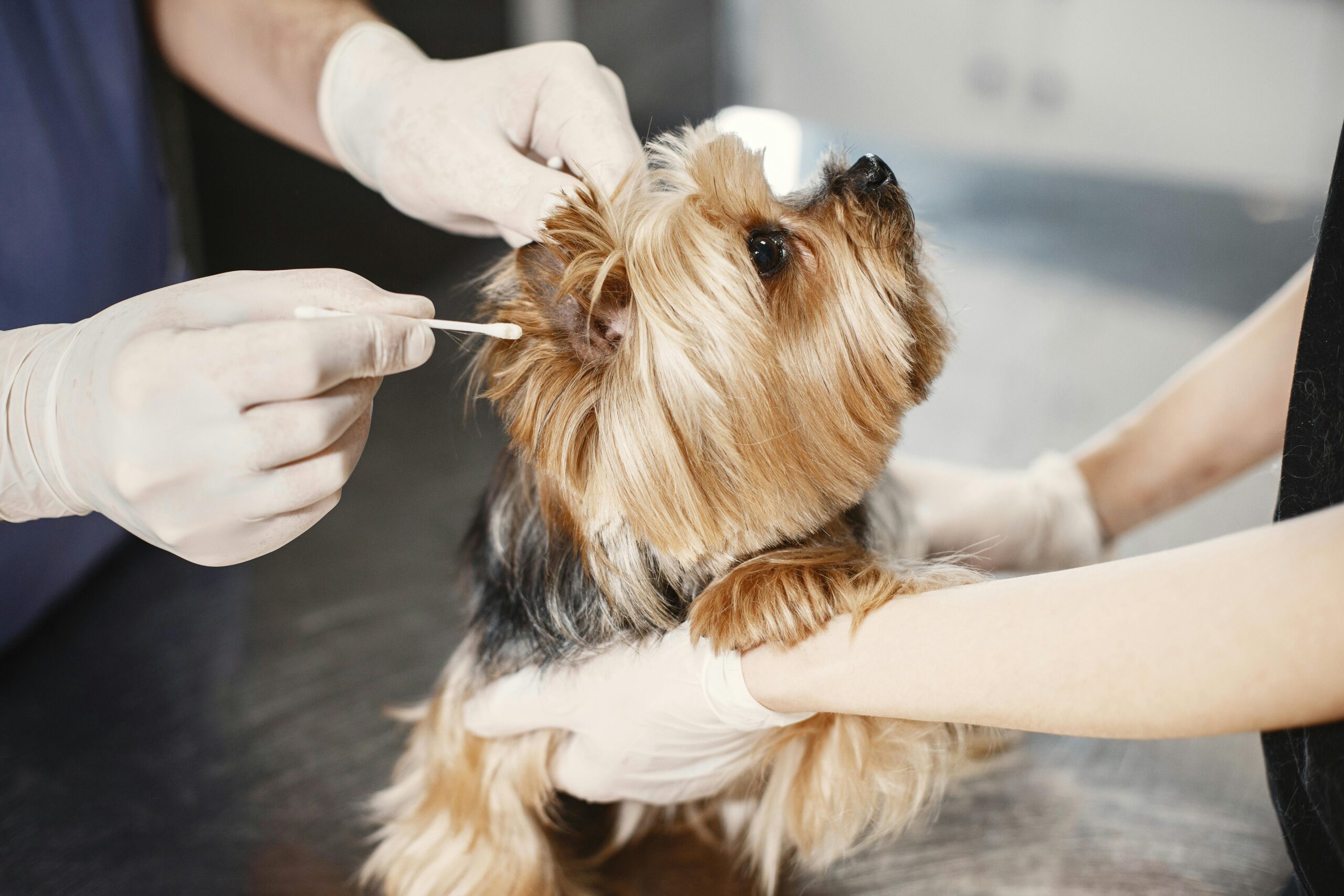
Your vet will start with a physical exam and use an otoscope (a small, lighted instrument used to look deep into the ear canal) to check for mites directly. They’ll also swab the discharge and examine it under a microscope to confirm Otodectes cynotis and rule out bacterial or yeast infections. It’s a quick, non-invasive process most dogs tolerate well.
Prescription treatments work significantly better than over-the-counter options. Most OTC products only target adult mites and miss the eggs entirely. Your vet can prescribe something that addresses the full lifecycle, and in some cases, a single dose is all it takes.
Here’s what your vet may recommend:
Before treatment can work well, the ears need to be cleaned. The buildup creates a barrier that keeps medication from reaching the mites. Your vet may clean the ears at the appointment and send you home with instructions and a vet-approved cleaner.
Most dogs improve noticeably within the first week or two. Full treatment typically takes 3 to 4 weeks, because it needs to cover the full lifecycle of the parasite, not just the adults. Follow the complete course even if your dog seems better before it’s done.
Ear mites often irritate the canal enough that bacteria or yeast move in. If your vet finds a secondary infection, they’ll treat it alongside the mites, usually with antibiotic or antifungal ear drops.
Ear mites move freely between dogs and cats, so if one pet has them, the others have almost certainly been exposed. Treat all pets at the same time, even if the others seem fine. Ear mites don’t generally infest humans, so you don’t need to worry about treating yourself.
Medication does the heavy lifting, but there are things you can do at home to support the process and prevent reinfestation:
You’ll find natural suggestions online: olive oil, apple cider vinegar, coconut oil, herbal preparations. There’s very little evidence any of these clears an ear mite infestation on their own. Some oils may offer temporary relief or smother a few mites, but they don’t address the full lifecycle and won’t touch a secondary infection. Using them instead of veterinary treatment can delay effective care.
Left untreated, ongoing irritation leads to chronic inflammation, which can cause:
Ear mites are very treatable when caught early.
Once you’ve cleared an infestation, you’ll want to keep it from happening again. Here’s what actually helps:
Several of the most widely used monthly preventatives – including products containing selamectin or moxidectin, and oral isoxazolines like NexGard and Bravecto – also provide protection against ear mites. If your dog is already on a regular monthly flea and tick prevention routine, you may already have a layer of ear mite protection built in. Ask your vet which product makes the most sense for your dog’s lifestyle.
Make it a habit to take a quick look inside your dog’s ears once a week. You’re looking for unusual discharge, redness, odor, or anything that just doesn’t look right. Catching a problem early means treating it early – which is always better.
Ask your vet how often to clean your dog’s ears and what product to use. Not all dogs need the same frequency, and over-cleaning can actually cause irritation. But for dogs who are prone to ear problems, a regular cleaning routine with a vet-approved cleaner keeps the canal healthier and makes it easier to spot changes early.
Ear mites in puppies are especially common – their immune systems are still developing, and they haven’t started parasite prevention yet. If you have a young dog or a household with multiple pets (especially cats), keep a closer eye on everyone’s ears and talk to your vet about the best prevention plan for each animal.
Ear mites usually mean at least one vet visit, a prescription, and potentially follow-up care. And if you have multiple pets who all need treatment at once, costs add up fast.
If your dog develops ear mites after your Lemonade pet insurance policy is active, a base accident and illness policy covers the vet visit, diagnosis, and prescription treatment. That includes prescription preventatives like Bravecto or Simparica when they’re being used to treat an active infestation. If your dog develops a secondary ear infection alongside the mites, that’s typically covered too, as long as it’s a new, acute infection and not tied to a pre-existing or chronic condition like allergies.
The one thing to know: if your dog already had ear mites, or showed signs of them, before your policy started or within the first 14 days (the illness waiting period), that would be considered pre-existing and wouldn’t be covered.
If you don’t have coverage yet, it’s worth getting a quote, ideally before your next dog park visit.
If your dog is scratching or you see that dark, coffee ground-like discharge, don’t wait it out. A quick vet visit gets you a confirmed diagnosis and a treatment plan that actually works. Treat every pet in the house, finish the full course of medication, and use this as a nudge to get everyone on a monthly parasite prevention routine.
A few quick words, because we <3 our lawyers: This post is general in nature, and any statement in it doesn’t alter the terms, conditions, exclusions, or limitations of the policies issued, which differ according to your state of residence. You’re encouraged to discuss your specific circumstances with your own professional advisors. The purpose of this post is merely to provide you with info and insights you can use to make such discussions more productive! Naturally, all comments by, or references to, third parties represent their own views, and Lemonade assumes no responsibility for them. Coverage may not be available in all states. Please note that statements about coverages, policy management, claims processes, Giveback, and customer support apply to policies underwritten by Lemonade Insurance Company or Metromile Insurance Company, a Lemonade company, sold by Lemonade Insurance Agency, LLC. The statements do not apply to policies underwritten by other carriers.
Please note: Lemonade articles and other editorial content are meant for educational purposes only, and should not be relied upon instead of professional legal, insurance or financial advice. The content of these educational articles does not alter the terms, conditions, exclusions, or limitations of policies issued by Lemonade, which differ according to your state of residence. While we regularly review previously published content to ensure it is accurate and up-to-date, there may be instances in which legal conditions or policy details have changed since publication. Any hypothetical examples used in Lemonade editorial content are purely expositional. Hypothetical examples do not alter or bind Lemonade to any application of your insurance policy to the particular facts and circumstances of any actual claim.