
Why Does My Dog Have a Crusty Nose or Rough Paw Pads?
Signs, symptoms, and treatment options.

Signs, symptoms, and treatment options.
If you’ve noticed a rough, crusty buildup on your dog’s nose or paw pads, or thick, hardened skin on their elbows, you’re probably wondering what’s going on and whether it’s something to worry about.That buildup has a name: hyperkeratosis. It’s a skin condition where the body produces too much keratin (the same protein that makes up hair and nails), causing the skin to thicken and harden in ways it shouldn’t.
The good news: it’s rarely an emergency. The less good news: it doesn’t go away on its own, and left unmanaged, it can get uncomfortable or even painful for your dog. Here’s how to tell what you’re looking at, how urgent it is, and what treatment looks like.
 TL;DR
TL;DR
Keratin is a tough, fibrous protein your dog’s body produces naturally. It’s the building block of their skin, coat, and nails. Normally, keratin production is tightly regulated, but with canine hyperkeratosis, that regulation breaks down. The body keeps making more keratin than it needs, and the excess piles up on the skin’s surface.
The result is skin that looks and feels different from normal. You might notice it as a crusty nose, rough and cracked paw pads, or a thickened, calloused patch on your dog’s elbow. In some cases, the excess keratin grows outward in a way that looks almost hair-like or spiky, sometimes called a “hairy” or feathered appearance.
Hyperkeratosis isn’t contagious, and it’s not automatically a sign that your dog is unhealthy. But it does need attention, especially if it’s getting worse or starting to cause discomfort.
Dog hyperkeratosis is categorized by where it shows up on the body. Each type has its own set of causes and care needs.
Nasal hyperkeratosis in dogs causes a dry, crusty, or thickened buildup on the surface of the nose. It can look like rough, flaky patches or a harder crust sitting on top of or around the nostrils. In more advanced cases, the buildup can crack and cause discomfort.
A slightly dry nose isn’t automatically a problem, but if your dog’s nose looks crusty, discolored, cracked, or dramatically different from its usual appearance, that’s worth a vet visit.
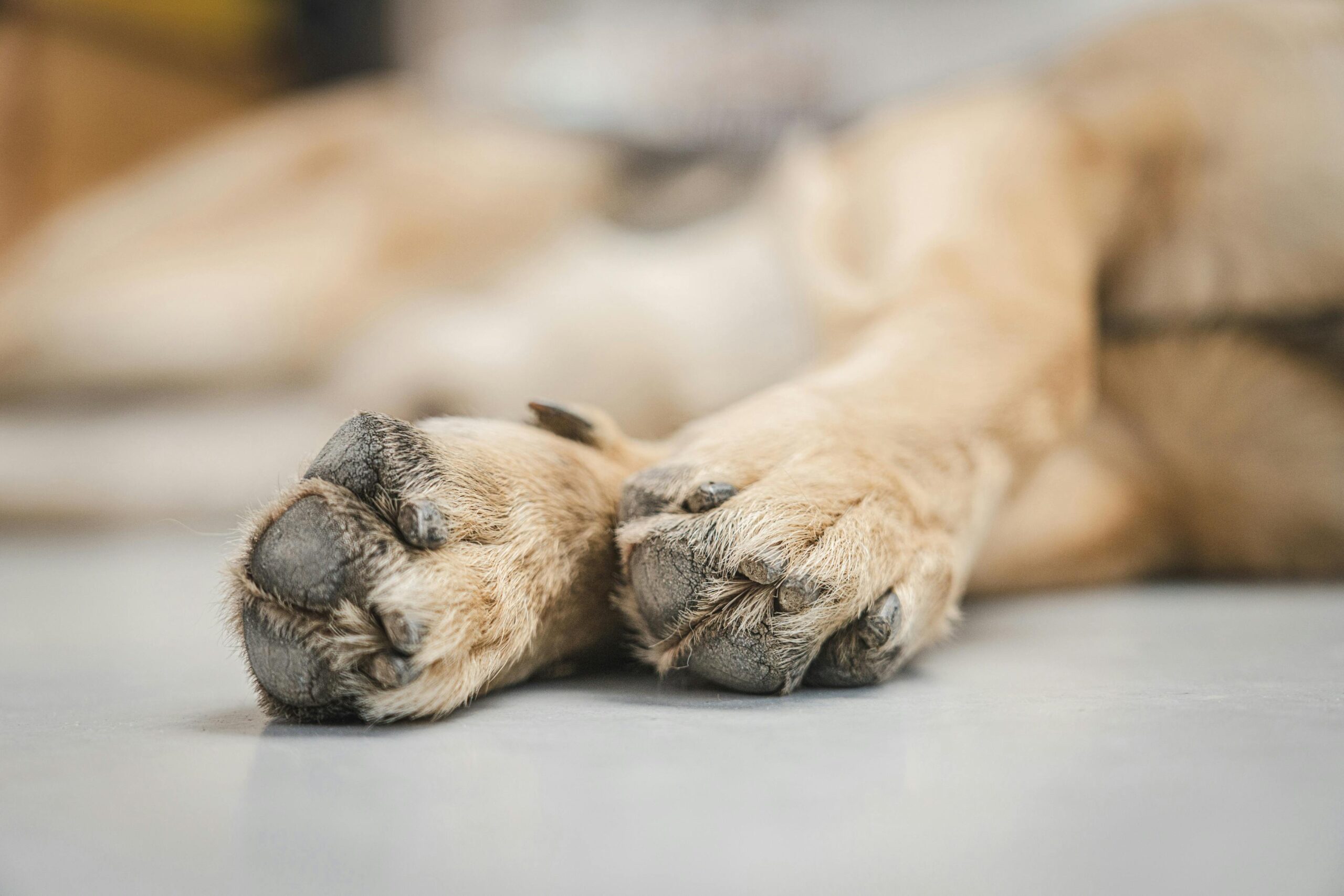
Digital hyperkeratosis in dogs affects the paw pads, causing them to become rough, thickened, and sometimes cracked or “hairy.” Hairy paw pads in dogs is a real thing: the excess keratin can project outward from the edges of the pads in small, hair-like strands, giving the paws a feathered or fringed look.
Dog paw pad hyperkeratosis can range from cosmetic to genuinely painful. When the buildup cracks, it creates fissures (deep splits in the skin) that are uncomfortable to walk on and can become infected if bacteria or fungi get in. If your dog is limping, licking their paws excessively, or reluctant to go on walks, thickened paw pads could be part of the reason.
This type of dog elbow callus hyperkeratosis is exactly what it sounds like: a thickened, rough patch of skin that forms over a pressure point. The elbows are the most common spot, especially in large and senior dogs who spend a lot of time lying on hard surfaces. The repeated pressure causes the skin to toughen up as a protective response, eventually building into a noticeable callus.
These are usually painless unless they crack, bleed, or become infected. Providing soft bedding can help slow their progression.
Here’s what to actually look for when you’re checking your dog over. The signs vary depending on where the hyperkeratosis is, but the common thread is skin that looks, feels, or behaves differently from normal.
If you’re seeing the first few items on that list without cracking, bleeding, or limping, it’s worth booking a regular vet appointment rather than rushing in urgently. If you’re seeing the last few, move a little faster.
There’s more than one answer to this, and figuring out the cause matters because it shapes the treatment plan.
Senior dog skin thickening is one of the most common forms of hyperkeratosis. As dogs get older (typically 8 and up), their skin changes, just like ours does. The regulation of keratin production can become less precise, leading to buildup on the nose and paws. This is especially common in large breeds.
Some dogs are simply born with a higher likelihood of developing hyperkeratosis. Idiopathic hyperkeratosis in dogs (meaning it happens with no identifiable cause or underlying disease) has a clear genetic component in certain breeds. Dogs that are more commonly affected include:
Hyperkeratosis in Bulldogs and hyperkeratosis in Labradors is particularly well-documented. If you have one of these breeds, it’s worth knowing the signs early so you can catch it and manage it before it becomes uncomfortable.
Sometimes hyperkeratosis is a symptom of something else happening in the body. Conditions that can trigger or contribute to keratin buildup include:
This is why a vet visit matters even for what looks like a simple skin condition. Ruling out underlying causes is an important part of the diagnosis process.
Idiopathic means “we don’t know why it’s happening.” Idiopathic hyperkeratosis in dogs is genuinely common, especially in middle-aged to senior dogs of predisposed breeds. There’s no identifiable disease or deficiency triggering it; the body just overproduces keratin. It’s manageable even without a clear cause, but that doesn’t mean you should skip the diagnostic workup, since ruling out something treatable is always worth it.
Your vet will start with a visual exam of the affected areas. That’s often enough for an initial assessment, but it’s usually not where the process stops.
To rule out underlying conditions, your vet may recommend:
The goal is to figure out whether you’re dealing with idiopathic hyperkeratosis or whether there’s something else driving the keratin buildup. The treatment plan can look quite different depending on the answer.
There’s no cure for hyperkeratosis in dogs. But “no cure” doesn’t mean “nothing to be done.” This condition is very manageable, and with consistent care, most dogs live comfortably with it.
Softening balms and moisturizers The cornerstone of home management is regular application of a vet-approved, pet-safe balm to the affected areas. A good balm softens the thickened skin, reduces cracking, and keeps the pads or nose supple and more comfortable. Ask your vet for a specific recommendation before picking something up. Not every product marketed for paws is safe for all dogs, and some ingredients can be harmful if licked.
Professional trimming of excess keratin When the buildup gets significant, your vet may gently trim or file down the excess keratin. This is not something to try at home. The thickened tissue has blood vessels running through it, and cutting too deep can cause bleeding and pain. Let the vet handle it.
Treating the underlying condition If your vet identifies an underlying cause, treating that condition is a priority. If hypothyroidism is driving the skin changes, thyroid medication may significantly improve the hyperkeratosis over time. If an autoimmune condition is involved, your vet may recommend immunosuppressive therapy, which is medication that calms the immune system’s overreaction.
Antibiotics or antifungals for secondary infections Cracked skin is an open door for bacteria and fungi. If your vet finds signs of infection in or around the cracked areas, they’ll likely prescribe a course of antibiotics or antifungal medication to clear it up before addressing the hyperkeratosis itself.
Protective booties For dogs with significant paw pad hyperkeratosis and cracking, booties can make a real difference. They protect the cracked pads from further trauma, keep out debris, and give the skin a chance to recover between applications of balm.
Between vet visits, consistent home care is what keeps this condition in check:
Mild hyperkeratosis that isn’t causing discomfort might not progress quickly, but it’s still worth managing. Without care, here’s what can develop over time:
Proactive care is much easier, and less expensive, than reactive treatment of an infected, cracked paw.
Managing hyperkeratosis isn’t necessarily a single vet bill. Between the initial exam, diagnostic tests like a biopsy or bloodwork, possible follow-up appointments, and treatment for any underlying condition, costs can add up over time.
If your dog develops hyperkeratosis after your Lemonade pet insurance policy is active, a base accident and illness policy can cover the vet visit, diagnosis, and treatment, including workups to identify underlying conditions like hypothyroidism or autoimmune disease.
The key caveat: if your dog already had hyperkeratosis, or showed signs of it, before your policy started or during the waiting period, that would be considered pre-existing and wouldn’t be covered. If your dog is a breed with a known predisposition, like a Bulldog or Labrador Retriever, getting coverage in place before any symptoms appear is the move that makes insurance genuinely useful.
Not sure what your plan covers? Your policy details are the best place to start, or you can reach out to the Lemonade team directly.
Finding a crusty patch on your dog’s nose or noticing their paw pads feel like sandpaper can be unsettling, but hyperkeratosis is one of those conditions where knowledge makes things easier. It’s manageable, it doesn’t have to be painful, and with a vet’s guidance and a consistent home care routine, most dogs do really well.
Start with a vet visit to get a proper diagnosis and rule out any underlying conditions. From there, it’s about staying consistent: moisturize, monitor, and protect.
A few quick words, because we <3 our lawyers: This post is general in nature, and any statement in it doesn’t alter the terms, conditions, exclusions, or limitations of the policies issued, which differ according to your state of residence. You’re encouraged to discuss your specific circumstances with your own professional advisors. The purpose of this post is merely to provide you with info and insights you can use to make such discussions more productive! Naturally, all comments by, or references to, third parties represent their own views, and Lemonade assumes no responsibility for them. Coverage may not be available in all states. Please note that statements about coverages, policy management, claims processes, Giveback, and customer support apply to policies underwritten by Lemonade Insurance Company or Metromile Insurance Company, a Lemonade company, sold by Lemonade Insurance Agency, LLC. The statements do not apply to policies underwritten by other carriers.
Please note: Lemonade articles and other editorial content are meant for educational purposes only, and should not be relied upon instead of professional legal, insurance or financial advice. The content of these educational articles does not alter the terms, conditions, exclusions, or limitations of policies issued by Lemonade, which differ according to your state of residence. While we regularly review previously published content to ensure it is accurate and up-to-date, there may be instances in which legal conditions or policy details have changed since publication. Any hypothetical examples used in Lemonade editorial content are purely expositional. Hypothetical examples do not alter or bind Lemonade to any application of your insurance policy to the particular facts and circumstances of any actual claim.