
Is Your Senior Cat's Weight Loss a Sign of Hyperthyroidism?
Weight loss despite a big appetite is the classic sign. Here's what hyperthyroidism looks like in cats.

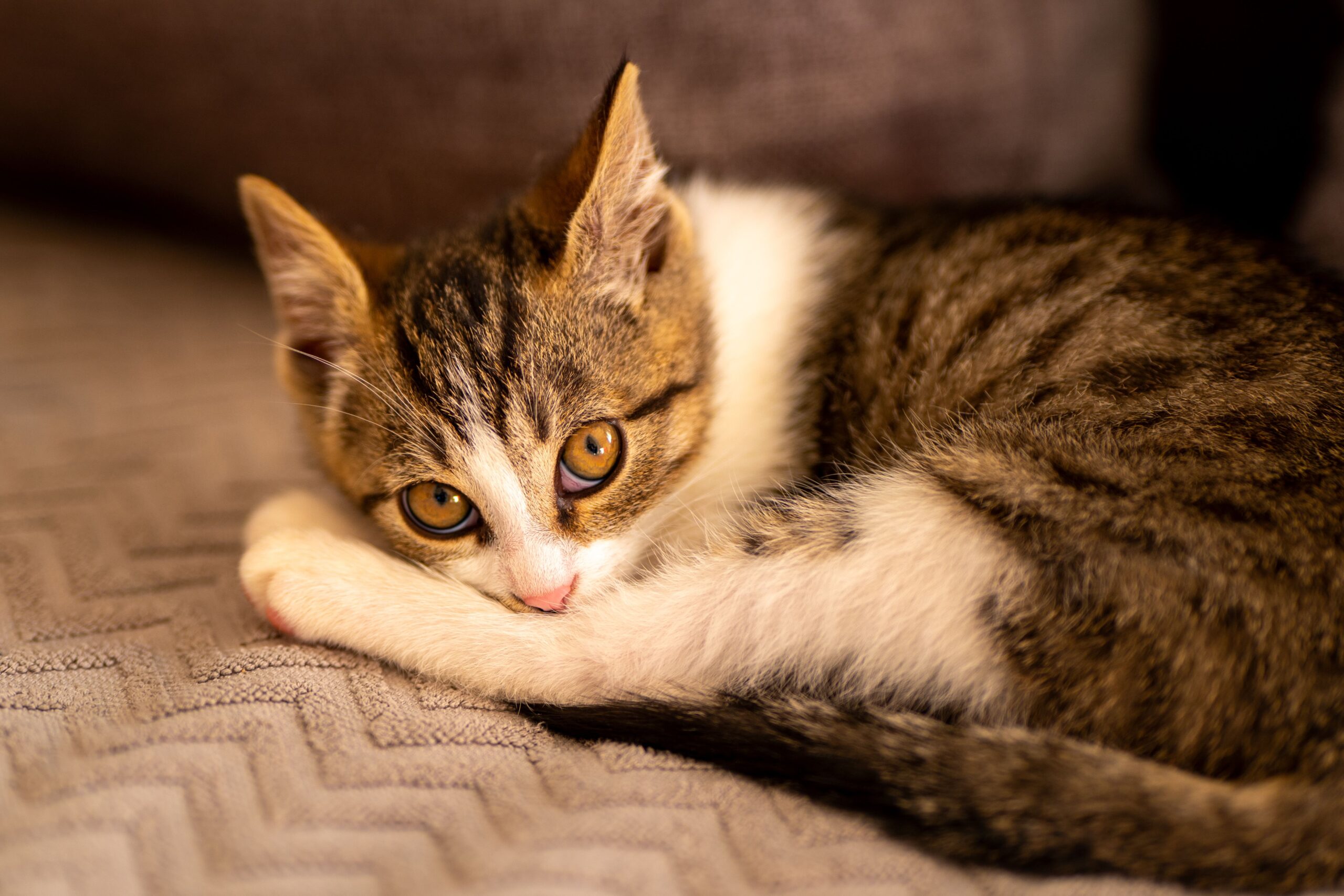
Weight loss despite a big appetite is the classic sign. Here's what hyperthyroidism looks like in cats.
If your cat is eating everything in sight but still losing weight, or suddenly acting like a restless kitten again at age 12, it’s worth paying attention. These are classic signs of hyperthyroidism in cats, one of the most common hormonal conditions in senior cats. The good news: it’s very treatable. The important thing is knowing what you’re dealing with so you can act fast.
 TL;DR
TL;DR
Your cat has two small thyroid glands in their neck. These glands produce thyroid hormone, primarily thyroxine (T4), which acts like a throttle for the body’s metabolism. When the thyroid gland goes into overdrive and produces too much T4, everything speeds up: heart rate, metabolism, appetite, activity level. This state is called hyperthyroidism, or more formally, thyrotoxicosis, meaning the body is being flooded with excess thyroid hormone.
In almost all cases (around 98%), the cause is a benign (non-cancerous) tumor called an adenoma growing on one or both thyroid glands. It’s rarely malignant, which is actually reassuring. But even a benign tumor can cause serious downstream damage if left untreated.
Feline hyperthyroidism is extremely common in older cats. Most diagnosed cats are over 10 years old, and it’s one of the top diagnoses vets see in senior cats. The exact cause of why these adenomas form isn’t fully understood, but diet, environmental factors, and genetics are all thought to play a role.
The signs of hyperthyroidism in cats tend to build gradually, which makes them easy to miss at first. Many owners assume their cat is just getting quirky in old age. Here’s what to watch for:
Late-stage hyperthyroidism in cats can look quite different: severe weight loss, muscle wasting, extreme lethargy, and signs of heart or kidney failure. If your cat has reached this point, they need veterinary care immediately. But caught earlier, most cats respond really well to treatment.
Diagnosis is relatively straightforward. Your vet will likely start by feeling your cat’s neck for an enlarged thyroid gland (a process called palpation), then confirm with a blood test that measures the level of T4 (thyroxine) in the bloodstream. An elevated T4 level is the key diagnostic marker.
In some cases, T4 levels can appear normal even when hyperthyroidism is present, particularly in early-stage disease. If your vet suspects hyperthyroidism but the first test is borderline, they may repeat the test, run a free T4 panel (a more sensitive version of the same test), or use a suppression test to get a clearer picture.
Because hyperthyroidism can affect the heart and kidneys, your vet will likely also recommend a full blood panel, urine testing, blood pressure measurement, and potentially a chest X-ray or heart ultrasound (echocardiogram) to check for secondary complications. All of this helps build a complete picture before choosing a treatment path.
There are four main treatment paths for feline hyperthyroidism. Most articles describe them in paragraphs, but here’s the comparison laid out so you can actually weigh them:
| Treatment | Cure rate | Typical cost | Pros | Cons |
|---|---|---|---|---|
| Methimazole (daily medication) | Controls, does not cure | $20–$50/month for medication (plus ongoing monitoring bloodwork) | Non-invasive, affordable month to month, reversible if kidney disease emerges | Lifelong daily medication, possible side effects (vomiting, itching, rarely bone marrow suppression), requires frequent vet check-ins |
| Radioactive iodine therapy (I-131) | ~95% cure rate after a single treatment | $1,200–$3,500 one-time | Highly effective, no surgery, no anesthesia risk, usually a permanent fix | Requires a hospital stay of several days to weeks (for radiation safety), limited availability, higher upfront cost |
| Surgery (thyroidectomy) | High cure rate if both glands treated | $800–$2,000 depending on one or both glands | Permanent solution, no ongoing medication needed | Requires general anesthesia (higher risk in senior cats), risk of damaging parathyroid glands (which regulate calcium), surgeon skill matters |
| Prescription low-iodine diet (dietary iodine restriction) | Controls when strictly maintained | $40–$100/month for prescription food | No medication or procedures, non-invasive | Must be the only food eaten (no treats, no hunting, no other food sources), less reliable control, not a cure |
Your vet will help you choose based on your cat’s age, overall health, kidney function, and your own circumstances. Many vets start with a methimazole trial specifically to see how the kidneys respond once thyroid levels normalize, since hyperthyroidism can actually mask underlying kidney disease. Treating the thyroid too aggressively without that trial can sometimes reveal kidney problems that were hidden underneath.
Left untreated, hyperthyroidism puts serious strain on the heart, the eyes, and the kidneys. The constant overdrive state causes the heart muscle to thicken, increasing the risk of hypertrophic cardiomyopathy and heart failure. High blood pressure builds alongside it, which can damage the kidneys and even cause sudden blindness. The longer it goes unmanaged, the more these secondary conditions can become permanent, even after the thyroid is eventually treated.
The good news is that the prognosis with treatment is excellent. Many cats go on to live several comfortable years after diagnosis, particularly those treated with radioactive iodine or surgery. Cats on medication do well too, as long as thyroid levels and organ function are monitored regularly. A cat diagnosed early with no major organ involvement and treated promptly has a very different outlook than one whose hyperthyroidism was caught late. Early diagnosis and consistent treatment give your cat the best shot at a good quality of life for years to come.
Yes, hyperthyroidism is eligible for coverage under a Lemonade accident and illness policy, as long as the condition isn’t pre-existing. That means your cat shouldn’t be showing any signs or symptoms of hyperthyroidism before your policy starts or during your waiting period.
Treatment costs add up quickly, especially if you go the radioactive iodine route or need ongoing medication and bloodwork monitoring. Having coverage in place before a diagnosis is what makes it actually useful when you need it most.
Most cats develop hyperthyroidism after age 10, so enrolling while your cat is still healthy, ideally well before their senior years, gives coverage the best chance of being there when something like this comes up.
Hyperthyroidism is one of those diagnoses that sounds scary at first but comes with real, effective options. Most cats do well with treatment, and catching it early gives you and your vet the most choices. If your cat is over 10 and hasn’t had a thyroid check recently, ask your vet to add a T4 test to their next bloodwork panel. It’s a small thing that can make a big difference.
And if you don’t have pet insurance in place yet, now is a good time to look into Lemonade coverage before anything comes up.
The earliest signs are usually weight loss despite eating more than usual, increased thirst, and restlessness or hyperactivity. Many owners notice their older cat suddenly seems more active or demanding around food before any other symptoms appear.
Yes, radioactive iodine therapy and surgery (thyroidectomy) can both be curative, with radioactive iodine having around a 95% success rate after a single treatment. Methimazole medication and a prescription low-iodine diet control the condition but don’t eliminate it.
Left untreated, hyperthyroidism puts serious strain on the heart, raises blood pressure, and damages the kidneys over time. Late-stage hyperthyroidism in cats can involve heart disease, hypertension, significant muscle wasting, and organ failure.
Costs vary by treatment: methimazole medication runs roughly $20–$50 per month plus monitoring bloodwork, radioactive iodine therapy is typically $1,500–$3,000 as a one-time cost, and surgery ranges from $1,000–$3,000. A prescription iodine-restricted diet costs around $60–$100 per month.
Lemonade pet insurance can cover diagnosis, treatment, and monitoring for hyperthyroidism when it isn’t a pre-existing condition. Enrolling your cat before symptoms appear, ideally before their senior years, is the key to making sure this kind of condition is eligible for coverage.
A few quick words, because we <3 our lawyers: This post is general in nature, and any statement in it doesn’t alter the terms, conditions, exclusions, or limitations of the policies issued, which differ according to your state of residence. You’re encouraged to discuss your specific circumstances with your own professional advisors. The purpose of this post is merely to provide you with info and insights you can use to make such discussions more productive! Naturally, all comments by, or references to, third parties represent their own views, and Lemonade assumes no responsibility for them. Coverage may not be available in all states. Please note that statements about coverages, policy management, claims processes, Giveback, and customer support apply to policies underwritten by Lemonade Insurance Company or Metromile Insurance Company, a Lemonade company, sold by Lemonade Insurance Agency, LLC. The statements do not apply to policies underwritten by other carriers.
Please note: Lemonade articles and other editorial content are meant for educational purposes only, and should not be relied upon instead of professional legal, insurance or financial advice. The content of these educational articles does not alter the terms, conditions, exclusions, or limitations of policies issued by Lemonade, which differ according to your state of residence. While we regularly review previously published content to ensure it is accurate and up-to-date, there may be instances in which legal conditions or policy details have changed since publication. Any hypothetical examples used in Lemonade editorial content are purely expositional. Hypothetical examples do not alter or bind Lemonade to any application of your insurance policy to the particular facts and circumstances of any actual claim.