
Could That Spot on My Dog's Nose Be Skin Cancer?
Skin cancer types, symptoms, and treatment options.

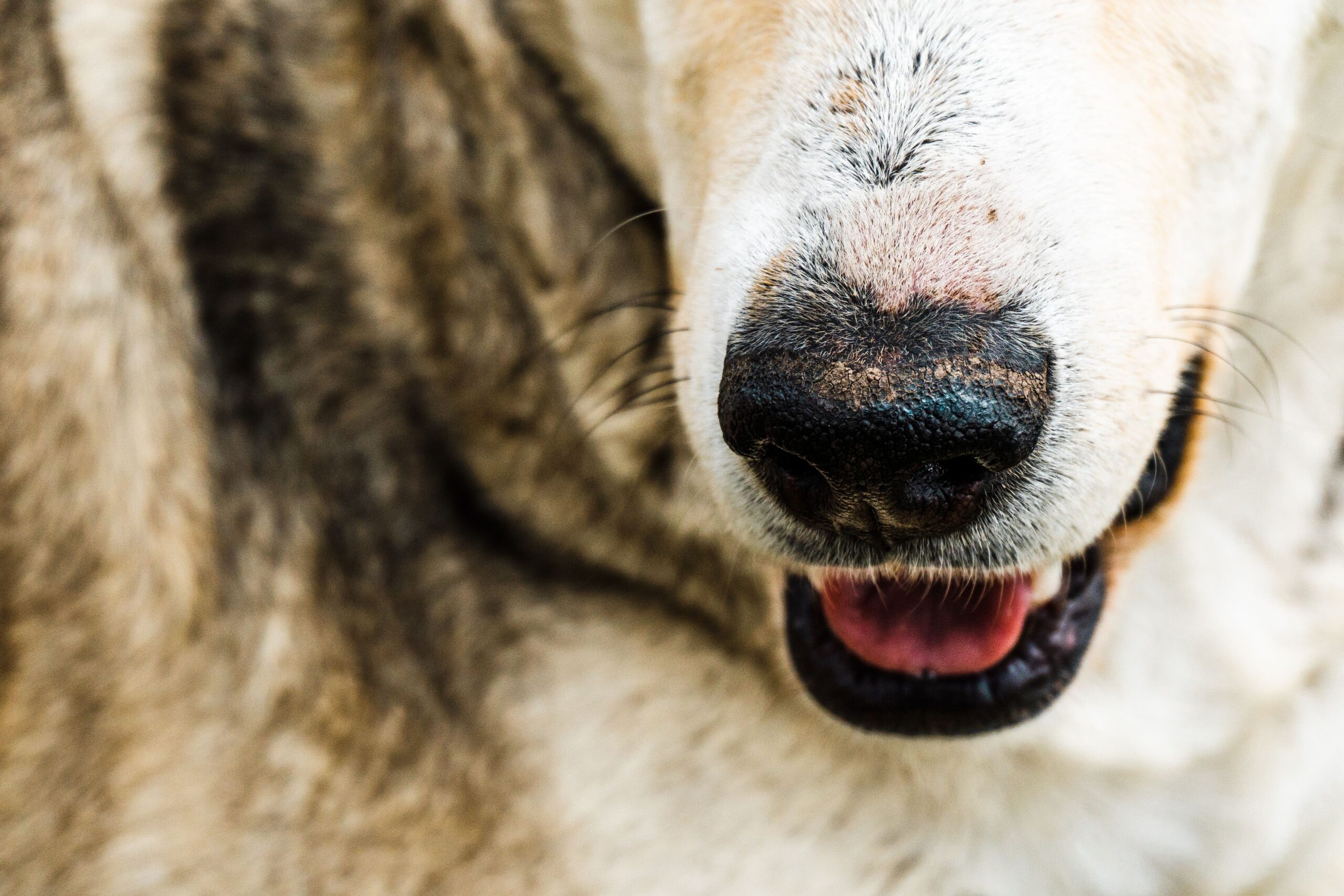
Skin cancer types, symptoms, and treatment options.
A sore on your dog’s nose that won’t heal, a crusty patch that keeps returning, or a spot that’s changing color: these aren’t always harmless. The nose is one of the more sun-exposed and vulnerable spots on a dog’s body, and changes that bleed, ulcerate, or grow can sometimes be skin cancer.
The type matters a lot when it comes to treatment and outlook. And catching it early gives your dog a real advantage.
 TL;DR
TL;DR
Three types of skin cancer show up most often on a dog’s nose. Each one looks and behaves a little differently, which is why a vet visit and a biopsy are so important rather than guessing from appearance alone.
The most common skin cancer found on the nasal planum (the flat, leathery surface of a dog’s nose). SCC starts in the outer skin cells and tends to grow slowly, but it can invade nearby tissue if left untreated. It’s strongly linked to sun exposure and shows up most often in dogs with light-colored or pink noses, including white-coated breeds like Bull Terriers, Dalmatians, and Boxers. At an early stage, it can look like a small pink sore, a rough scaly patch, or an area where the nose’s surface seems to be breaking down.
A cancer of the pigment-producing cells that can appear anywhere on the body, including the nose. On the nose, it may show up as a dark or irregularly pigmented lump, or as an area that changes color quickly. Oral and mucosal melanomas (ones that develop near the mouth or on moist tissue surfaces) tend to be more aggressive than those on haired skin, so location really matters.
One of the most common skin tumors in dogs overall. Mast cell tumors can appear virtually anywhere on the skin, including the nose, and can look like a lot of things: from a small, soft bump to a red or ulcerated sore. Without a biopsy, even experienced vets can’t reliably tell a mast cell tumor apart from other lesions just by looking.
Knowing what to look for is the first step. These are the signs that should prompt a vet visit, not a wait-and-see approach:
Any one of these symptoms, especially if it persists or gets worse, is worth a conversation with your vet. Early-stage lesions are often subtle, which is exactly why they’re easy to miss.
Not every nose change is cause for alarm. Here’s how to read what you’re seeing:
| What it looks like | Key features | What to do | |
|---|---|---|---|
| Snow nose | Faded or pinkish stripe on the nose, usually in winter | Benign color change only. Normal texture, no crusting or bleeding. Often returns to darker color in summer. | No action needed. Monitor if it doesn’t return to normal by summer. |
| Sunburn | Red, slightly swollen, or peeling nose surface | Uncomfortable but not cancer. Repeated sunburns are a known risk factor for squamous cell carcinoma over time. | Protect with dog-safe sunscreen. Ask your vet about prevention. |
| Skin cancer | Sore, ulcer, crust, or color change that doesn’t resolve | Grows, bleeds, ulcerates, or fails to heal. | See a vet. A biopsy is the only way to know for certain. |
The key difference between harmless changes and something worth investigating is healing and progression. If you’re unsure, get it checked. A vet visit costs far less than the cost of delayed diagnosis.
The only way to know for certain what a lesion is, is a biopsy. The vet takes a small sample of tissue from the nose and sends it to a lab, where a pathologist examines it under a microscope to identify exactly what type of cells are present. Your vet may also recommend imaging (like X-rays or a CT scan) to see if the cancer has spread to nearby tissue or lymph nodes.
Treatment depends on the type of cancer, how advanced it is, and your dog’s overall health.
Prognosis varies a lot by cancer type and stage. Early-stage squamous cell carcinoma of the nasal planum treated with surgical excision or radiation can have good outcomes. Melanoma near the mouth or mucous membranes tends to be more aggressive. Your vet is the right person to give you a realistic picture based on your dog’s specific case.
Diagnosis and treatment for nose cancer, including biopsies, surgical excision, and radiation therapy, can add up quickly.
Nose skin cancer in dogs is covered under a Lemonade Pet accident and illness policy, as long as it’s not pre-existing and develops after your waiting periods end. If your dog already has a lesion or a diagnosis when you apply, that condition won’t be eligible. Getting a quote while your dog is healthy is what keeps your options open when it matters most.
A sore on your dog’s nose that won’t heal isn’t something to wait out. It might turn out to be nothing serious, but the difference between catching skin cancer early and catching it late is significant. If you’ve noticed crusting, bleeding, an ulcer, or a color change that doesn’t resolve, call your vet and get it looked at. A biopsy is the only way to know for sure what you’re dealing with, and knowing is always better than guessing.
In the meantime, if your dog spends a lot of time in the sun and has a pink or light-colored nose, ask your vet about dog-safe sunscreen options to lower the risk going forward.
Yes. The nose is one of the more common sites for skin cancer in dogs, particularly squamous cell carcinoma of the nasal planum, which is strongly linked to sun exposure. Melanoma and mast cell tumors can also appear there.
Early-stage skin cancer on a dog’s nose can look like a small pink sore, a rough or crusty patch, an ulcer that won’t heal, or an area of color change or loss of the nose’s normal texture. Because these signs can also look like sunburn or irritation, any lesion that doesn’t resolve in two weeks should be evaluated by a vet.
A biopsy is the definitive diagnostic tool. The vet takes a small tissue sample from the lesion and sends it to a lab for analysis. Imaging like X-rays or a CT scan may also be used to check whether the cancer has spread.
Treatment depends on the cancer type and stage, but commonly includes surgical excision (removing the tumor), radiation therapy, or a combination of both. Your vet or a veterinary oncologist will recommend the best approach for your dog’s specific situation.
No. Snow nose is a harmless seasonal depigmentation where the nose fades to a lighter color in winter and often returns to normal in summer. It doesn’t cause sores, crusting, or bleeding. Skin cancer lesions tend to grow, ulcerate, or fail to heal, which is the key difference to watch for.
A few quick words, because we <3 our lawyers: This post is general in nature, and any statement in it doesn’t alter the terms, conditions, exclusions, or limitations of the policies issued, which differ according to your state of residence. You’re encouraged to discuss your specific circumstances with your own professional advisors. The purpose of this post is merely to provide you with info and insights you can use to make such discussions more productive! Naturally, all comments by, or references to, third parties represent their own views, and Lemonade assumes no responsibility for them. Coverage may not be available in all states. Please note that statements about coverages, policy management, claims processes, Giveback, and customer support apply to policies underwritten by Lemonade Insurance Company or Metromile Insurance Company, a Lemonade company, sold by Lemonade Insurance Agency, LLC. The statements do not apply to policies underwritten by other carriers.
Please note: Lemonade articles and other editorial content are meant for educational purposes only, and should not be relied upon instead of professional legal, insurance or financial advice. The content of these educational articles does not alter the terms, conditions, exclusions, or limitations of policies issued by Lemonade, which differ according to your state of residence. While we regularly review previously published content to ensure it is accurate and up-to-date, there may be instances in which legal conditions or policy details have changed since publication. Any hypothetical examples used in Lemonade editorial content are purely expositional. Hypothetical examples do not alter or bind Lemonade to any application of your insurance policy to the particular facts and circumstances of any actual claim.