
Benefits of a Dash Cam: Is It Worth It for Your Car?
Accident evidence, fraud protection, parking coverage, and more.

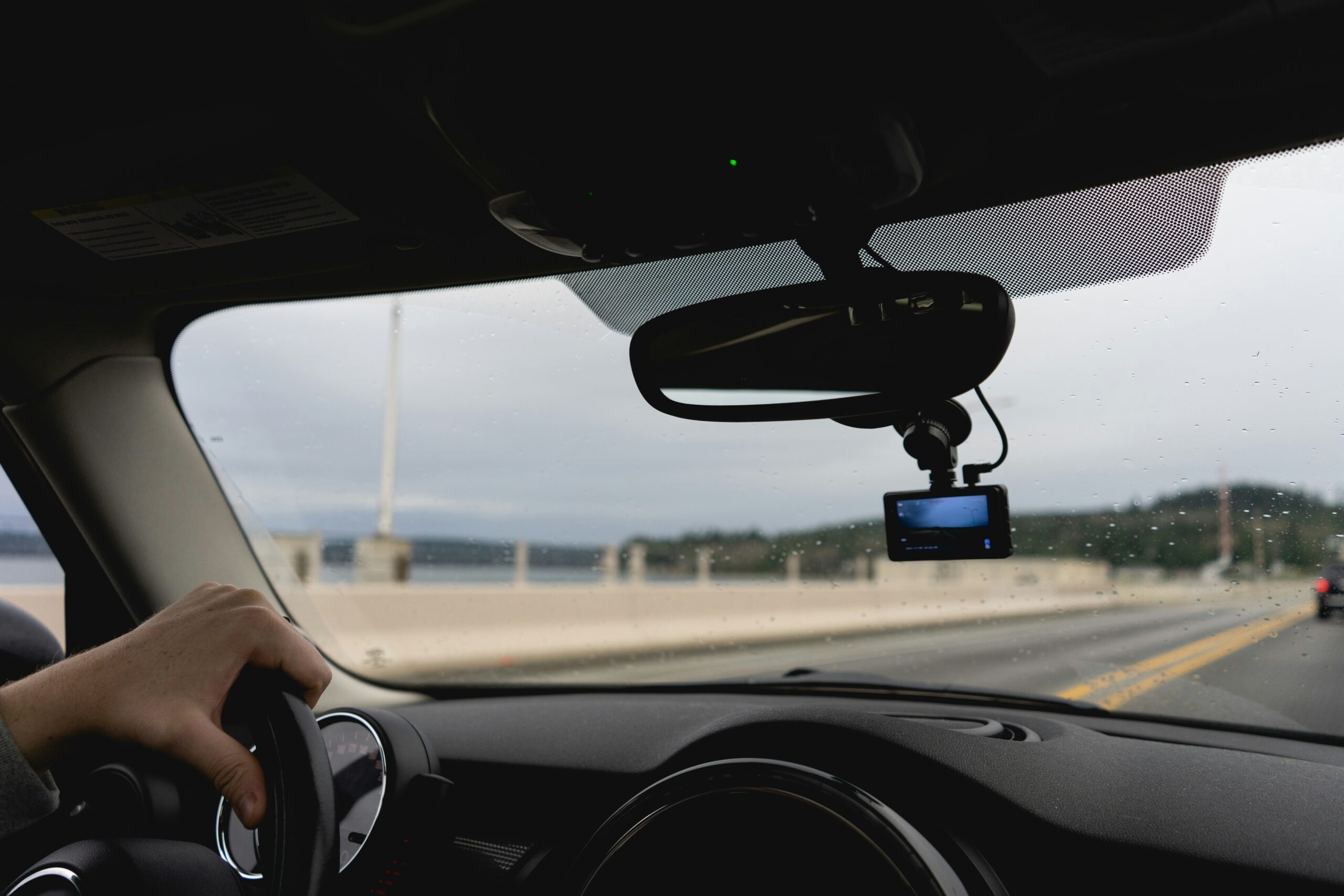
Accident evidence, fraud protection, parking coverage, and more.
A dash cam might be one of the smartest things you can add to your car. Here’s why.
 TL;DR
TL;DR
When two cars collide and the stories don’t match, it usually comes down to he-said-she-said. Insurance adjusters piece together what happened from damage patterns, witness accounts, and whatever each driver claims. That process takes time, and the outcome isn’t always accurate.
A dash cam changes that. The footage shows exactly what happened in the moments before impact, where the cars were, who had the right of way, and how the collision unfolded. It’s not a memory or an interpretation. It’s a recording.
This matters most when fault is contested. Dash cam footage is especially useful in multi-car accidents, low-speed collisions where damage is minimal but injuries are claimed, and intersections where traffic signals are involved. In those situations, video is often the only reliable account of what actually happened.
Insurance fraud is more common than most people realize, and staged accidents are one of the most frequent forms. A driver deliberately causes a collision, then claims you were at fault, braking suddenly in front of you, or waving you through before accelerating into your path. Without a dash cam, these scams can be surprisingly hard to disprove.
A dash cam recording makes the whole scheme fall apart. If your footage shows the other driver deliberately cutting in front of you or braking without cause, that’s not a dispute anymore. It’s evidence of fraud. Insurance investigators and law enforcement take that seriously.
It’s not just about your individual claim either. When fraud attempts get documented and reported, it helps keep costs down for everyone paying premiums.
A lot of the damage cars take happens when the driver isn’t even there, a parking lot hit-and-run, vandalism overnight, or someone sideswiping your car and driving off without leaving a note.
Parking mode addresses all of that. When your car is off, a dash cam with parking mode uses motion or impact sensors to trigger a recording if something happens nearby. If someone bumps your bumper at 2am, you’ve got it on video. The visible presence of a camera alone is often enough to deter someone from targeting your car in the first place.
One thing to note: parking mode draws power from your car’s battery, so some models require a hardwire kit. Worth factoring in when you’re choosing a camera.
Knowing you’re being recorded tends to make people drive better, including you. For new drivers especially, a dash cam adds an extra layer of accountability. Parents can review footage after their teenager’s trips, and the knowledge that the camera is there encourages better habits from the start.
Reviewing your own footage occasionally can be surprisingly revealing too. That rolling stop you didn’t realize you were making. The lane change that was closer than it felt. Small things that are easy to ignore in the moment but visible on video.
It depends on your insurer. Some offer a formal dash cam discount, recognizing that drivers with cameras tend to have fewer disputes and faster claims resolution. Others don’t have a specific discount but factor footage into claims processing, which can still speed things up and reduce friction.
The more consistent benefit is in the claims process itself. Clear video evidence means fewer disputes, less back-and-forth, and a greater likelihood of a fair outcome without a prolonged investigation.
With Lemonade car insurance, your policy covers accidents and damage. If you’ve got dash cam footage to share after an incident that clearly establishes what happened, the claims process can get a lot smoother. You’re not relying on anyone’s memory, you have a reliable visual backup to support your side of the story.
There’s no shortage of options out there, so here’s what actually matters when you’re deciding.
| Feature | What to look for | Why it matters |
|---|---|---|
| Video quality | 1080p minimum; 4K preferred | Needs to be clear enough to read license plates, especially at night |
| Field of view | 140° or wider | A narrow lens misses side merges and wide intersections |
| Loop recording | Should be standard on any model | Automatically overwrites old footage so storage never fills up |
| Camera coverage | Front and rear (dual-channel) | Rear-end collisions are among the most common accident types |
| GPS tracking | Built-in preferred | Embeds speed and location into footage for added context |
| Wi-Fi connectivity | Useful, not essential | Lets you transfer clips to your phone without removing the SD card |
| Parking mode | Check if hardwire kit is required | Captures hit-and-runs and vandalism while the car is off |
| Storage | 64GB or 128GB high-endurance microSD | Gives you several hours of footage before loop recording kicks in |
A dash cam is genuinely useful for most drivers, but it’s worth knowing what you’re getting into.
For most people, the pros significantly outweigh the cons. The cost of a decent camera is a fraction of what a single disputed claim can cost in time, stress, and potentially higher premiums.
A dash cam records the accidents you’d otherwise have to argue about, the fraud attempts you’d otherwise fall victim to, and the parking lot incidents you’d otherwise never know happened.
Pair it with solid car insurance and you’re genuinely covered. Lemonade handles the accidents, the damage, and the unexpected. Your dash cam handles the evidence. Ready to see what a policy looks like? Get a quote in minutes.
Yes, for most drivers it’s worth it. The evidence it provides in an accident or fraud attempt alone can save you far more than the camera costs, and features like parking mode and GPS tracking add extra value beyond just recording while you drive.
Some insurers offer a discount for dash cam-equipped cars, but not all do. Even without a formal discount, having clear footage can speed up the claims process and help ensure a fair outcome, which is a real financial benefit.
A front-only camera records what’s ahead of you, while a front and rear dash cam captures both directions. Since rear-end collisions are among the most common accidents, dual coverage gives you a much more complete record of what happened.
Technically yes, dash cam footage records everything, including your own driving. But the same transparency that could work against you in a rare case is also what makes dash cam evidence so valuable when you’re not at fault, which is the much more common scenario.
A few quick words, because we <3 our lawyers: This post is general in nature, and any statement in it doesn’t alter the terms, conditions, exclusions, or limitations of the policies issued, which differ according to your state of residence. You’re encouraged to discuss your specific circumstances with your own professional advisors. The purpose of this post is merely to provide you with info and insights you can use to make such discussions more productive! Naturally, all comments by, or references to, third parties represent their own views, and Lemonade assumes no responsibility for them. Coverage may not be available in all states. Please note that statements about coverages, policy management, claims processes, Giveback, and customer support apply to policies underwritten by Lemonade Insurance Company or Metromile Insurance Company, a Lemonade company, sold by Lemonade Insurance Agency, LLC. The statements do not apply to policies underwritten by other carriers.
Please note: Lemonade articles and other editorial content are meant for educational purposes only, and should not be relied upon instead of professional legal, insurance or financial advice. The content of these educational articles does not alter the terms, conditions, exclusions, or limitations of policies issued by Lemonade, which differ according to your state of residence. While we regularly review previously published content to ensure it is accurate and up-to-date, there may be instances in which legal conditions or policy details have changed since publication. Any hypothetical examples used in Lemonade editorial content are purely expositional. Hypothetical examples do not alter or bind Lemonade to any application of your insurance policy to the particular facts and circumstances of any actual claim.