What Should Be in Your Car Emergency Kit? Here's the Complete Checklist.

Everything you need to handle a breakdown, stay safe roadside, and keep your family protected.

Team LemonadeTeam Lemonade
Get a quote
car emergency kit checklist

A car emergency kit is one of those things that feels unnecessary until the moment it isn’t. Building a solid one takes less than an hour and can cost less than a single tow truck call. Here’s exactly what to pack, how to store it, and how to keep it ready.

TL;DR
  • Every car should have a roadside emergency kit with jumper cables (or a portable jump starter), a first aid kit, warning triangles or flares, a flashlight, and basic tools.
  • Keep your seatbelt cutter and window breaker within reach of the driver, not buried in the trunk.
  • Tailor your kit to your climate: winter driving calls for an ice scraper, warm layers, and sand or kitty litter; hot climates need extra water and sunscreen.
  • Families and parents should add diapers, formula, a child comfort item, and any necessary medications to their car emergency kit.
  • Check your kit every six months: rotate food and water, replace expired medications, and test the flashlight.

The complete car emergency kit checklist

Think of your car emergency kit in layers: things that get you moving again, things that keep you safe while you wait, and things that keep you alive if the wait is long. Here’s the full breakdown.

Get-you-moving essentials

These are the car breakdown essentials that solve the most common roadside problems fast.

  • Jumper cables or a portable jump starter: A dead battery is one of the most common reasons you’ll need roadside assistance. Jumper cables work great if another car is nearby. A portable jump starter (also called a jump pack) works even when you’re alone, and most double as a phone charger. Worth every penny.
  • Spare tire, jack, and lug wrench: Check that your spare is properly inflated every time you rotate your tires. A flat spare is just another problem.
  • Tire pressure gauge: Cheap, small, and surprisingly useful. Low tire pressure is one of the easiest issues to catch before it becomes a flat.
  • Tow rope or tow strap: If your car needs to be pulled out of mud, snow, or a ditch, you’ll want one of these on hand.
  • Basic tool kit: A compact set with screwdrivers, pliers, and an adjustable wrench covers most roadside fixes.
  • Duct tape and zip ties: Temporarily hold a loose bumper, seal a leaking hose, or fix a hundred other things that break at the worst possible moment.

Safety and visibility

Being visible to other drivers is just as important as fixing the problem. This is the part of your roadside assistance kit checklist that could actually save your life.

  • Reflective warning triangles or road flares: More on the triangles vs. flares debate in a minute, but either way, you need something to warn oncoming traffic that you’re stopped.
  • Hi-vis safety vest: If you have to get out of the car on a busy road, wear it. It weighs nothing and folds flat.
  • Flashlight with extra batteries (or hand-crank): Your phone flashlight drains your battery fast. Keep a dedicated flashlight in your kit. A hand-crank model means you never have to worry about dead batteries.
  • Rain poncho: Breakdowns don’t wait for good weather. A compact poncho keeps you dry while you work.

Safety and medical

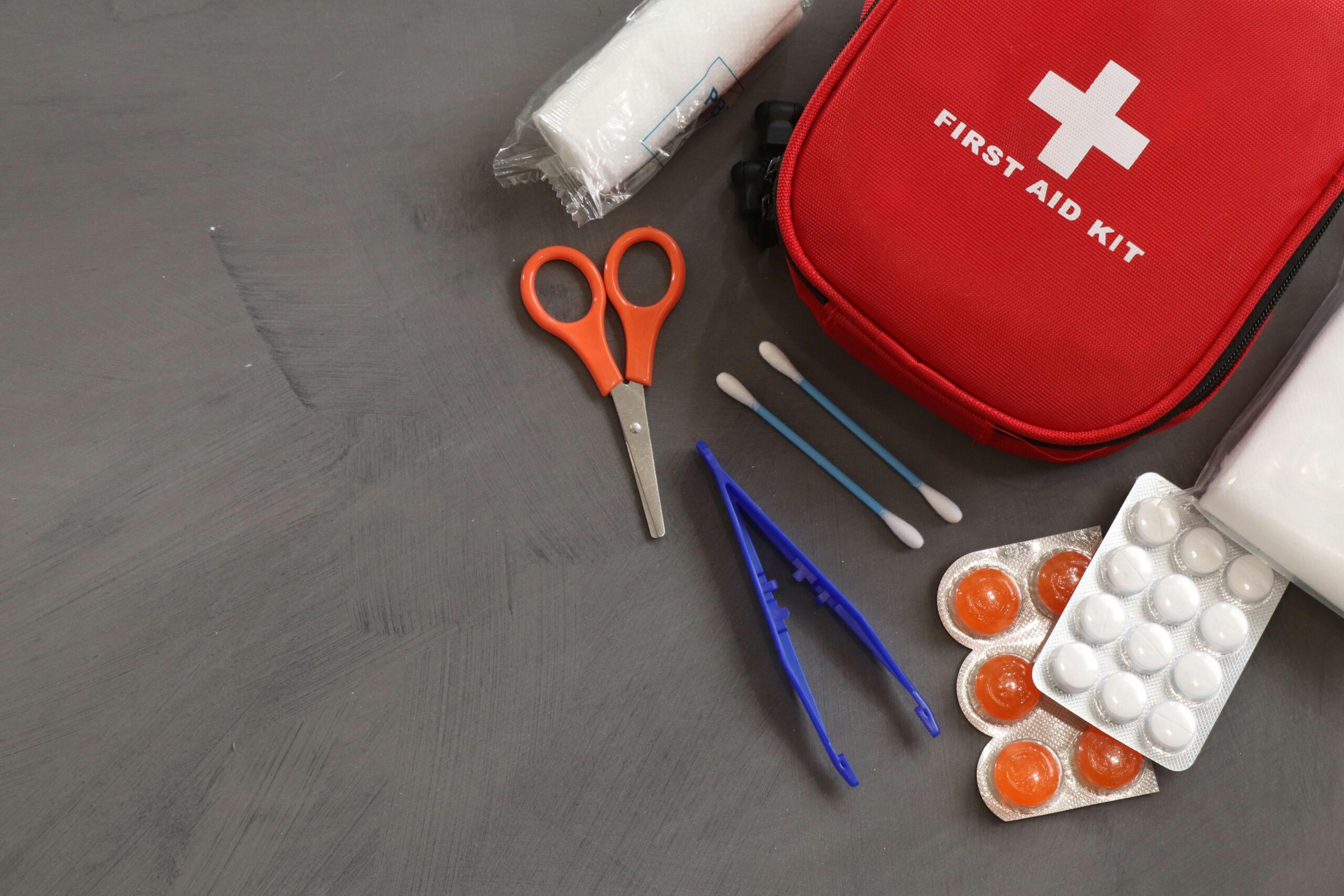
  • First aid kit: Stock it with bandages, antiseptic wipes, gauze, medical tape, pain relievers, and tweezers. A pre-assembled car first aid kit from a pharmacy or Amazon works well – just check the expiration dates when you buy it.
  • Seatbelt cutter and window breaker: This one’s non-negotiable. Keep it clipped to your visor or tucked in your door pocket – somewhere you can grab it without thinking. The trunk is too far away in an emergency.
  • Car fire extinguisher: Look for a Class B/C-rated extinguisher designed for car use. Small enough to fit under a seat, and hopefully something you’ll never need.
  • Emergency contact card: A physical card with key phone numbers: family, doctor, insurance. Don’t rely solely on your phone. If it’s dead or cracked, you’ll want a backup.

Survival basics

If you’re stranded for hours, or overnight, these items matter more than you’d think.

  • Bottled water: At least one liter per person. More if you’re in a hot climate or driving with kids.
  • Non-perishable snacks: Granola bars, nuts, or dried fruit. Nothing that melts, spoils, or makes a mess.
  • Emergency mylar blanket: These fold up to the size of a deck of cards and reflect body heat back to you. A must-have for cold climates, but useful anywhere.
  • Extra phone charger or power bank: A charged power bank means you can call for help, pull up a map, or stay in contact with family while you wait.
  • Cash (small bills): Card readers fail. Parking meters run out. Tow truck drivers sometimes prefer cash. Keep $20–$40 in small bills tucked in your kit.

Roadside flares vs. warning triangles: which should you use?

Both work, but they have different strengths. Here’s how to think about it.

Reflective warning triangles are reusable, weatherproof, and don’t require any heat or flame. They’re the safer choice if you have kids in the car or if you’re stopping near dry brush. The downside: they’re only visible because of reflected light, so they’re less effective in heavy rain or fog.

Road flares (including electronic LED versions) are bright and visible in almost any conditions. Traditional flares burn hot, so you need to handle them carefully and keep them away from fuel spills. Electronic LED flares are a great middle ground: bright, long-lasting, and safe around kids.

The practical answer? Keep both if you can. If you have to choose one, electronic LED flares give you the best of both worlds.

Winter car emergency kit additions

If you live somewhere that sees real winters, your emergency car kit for winter needs a few extra items. Getting stuck in snow or ice is a completely different scenario than a summer breakdown.

  • Ice scraper and snow brush: Keep one in the car, not in the garage.
  • Sand or kitty litter: Pour it under your tires for traction when you’re stuck in snow or ice. A small bag in the trunk is all you need.
  • Extra warm layers: A blanket, gloves, and a hat. If your car breaks down in freezing temperatures and you have to wait for help, you’ll want them.
  • Hand warmers: Inexpensive, compact, and a genuine comfort in the cold.
  • Collapsible snow shovel: Compact enough to tuck in the trunk, and genuinely useful if you get buried.

Hot climate additions

  • Extra water: Heat accelerates dehydration. If you’re driving through desert or high-temperature regions, double your water supply.
  • Sunscreen: If you’re stuck roadside in full sun, you’re going to want it.
  • Cooling towel: Wet it, snap it, and it stays cool for hours. A small comfort that makes a big difference.
  • Car window shades: Keep a set of window shades in the car. They block direct sun, help regulate interior temperature, and protect from heat and UV exposure.

Rural and remote driving additions

  • Extra fuel canister: If the next gas station is 50 miles away, a small fuel reserve is your safety net.
  • Paper maps: GPS fails. Cell service disappears. A folded state map in your glove box is old-school and still useful.
  • Whistle: If you’re off-road or in a remote area and need to signal for help, a whistle carries farther than your voice.

Family car emergency kit: what to add when kids are in the car

A family car emergency kit is basically a regular kit with a few extra layers of “what if my toddler is melting down while I’m changing a tire” energy. Here’s what to add.

  • Extra diapers and wipes: More than you think you’ll need. Double it.
  • Formula or snacks: Age-appropriate food for every child in the car. A hangry kid is a loud kid.
  • Baby or child blanket: Doubles as comfort item and warmth layer.
  • Child’s medications: Any prescriptions, plus children’s pain reliever and antihistamine.
  • Comfort item: A small stuffed animal or familiar toy. It won’t fix a flat tire, but it can make a stressful wait much more manageable for little ones.
  • Extra change of clothes: For the kids, obviously. But honestly, for you too.

Where to store your car emergency kit

The trunk or cargo area is the right place for most of your emergency kit. Use a dedicated bag, bin, or organizer so everything stays in one place and doesn’t roll around.

A few exceptions:

  • Seatbelt cutter and window breaker: These need to be within arm’s reach of the driver at all times. Clip one to your sun visor or keep it in your door pocket. Not the trunk.
  • Power bank and phone charger: Keep these in your center console or glove box so they’re easy to access without leaving the car.
  • Emergency contact card: Glove box. Along with your insurance and registration.

If you drive an SUV or hatchback, a cargo organizer with a hard bottom works great. For sedans, a soft-sided duffel or zippered bag fits neatly next to the spare tire well.

Check your kit twice a year

Building the kit is step one. Keeping it ready is step two. Set a reminder every six months (spring and fall work well) and run through this quick car kit maintenance checklist.

  • Rotate bottled water and snacks. Check expiration dates and replace anything past its prime.
  • Check and replace any expired medications in your first aid kit.
  • Test your flashlight and replace batteries if needed.
  • Check your spare tire pressure. It loses air slowly over time, even when it’s not in use.
  • Make sure your power bank is charged.
  • Confirm your emergency contact card is still accurate.
  • Swap out seasonal items: add warm layers in fall, swap them for cooling supplies in spring.

Does car insurance cover breakdowns?

Standard car insurance typically doesn’t cover the cost of a breakdown itself. The tow, the labor, and the repair all depend on your policy: collision and comprehensive coverage help when your car is damaged by an accident, a natural disaster, theft, or similar events. But for the everyday stuff like a dead battery or a flat tire, that’s where roadside assistance comes in.

Lemonade car insurance offers roadside assistance coverage that takes the stress out of being stranded. Whether your battery dies on a back road or you get a flat on the highway, we can dispatch help straight to your location through the app. Coverage includes towing, jump starts, fuel delivery, tire changes, and lockout services, so you’re not left figuring it out alone on the side of the road.

Before we go

You don’t need a fancy setup to be prepared. A sturdy bag, the right supplies, and a twice-yearly check is all it takes to go from “stranded and stressed” to “handled it”. Start with the essentials, tailor it to your climate and your family, and store it somewhere you’ll actually be able to reach it.

And while you’re thinking about being ready on the road, it’s a good time to make sure your auto insurance is doing its job too. Lemonade auto insurance has you covered when things go sideways, from fender benders to bigger moments. Grab a quick quote and see what the right coverage looks like for you.

get your quote

Frequently Asked Questions

What are the most important things to keep in a car emergency kit?

The essentials are a portable jump starter or jumper cables, a first aid kit, reflective warning triangles or road flares, a flashlight, a spare tire with a jack and lug wrench, a seatbelt cutter and window breaker (kept within reach), a power bank, and at least one liter of water per person.

Where should I store my car emergency kit?

Keep the main kit in your trunk or cargo area in a dedicated bag or bin. The exception: your seatbelt cutter and window breaker should always be within arm’s reach of the driver, not in the trunk. Your emergency contact card and phone charger belong in the glove box or center console.

How often should I check and restock my roadside emergency kit?

Twice a year is the right cadence. Spring and fall work well as reminders. Check expiration dates on food, water, and medications, test your flashlight, verify your spare tire pressure, and make sure your power bank is charged.

What extra items should I add to a winter car emergency kit?

For cold climates, add an ice scraper and snow brush, sand or kitty litter for traction, extra warm layers and gloves, hand warmers, and a compact collapsible snow shovel. An emergency mylar blanket is also a must if temperatures can drop significantly where you drive.

A few quick words, because we <3 our lawyers: This post is general in nature, and any statement in it doesn’t alter the terms, conditions, exclusions, or limitations of the policies issued, which differ according to your state of residence. You’re encouraged to discuss your specific circumstances with your own professional advisors. The purpose of this post is merely to provide you with info and insights you can use to make such discussions more productive! Naturally, all comments by, or references to, third parties represent their own views, and Lemonade assumes no responsibility for them. Coverage may not be available in all states. Please note that statements about coverages, policy management, claims processes, Giveback, and customer support apply to policies underwritten by Lemonade Insurance Company or Metromile Insurance Company, a Lemonade company, sold by Lemonade Insurance Agency, LLC.  The statements do not apply to policies underwritten by other carriers.

Share

Please note: Lemonade articles and other editorial content are meant for educational purposes only, and should not be relied upon instead of professional legal, insurance or financial advice. The content of these educational articles does not alter the terms, conditions, exclusions, or limitations of policies issued by Lemonade, which differ according to your state of residence. While we regularly review previously published content to ensure it is accurate and up-to-date, there may be instances in which legal conditions or policy details have changed since publication. Any hypothetical examples used in Lemonade editorial content are purely expositional. Hypothetical examples do not alter or bind Lemonade to any application of your insurance policy to the particular facts and circumstances of any actual claim.