

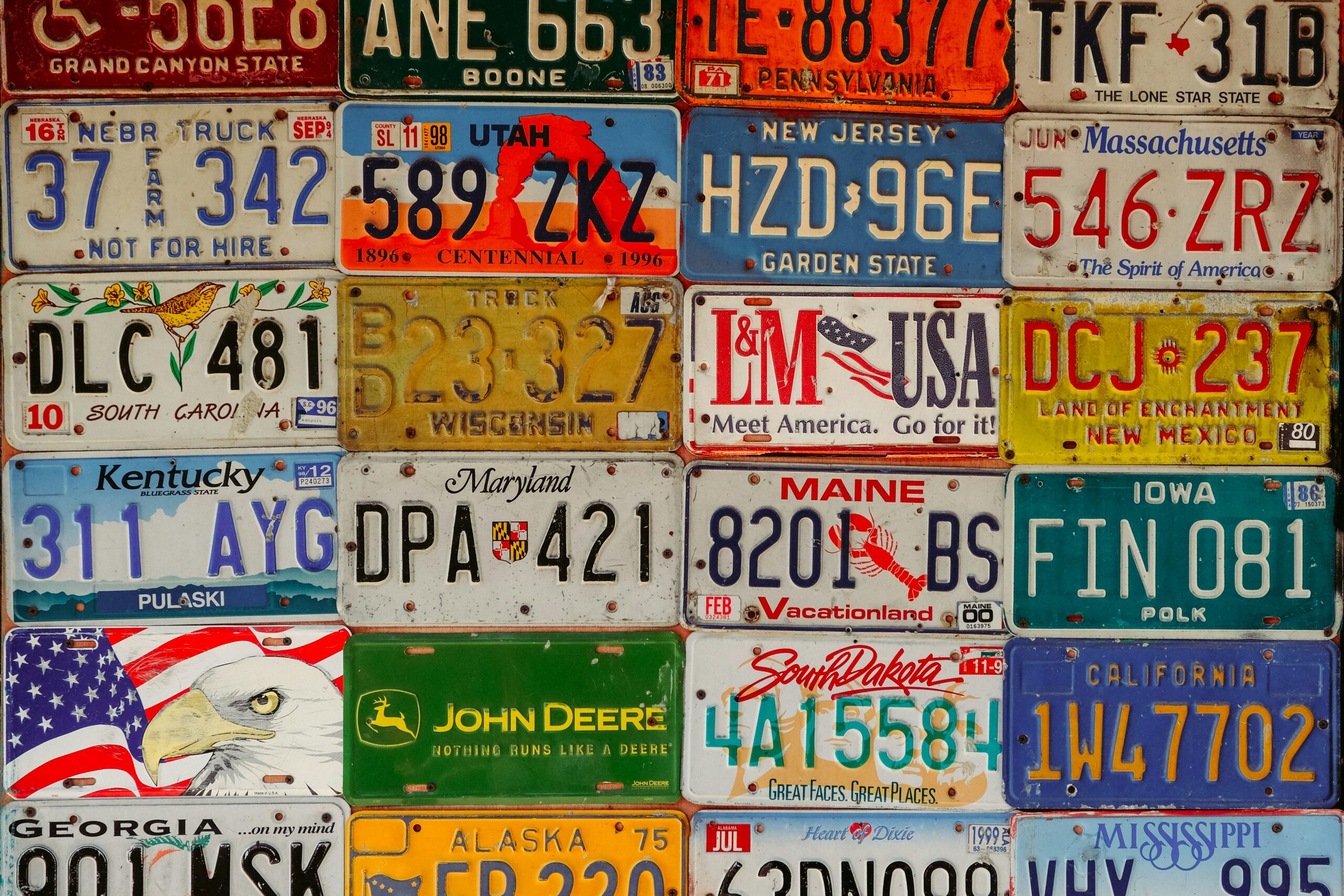
Getting your driver’s license involves moving through your state’s graduated licensing system, which includes gathering documents, passing tests, completing education requirements, and demonstrating safe driving skills over several months.
 TL;DR
TL;DR
The path to your driver’s license follows a clear 4-step process through your state’s Graduated Driver License (GDL) program:
- You’ll gather documents
- Get your learner’s permit by passing a written test
- Complete driver education and practice hours
- Pass a road test.
The whole process typically takes 6-12 months from start to finish.
Step 1: Gather your required documents
Before you can walk into any DMV office, you need specific documents that prove your identity, residency, and legal status. Missing even one document means you’ll have to come back another day.
Essential Documents Checklist:
- Proof of identity: Birth certificate or valid passport
- Social security verification: Social security card, W-2, or pay stub showing your full SSN
- Proof of residency: Utility bill, bank statement, or school enrollment records with your current address
- Parental consent: Parent or guardian signature and presence (required for minors)
| Document type | Why you need it | Acceptable forms |
|---|---|---|
| Identity verification | Proves you are who you say you are | Birth certificate, passport, certificate of naturalization |
| Social Security proof | Required for all licenses | Social security card, W-2, pay stub with full SSN |
| Residency proof | Shows you live in the state | Utility bill, bank statement, lease agreement |
| Parental consent | Required for drivers under 18 | Signed form, parent present at appointment |
If your state participates in Real ID programs and you want to fly domestically or visit federal buildings later, bring additional documents now. This saves you from having to upgrade your license later.
The DMV can be unforgiving about documentation. Be sure to call ahead or check your state’s DMV website to confirm exactly what documents you need. Some must be originals, while others accept certified copies.
Step 2: Get your learner’s permit

Your learner’s permit is your official permission to start learning to drive, but first you need to pass the written test (also called the knowledge test or permit test). Most states let you apply when you’re 15-16 years of age.
Here’s a look at the age requirements for all 50 states:
| Minimum age | States |
|---|---|
| 14 | Alaska, Arkansas, Iowa, Kansas, North Dakota, South Dakota |
| 14½ | Idaho, Montana, New Hampshire |
| 14¾ | Michigan |
| 15 | Alabama, Colorado, Florida, Georgia, Illinois, Indiana, Minnesota, Mississippi, Missouri, Nebraska, New Mexico, North Carolina, South Carolina, Tennessee, Texas, Utah, Vermont, Washington, West Virginia, Wyoming |
| 15½ | Arizona, California, Hawaii, Nevada, Ohio, Oklahoma, Virginia, Wisconsin |
| 15¾ | Maryland |
| 16 | Connecticut, Delaware, Kentucky, Louisiana, Maine, Massachusetts, New Jersey, New York, Oregon, Pennsylvania, Rhode Island |
What the written test covers:
- Traffic laws and regulations
- Road signs and their meanings
- Safe driving practices and right-of-way rules
- Parking regulations and emergency procedures
Study your state’s driver’s manual (free on your DMV’s gov website) for 10-15 hours, then take online practice tests until you’re consistently scoring 90% or higher. Most teens need to score 80% or higher to pass.
You’ll also take a vision exam to ensure you can see well enough to drive safely. The whole process usually takes 1-2 hours, including waiting time.
Step 3: Complete driver education and practice hours
This step involves two parts: formal driver education and supervised practice driving.
Driver education requirements
Most states require new drivers under 18 to complete a driver education course:
| Program type | Cost range | Duration | Best for |
|---|---|---|---|
| High school program | $50-200 | Semester-long | Budget-conscious families |
| Private driving school | $200-600 | 2-6 weeks | Flexible scheduling needs |
| Online course + road training | $100-400 | Self-paced | Busy schedules |
What you’ll learn:
- Vehicle operation and safety systems
- Defensive driving techniques and hazard recognition
- Traffic laws, road signs, and emergency procedures
- Parking and maneuvering skills
Supervised practice driving
Typical state requirements:
| Requirement | Standard | Range across states |
|---|---|---|
| Total supervised hours | 50 hours | 40-60 hours |
| Night driving hours | 10 hours | 5-15 hours |
| Minimum permit holding period | 6 months | 3-12 months |
| Supervising adult age | 21+ years | 18-25+ years |
Essential skills to master:
- Basic vehicle operation (starting, steering, braking)
- Parking (parallel, perpendicular, angled)
- Highway driving and merging
- City driving with pedestrians and traffic
- Three-point turns, backing up, and emergency stops
Step 4: Pass your road test and get your license
When you’ve completed your practice hours and driver education, it’s time to schedule your skills test (also called the road test or driving test) at the DMV.
What to bring on test day:
- Your current learner’s permit
- Certificate of completion from driver education
- Log book showing completed practice hours
- Vehicle registration and insurance proof
- A licensed adult (21+) to drive you to the test
Your test vehicle must be:
- Currently registered and insured
- In good working condition (all lights, signals, brakes functioning)
- Clean enough for the examiner to see clearly
- Equipped with working seatbelts
What happens during the road test
The test typically lasts 15-30 minutes and covers several key areas:
| Test component | What they’re evaluating |
|---|---|
| Pre-drive inspection | Mirror adjustment, seat position, safety awareness |
| Basic maneuvers | Three-point turns, backing, parking |
| Traffic navigation | Following speed limits, proper signaling, lane changes |
| Intersection handling | Stop signs, traffic lights, right-of-way |
| Parallel parking | Spatial awareness and vehicle control |
During the test:
- Follow all traffic laws exactly (full stops, proper speeds, complete signals)
- Check mirrors frequently and maintain awareness
- Keep both hands on the wheel and avoid sudden movements
- Stay calm if you make a minor mistake, keep driving safely
If you pass: Congratulations! You’ll receive your temporary license that day, with your official license arriving in the mail within 1-2 weeks.
If you don’t pass: Don’t panic; many people need multiple attempts. You can usually retake the test after waiting 1-7 days. Use the examiner’s feedback to practice specific areas before your next attempt.
Understanding your new license restrictions
Don’t expect full driving privileges immediately. Most states use a Graduated Driver License (GDL) system that gradually increases your freedoms as you gain experience.
Common GDL restrictions:
| Restriction type | Typical rules | Duration |
|---|---|---|
| Night driving | No driving between midnight-5 AM | 6-12 months |
| Passenger limits | No passengers under 20 (except family) | 6 months |
| Cell phone use | No handheld devices, sometimes no hands-free | Until age 18 |
| Zero tolerance | Any violation extends restrictions | Until full license |
These restrictions exist because teen drivers are statistically more likely to have accidents, especially at night and playing with their phone. But here’s the silver lining: following these restrictions can actually save your family money. Insurance companies like Lemonade reward the exact behaviors GDL programs require: avoiding night driving and staying off your phone while driving can earn you real discounts.
Special circumstances: What if I’m 18+?
If you’re 18 years of age or older, you may be able to skip some GDL requirements and apply directly for a full license. You’ll likely still need to:
- Pass vision, written, and driving exams
- Provide all required documentation
- Pay application fees
- Complete some form of driver education (varies by state)
The process is often expedited, but you’ll still need to demonstrate safe driving skills through the road test.
The real cost of getting licensed
The cost to get your actual driver’s license varies widely across the US, from just $4 in Iowa to $89 in Washington. But these upfront fees are nothing compared to what many families don’t expect: the ongoing costs once you start driving. Let’s take a look at the average costs families are paying for their teen drivers according to 2,000 parents of teen drivers.
| Monthly expense | Average cost | Annual total |
|---|---|---|
| Insurance | $206 | $2,472 |
| Gas | $176 | $2,112 |
| Maintenance | $158 | $1,896 |
| Total Monthly | $540 | $6,480 |
Making the process smoother for your family
Driving is the #2 source of family conflict, according to our survey. Here’s some tech-driven strategies to reduce the tension:
- Location sharing: 43% of families use Find My Friends or Life360 to eliminate “where are you?” arguments
- Driving monitoring: Insurance companies like Lemonade offer discounts for safe driving habits tracked through apps
- Practice logging apps: Digital hour tracking is more reliable than paper logs
Before we go…
Getting your driver’s license is just the beginning of your driving journey. With families investing $6,480 annually in teen driving, proving your responsibility behind the wheel isn’t just about safety, it’s about earning trust and potentially saving money.
The good news? Insurance companies like Lemonade are starting to reward safe driving habits instead of just penalizing mistakes. Modern telematics programs track things like smooth acceleration, gentle braking, and minimal phone use, turning good habits into real savings for you and your family.
Ready to start driving smart? Get a quote with Lemonade today
Drivers license FAQs
How long does the entire process take to get my drivers license?
Typically 6-12 months from getting your learner’s permit to receiving full driving privileges, depending on your state’s waiting periods and how quickly you complete requirements.
What if I fail my driving test?
You can usually retake it after waiting 1-7 days. Use the examiner’s feedback to identify areas for improvement and practice those specific skills.
Do I need my own car when I’m learning to drive?
Nope, you can use a family vehicle for both practice and testing. Only 39% of today’s teens have their own cars, compared to 45% of their parents’ generation.
Can I drive in other states with my new license?
Yes, your state license is valid nationwide, but you must follow the traffic laws and GDL restrictions of whatever state you’re driving in.
A few quick words, because we <3 our lawyers: This post is general in nature, and any statement in it doesn’t alter the terms, conditions, exclusions, or limitations of policies issued by Lemonade, which differ according to your state of residence. You’re encouraged to discuss your specific circumstances with your own professional advisors. The purpose of this post is merely to provide you with info and insights you can use to make such discussions more productive! Naturally, all comments by, or references to, third parties represent their own views, and Lemonade assumes no responsibility for them. Coverage and discounts may not be available in all states.
Share


