

- Why do blind spots matter?
- Where are my car's blind spots?
- How can I check my blind spot?
- Do I still need to check my blind spot if my car has blind spot detection systems?
- Why are blind spots extra dangerous for new drivers?
- Common blind spot mistakes (and how to fix them)
- Do I need to worry about blind spots during my driving test?
- When do blind spots cause accidents?
- Blind spot FAQs
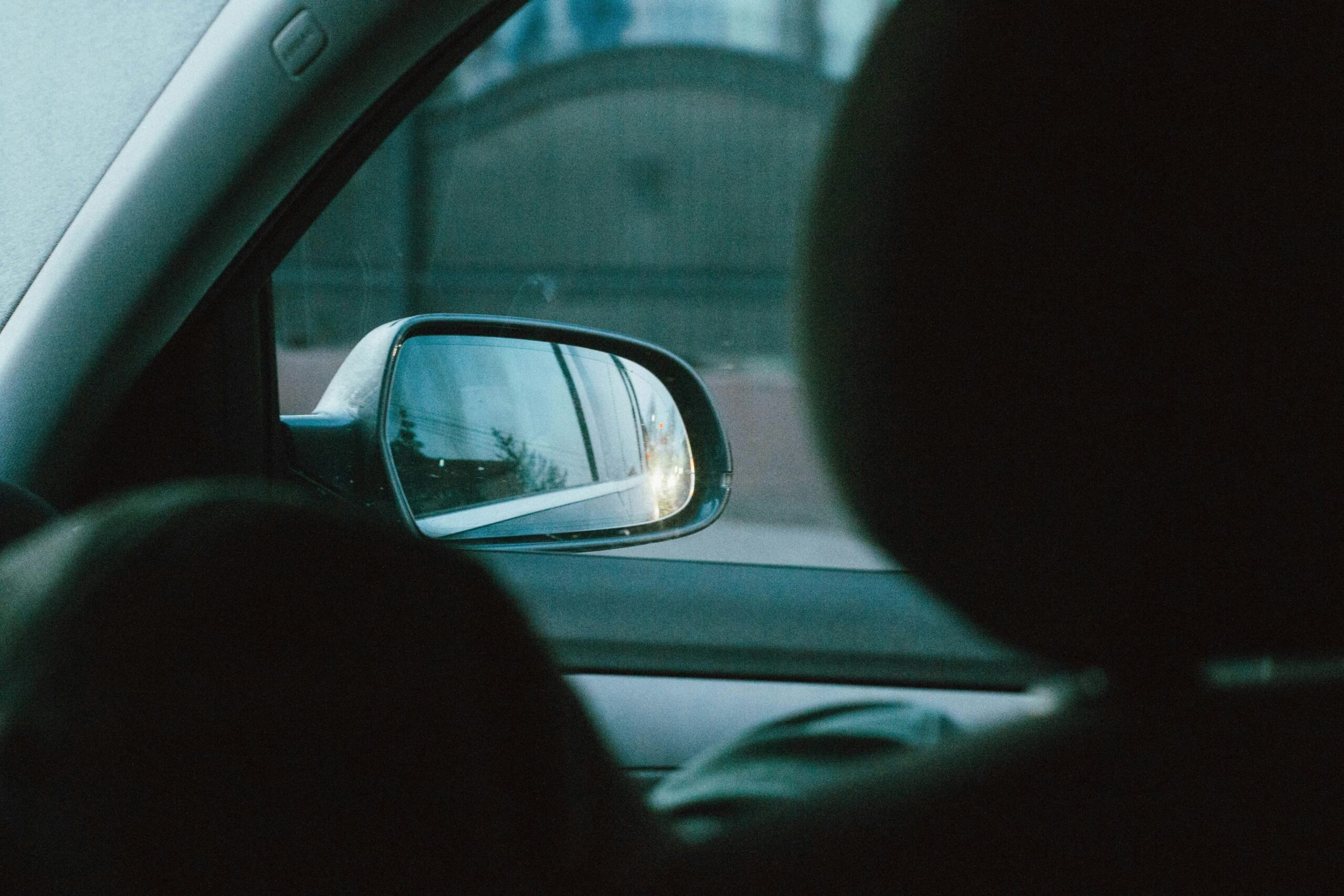
A blind spot is any area around your car that you can’t see using your rear-view mirror, side-view mirrors, or peripheral vision. These invisible zones exist on both sides of your car and behind you.
 TL;DR
TL;DR
Blind spots are the hidden areas around your car where other cars, motorcyclists, or cyclists can “disappear” from view. Every car has them, usually:
- Just behind your left and right shoulders
- Directly behind your car (especially in larger cars)
- Close to your front bumper
The fix? Always do a shoulder check before changing lanes, use your mirrors correctly, and consider blind spot mirrors for extra visibility.
Why do blind spots matter?
Think about it this way: even with perfectly adjusted mirrors, there are still zones around your car where a motorcycle could be riding right next to you… completely invisible. That’s your blind spot, and it’s why your driving instructor hammered the “check your blind spot” rule during driving lessons.
Here’s what creates these invisible areas:
| Mirror type | What it shows | What it misses |
|---|---|---|
| Rear-view mirror | Directly behind your car | Sides of your car |
| Left side-view mirror | Left rear area | Left side blind spot |
| Right side-view mirror | Right rear area | Right side blind spot |
Your field of vision through side windows only covers so much. The pillars of your car (those metal supports) create additional blind spots that block your view of pedestrians, cyclists, or other cars.
Where are my car’s blind spots?
Every car has predictable blind spot locations. From the driver’s seat, here are the danger zones:
Left side blind spot:
- Area just behind your left shoulder
- Extends from your rear door to about 10 feet back
- Where motorcyclists often “hide” during lane changes
Right side blind spot:
- Larger than the left side (you’re sitting on the left)
- Covers the area behind your right shoulder
- Extends further back due to your seating position
Rear blind spot:
- Directly behind your car, below your rear window view
- Especially large in SUVs, trucks, and vans
- Where kids, pets, or small objects disappear
Front blind spots:
- Close to your front bumper
- Created by your hood and dashboard height
- Dangerous in parking lots and driveways
How can I check my blind spot?
Your driving school probably taught you the “mirror-signal-shoulder check” sequence, but here’s why each step matters:
The three-step process
- Check your mirrors first: See what’s in your rear-view and side-view mirrors
- Signal your intention: Let other drivers know you’re planning to move
- Shoulder check: Turn your head to look directly into your blind spot
Proper shoulder check technique
- Turn your head about 45 degrees (not a full 90-degree turn)
- Keep your hands on the wheel
- Make it quick, about 1 second
- Check the blind spot on the side you’re moving toward
Pro-tip: Practice the shoulder check motion while parked. You want it to become automatic muscle memory before your driving test.
Do I still need to check my blind spot if my car has blind spot detection systems?
Yes, absolutely.
Blind spot detection systems use sensors to monitor the sides of your car and warn you with lights or beeps when something’s there. They’re helpful, but they’re not perfect. Sensors can miss motorcyclists, cyclists, or fail in bad weather like rain or snow.
Treat blind spot detection as backup support, not a replacement for good habits.
What about blind spot mirrors?
Those small convex mirrors you stick on your side-view mirrors work well for expanding your field of vision. Just remember they make objects look farther away than they actually are. Use them to spot if something’s there, then shoulder check for exact positioning.
The bottom line? Use every tool available: detection systems, blind spot mirrors, and shoulder checks. Your safety is worth the extra effort.
Why are blind spots extra dangerous for new drivers?
When you’re learning to drive, you’re already juggling a lot: steering, speed control, watching for pedestrians. Here’s why blind spots add extra risk:
You’re still building habits. Your brain isn’t automatically running the “check blind spots” program yet. According to recent data, families argue about teen driving an average of 4.2 times per month, with speeding and safety being top concerns—blind spot checking is definitely part of those conversations.
Other drivers expect you to check. Experienced drivers assume you’ll shoulder check before changing lanes. When you don’t, accidents happen fast.
Motorcyclists and cyclists are vulnerable. They’re smaller, quieter, and often travel in blind spot zones. Missing them during a lane change can be deadly.
Common blind spot mistakes (and how to fix them)

Mistake #1: Only using mirrors
The problem? Thinking your mirrors show everything
The fix: Always combine mirror checks with shoulder checks
Mistake #2: Rushing the process
The problem? Quick mirror glance, then immediate lane change
The fix: Mirror → Signal → Shoulder check → Move (give it 3-4 seconds total)
Mistake #3: Forgetting about large trucks
The problem? Big trucks have massive blind spots, if you can’t see their mirrors, they can’t see you
The fix: Pass quickly and maintain distance
Mistake #4: Ignoring backing up
The problem? Only thinking about blind spots when changing lanes
The fix: Shoulder check and use backup cameras when reversing
Do I need to worry about blind spots during my driving test?
Yes, your road test examiner will absolutely check whether you’re properly clearing your blind spots. Here’s what they’re looking for:
During lane changes:
- Mirror check before signaling
- Clear shoulder check to the side you’re moving
- Smooth, confident movement
During parking:
- Shoulder checks when backing up
- Awareness of pedestrians and cyclists
- Using all mirrors effectively
Fail-worthy mistakes:
- Changing lanes without shoulder checking
- Near-miss with another car due to blind spot failure
- Cutting off motorcyclists or cyclists
When do blind spots cause accidents?
Way more often than you’d think, and they’re exactly when good drivers get caught off guard.
Merging on the highway
You’re merging onto the highway. A motorcycle is traveling in your blind spot at the same speed you are. Your mirrors don’t show them.
Solution? Shoulder check before moving over, even if your mirrors look clear.
Backing out in a crowded parking lot
You’re backing out of a parking space. A small child is walking behind your car, below your rear window view.
Solution? Walk around your car before getting in, use backup camera AND shoulder checks.
Sharing the road with cyclists
You’re turning right at an intersection. A cyclist is traveling alongside your car in the bike lane.
Solution? Shoulder check right before turning, even when going straight.
Master your blind spots, master the road
Learning to check your blind spots isn’t just about passing your driving test, it’s about building habits that’ll keep you safe for life. Once shoulder checking becomes automatic, you’ll feel way more confident changing lanes and navigating traffic. You’ll know exactly what’s around your car at all times, and that peace of mind is worth everything.
As you build these safe driving habits, make sure your car insurance rewards your responsibility.
Get a quote with Lemonade to see how our telematics technology tracks safe behaviors like smooth lane changes and low phone use, helping responsible drivers earn discounts. Plus, you’ll get crash detection and 24/7 roadside assistance right through the app.
Blind spot FAQs
Do all cars have the same blind spots?
No. Larger cars like SUVs and trucks have bigger blind spots, especially behind and to the right side. Smaller cars generally have smaller blind spots, but they still exist. Sports cars with thick pillars can actually have worse blind spots despite their size.
Can I eliminate blind spots completely?
Not entirely, but you can minimize them. Properly adjusted mirrors, blind spot mirrors, and modern blind spot detection systems help a lot. The key is always combining technology with physical shoulder checks.
How do I know if my car mirrors are adjusted correctly?
Sit in your normal driving position. Your rear-view mirror should show your entire rear window. Your side mirrors should show just a sliver of your car’s side—if you see too much of your own car, they’re angled too far in.
What should I do if someone is camping in my blind spot?
Change your speed slightly to create space. Either speed up or slow down so they’re clearly visible in your mirrors. Don’t just sit there hoping they’ll move, take control of the situation.
Are blind spots different for new drivers vs experienced drivers?
The physical blind spots are the same, but experienced drivers develop better spatial awareness and more automatic checking habits. New drivers need to consciously think about each step until it becomes muscle memory, which is why practice and patience during driving lessons are so important.
A few quick words, because we <3 our lawyers: This post is general in nature, and any statement in it doesn’t alter the terms, conditions, exclusions, or limitations of policies issued by Lemonade, which differ according to your state of residence. You’re encouraged to discuss your specific circumstances with your own professional advisors. The purpose of this post is merely to provide you with info and insights you can use to make such discussions more productive! Naturally, all comments by, or references to, third parties represent their own views, and Lemonade assumes no responsibility for them. Coverage and discounts may not be available in all states.
Share


