
4 Ways the Inflation Reduction Act Can Help Homeowners Save Money
Don't sleep on these incentives.

Don't sleep on these incentives.
If you’re a homeowner, it may be worth it to read up on the Inflation Reduction Act. Via this recently-passed bill, you might be eligible to score tax rebates and incentives worth thousands of dollars, all designed to help improve your home’s energy efficiency.
One study found that the new law could save homeowners more than $37 billion on energy bills alone.
Saving money on your taxes and helping fight climate change? Not a bad deal. Here are four ways the Inflation Reduction Act might come in handy.
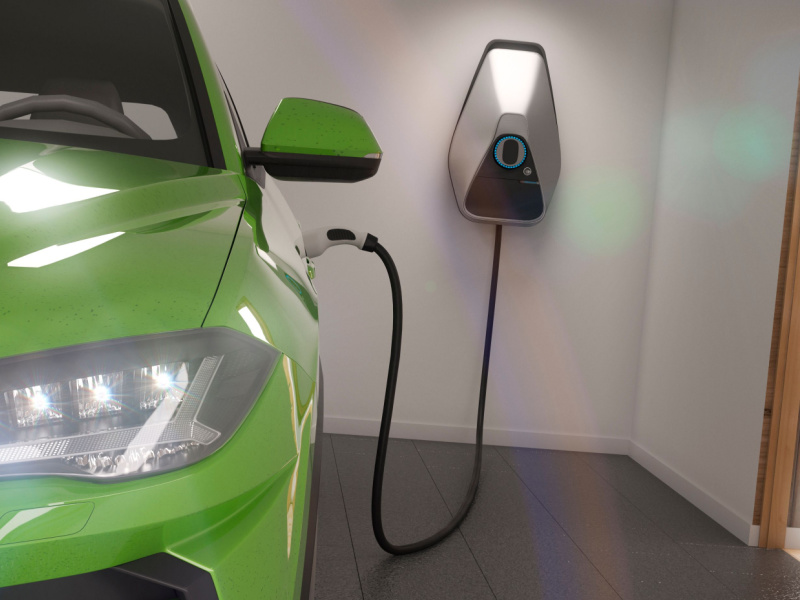
If you’re the owner of an electric car-or have been considering one-you may qualify for a tax credit of up to $4,000 for the purchase of a used electric vehicle, and up to $7,500 for a new electric vehicle.
Keep in mind the electric vehicle must be manufactured in North America in order to qualify, a portion of the law that not everyone is thrilled about.
Heating bills are expected to reach record highs this winter-something the Inflation Reduction Act hopes to tackle by supporting a wider move to cleaner, cheaper sources of electricity.
There are two grant programs for homeowners who cut down on their energy usage. Homeowners who slash their energy use by 35% through home renovations like energy-efficient insulation and HVAC installation would be eligible for a maximum $4,000 rebate. Homeowners who reduce their energy use by even just 20% would see a maximum $2,000 rebate.
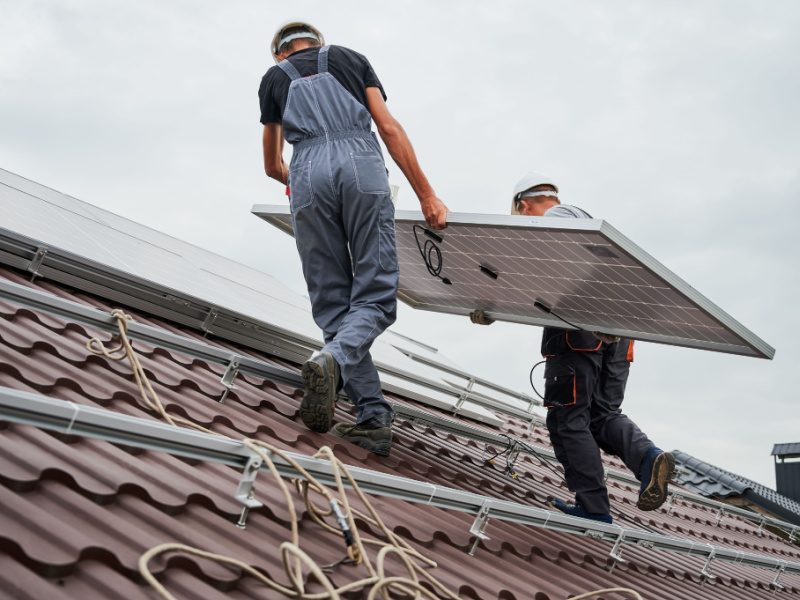
The Inflation Reduction Act is offering a 30% tax credit for homeowners who install solar panels, wind turbine systems, or other renewable energy equipment.
For example, if you install a $15,000 solar electric system, you could receive a $4,500 tax credit for your 2022 taxes. What’s more, you’d likely save an average of $1,500 annually on your energy bill for switching to such an energy-efficient system.
This tax credit also includes battery storage technology-so if you install a new battery system alongside a solar panel system, for example, you can also use that towards your overall tax credit. There’s no maximum amount that can be claimed.
Homeowners are eligible for the 30% tax rebate through December 2032. After that, the tax credit will drop to 26% through 2033, and 22% in 2034.
If you do take advantage of the act’s tax credit, your new solar panels may well add a significant amount to your home’s reconstruction cost, so you’ll want to reach out to your insurance provider to make sure you’re adequately covered.
And if you insure your home with Lemonade, you can cover your solar panels against mechanical breakdown by adding our Equipment Breakdown Coverage endorsement. This added layer of protection costs only about $3/month for Lemonade homeowners.
Homeowners can receive a maximum of $14,000 for buying and installing energy-efficient appliances or making qualifying home upgrades. The IRA also covers up to $150 for a professional home energy audit.
Here’s a quick breakdown of rebate amounts by category:
| Upgrade | Maximum rebate |
|---|---|
| Heat pump (space heating/cooling) | $8,000 |
| Electric load service center upgrade | $4,000 |
| Insulation and air sealing | $1,600 |
| Heat pump water heater | $1,750 |
| Electric stove, cooktop, range, or oven | $840 |
| Home energy audit | $150 |
These rebates are part of the High-Efficiency Electric Home Rebate Act (HEEHRA), administered at the state level. Availability and timing depend on your state’s program rollout.
To qualify, you need to meet specific energy-efficiency criteria – like purchasing Energy Star-rated appliances, and your household income can’t exceed 150% of your county’s median income.

Even if you aren’t planning on making your entire home eco-friendly or replacing all of your appliances or insulation, there are plenty of small ways to save money via the Inflation Reduction Act-so make sure you read up on all the ways you could save money come tax time next year. If you’re curious on how much you may be able to get with the Inflation Reduction Act, you may be able to calculate it here.
Meanwhile, while we’re on the subject of a great value for your money: In just a few minutes, you can get a quote for a Lemonade homeowners policy. Click the button below to get started.
To qualify for most IRA rebates, your household income must not exceed 150% of your county’s median income. You must also meet specific energy-efficiency criteria for each upgrade, such as purchasing Energy Star-rated appliances. Some credits, like the solar panel tax credit, have no income cap, while appliance rebates do.
Homeowners can potentially save $20,000 or more through combined IRA programs. Solar panel tax credits are 30% of installation costs with no upper limit. Appliance rebates top out at $14,000, and energy efficiency rebates reach up to $4,000. Combined savings depend on which upgrades you make and your household income.
Yes. Homeowners who reduce their overall energy use by 20% or more through upgrades including HVAC installation can receive rebates of $2,000 to $4,000 under the IRA’s energy efficiency programs.
The 30% Residential Clean Energy Credit is available through December 31, 2032. It drops to 26% in 2033 and 22% in 2034 before expiring for residential installations.
Yes. The IRA provides a tax credit of up to $4,000 for a used EV and up to $7,500 for a new one, provided the vehicle is manufactured in North America. For used vehicles, the credit is the lesser of $4,000 or 30% of the purchase price.
Yes. Major upgrades like solar panels increase your home’s reconstruction cost and may require a coverage update. Some insurers offer specific endorsements for solar panels and energy equipment. Lemonade homeowners can add Equipment Breakdown Coverage for solar panels for around $3/month.

Please note: Lemonade articles and other editorial content are meant for educational purposes only, and should not be relied upon instead of professional legal, insurance or financial advice. The content of these educational articles does not alter the terms, conditions, exclusions, or limitations of policies issued by Lemonade, which differ according to your state of residence. While we regularly review previously published content to ensure it is accurate and up-to-date, there may be instances in which legal conditions or policy details have changed since publication. Any hypothetical examples used in Lemonade editorial content are purely expositional. Hypothetical examples do not alter or bind Lemonade to any application of your insurance policy to the particular facts and circumstances of any actual claim.