
Does Your Dog Have Ectropion?
A droopy, outward-rolling eyelid that leaves the eye exposed. Here's what ectropion looks like and how it's managed.

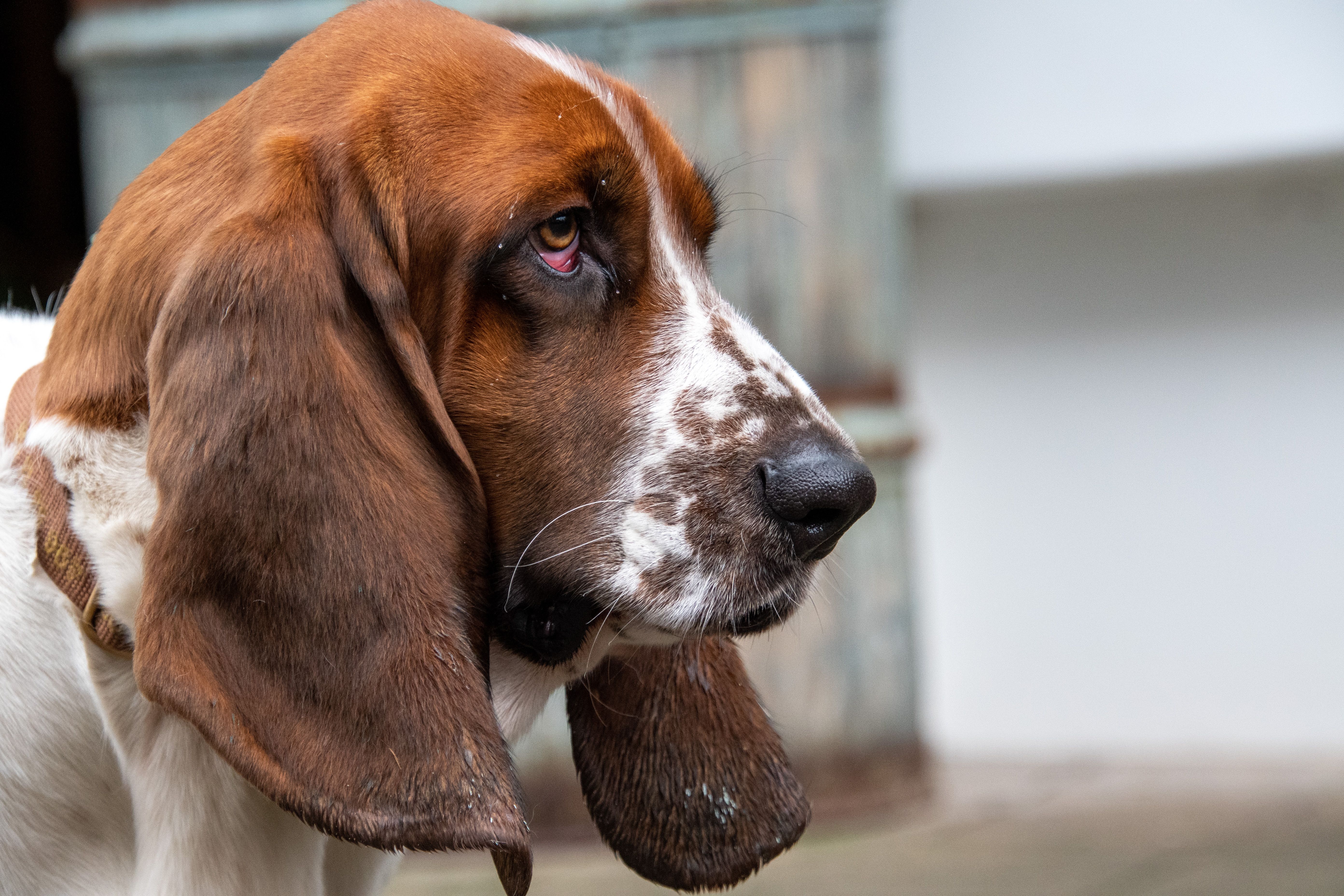
A droopy, outward-rolling eyelid that leaves the eye exposed. Here's what ectropion looks like and how it's managed.
If your dog’s lower eyelid looks like it’s drooping or rolling outward, exposing a rim of red or pink tissue underneath, that’s called ectropion. It’s one of the more common eye conditions in dogs, especially in certain breeds, and it’s not always an emergency. But it’s not something to ignore either. When the lower eyelid turns outward instead of lying flat against the eye, the inner lining becomes exposed and the eye’s surface becomes more vulnerable to dryness, debris, and infection.
 TL;DR
TL;DR
The most obvious sign is a droopy lower eyelid that rolls outward, showing the red or pink inner lining. But because the eye is more exposed than it should be, you’ll often see secondary signs of irritation alongside it.
If you’re seeing thick discharge or your dog seems uncomfortable, that’s a vet visit, not a wait-and-see situation.
For many dogs, ectropion isn’t a disease. It’s just the way their face is built. Breeds with loose, heavy facial skin are predisposed because that extra skin naturally pulls the lower lid outward.
Breeds with the highest predisposition include Bloodhounds, Basset Hounds, St. Bernards, Cocker Spaniels, Great Danes, Newfoundlands, and some Mastiff types.
But ectropion isn’t always inherited. It can also develop later in life due to:
These two conditions are easy to mix up because they both involve the eyelid, but they’re opposites. Ectropion is the lid rolling outward. Entropion is the lid rolling inward, so the eyelashes or skin rub directly against the eye’s surface.
With ectropion, the inner lid is exposed and dry. With entropion, the eye is being physically irritated by the lid rubbing against it, which tends to be more immediately painful. If you’re not sure which one you’re looking at, a vet can tell quickly during a basic exam.
Diagnosis is usually straightforward. Your vet will look at the eyelid position and check for any secondary damage to the eye’s surface. They may use a few simple tests:
These tests are quick, non-invasive, and help your vet decide how serious the ectropion is and whether treatment beyond eye drops is needed.
How ectropion is treated depends on how much trouble it’s actually causing. Mild cases in otherwise comfortable dogs often don’t need surgery at all. Severe cases, or those causing repeated infections or corneal damage, usually do.
If your dog’s ectropion is mild and not causing significant irritation, your vet will likely recommend a conservative routine you can maintain at home.
When ectropion is causing repeated infections, corneal damage, or significant discomfort that drops can’t manage, your vet may refer you to a veterinary ophthalmologist for corrective eyelid surgery, called blepharoplasty. The procedure tightens and repositions the lower eyelid so it sits properly against the eye again.
Here’s what to realistically expect:
| What to know | |
|---|---|
| Cost | Typically $500 to $2,000 or more, depending on location, severity, and whether a specialist is involved. Pre-surgical bloodwork, anesthesia, and follow-up visits may add to this. |
| Recovery | Most dogs recover within two to four weeks. They’ll wear an e-collar to prevent rubbing, and you’ll apply prescribed eye drops or ointment during healing. |
| Success rate | High when performed by an experienced surgeon. Some severe or anatomically complex cases may need a second procedure. |
Yes, ectropion is eligible for coverage under a Lemonade Pet accident and illness policy, as long as the condition isn’t pre-existing. That means your dog shouldn’t be showing any signs or symptoms before your policy starts or during your waiting period.
Eye care adds up quickly, especially with recurrent infections, prescription drops, and potentially surgery. For owners of Bloodhounds, Basset Hounds, St. Bernards, Cocker Spaniels, and other predisposed breeds, enrolling before any eye issues show up in the records is what keeps those costs eligible for coverage.
A droopy lower eyelid doesn’t automatically mean your dog is suffering, but it does mean their eye needs more attention than most. Whether you’re managing a mild case with daily drops and cleaning or heading toward surgery, staying on top of it protects your dog’s vision and comfort long-term. If you haven’t had it checked out yet, a vet visit is the right first step. And if your dog is a breed that’s wired for this, getting coverage in place before problems appear is one of the smartest things you can do.
It depends on severity. Mild ectropion in predisposed breeds is manageable with lubricating drops and regular cleaning. But if left unaddressed, it can lead to recurrent eye infections (conjunctivitis), corneal damage from dryness (exposure keratitis), and long-term vision problems. Always have it evaluated by a vet.
Most dogs recover from corrective eyelid surgery (blepharoplasty) within two to four weeks. They’ll need to wear an e-collar and receive prescribed eye drops during that time. Your vet will schedule a follow-up to confirm the eyelid is healing correctly.
Ectropion is the lower eyelid rolling outward, exposing the inner lid and drying out the eye. Entropion is the opposite: the eyelid rolls inward, causing the lashes or skin to rub against the eye’s surface. Both need veterinary attention, but they look and feel very different.
Not without checking with your vet first. Some human lubricating drops are safe for short-term use, but many contain preservatives or active ingredients that can irritate or harm a dog’s eye. Ask your vet to recommend a specific product.
Bloodhounds, Basset Hounds, St. Bernards, and Cocker Spaniels are among the most commonly affected breeds. Other large, loose-skinned breeds like Great Danes, Newfoundlands, and Mastiffs also have a higher predisposition due to the way their facial skin naturally sits.
A few quick words, because we <3 our lawyers: This post is general in nature, and any statement in it doesn’t alter the terms, conditions, exclusions, or limitations of the policies issued, which differ according to your state of residence. You’re encouraged to discuss your specific circumstances with your own professional advisors. The purpose of this post is merely to provide you with info and insights you can use to make such discussions more productive! Naturally, all comments by, or references to, third parties represent their own views, and Lemonade assumes no responsibility for them. Coverage may not be available in all states. Please note that statements about coverages, policy management, claims processes, Giveback, and customer support apply to policies underwritten by Lemonade Insurance Company or Metromile Insurance Company, a Lemonade company, sold by Lemonade Insurance Agency, LLC. The statements do not apply to policies underwritten by other carriers.
Please note: Lemonade articles and other editorial content are meant for educational purposes only, and should not be relied upon instead of professional legal, insurance or financial advice. The content of these educational articles does not alter the terms, conditions, exclusions, or limitations of policies issued by Lemonade, which differ according to your state of residence. While we regularly review previously published content to ensure it is accurate and up-to-date, there may be instances in which legal conditions or policy details have changed since publication. Any hypothetical examples used in Lemonade editorial content are purely expositional. Hypothetical examples do not alter or bind Lemonade to any application of your insurance policy to the particular facts and circumstances of any actual claim.