
Lick Granuloma in Dogs: Why Your Dog Won't Stop, and How to Help
It's not just a bad habit. Lick granulomas are stubborn for a reason.

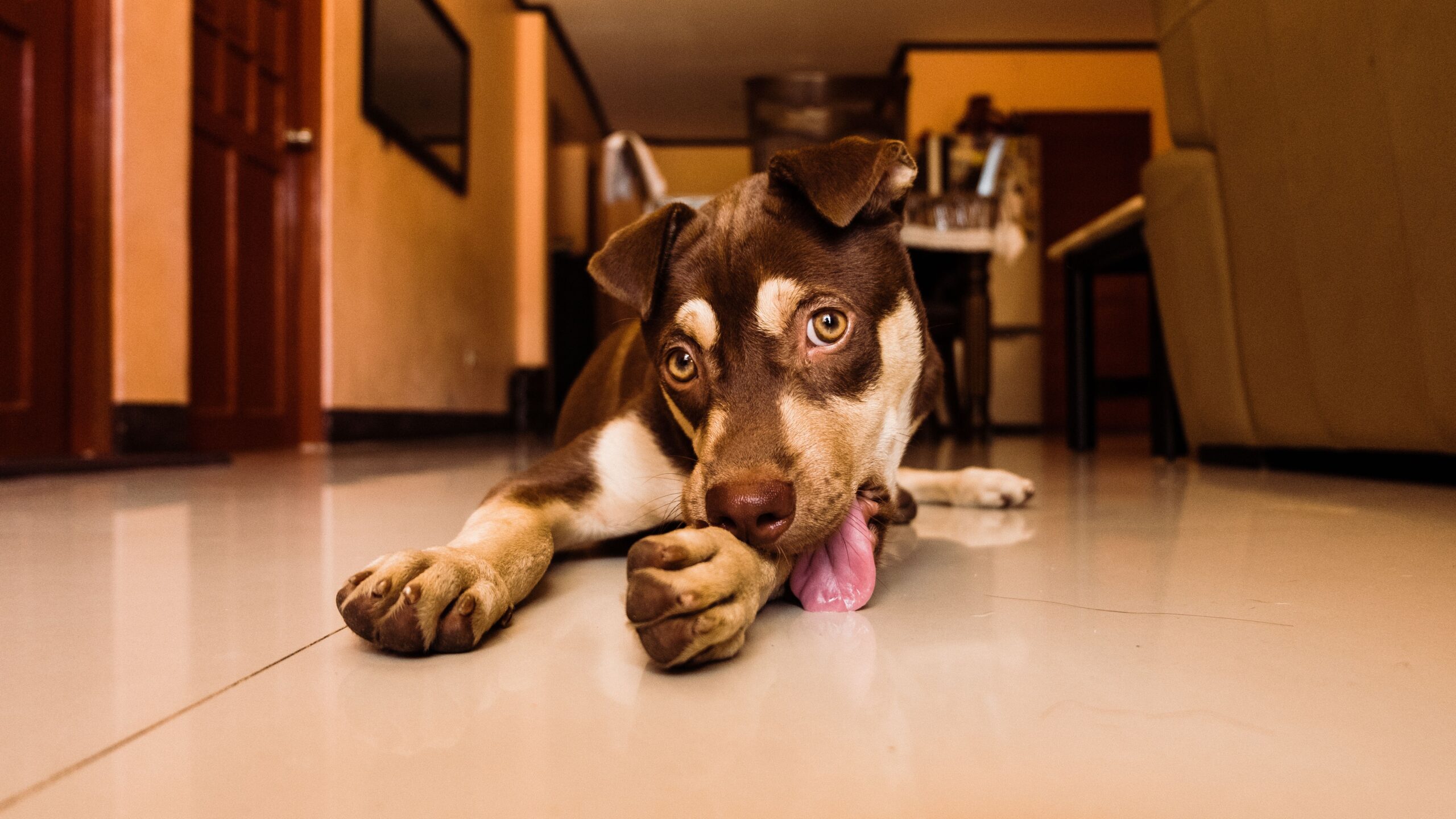
It's not just a bad habit. Lick granulomas are stubborn for a reason.
You notice a raw, hairless, thickened patch on your dog’s lower leg or paw, and no matter what you do, they won’t stop licking it. That’s a lick granuloma, also called acral lick dermatitis, and it’s one of the more frustrating conditions a dog owner can deal with. It’s not purely physical, and it’s not purely behavioral. It’s both, which is exactly why it tends to stick around.
 TL;DR
TL;DR
A lick granuloma is a firm, raised, ulcerated sore that forms when a dog licks one spot so repeatedly and intensely that the skin breaks down and thickens. The medical name, acral lick dermatitis, just means skin inflammation caused by licking at the extremities. “Acral” refers to the limbs, and that’s almost always where you’ll find it: the lower front leg (forelimb), especially over the wrist area (carpus), though it can appear on the lower hind leg too.
What makes it self-perpetuating is the itch-lick cycle. Licking releases endorphins, which feels good in the moment, but the licking also traumatizes the skin, which causes more itching and discomfort, which drives more licking. Over time, the lesion becomes thickened, firm, and hairless, and secondary bacterial infection often sets in, making everything worse.
Lick granulomas are multifactorial, meaning several things can trigger or maintain them. Your vet will want to look at the full picture:
Certain breeds show up more often with this condition: Dobermans, Great Danes, Labrador Retrievers, and Golden Retrievers are among the most commonly affected. Large and medium breeds with anxious or high-energy temperaments tend to be most at risk.
Your vet will start with a physical exam and history: how long has the licking been going on, which leg, any changes in behavior or environment? This conversation matters more than it might seem, because not every sore or lump on your dog’s leg is a lick granuloma, and assuming it is without a proper workup can mean missing something more serious.
A hot spot (acute moist dermatitis, a rapidly inflamed skin lesion) can look alarming but tends to appear quickly, often within hours, and has a wet, weeping texture. A lick granuloma develops slowly over weeks or months, is dry and thickened, and has a chronic history of self-trauma in exactly the same spot. Hot spots can appear almost anywhere on the body; lick granulomas are almost always on the lower leg.
This is the comparison that makes vets want to biopsy rather than assume. A mast cell tumor, a type of skin cancer that can look deceptively benign, can appear on the lower limbs as a raised, firm mass and look nearly identical to a lick granuloma on the surface, especially if the dog has been licking it raw. This is exactly why your vet may recommend diagnostics even when “it looks like just licking.”
From there, diagnostics may include:
There’s no single fix here. Effective treatment addresses the underlying cause, the secondary infection, the inflammation, and the behavioral component all at once. Your vet may recommend a combination of:
At-home management matters too. Keeping the site clean, using your vet’s recommended topicals, maintaining the e-collar consistently, and sticking to the full antibiotic course are all critical. There’s no reliable lick granuloma home treatment that works without vet guidance, but following through on the treatment plan at home is where owners make the biggest difference.
This is a condition that rewards honesty over optimism. Lick granulomas are often chronic and prone to relapse, especially if the underlying trigger (allergy, anxiety, joint pain) isn’t fully resolved. Some dogs manage very well with treatment and lifestyle changes. Others cycle through flares over years. The skin may never look completely normal again, and some scarring or thickening can remain even after healing.
That’s not a reason to give up. It’s a reason to commit to the full workup and keep your vet in the loop long-term. Catching a flare early and treating it aggressively is much easier than managing a deep, infected, chronic lesion.
It’s also worth thinking about the financial side. Diagnosing and managing a lick granuloma can involve skin biopsies, cytology, X-rays, allergy testing, long antibiotic courses, and laser therapy sessions, and those costs add up fast. A Lemonade pet insurance accident and illness policy can help cover both the granuloma and the underlying condition driving it, as long as neither is pre-existing, meaning your dog showed no signs or symptoms before you enrolled and your waiting periods passed. One thing to note: if anxiety or another behavioral condition turns out to be the root cause, that’s only covered if you have the Behavioral Conditions add-on.
If your dog is healthy right now, this is a good time to get something in place.
Lick granulomas are stubborn, but they’re manageable with the right team and the right plan. If your dog is already showing signs, start with your vet today. And if they’re not, take five minutes and get a Lemonade quote while they’re healthy. It’s the kind of thing you’ll be glad you did before you need it.
A lick granuloma typically appears as a firm, raised, hairless, and often ulcerated patch on the lower leg or paw. The surface can look raw, thickened, or shiny, and the skin around it may be discolored. Searching for lick granuloma pictures online can help you compare, but a vet exam is the only way to confirm what you’re seeing.
Rarely. Because of the self-perpetuating itch-lick cycle and the frequent presence of secondary bacterial infection, lick granulomas almost always require veterinary treatment to resolve. Without intervention, most worsen over time.
Signs of an infected lick granuloma include increased redness, swelling, warmth, discharge, or a foul smell from the lesion. Your dog may also seem more uncomfortable or lick more intensely. Your vet will confirm infection with cytology or a culture.
No. A hot spot is a wet, rapidly developing skin lesion that can appear almost anywhere on the body. A lick granuloma develops slowly on the lower leg, becomes dry and thickened over time, and has a strong behavioral component. They can look similar but require different treatment approaches.
A Lemonade pet accident and illness policy can help cover costs like skin biopsies, imaging, antibiotics, and behavior consultations if the condition isn’t pre-existing. Enrolling your dog before any symptoms appear gives you the most coverage options.
A few quick words, because we <3 our lawyers: This post is general in nature, and any statement in it doesn’t alter the terms, conditions, exclusions, or limitations of the policies issued, which differ according to your state of residence. You’re encouraged to discuss your specific circumstances with your own professional advisors. The purpose of this post is merely to provide you with info and insights you can use to make such discussions more productive! Naturally, all comments by, or references to, third parties represent their own views, and Lemonade assumes no responsibility for them. Coverage may not be available in all states. Please note that statements about coverages, policy management, claims processes, Giveback, and customer support apply to policies underwritten by Lemonade Insurance Company or Metromile Insurance Company, a Lemonade company, sold by Lemonade Insurance Agency, LLC. The statements do not apply to policies underwritten by other carriers.
Please note: Lemonade articles and other editorial content are meant for educational purposes only, and should not be relied upon instead of professional legal, insurance or financial advice. The content of these educational articles does not alter the terms, conditions, exclusions, or limitations of policies issued by Lemonade, which differ according to your state of residence. While we regularly review previously published content to ensure it is accurate and up-to-date, there may be instances in which legal conditions or policy details have changed since publication. Any hypothetical examples used in Lemonade editorial content are purely expositional. Hypothetical examples do not alter or bind Lemonade to any application of your insurance policy to the particular facts and circumstances of any actual claim.