

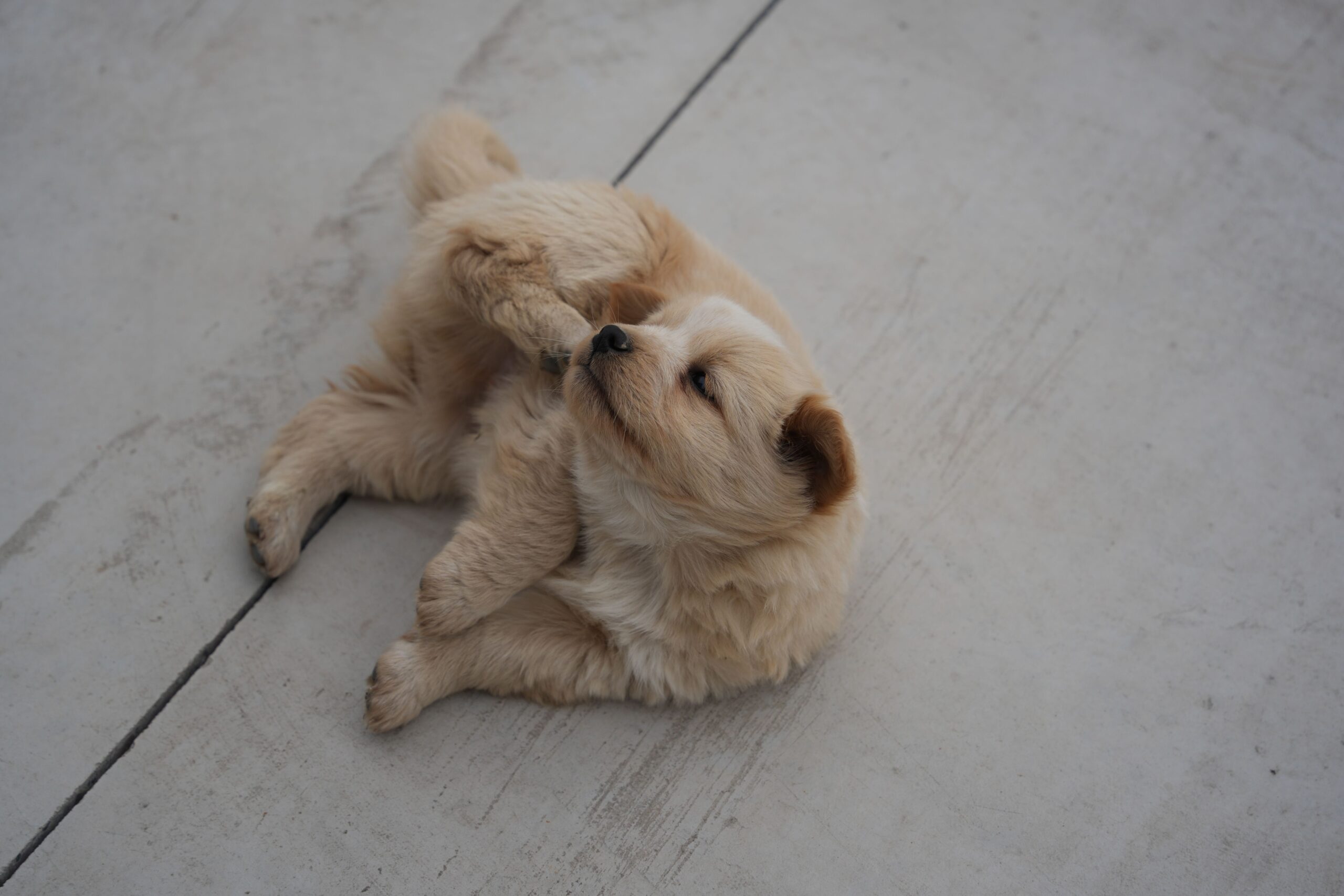
If your dog has been scratching nonstop, smells funky, or has skin that looks greasy and darker than usual, a yeast called Malassezia pachydermatis is probably why. It normally lives on your dog’s skin in small, harmless amounts, but when conditions shift, it multiplies fast and causes what’s called yeast dermatitis.
The good news: it’s treatable. The catch? Treating the yeast alone usually isn’t enough. Here’s what you need to know.
 TL;DR
TL;DR
- Malassezia is a yeast that naturally lives on dogs’ skin and ears, but can overgrow into a yeast infection (yeast dermatitis) when something disrupts the skin’s balance.
- Signs include intense itching, a musty odor, greasy or darkened skin, and ear infections, most often in skin folds, paws, and ears.
- Diagnosis involves a quick in-office test called cytology, where the vet checks a skin or ear sample under a microscope.
- Treatment includes medicated shampoo, topical or ear antifungals, and oral antifungal medication for severe cases, but without finding and addressing the underlying cause (usually allergies or a hormonal condition), the yeast infection almost always comes back.
- Lemonade Pet insurance can help cover the vet visits and diagnostics needed to find that root cause, but coverage applies to conditions that aren’t pre-existing, so enrolling before symptoms show up matters.
What is Malassezia in dogs?
Malassezia pachydermatis is a type of yeast, a microscopic fungus, that lives on the surface of your dog’s skin and inside the ear canal as a normal resident. Healthy dogs carry it all the time with zero problems. The trouble starts when the skin environment changes in a way that lets the yeast multiply out of control.
That overgrowth is what causes yeast dermatitis, a skin inflammation driven by too much Malassezia. It can show up almost anywhere, but it tends to concentrate in warm, moist spots where yeast thrive.
- Ears (one of the most common sites for a Malassezia ear infection)
- Skin folds (face wrinkles, armpits, groin, under the tail)
- Paws (between the toes, around the nail beds)
- Belly and inner thighs
- Neck and chest
Symptoms of a Malassezia yeast infection in dogs
What you’ll notice first is usually the itch. Dogs with a Malassezia yeast infection tend to scratch, lick, and chew persistently, especially at their paws or ears. The smell is another telltale sign: a distinct musty odor, sometimes described as corn chips or stale bread, that doesn’t go away with a bath.
As the infection progresses, the skin itself changes. Here’s what to look for:
- Greasy skin with a waxy, oily feel
- Redness and irritation, especially in folds and between the toes
- Thickened or darkened skin over time (chronic cases)
- Flakiness or a crusty buildup around affected areas
- Brown or dark discharge in the ears
- Hair loss in patches where scratching has been intense
In the ears specifically, you might see your dog shaking their head, pawing at their ears, or holding one ear lower than the other. That’s a Malassezia ear infection showing up in a way you can see.
How vets diagnose Malassezia dermatitis
Your vet will likely do a test called cytology, where they press a small piece of tape or a cotton swab against your dog’s skin or ear, stain the sample, and look at it under a microscope. If Malassezia is present in abnormal amounts, it shows up clearly.
This test is quick, done right in the clinic, and gives your vet a definitive answer without sending anything to a lab. It’s also the starting point for ruling out bacterial infections, which often occur alongside yeast and need different treatment.
How to treat Malassezia in dogs
Treatment depends on how widespread the infection is. Your vet will tailor a plan, but here’s a general picture of what’s typically involved.
Medicated shampoo
For skin infections, a medicated shampoo containing antifungal ingredients like ketoconazole or miconazole is usually the first line of treatment. These shampoos work by making direct contact with the yeast on the skin, so lather time matters. Your vet may recommend leaving it on for several minutes before rinsing.
Topical antifungals and ear treatments
For localized spots or a Malassezia ear infection, your vet may prescribe a topical antifungal cream, wipe, or ear solution applied directly to the affected area. These target the yeast where it’s concentrated without systemic effects, meaning the medication works locally rather than through your dog’s whole body.
Oral antifungal medication
For severe or widespread yeast dermatitis, your vet may recommend an oral antifungal medication, a pill that works through your dog’s bloodstream to reduce yeast throughout the body. This is usually reserved for cases where topical treatment alone isn’t enough.
It’s a symptom, not just a bug: finding the underlying cause
Malassezia overgrowth almost never happens on its own. It’s a sign that something else has changed in your dog’s body or environment.
The most common underlying causes include:
- Allergies: Environmental triggers like pollen or dust mites, or food allergies, can inflame the skin and disrupt its natural defenses.
- Hormonal conditions: Hypothyroidism (an underactive thyroid) or Cushing’s disease (a condition where the body produces too much cortisol, a stress hormone) both change the skin’s surface and make it easier for yeast to overgrow.
- Trapped moisture: In skin folds, ears, or between the toes.
- Immune suppression: From long-term steroid use or other medications.
If you only treat the yeast and don’t find what allowed it to overgrow in the first place, relapse is likely. Your dog gets better, you stop the medicated shampoo and antifungals, and within weeks or months the itch is back and the smell returns.
Finding the root cause often means more diagnostic work: allergy testing, blood panels to check thyroid or cortisol levels, or a referral to a veterinary dermatologist. It takes more time and more visits, but it’s the only way to actually break the cycle.
Does pet insurance cover Malassezia yeast infections?
Treating yeast dermatitis isn’t just a one-appointment fix, especially when you factor in the diagnostic workup needed to find the underlying allergy or hormonal condition driving it. Costs can add up across cytology tests, prescription medications, dermatology referrals, and follow-up visits.
Malassezia yeast dermatitis is covered under Lemonade Pet illness coverage, including the workup to identify what’s causing it, as long as it’s not pre-existing and develops after the 14-day illness waiting period has passed. If your dog already has a history of skin infections or allergies before you enroll, those conditions may not be covered. Enrolling before symptoms appear is what gives you the most coverage flexibility down the line.
Before we go
Malassezia dermatitis is frustrating to deal with, but it’s very manageable when you treat the full picture and not just the yeast. If your dog is itchy, smelly, or has greasy, darkened skin that keeps coming back, that’s your signal to dig deeper with your vet rather than just reaching for the medicated shampoo again. Getting to the root cause is what breaks the cycle.
Frequently Asked Questions
What causes Malassezia overgrowth in dogs?
Malassezia overgrowth is almost always secondary to something else, most often allergies (environmental or food), a hormonal condition like hypothyroidism or Cushing’s disease, or chronic moisture trapped in skin folds, ears, or between the toes. Treating only the yeast without finding the underlying cause usually leads to relapse.
How do I know if my dog has a Malassezia yeast infection?
The most common signs are intense itching, a musty or yeasty odor, greasy or oily skin, redness, darkened or thickened skin in chronic cases, and a dark waxy discharge in the ears. Your vet can confirm it quickly with a cytology test, where they look at a skin or ear sample under a microscope.
Can I treat Malassezia in my dog at home?
Medicated antifungal shampoos can help manage mild cases, but they won’t resolve the underlying cause, which is what drives relapse. Your vet should confirm the diagnosis and guide treatment, especially if the infection is in the ears or is widespread.
How long does it take to treat Malassezia dermatitis in dogs?
It depends on the severity and whether the underlying cause is identified and addressed. Mild cases may improve within a few weeks of antifungal treatment. Chronic or recurring cases tied to allergies or hormonal disease can take much longer to manage and may require ongoing maintenance.
Does Lemonade Pet insurance cover Malassezia yeast infections in dogs?
Lemonade Pet illness coverage can help reimburse eligible vet visits, diagnostics like cytology, and treatments for Malassezia yeast infections, as long as the condition isn’t pre-existing. Enrolling before your dog shows symptoms gives you the broadest coverage options.
A few quick words, because we <3 our lawyers: This post is general in nature, and any statement in it doesn’t alter the terms, conditions, exclusions, or limitations of the policies issued, which differ according to your state of residence. You’re encouraged to discuss your specific circumstances with your own professional advisors. The purpose of this post is merely to provide you with info and insights you can use to make such discussions more productive! Naturally, all comments by, or references to, third parties represent their own views, and Lemonade assumes no responsibility for them. Coverage may not be available in all states. Please note that statements about coverages, policy management, claims processes, Giveback, and customer support apply to policies underwritten by Lemonade Insurance Company or Metromile Insurance Company, a Lemonade company, sold by Lemonade Insurance Agency, LLC. The statements do not apply to policies underwritten by other carriers.