
What is Progressive Retinal Atrophy in Cats?
Some cats are more prone to vision loss than others. Here's what PRA looks like and how to help.

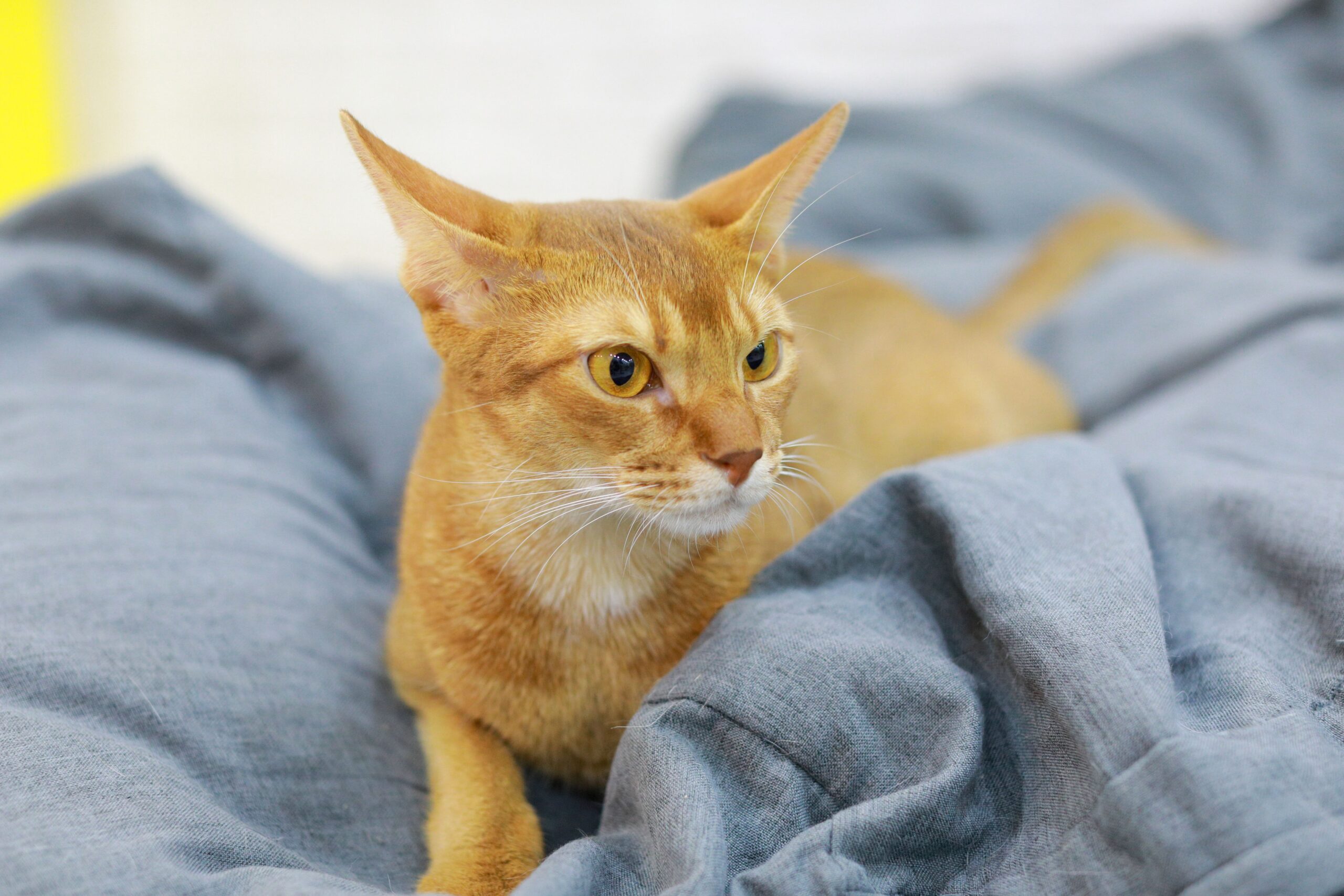
Some cats are more prone to vision loss than others. Here's what PRA looks like and how to help.
 Reviewed by Dr. Stephanie LiffLast Updated:
If your cat has just been diagnosed with progressive retinal atrophy (PRA), or you own a breed that’s known to be at risk, it’s completely normal to feel shaken. PRA is a condition where the light-sensitive cells in the retina, called photoreceptors (the rods and cones your cat uses to see), gradually break down over time.
The end result is blindness, and that part is hard to hear. But here’s what’s also true: cats are remarkably good at adapting, and with the right support at home, a blind cat can live a full, happy life.
 TL;DR
TL;DR
PRA is an umbrella term for a group of inherited eye diseases that cause the retina to slowly degenerate. The photoreceptors are the cells doing most of the work: rods handle low-light and night vision, while cones handle detail and color in bright light. In PRA, these cells stop functioning and eventually die off entirely. It happens gradually, which is part of why it can be so easy to miss in the early stages.
There are two main forms. Early-onset PRA, sometimes called rod-cone dysplasia, shows up in kittens as young as a few weeks old and moves quickly. Late-onset PRA develops in adult cats and progresses more slowly, which is why many owners don’t notice anything until the condition is fairly advanced. Both forms are inherited, passed down genetically rather than caused by injury or infection.
One important distinction worth knowing: PRA is not the same as blindness caused by taurine deficiency, which is an amino acid cats must get from their diet. Taurine-related retinal damage is nutritional, not genetic, and is largely preventable with proper feeding. PRA is genetic and can’t be reversed regardless of diet.
Because PRA moves slowly, the early signs are easy to attribute to something else entirely. Night blindness is almost always the first thing owners notice: your cat suddenly seems hesitant in dim lighting, bumps into things after dark, or refuses to jump up or down when the lights are low. It can look like clumsiness or anxiety before it looks like a vision problem.
As progressive retinal atrophy in cats advances, you might also notice:
If you’re seeing any of these signs of progressive retinal atrophy in cats, don’t wait to see if it resolves. Call your vet.
PRA in cats is largely inherited, and some breeds carry a much higher risk than others. The Abyssinian is the most studied: they carry a specific genetic variant called the rdAc mutation, which is the most common cause of PRA in that breed. DNA testing is available for Abyssinians, which means breeders can screen before breeding, and owners of at-risk cats can get clarity well before any symptoms appear.
Progressive retinal atrophy in Siamese cats and progressive retinal atrophy in Persian cats is also well-documented, along with elevated risk in Bengals and Somalis. If you own one of these breeds, ask your vet whether genetic testing makes sense for your cat. It usually involves nothing more than a cheek swab or a blood draw.
Your vet will likely start with an ophthalmoscope exam, looking directly at the retina for early signs of degeneration. From there, they may refer you to a veterinary ophthalmologist (a vet who specializes in eye conditions) for an electroretinogram, or ERG. This test measures the electrical activity of the retina to confirm how well the photoreceptors are still functioning. It’s the most definitive way to diagnose PRA.
There is currently no cure for progressive retinal atrophy in cats, and no treatment has been shown to stop or meaningfully slow its progression. The focus instead is on monitoring, managing any secondary complications like cataracts that may develop alongside vision loss, and helping your cat adjust to the changes ahead.
Cats losing their vision rely heavily on spatial memory, scent, and texture to navigate. Your job is to make your home as predictable and navigable as possible.
Once your cat has mentally mapped your home, moving the couch, food bowl, or litter box can genuinely disorient them. Pick a layout and stick with it. If you do have to rearrange, reintroduce your cat to the space slowly, letting them sniff and explore at their own pace.
Place different textured mats near key spots (a coarse mat near the litter box, a soft rug near the food bowls) so your cat can feel where they are underfoot. A familiar scent near important areas, like a dab of catnip near their bed, can also help them orient more easily.
Stairs can become a hazard as vision fades. Use baby gates if needed, or lay a textured runner so your cat can feel the edge of each step. Balconies, open windows, and high surfaces without a safe landing should be blocked off. Falls are a real risk for cats with vision loss.
Sound becomes a primary cue for a cat with blindness. Talk as you move around the house so your cat always knows where you are. Approach them with a word or soft sound before reaching out to touch them, so you’re never startling them. If you have other pets, a small bell on their collar can help your cat track where they are in the room.
Specialist visits, ERG testing, and ongoing monitoring can add up quickly, and that’s before factoring in treatment for any secondary conditions like cataracts. Having coverage already in place is what makes a real difference here.
A Lemonade accident and illness policy can help cover eligible costs related to PRA, as long as the condition isn’t pre-existing. That means your cat shouldn’t be showing any signs or symptoms before your policy starts or during your waiting period. If you own an Abyssinian, a Persian, a Siamese, or another breed with a documented higher risk, getting coverage in place early is one of the most practical things you can do, well before any symptoms appear.
A PRA diagnosis is hard news, and it’s okay to sit with that. But cats are adaptable in ways that can truly surprise you. With a stable home, a few thoughtful changes, and regular vet check-ins, most cats with PRA go on to live comfortable, engaged lives long after their vision fades.
If your cat is at risk but hasn’t shown symptoms yet, genetic testing and an early Lemonade policy are two of the most proactive steps you can take right now. Get a quote in minutes.
Inherited PRA can’t be prevented once a cat has the genetic mutation, but responsible breeding and DNA testing (especially for Abyssinians carrying the rdAc mutation) can reduce how often it’s passed on. Taurine deficiency-related retinal damage is preventable with a complete, balanced diet.
Night blindness is usually the earliest sign. You might notice your cat hesitating or bumping into things in low light, even though they seem fine during the day. Dilated pupils in bright light are another early indicator worth mentioning to your vet.
Yes, Siamese cats are among the breeds with an elevated risk for PRA. If you have a Siamese, it’s worth discussing their eye health with your vet, especially if you notice any changes in their night vision or behavior in low light.
It varies depending on the form of PRA. Early-onset PRA can progress to blindness within months. Late-onset PRA typically moves more slowly, sometimes taking years. Your vet or a veterinary ophthalmologist can give you a clearer picture based on your cat’s specific diagnosis.
Yes, genuinely. Cats rely heavily on scent, hearing, and spatial memory, and most adapt well to vision loss when their environment is kept consistent and safe. Many owners of blind cats report that their pets remain playful, affectionate, and engaged for years after losing their sight.
A few quick words, because we <3 our lawyers: This post is general in nature, and any statement in it doesn’t alter the terms, conditions, exclusions, or limitations of the policies issued, which differ according to your state of residence. You’re encouraged to discuss your specific circumstances with your own professional advisors. The purpose of this post is merely to provide you with info and insights you can use to make such discussions more productive! Naturally, all comments by, or references to, third parties represent their own views, and Lemonade assumes no responsibility for them. Coverage may not be available in all states. Please note that statements about coverages, policy management, claims processes, Giveback, and customer support apply to policies underwritten by Lemonade Insurance Company or Metromile Insurance Company, a Lemonade company, sold by Lemonade Insurance Agency, LLC. The statements do not apply to policies underwritten by other carriers.
Please note: Lemonade articles and other editorial content are meant for educational purposes only, and should not be relied upon instead of professional legal, insurance or financial advice. The content of these educational articles does not alter the terms, conditions, exclusions, or limitations of policies issued by Lemonade, which differ according to your state of residence. While we regularly review previously published content to ensure it is accurate and up-to-date, there may be instances in which legal conditions or policy details have changed since publication. Any hypothetical examples used in Lemonade editorial content are purely expositional. Hypothetical examples do not alter or bind Lemonade to any application of your insurance policy to the particular facts and circumstances of any actual claim.