
Ceiling Leaking From Upstairs and No Renters Insurance? 6 Steps to Take Right Now
Everything you need to know about ceiling leaks from upstairs, and what to do when you're not insured.

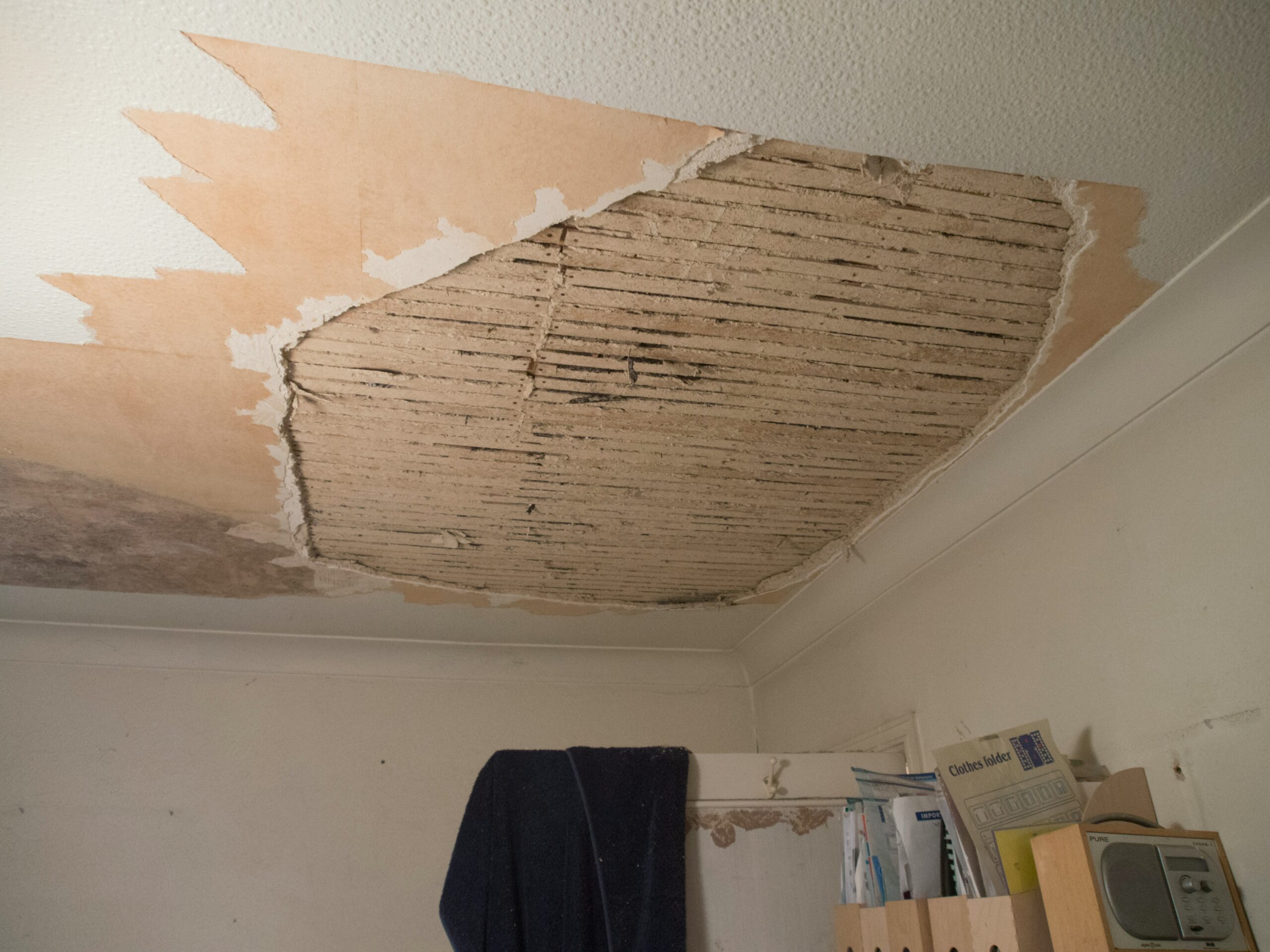
Everything you need to know about ceiling leaks from upstairs, and what to do when you're not insured.
Move your furniture and electronics out of the drip zone right now. Film the active leak before you touch anything else. Send written notice to your landlord and your upstairs neighbor today.
That’s the short version. If you have a few more minutes, this guide covers who’s actually responsible for the damage, what you’re probably on the hook for, and how to protect yourself when there’s no policy to fall back on.
 TL;DR
TL;DR
What counts as a ceiling leak from upstairs?
A ceiling leak from upstairs refers to any water intrusion entering your unit from the floor above, whether from a neighbor’s overflowing tub, a failed appliance hose, or a shared building pipe, that causes damage to your ceiling, walls, floors, or personal belongings.
If your ceiling is actively leaking right now, these steps in the first hour protect your safety, your evidence, and your financial recovery options.
Before anything else, if water is dripping near electrical fixtures, outlets, or switches, don’t touch them. Turn off the circuit breaker for that room and keep people out. Water and live electricity are a dangerous combination.
Move furniture, electronics, and valuables out of the drip zone right now. Place buckets or towels to contain the water and protect your floors. The longer water sits on surfaces, the worse the damage and the higher the bill.
⚠️ Stop. Don’t remove, throw away, or clean up anything yet.
Even if it’s soaked, warped, or completely ruined, don’t act yet. Your damaged items, water-stained ceiling, and the active leak itself are evidence. A landlord, adjuster, attorney, or plumber needs to see it first. Once it’s gone, it’s gone, and so is your proof.
Here’s what to capture right now:
Email or text right now, not tomorrow. Give a factual description of the leak: when it started, what’s damaged, and that you expect the structural issue to be addressed immediately. Your landlord has a legal obligation under the implied warranty of habitability in every U.S. state. That obligation starts when they’re notified.
Be direct but not accusatory. Something like: “Water is coming through my ceiling. I believe it may be from your unit. Please check your bathroom and appliances and let me know what you find.” If they have renters insurance, this notification starts the clock on their potential liability.
Buckets, fans, professional drying, temporary hotel, laundry for water-damaged clothing. Log everything from day one and keep all receipts. If this ends up as a negligence claim against your neighbor or their insurer, documented expenses are what get you paid.
Here’s who to reach out to:
Here’s the honest answer: it depends on where the water came from and whether anyone was negligent.
If a pipe inside the wall burst due to normal wear and tear, age, or poor maintenance, your landlord is responsible for repairing the structural damage: the ceiling, the pipes, the drywall. But here’s where renters get blindsided. Your landlord’s responsibility ends at the building. Your furniture, electronics, and personal belongings are a separate matter and almost certainly not covered by their policy.
If your upstairs neighbor caused the water damage, an overflowing bathtub, a washing machine hose that was old and never replaced, a dishwasher they knew was leaking, their liability may extend to your losses. If they have renters insurance with liability coverage, that policy can pay for your damaged personal property, professional drying costs, and possibly temporary housing.
You’ll need the plumber’s written report tracing the source, any written admissions from the neighbor, and documented proof of your losses.
If the pipe failure was sudden and no one was at fault, there’s no liability to chase. Your losses are yours to absorb. This is exactly the scenario renters insurance exists for.
Pro tip: Most renters assume their landlord’s insurance has them covered. It doesn’t.
Your landlord’s policy protects their investment: the walls, the doors, the building’s structure. It does not cover your lifestyle: your laptop, your TV, your jewelry, or anything else that was taken. That’s not a loophole. It’s just how property insurance works. The only policy that covers your stuff is one you take out yourself.
💡 Did You Know?
Water damage is one of the most common claims Lemonade renters file. The average payout for this type of claim is $4,777 (Based on Lemonade internal claims data from 2026)
According to Angi, water damage restoration costs an average of $3,864, ranging from $450 to $16,000 depending on the source and extent of damage. Add mold to the picture and the bill climbs fast. Mold remediation averages $2,368 and typically ranges from $1,223 to $3,755.
Here’s what an uninsured renter realistically faces after a significant ceiling leak:
| Expense | Without Renters Insurance | With Renters Insurance |
|---|---|---|
| Professional water drying and extraction | ~$2,000 to $3,864 | Covered under Personal Property |
| Damaged furniture (sofa, bed, rugs) | ~$2,000 to $5,000 | Covered under Personal Property |
| Damaged electronics | ~$500 to $2,000 | Covered under Personal Property |
| Emergency hotel stay (if uninhabitable) | ~$1,500 to $3,000 | Covered under Loss of Use (costs above your normal housing expense) |
| Legal fees (if liability disputed) | $300+/hr | $0 |
| Total | $7,000 to $17,000+ | Your deductible only (up to policy limits) |
That’s a lot of money to spend on something a basic policy starting at around $5/month in select states could have covered.
If your neighbor is found liable, their renters insurance liability coverage may pay out, but most settlements pay Actual Cash Value (ACV), not what it costs to buy the same item new today.
ACV reflects what your item was worth at the time of the loss, after depreciation. A sofa you paid $1,000 for three years ago might pay out closer to $300 or $350. The rest is yours to cover.
Here’s what that gap looks like in practice:
| Item | What you paid | What ACV pays out | Your out-of-pocket gap |
|---|---|---|---|
| Sofa | $1,000 | ~$350 | ~$650 |
| Laptop | $1,200 | ~$400 | ~$800 |
| Area rug | $400 | ~$100 | ~$300 |
| Total | $2,600 | ~$850 | ~$1,750 |
The gap between those columns is yours to cover. Renters insurance with replacement cost coverage closes it entirely.
You still have a legal claim against them personally. It’s just harder to collect. Small claims court is usually the right venue for amounts under $10,000, though thresholds vary by state. You’ll need your documentation, evidence of negligence, and receipts for everything you lost or paid to repair.
If you had renters insurance, your insurer would have paid your claim first and then pursued the neighbor on your behalf through subrogation. You’d get paid, and they’d handle the legal fight. Without coverage, that’s all on you.
If your unit is uninhabitable and the bills are piling up, here’s what you can do:
You can’t prevent every leak from upstairs. But you can make sure you’re not caught off guard:
The single most effective thing you can do, though, is get covered before something happens. Every line on that cost table above, your furniture, your electronics, your hotel stay, even legal costs, is exactly what a renters policy exists to handle.
Acting quickly is vital. The longer water sits, the more damage it causes. A minor ceiling leak caught fast and contained to one area can often be resolved in a few days. Professional mold remediation projects typically take three to seven days on average, though more extensive damage can stretch to weeks or months.
Anything involving prolonged water exposure, mold growth, legal proceedings, or structural repairs can stretch significantly. Mold remediation often has to be fully certified complete before your landlord can legally allow you to return to the unit. The sooner you start drying, the shorter and cheaper that timeline becomes.
If you’re reading this after a ceiling leak, we’re sorry you’re dealing with it. It’s stressful, it’s expensive, and the financial reality of being uninsured in this situation is genuinely rough.
A basic renters policy would have covered almost every line on that cost table: your furniture, your electronics, your hotel stay while the ceiling dries out, even legal costs if the liability dispute got complicated. And it would have cost less per month than most streaming subscriptions.
If you’re not currently covered, a quote takes about 90 seconds. And if something like this ever happens again, you’ll know exactly what to do and you won’t be doing it alone.
Your main paths are: pursuing your neighbor’s liability coverage if they have renters insurance and you can prove negligence, negotiating rent abatement from your landlord if the unit becomes uninhabitable, or taking your neighbor to small claims court if they were clearly at fault and won’t cooperate. None of these are as fast or reliable as having your own coverage, but they’re real options, and documentation is what makes them work.
It depends on the cause. If your neighbor was negligent, an overflowing tub or a leaking appliance they ignored, their liability coverage may apply to your losses. If the building’s pipes failed, your landlord is responsible for structural repairs but not your personal property. If there’s no clear negligence, the costs fall to you.
Possibly. If the damage makes your unit genuinely uninhabitable, no ceiling, active mold, unsafe structure, you may be entitled to a rent reduction proportional to what you’ve lost use of. Request it in writing, document the damage clearly, and consult your state’s landlord-tenant law or a local tenant rights org to understand your leverage.
The strongest proof is a plumber or contractor’s written report tracing the water source to the upstairs unit. Combine that with a video of the active leak, any written admission from your neighbor, maintenance records showing a known issue that went unaddressed, and photos of the damage pattern. The person with the better paper trail usually wins in small claims.
Yes. Renters insurance covers sudden and accidental water damage from a neighbor’s unit. That means your damaged personal property and, if the unit becomes uninhabitable, your hotel and additional living expenses through loss of use coverage. It also covers your losses even if your neighbor has no insurance of their own.
ACV (Actual Cash Value) pays what your item was worth at the time of the loss, after depreciation. A three-year-old couch that cost $1,000 might net you $300 or $350. Replacement cost coverage pays what it actually costs to buy the same item new today. It usually comes with a slightly higher premium, but the difference when you actually need to make a claim is significant. If you’re getting renters insurance, replacement cost is worth it.
A few quick words, because we <3 our lawyers: This post is general in nature, and any statement in it doesn’t alter the terms, conditions, exclusions, or limitations of the policies issued, which differ according to your state of residence. You’re encouraged to discuss your specific circumstances with your own professional advisors. The purpose of this post is merely to provide you with info and insights you can use to make such discussions more productive! Naturally, all comments by, or references to, third parties represent their own views, and Lemonade assumes no responsibility for them. Coverage may not be available in all states. Please note that statements about coverages, policy management, claims processes, Giveback, and customer support apply to policies underwritten by Lemonade Insurance Company or Metromile Insurance Company, a Lemonade company, sold by Lemonade Insurance Agency, LLC. The statements do not apply to policies underwritten by other carriers.
Please note: Lemonade articles and other editorial content are meant for educational purposes only, and should not be relied upon instead of professional legal, insurance or financial advice. The content of these educational articles does not alter the terms, conditions, exclusions, or limitations of policies issued by Lemonade, which differ according to your state of residence. While we regularly review previously published content to ensure it is accurate and up-to-date, there may be instances in which legal conditions or policy details have changed since publication. Any hypothetical examples used in Lemonade editorial content are purely expositional. Hypothetical examples do not alter or bind Lemonade to any application of your insurance policy to the particular facts and circumstances of any actual claim.