

Ever wondered what your favorite jewelry pieces are actually worth?
Whether it’s a diamond engagement ring or a necklace passed down through generations, knowing the value of your jewelry matters – especially when it comes to insuring it properly. That’s where a jewelry appraisal comes in. Here’s everything you need to know.
 TL;DR
TL;DR
- A jewelry appraisal is a document from an expert, called an “appraiser”, that provides an estimated value of a piece of jewelry
- Jewelry appraisals are often used for insurance purposes, but can also come in handy if you’re selling your jewelry, or estate planning
- Factors like the gemstones and metals used, the condition, and current market demand can all impact the value of your jewelry
- A base plan at Lemonade can cover $1,500 worth of jewelry against theft, but you can also protect your higher ticket items up to their full value with Extra Coverage, which requires a jewelry appraisal
What is a jewelry appraisal?
A Jewelry appraisal is an official document that states how much your jewelry is worth.
To get an appraisal, you’ll need to find an experienced and qualified jewelry appraiser to perform an in-person inspection of your jewelry.
After the appraisal, you’ll receive a certificate with a brief description of the item and its appraised value. The appraisal will also list out the owner’s name, address, and contact info, as well as the date of the appraisal. This will serve as legal proof that you own your jewelry.
That document serves as legal proof that you own the jewelry, and it’s what your insurance company will use if you ever need to file a claim.
Types of jewelry appraisals
When it comes to the value of your precious jewelry, getting an appraisal isn’t just useful for insurance purposes. There are several reasons why you might consider getting an appraisal to estimate the value of your jewelry.
Let’s explore the different types of jewelry appraisals and how they can come in handy for a few different situations:
Insurance appraisal
An insurance appraisal tells your insurance company how much your jewelry is worth. By sharing the estimated value of your jewelry with your insurance company, it will help with:
- Protecting your jewelry from loss or damage
- Estimating the replacement cost of your valuables
- Determining you have adequate coverage in the event that your jewelry is lost or damaged due to a covered peril under your policy
But you might be asking-why would I need an appraisal to get my jewelry properly covered under my policy?
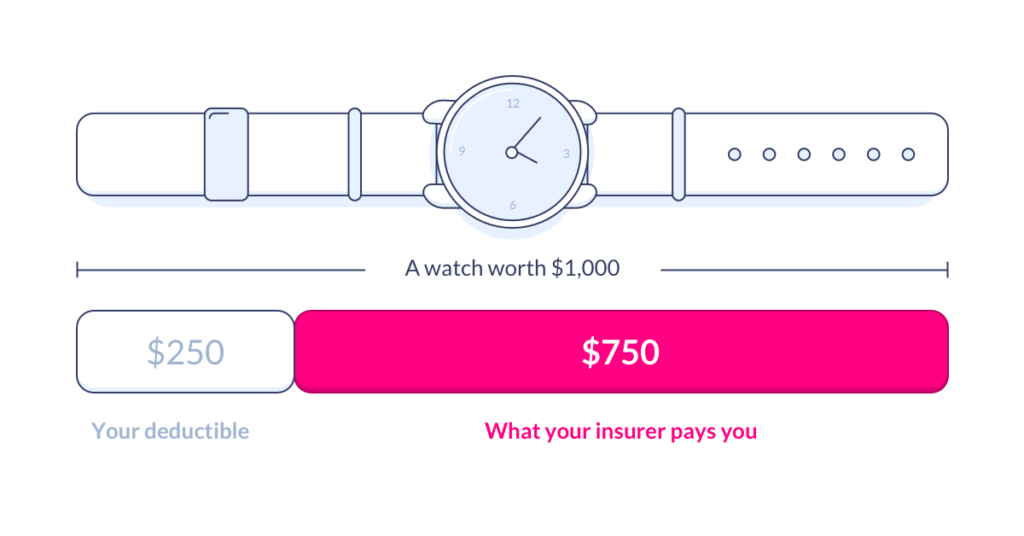
If your jewelry is stolen or damaged, your insurance company can pay you the current value to repair or replace your valuables, minus your deductible, of course. It’s easy to say the jewelry you get online is priceless. That’s why insurance companies require third-party certification to verify it’s worth as much as you say it is.
But here’s the thing: Most insurance companies cover jewelry up to a certain amount. For example, Lemonade’s base plan covers $1,500 worth of jewelry for theft.
If you have any big-ticket items or items with strong sentimental value, consider adding Extra Coverage to your insurance policy.
Extra Coverage (sometimes called scheduled personal property) is insurance-speak for adding a valuable item to your insurance policy. Here’s how it works: Yyou need to get an appraisal to verify the cost of your jewelry, and then tell your insurance company you’re willing to pay for more insurance each month as an extra layer of protection.
If something happens to your valuables, your insurance company will pay you back the value of your jewelry, which is where your jewelry appraisal comes back in. Btw, Extra Coverage covers accidental damage and mysterious disappearance, deductible free!
Fair market value appraisal
Thinking about selling your jewelry? An appraisal can be your trusted partner in this process. This appraisal reflects what your piece could sell for in a fair market, considering current trends and demand. While the selling price might not match the appraisal exactly, it gives you a solid starting point, so you can feel confident that you’re in the right price range during negotiations.
Estate appraisal
Jewelry appraisals play an important role in estate planning. This appraisal helps determine the valuation of pieces that are part of an estate, to provide an equitable distribution among heirs. Appraisals can also assist in calculating estate taxes or preparing for the sale of estate items. With a clear understanding of each item’s worth, you can make informed decisions that respect both financial considerations and sentimental value.
Immediate liquidation value appraisal
Used for quick sales, this appraisal estimates what you might receive in a forced sale. It typically yields a lower value due to urgency, often seen in auctions, business closures, or divorce settlements.
How does jewelry appraisal work?
Here’s what your appraiser will actually do, step by step.
1. Initial assessment
The appraiser starts by reviewing the general condition of your piece, identifying unique features, any damage, and what kind of evaluation it needs.
2. Examination of materials
Using professional tools, the appraiser examines the components of your jewelry: gemstones, precious metals, carat weight, and gemological characteristics. This is where the technical detail happens.
3. Market research
The appraiser looks at current market trends and comparable sales data to establish a fair replacement or market value. This step accounts for how demand shifts over time.
4. Documentation and final valuation
The appraiser compiles everything (detailed descriptions, photographs, and supporting data) into a formal appraisal report. This document is what you’ll share with your insurance company, and what supports the final appraised value.
What happens if I don’t get a jewelry appraisal?
Without Extra Coverage, you’re only covered up to the maximum amount in your base policy, minus your deductible.
Here’s what that looks like in practice:
| Item value | Deductible | Insurance pays |
|---|---|---|
| $200 earrings | $250 | $0 – below deductible |
| $500 watch | $250 | $250 |
| $1,000 necklace | $250 | $750 |
| $1,700 jewelry collection (stolen) | $250 | $1,500 – base plan max |
You can still file a claim, but you’ll need to show proof of purchase, like a receipt or bank statement, but you may not get the full value back.
Basically, Extra Coverage is a way to pay more now, in order to get its appraised value later in case something happens.
When do I need to get an appraisal?
Usually, if you bought the piece of jewelry within the last five years, you can show your insurance company the receipt. Sometimes, that’s better than an appraisal, since it’s the most current value.
If you don’t have the receipt or it’s been more than five years since you bought it, you’ll need to get an appraisal to confirm its value. So if you submit your grandmother’s diamond engagement ring for Extra Coverage in June of 2022 but you only have a diamond appraisal from 2015, you’ll need to get an updated one.
When do you actually need a jewelry appraisal? Real-world scenarios
The rules are straightforward, but real life is messier. Here are five situations where an appraisal makes a real difference.
Scenario 1: You inherit a family heirloom
Maria’s grandmother passes away and leaves her a diamond engagement ring. There’s no receipt, no purchase record, and no idea of the current value. Just a family memory and a beautiful piece of jewelry.
The risk: Maria’s base homeowners policy only covers $1,500 worth of jewelry for theft. If the ring is worth more than that, she’s underinsured.
The fix: Maria gets an estate appraisal. The appraiser determines the ring’s current replacement value is $4,200. With that document in hand, she adds Extra Coverage to her Lemonade policy for the full $4,200, so if the ring is ever lost, stolen, or damaged, she’s paid back exactly what it’s worth.
Without the appraisal, she’d have no way to prove the value and no way to get proper coverage.
Scenario 2: You buy an engagement ring and want full protection right away
James buys a $6,500 engagement ring. He has the receipt, but he’s worried about more than theft. What if the ring slips off her finger and disappears? What if it’s damaged in an accident?
The risk: A receipt alone may cover theft under a base policy, but not mysterious disappearance or accidental damage.
The fix: James gets an independent appraisal, which confirms the replacement value at $6,500. He adds Extra Coverage to his Lemonade policy, which covers not just theft, but accidental loss and mysterious disappearance, deductible-free. He pays a little more each month and has complete confidence from day one.
Scenario 3: You bought jewelry years ago and can’t find the receipt
A couple bought a sapphire bracelet eight years ago for $1,800. They’ve moved twice since then, and the receipt is long gone.
The risk: Without documentation, they can’t get Extra Coverage, and if the bracelet is stolen or lost, they’re limited to whatever their base policy covers.
The fix: They get a current insurance appraisal. The appraiser determines the replacement cost is now $2,400, since sapphire prices have risen since they bought it. They update their Lemonade policy with Extra Coverage at the new value, which means they’re covered for what it would actually cost to replace the piece today, not what they paid almost a decade ago.
Scenario 4: You want to sell a piece and negotiate confidently
Someone inherits a vintage brooch and wants to sell it, but has no idea if the offers they’re getting are fair.
The risk: Without a professional valuation, they could easily accept an offer that’s hundreds of dollars below market value.
The fix: They get a fair market value appraisal. The appraiser determines the piece is worth $900 to $1,100 in the current market. Armed with that data, they can evaluate offers confidently and push back on anything that comes in too low.
Scenario 5: Your jewelry is stolen and you need to file a claim
A homeowner’s jewelry is stolen during a burglary. They have Extra Coverage on their Lemonade policy and an appraisal on file for every scheduled piece.
The outcome: They file a claim with their appraisal documents as proof of value. Lemonade pays the full appraised replacement value for each item covered under Extra Coverage. The process is straightforward because the documentation was already in place.
Without the appraisals, the claim would have been limited to the base policy cap, and they’d have had to dig up purchase records to prove value for anything else.
How much does a jewelry appraisal cost?
Most appraisers charge either a fixed price per item or an hourly rate between $50 and $150. Avoid appraisers who charge a percentage of the appraised value, that’s a red flag, since it creates an incentive to inflate the number.
What factors influence jewelry value?
A few key things drive how much a piece is worth:
- Gemstones: The carat, cut, clarity, and color of diamonds and other stones are evaluated against GIA standards and have a major impact on value.
- Precious metals: Gold, platinum, and silver all carry intrinsic value that factors into the final appraisal.
- Market trends: Demand shifts over time. A piece appraised five years ago may be worth significantly more or less today.
- Cultural or historical significance: Pieces from notable eras (like the Victorian or Art Deco periods) or with documented provenance can command a premium.
- Condition: Scratches, missing stones, broken clasps, and general wear all reduce appraised value.
How do I find a jewelry appraiser near me?
Because appraisals require an in-person inspection, you’ll want someone local. Here’s how to find a good one.
What to look for:
- Word of mouth: Ask friends, family, or a local jeweler for recommendations. A trusted referral goes a long way.
- Credentials: Look for certifications from the Gemological Institute of America (GIA) or the National Association of Jewelry Appraisers (NAJA). These signal real expertise.
- Continuing education: A good appraiser stays current on industry standards and market changes. Ask about their ongoing training.
- Experience: Look for a track record in valuating the specific type of jewelry you have, since antique pieces, colored gemstones, and diamonds each require different expertise.
- Ethical standards: Your appraiser will be handling your most valuable possessions. Make sure they’re someone you can trust.
Trusted organizations that offer formal appraiser training:
- International Society of Appraisers
- American Society of Appraisers
- National Association of Jewelry Appraisers
Red flags to watch out for:
- No credentials or verifiable training
- Doesn’t require a physical inspection
- Pressures you to sell your jewelry
- Charges a percentage of the appraised value, which creates an incentive to inflate the number
- Charges large upfront fees
Any of the above should give you pause. Trust your instincts. If something feels off, find someone else.
Before we go…
Just like anything precious, your valuable jewelry deserves protection. Let’s face it, it would really stink if you lost your sparkling new engagement ring, or your Grandma’s diamond tennis bracelet.
While adding Extra Coverage to a Lemonade homeowners policy won’t be able to replace the sentiment behind your pieces, it can make sure that you’re paid for what your jewelry is worth, offering some peace of mind in the event that the worst happens. Ready to get started?
Jewelry appraisal FAQs
Can I use a jewelry appraisal from another insurance company?
Yes, in most cases. If you have a recent appraisal (within the last five years) from a qualified, credentialed appraiser, your insurance company will typically accept it regardless of who originally requested it. Just
make sure it includes the appraiser’s credentials, a full item description, and the appraised replacement value.
How often should I get my jewelry reappraised?
Every three to five years is a good rule of thumb. Jewelry markets shift, metal prices fluctuate, and gemstone values change over time. An outdated appraisal could leave you underinsured if your piece has gone up in value
since your last one.
Does a jewelry appraisal work as proof of ownership?
Yes. A jewelry appraisal lists your name, address, and contact information alongside a detailed description of the piece and its value. That makes it a legitimate proof of ownership document, which can be especially useful
when filing an insurance claim or settling an estate.
Is a jewelry appraisal the same as a grading report?
No. A grading report (like a GIA certificate) is issued by a gemological lab and evaluates the technical characteristics of a specific gemstone:
its cut, color, clarity, and carat weight. An appraisal assigns a monetary value to your jewelry as a whole, based on those characteristics plus current market conditions. You can have both, and having a grading report
can actually support a more accurate appraisal.
What should I bring to a jewelry appraisal appointment?
Bring the piece of jewelry itself, any original receipts or previous appraisals you have, and any grading reports for gemstones if you have
them. The more documentation you can provide, the easier it is for the appraiser to do their job accurately. If you’re getting an estate piece appraised, any provenance information (like a letter, photo, or family record) can also be helpful.
A few quick words, because we <3 our lawyers: This post is general in nature, and any statement in it doesn’t alter the terms, conditions, exclusions, or limitations of the policies issued, which differ according to your state of residence. You’re encouraged to discuss your specific circumstances with your own professional advisors. The purpose of this post is merely to provide you with info and insights you can use to make such discussions more productive! Naturally, all comments by, or references to, third parties represent their own views, and Lemonade assumes no responsibility for them. Coverage may not be available in all states. Please note that statements about coverages, policy management, claims processes, Giveback, and customer support apply to policies underwritten by Lemonade Insurance Company or Metromile Insurance Company, a Lemonade company, sold by Lemonade Insurance Agency, LLC. The statements do not apply to policies underwritten by other carriers.