
What Do You Do When Your Dog's Eye Pops Out of the Socket?
Eye proptosis in dogs requires immediate action. Here's the first aid, what vets do, and what recovery looks like.

Eye proptosis in dogs requires immediate action. Here's the first aid, what vets do, and what recovery looks like.
If your dog’s eye is bulging forward out of the socket, you’re dealing with a true emergency. This is called proptosis, and it needs immediate veterinary attention. If that’s happening right now, stop reading and get to an emergency vet. Call ahead so the team is ready when you arrive, and keep your dog as calm as possible on the way there. The rest of this article will be here when you need it.
For everyone else: proptosis is when the eyeball is forced forward out of its socket so far that the eyelids close behind it. The eye is still connected to the muscles and the optic nerve, the cord that sends visual signals from the eye to the brain, but that connection is under serious strain and can be damaged quickly. The longer the eye is exposed, the more that damage compounds, which is why this is always treated as a same-hour emergency.
 TL;DR
TL;DR
The most common cause is blunt trauma, with dog fight injuries being the leading culprit. A bite or scratch near the eye, a collision, or a fall can all generate enough force to displace the eyeball. In some cases, even rough handling has been enough to cause proptosis in especially vulnerable dogs.
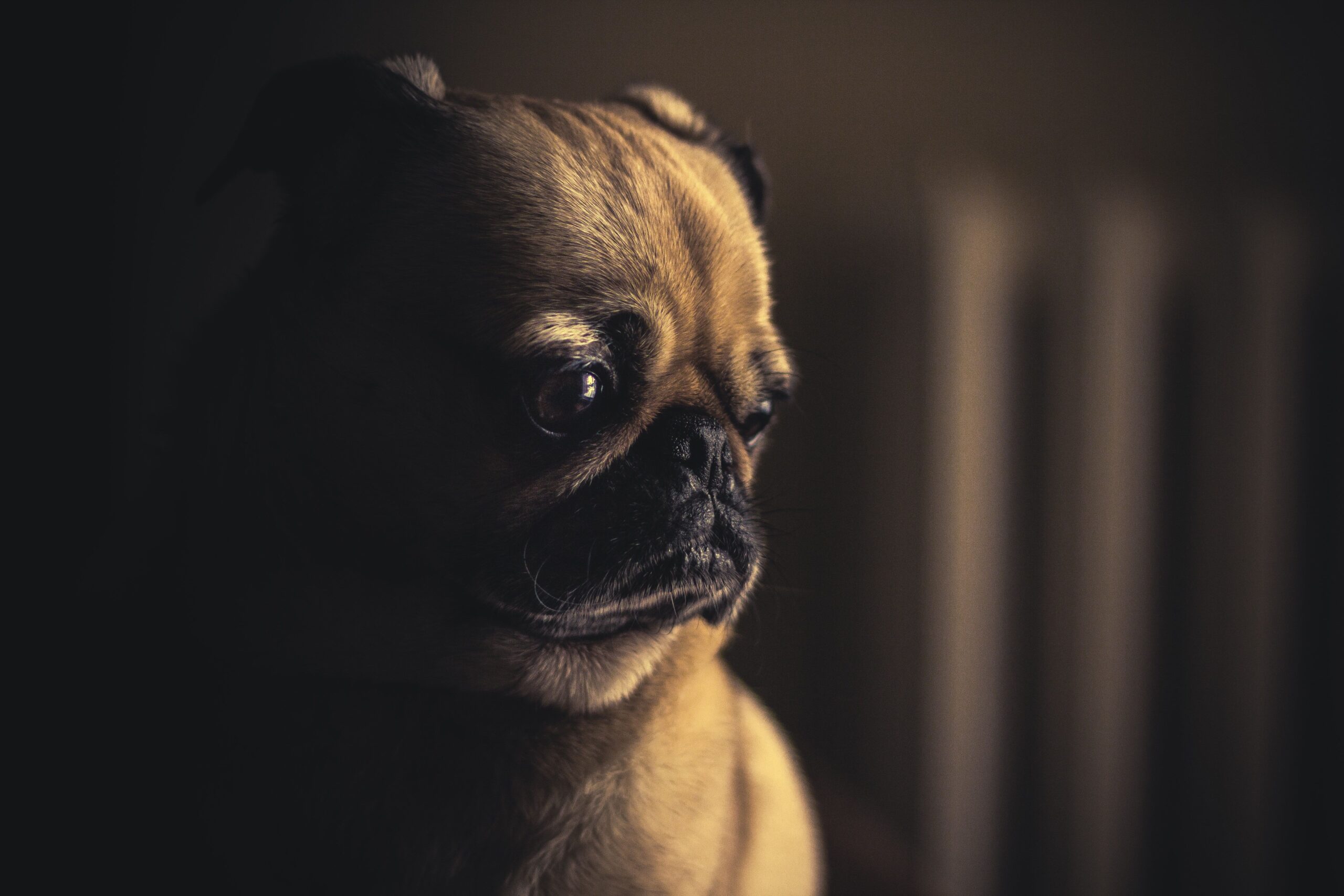
That vulnerability comes down to anatomy. Flat-faced breeds like Pugs, French Bulldogs, Boston Terriers, Shih Tzus, and Pekingese have naturally shallow eye sockets. Because the eye sits closer to the surface than in longer-snouted breeds, it takes far less force to push it forward. These dogs can experience proptosis from what would be a minor incident for any other breed.
Dogs with longer snouts can also experience proptosis, but it typically takes more significant trauma to cause it.
For those of you already at the clinic or in the waiting room, here’s what the vet is assessing and what comes next.
Your vet will evaluate how long the eye has been displaced, the condition of the cornea and surrounding tissue, and whether the optic nerve and eye muscles appear intact. This determines whether attempting to save the eye is realistic.
If the eye looks viable, the vet will perform emergency surgery to gently reposition the eyeball back into the socket under general anesthesia. Temporary sutures are then placed to hold the eyelids partially closed, keeping the eye protected while healing begins.
If the eye is too damaged to save, the vet will recommend removing it entirely. This sounds devastating, but dogs adapt remarkably well to life with one eye. They can still live full, happy, comfortable lives. Enucleation also resolves the pain and infection risk that comes with a severely damaged eye. It’s not giving up. It’s often the most compassionate choice.
Sometimes, yes. Even when surgery successfully replaces the eye, vision loss is common. The optic nerve is delicate, and stretching or compression during the injury can cause permanent damage. Many dogs end up with limited vision or none at all in the affected eye, even after a technically successful procedure.
Some dogs also develop strabismus after proptosis, where the eye drifts or points in an abnormal direction because the muscles that control eye movement were damaged. This is a known complication and doesn’t always affect comfort or quality of life, but it’s worth knowing about.
The factors that give the best odds of saving the eye are getting to a vet within the first hour, keeping the eye moist during transport, and the absence of severe muscle or nerve damage. Flat-faced breeds, because their displacement often requires less force, sometimes have relatively better outcomes than long-snouted dogs whose proptosis typically involved more serious trauma.
Yes, proptosis from a dog fight injury or trauma is an unexpected accident and can be eligible for coverage under a Lemonade Pet accident and illness policy, as long as the injury occurred after your policy started and your waiting period passed.
Emergency eye surgery isn’t cheap. Emergency consultation fees, anesthesia, surgical costs, follow-up medications, and potentially a referral to a veterinary ophthalmologist can reach several thousand dollars quickly. Getting coverage in place before anything happens is what makes it actually useful in a moment like this. If you have a flat-faced breed or an active dog who could be injured in a fight or collision, getting a quote now, before anything happens, is the move that actually helps when you need it most.
Proptosis happens fast and looks terrifying. But the steps in those first few minutes really do matter. Keep the eye moist, don’t try to push it back, and get to an emergency vet as quickly as you can. That’s the sequence that gives your dog the best shot.
If you have a flat-faced breed, it’s also worth talking to your vet about their eye anatomy at your next regular visit, and making sure you have a 24-hour emergency clinic bookmarked before you ever need it. And if you haven’t looked into pet insurance yet, now is a good time to do it while your dog is still healthy.
The eyeball will be visibly displaced forward, past the eyelids, which may appear to close behind it. The eye looks like it’s bulging or has popped out of the socket entirely. The white of the eye and the cornea will be exposed and can dry out quickly.
Brachycephalic (flat-faced) breeds are at the highest risk due to their shallow eye sockets. This includes pugs, French bulldogs, Boston terriers, Shih Tzus, Pekingese, and Bulldogs. In these breeds, even minor trauma or pressure near the head can cause proptosis.
Yes. Dogs adapt very well to losing an eye. They rely more heavily on their other senses and the remaining eye, and most return to a good quality of life with little long-term impact on their daily activity or happiness.
Every minute counts, but acting within the first hour gives the best chance of saving the eye. The longer the eyeball is exposed and the cornea dries out, the greater the damage. Treat it as you would any life-threatening emergency and go immediately.
It depends on the severity of the injury and how quickly treatment was given. Even with successful surgery to replace the eye, vision loss is common because the optic nerve is often damaged. Your vet or a veterinary ophthalmologist can give you a more specific prognosis after examining the eye.
A few quick words, because we <3 our lawyers: This post is general in nature, and any statement in it doesn’t alter the terms, conditions, exclusions, or limitations of the policies issued, which differ according to your state of residence. You’re encouraged to discuss your specific circumstances with your own professional advisors. The purpose of this post is merely to provide you with info and insights you can use to make such discussions more productive! Naturally, all comments by, or references to, third parties represent their own views, and Lemonade assumes no responsibility for them. Coverage may not be available in all states. Please note that statements about coverages, policy management, claims processes, Giveback, and customer support apply to policies underwritten by Lemonade Insurance Company or Metromile Insurance Company, a Lemonade company, sold by Lemonade Insurance Agency, LLC. The statements do not apply to policies underwritten by other carriers.
Please note: Lemonade articles and other editorial content are meant for educational purposes only, and should not be relied upon instead of professional legal, insurance or financial advice. The content of these educational articles does not alter the terms, conditions, exclusions, or limitations of policies issued by Lemonade, which differ according to your state of residence. While we regularly review previously published content to ensure it is accurate and up-to-date, there may be instances in which legal conditions or policy details have changed since publication. Any hypothetical examples used in Lemonade editorial content are purely expositional. Hypothetical examples do not alter or bind Lemonade to any application of your insurance policy to the particular facts and circumstances of any actual claim.