
Does Homeowners Insurance Cover Your Home Office?
Your homeowners insurance has limits when work enters the picture. Here's what to know.

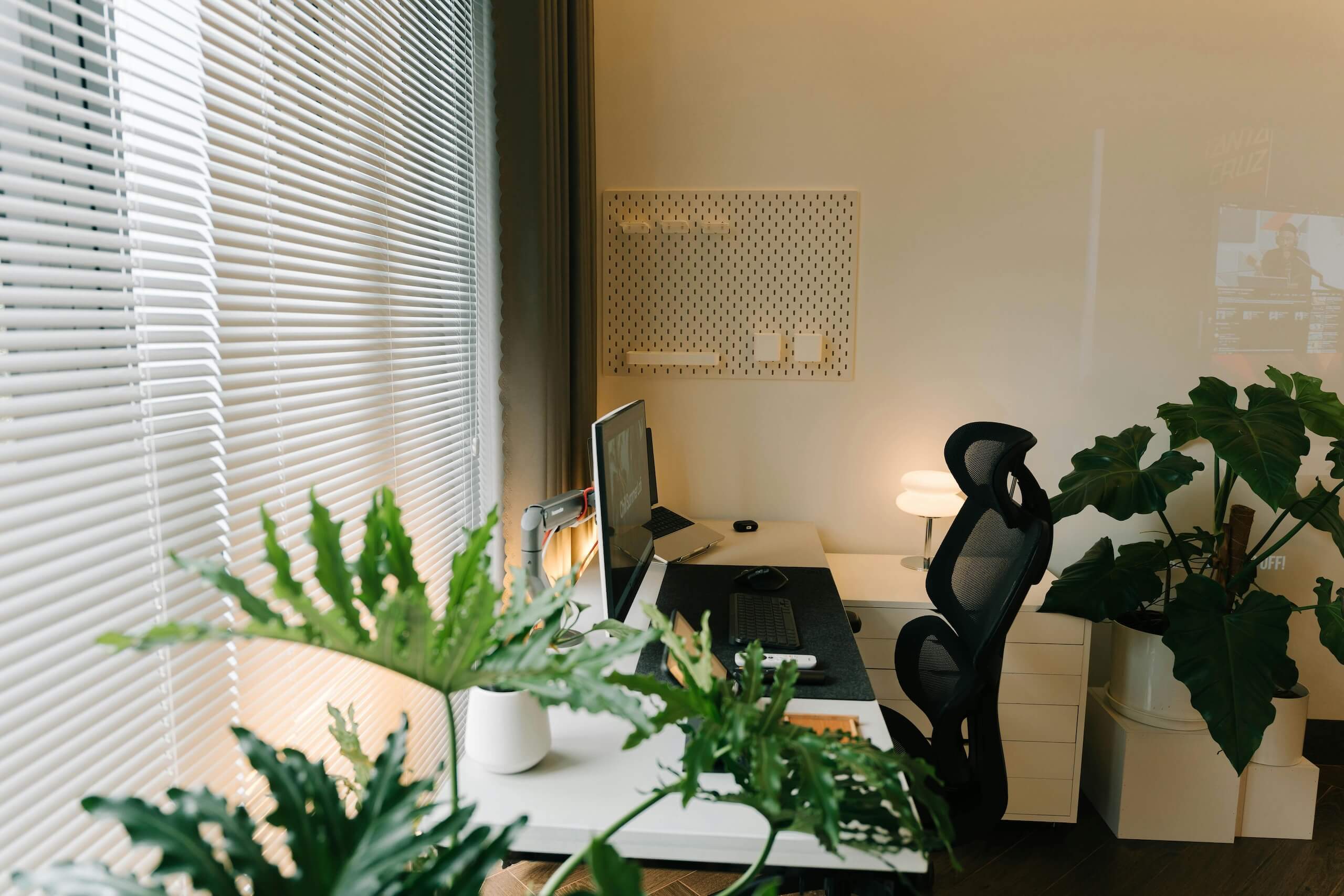
Your homeowners insurance has limits when work enters the picture. Here's what to know.
Your standard homeowners insurance policy may cover some business equipment, but typically only if it’s yours – not gear your employer bought and sent home with you. Beyond that, it wasn’t built for remote work, so the gaps can catch you off guard. The insurance landscape gets tricky fast when your home becomes your workspace, so here’s what’s typically covered, what isn’t, and how to make sure your setup is protected.
 TL;DR
TL;DR
Your homeowners insurance policy may offer some protection for your home office, though not necessarily as much as you might expect. Here’s what it may cover:
If your personal property like your laptop, printer, or desk gets damaged in a fire or stolen, your home insurance policy may generally cover it, often up to around $2,500 depending on your policy limits. Just keep in mind that coverage typically applies only to gear you bought yourself. Equipment your employer owns and sent home with you is generally their responsibility, not your insurer’s.
Your home insurance typically covers your home office space the same way it covers the rest of your home. So if a burst pipe ruins your home office setup, you may be covered for the physical damage, depending on your specific policy and which work equipment you actually own yourself.
If someone trips and falls in your home, your liability protection may kick in, but typically only if it’s a personal visit. The moment it’s business-related, like a client stopping by, your personal insurance coverage generally won’t apply. If you run your own business from home, your separate business insurance would be the relevant policy.
While your home insurance policy may cover personal belongings, it typically excludes property and liability claims tied to business activities. Say your home-based business involves shipping products – damages to inventory stored at your house may not be covered. Similarly, if a client visits and gets injured, your liability protection may not apply, as it’s generally designed for personal, not professional, scenarios.
If your home office is packed with pricey tech or specialized equipment worth more than your policy’s business equipment limit, it may not be fully protected under a standard plan. That’s where endorsements and specialized policies may help.
Insurance concepts are easier to understand when you can see them play out. Here are four common situations that show exactly where standard coverage holds, and where it doesn’t.
Situation: Jamie works remotely for a marketing agency. Her home office includes a company-issued MacBook Pro 14-inch ($2,800), her own Dell 27-inch monitor ($700), an HP LaserJet printer ($250), and a standing desk she bought herself ($600). A kitchen fire spreads and damages the entire home office. Everything is smoke- and water-damaged.
Coverage decision: Partially covered.
Reasoning: Homeowners insurance covers personal property, not employer-owned equipment. Jamie’s Dell monitor, HP printer, and standing desk are hers, so they fall within her policy’s business equipment sublimit. The company MacBook Pro isn’t hers to claim, her employer’s commercial property insurance handles that.
Outcome: Jamie’s personal equipment ($1,550) is covered up to her policy’s $2,500 business equipment sublimit. The company MacBook Pro ($2,800) is filed through her employer’s insurer. Jamie pays nothing out of pocket for her own gear.
| Without homeowners insurance | With homeowners insurance | |
|---|---|---|
| What Jamie pays | $1,550 (personal equipment) | $0 |
| What Jamie gets back | $0 | Up to $1,550 for personal gear |
| Who covers the laptop | Nobody | Jamie’s employer’s insurer |
Situation: Marco is a freelance video editor with $7,300 in personal equipment: a custom-built PC editing workstation ($3,200), two LG UltraWide 34-inch monitors ($1,800 total), a Seagate 8TB external hard drive array ($900), and a Rode NT-USB microphone and audio interface ($1,400). His home is broken into. The workstation and one monitor are stolen. Replacement cost: $4,500.
Coverage decision: Partially covered.
Reasoning: Marco’s homeowners policy covers business equipment, but only up to its $2,500 sublimit. The stolen gear totals $4,500, so the remaining $2,000 isn’t reimbursed. A business equipment endorsement would have raised that limit and covered the full loss.
Outcome: Marco receives $2,500 from his insurer. The remaining $2,000 comes out of pocket. If he’d added an endorsement (as little as $25/year), he could have raised his limit to $5,000 and covered the full claim.
| Without homeowners insurance | With standard homeowners insurance | With endorsement | |
|---|---|---|---|
| What Marco pays | $4,500 (full loss) | $2,000 (above sublimit) | $0 |
| What Marco gets back | $0 | $2,500 (up to sublimit) | Up to $5,000 |
Situation: Priya runs an online ceramics business from home. She stores $6,000 in finished inventory (hand-thrown bowls, mugs, and vases) in her spare bedroom. A burst pipe floods the room and destroys the entire stock. Her Skutt KM-1022 kiln and raw materials in the garage are undamaged.
Coverage decision: Not covered under a standard homeowners policy.
Reasoning: A burst pipe damaging personal furniture would typically be covered. But business inventory is a different story. Standard homeowners policies exclude business property like product stock, so Priya’s $6,000 in ceramics isn’t reimbursable without a separate business property or in-home business policy.
Outcome: Priya’s $6,000 inventory loss isn’t covered. A home-based business policy or BOP would have covered the stock in full.
| Without homeowners insurance | With standard homeowners insurance | With in-home business policy | |
|---|---|---|---|
| What Priya pays | $6,000 (full inventory loss) | $6,000 (excluded) | $0 |
| What Priya gets back | $0 | $0 | Full inventory value covered |
Situation: David is a tax consultant who meets two or three clients per week at his home office. His setup includes an Apple Mac Mini with a Samsung 32-inch 4K monitor ($1,200), a Brother laser printer ($350), and a two-monitor arm desk setup ($400). A client arrives for an appointment, slips on a wet floor near the entrance, and breaks their wrist. The client files a personal injury claim.
Coverage decision: Not covered under standard homeowners liability.
Reasoning: Personal liability coverage is designed for personal visits, not business ones. Because the client was there for a professional appointment, the claim falls outside the scope of a standard homeowners policy. Without a general liability or in-home business policy, David is personally exposed.
Outcome: David’s homeowners insurer denies the claim. He’s responsible for the client’s medical and legal costs out of pocket. A general liability or in-home business policy would have covered the full claim.
| Without business liability coverage | With general liability or in-home business policy | |
|---|---|---|
| What David pays | Full medical and legal costs | $0 (up to policy limits) |
| What David gets back | $0 | Full claim covered |
Not all coverage is built the same. Here’s how the main options stack up against each other, and how to figure out which one actually fits your situation.
Before you compare policies, it helps to speak the language.
Business use exclusion. A clause in your homeowners policy that excludes claims related to business activities. This is why a client injury or business inventory loss may get denied, even if the same incident involving a personal guest or personal belongings would have been covered.
Incidental business activities. Low-intensity, infrequent business use that some homeowners policies treat more leniently. Writing a blog for side income from your home computer, for example, might fall under this threshold. Storing inventory or regularly hosting clients generally doesn’t.
Scheduled business property. A way to specifically list high-value business items on your policy so they’re covered individually, often at their full appraised value. Think of it as a named-item rider: the item is explicitly covered, rather than falling under a general sublimit.
Business interruption coverage. Coverage that compensates you for lost business income if a covered event (like a fire) forces you to temporarily stop operating. Should you have to shut down your business because of damage to your house, an in-home policy can cover the income the business loses and ongoing expenses, such as payroll, for up to one year.
Professional liability insurance. Also called errors and omissions (E&O) insurance. If you provide professional services or consulting from your home, professional liability insurance covers legal expenses if a client alleges mistakes or negligence in your work. It’s separate from general liability and typically not included in homeowners policies or basic endorsements.
Here’s how the four main coverage options compare across the factors that matter most:
| Standard Homeowners | + Endorsement | In-Home Business | BOP | |
|---|---|---|---|---|
| Business Equipment | ~$2,500 | Up to ~$10,000 | Up to ~$10,000+ | Higher limits |
| Business Liability | ✗ | Limited | ✓ | ✓ |
| Business Interruption | ✗ | ✗ | Often included | Often included |
| Professional Liability | ✗ | ✗ | ✗ | Add-on |
| Business Inventory | ✗ | ✗ | Sometimes | ✓ |
| Client Visits | ✗ | Limited | ✓ | ✓ |
| Typical Annual Cost | Included in home policy | ~$25–$100 extra | ~$250–$500 | ~$500–$1,500+ |
| Best For | Remote employees | Freelancers | Home-based businesses | Growing businesses |
Use this as a starting point, not a definitive answer. Your actual situation may call for a conversation with an insurance professional.
Stick with standard homeowners if:
Consider adding an endorsement if:
Your homeowners insurer may offer an endorsement to your homeowners policy that adds additional property coverage and some limited liability coverage, and for less than $20 a year, you may be able to double your standard policy limits for business equipment from $2,500 to $5,000.
Look into an in-home business policy if:
Some insurers offer in-home business policies, which go further than a standard endorsement. They typically cover damaged business property, general liability (including client injuries on-site), and business interruption if a fire or storm forces you to temporarily relocate.
Consider a Business Owners Policy (BOP) if:
A BOP bundles property, liability, and income protection into one policy, typically at broader coverage limits than an in-home business policy. It’s worth considering if your business has outgrown a single location.
If you’re working from home full-time or running a small business, your standard home insurance policy may not be enough. Here are a few options that could help close the gaps:
If you employ remote workers from your home base, you may also need workers’ compensation insurance to cover injuries or illnesses sustained on the job. Requirements typically vary state by state, and this is generally not something a standard home insurance policy would cover. It’s worth checking your local requirements with a licensed insurance professional.
Not sure if your current policy covers your needs? Here’s a quick checklist to help you evaluate your situation:
By proactively reviewing your coverage, you may be able to focus more on growing your business and less on worrying about potential gaps.
Your home insurance policy may be a helpful safety net, but it was likely never designed to cover the full complexities of working from home or running your own business. Reviewing your current policy, considering additional coverage or specialized options, and asking the right questions can go a long way. Head over to Lemonade to explore modern, customizable homeowners insurance that may be a better fit for how you actually live and work.
Standard homeowners insurance may cover some business equipment, but typically only up to around $2,500 depending on your policy, and generally only if you own it. Liability from business activities, like a client getting injured at your home, may not be covered either. If your home office setup exceeds those limits, or you regularly have clients over, it may be worth looking into additional coverage options.
An endorsement is an add-on to your existing home insurance policy that may expand or adjust your coverage. For home offices, endorsements may raise the limit on business equipment coverage or add protection for business liability, without necessarily needing a separate policy.
It depends on your situation. If you’re occasionally answering work emails from home, probably not. But if you’re running a business, have clients visiting, or own a lot of business equipment, a separate policy like in-home business insurance or a Business Owners Policy may be worth considering.
In-home business insurance may cover property and liability risks tied to running a business from your home. That could include business equipment, client injuries on your property, and business interruption, meaning if a covered event stops you from working, you may be able to recover lost income depending on your policy terms.
Generally, no. Your homeowners insurance policy typically only covers you and your household. If you have remote employees working under your business, you may need workers’ compensation insurance to cover any injuries or illnesses they sustain on the job. Requirements can vary by state, so it’s worth checking with a licensed insurance professiona
A few quick words, because we <3 our lawyers: This post is general in nature, and any statement in it doesn’t alter the terms, conditions, exclusions, or limitations of the policies issued, which differ according to your state of residence. You’re encouraged to discuss your specific circumstances with your own professional advisors. The purpose of this post is merely to provide you with info and insights you can use to make such discussions more productive! Naturally, all comments by, or references to, third parties represent their own views, and Lemonade assumes no responsibility for them. Coverage may not be available in all states. Please note that statements about coverages, policy management, claims processes, Giveback, and customer support apply to policies underwritten by Lemonade Insurance Company or Metromile Insurance Company, a Lemonade company, sold by Lemonade Insurance Agency, LLC. The statements do not apply to policies underwritten by other carriers.
Please note: Lemonade articles and other editorial content are meant for educational purposes only, and should not be relied upon instead of professional legal, insurance or financial advice. The content of these educational articles does not alter the terms, conditions, exclusions, or limitations of policies issued by Lemonade, which differ according to your state of residence. While we regularly review previously published content to ensure it is accurate and up-to-date, there may be instances in which legal conditions or policy details have changed since publication. Any hypothetical examples used in Lemonade editorial content are purely expositional. Hypothetical examples do not alter or bind Lemonade to any application of your insurance policy to the particular facts and circumstances of any actual claim.