Does Homeowners Insurance Cover Solar Panels?
Here's how solar panels affect your home insurance, from coverage to your deductible.

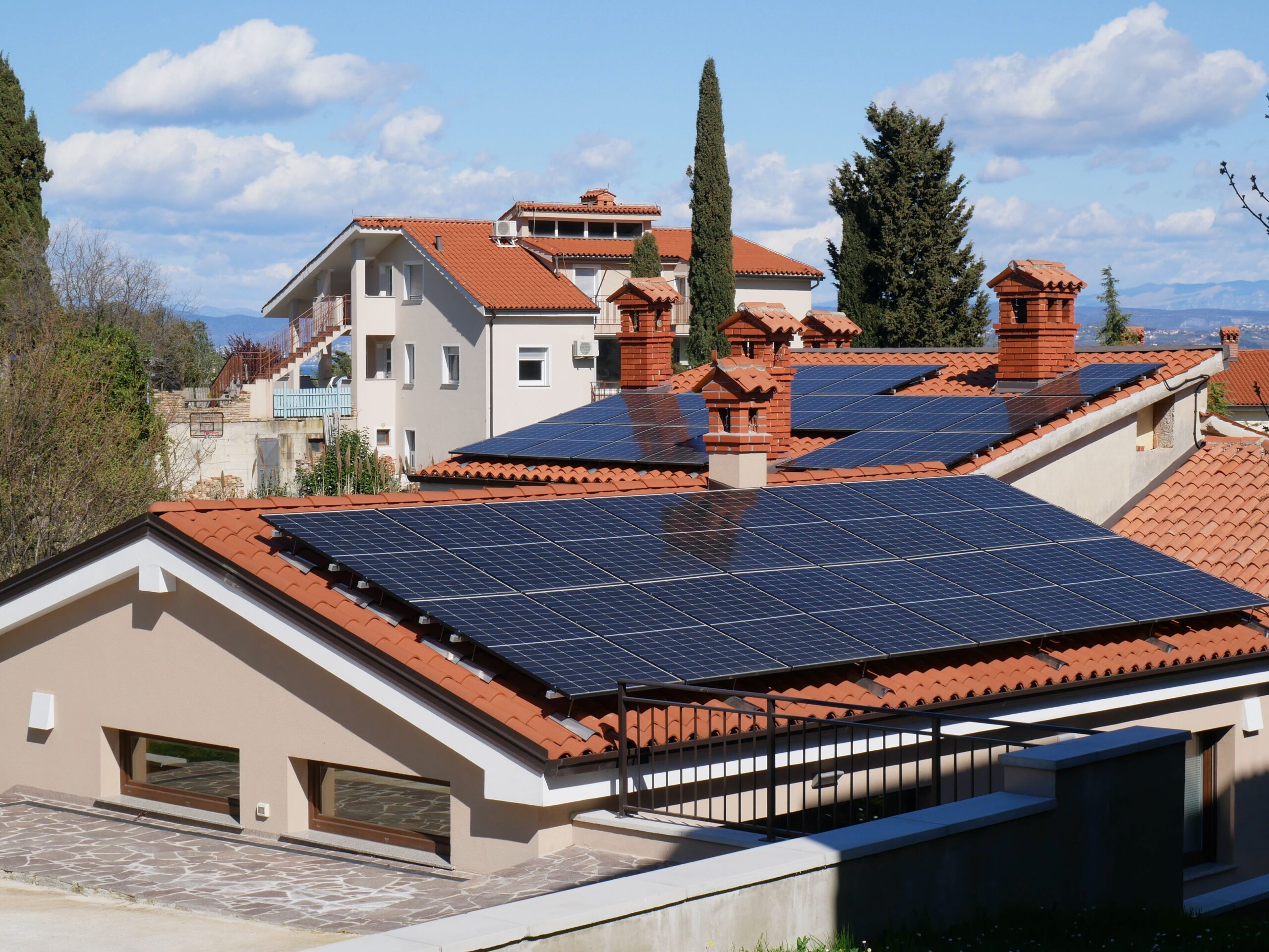
Here's how solar panels affect your home insurance, from coverage to your deductible.
Homeowners insurance typically covers owned, roof-mounted solar panels as part of your home against covered perils like fire, wind, hail, and theft. Coverage for your solar panels comes down to three things: owned or leased, roof or ground, and whether your dwelling limit matches the system’s cost.
Here’s what you need to know.
 TL;DR
For most people, yes. You usually don’t need separate solar panel insurance, because homeowners insurance for solar panels is built into your policy. The catch is where on your policy they land, and that changes how much you’re covered for.
If you own them, roof-mounted panels are treated as a permanent part of your home. That puts them under dwelling coverage (also called Coverage A), the same part of your policy that protects your roof, walls, and built-in fixtures.
Panels on a pole, a frame in the yard, or a carport roof aren’t attached to your house. Insurers usually treat them as other structures (Coverage B), alongside things like fences and sheds.
That coverage is typically capped at a percentage of your dwelling limit, and your other structures share it. A big array can use up the cap fast, which is why an endorsement might be worth asking about.
With a lease, the solar company owns the panels. With a PPA (power purchase agreement), you pay for the electricity the panels produce instead of owning the system.
Either way, your contract decides who insures and repairs the equipment. Your homeowners policy might not cover it at all.
Read your lease or PPA for three things: who insures the system, who pays to repair it, and what happens if the roof needs work.
| Solar setup | Typically covered under | Who insures | Watch out for |
|---|---|---|---|
| Owned, roof-mounted | Dwelling (Coverage A) | You | Your dwelling limit may not include the system’s cost |
| Owned, ground-mounted | Other structures (Coverage B) | You | The cap on other structures may be too low |
| Solar carport | Other structures (Coverage B) | You | Shares the same cap as your fence, shed, and more |
| Leased | Usually not your policy | The solar company, per your lease | Some leases require you to carry coverage |
| PPA | Usually not your policy | The solar company, per your contract | Your contract may make you responsible for certain damage |
| Financed (you own it) | Same as owned | You | Your lender may require proof of coverage |
| Battery storage | Depends on where it’s installed | You, if you own it | Attached and detached batteries can be treated differently |
Dwelling coverage is usually open-peril, meaning your panels are covered for sudden, accidental damage unless your policy specifically excludes it. Common examples:
Most standard policies cover wind and hail damage to roof-mounted panels. Some policies exclude it for certain homes, or apply a separate deductible. Coverage and deductibles can vary by state, so check your own policy.
Hail is the most common cause of claims on homes with solar panels. It makes up about 57% of all claims from those homes. (Based on Lemonade internal data, as of October 2026.)
Solar panels are exposed to the elements. The table below shows what causes the claims on homes with solar.
| Loss type | Percentage of claims |
|---|---|
| Hail | 57% |
| Wind | 27% |
| Lightning | 3% |
| Freeze event | 3% |
| Roof leak / ice dam | 3% |
| Other | 7% |
Homeowners insurance pays for sudden, accidental damage. It doesn’t pay for things that happen slowly, or things that were wrong from the start.
Not covered:
| Covered | Not covered |
|---|---|
| Hail cracks your panels | Panels slowly produce less power with age |
| A storm tears the array off your roof | A defect in the panels or inverter (the box that turns solar power into household power) |
| Someone steals your panels | A mistake made during installation |
| A tree falls on the array | The electricity savings you lose while panels are down |
| A fire damages the system | A flood or earthquake (separate coverage) |
Note: Panel or inverter breakdowns aren’t covered by your standard policy, but Equipment Breakdown Coverage can step in if you add it. Equipment Breakdown Coverage is an endorsement you can purchase to complement your homeowners or renters insurance, and Lemonade’s list of covered equipment includes solar panels.
Keep your installer and manufacturer warranties in the same folder as your policy. Between them, they cover most of what insurance doesn’t.
Enough to replace the whole system without dipping into savings. Many people come up short because their policy was set before the panels went up.
Your dwelling limit is what it would cost to rebuild your home. Solar panels add to that number, so it’s worth a quick update.
So what do panels cost? It depends on system size, equipment, and where you live. Berkeley Lab’s Tracking the Sun report found that state-level median prices for systems installed in 2023 ranged from $3.20 to $5.20 per watt before incentives. For a 5 kW (kilowatt) system, that’s roughly $16,000 to $26,000.
Your installer’s contract is the best source for your own cost.
A ground-mounted array counts toward your other structures limit. So do fences, sheds, and anything else that’s detached.
Add up the replacement cost of all of it to see if your limit is enough.
Here’s an example: with a $500,000 dwelling limit and a 10% other structures default, you’d have $50,000 for all your detached structures combined.
Replacement cost (RC) pays what it costs to buy new panels today.
Actual cash value (ACV) pays what your panels are worth now, after depreciation. That’s the value they lose as they age.
| Replacement cost (RC) | Actual cash value (ACV) | |
|---|---|---|
| What it pays | The cost of new panels | The cost of new panels, minus depreciation |
| Older systems | Same payout as a new one | Payout shrinks as the system ages |
| Best for | Getting you fully back to where you were after a loss | Keeping premiums lower, with more risk on you |
Your deductible is what you pay before insurance pays.
There are two kinds:
Like we mentioned above, percentage deductibles most often apply to wind and hail, so check whether yours does.
This is an illustration, not a quote. The numbers are made up to show how the math works.
A hailstorm damages an entire roof-mounted array that would cost $20,000 to replace. The system is eight years old, and the insurer applies 30% depreciation, which values it at $14,000. Your dwelling limit is $400,000.
| Flat $2,500 deductible | 1% deductible ($4,000) | |
|---|---|---|
| RC payout | $17,500 | $16,000 |
| ACV payout | $11,500 | $10,000 |
Same storm, same damage. Depending on your setup, you could pay as little as $2,500 or as much as $10,000 out of pocket. That’s a $7,500 difference.
Yes. Your insurer set your coverage based on the home as it was, not as it is now.
If they don’t know about the panels, your dwelling limit might fall short of the real replacement cost. That can leave you underinsured, and it can turn a claim into a dispute about what was on the roof.
The best time to tell them is before installation, or at the latest when the system goes in.
What to do:
Does home insurance go up with solar panels? Often a little, but it depends on the factors below.
Panels raise your home’s replacement cost, so your dwelling limit goes up. A higher limit generally means a higher premium. Installing panels doesn’t necessarily raise your premium by itself, but you might need to increase your limits to cover replacement.
What shapes the final number:
For a real number, get a quote with the panels included.
Your panels are only as protected as the roof they sit on.
Before the install, take dated photos of your whole roof and get an inspection. If there’s ever a dispute about when damage happened, you’ll have proof.
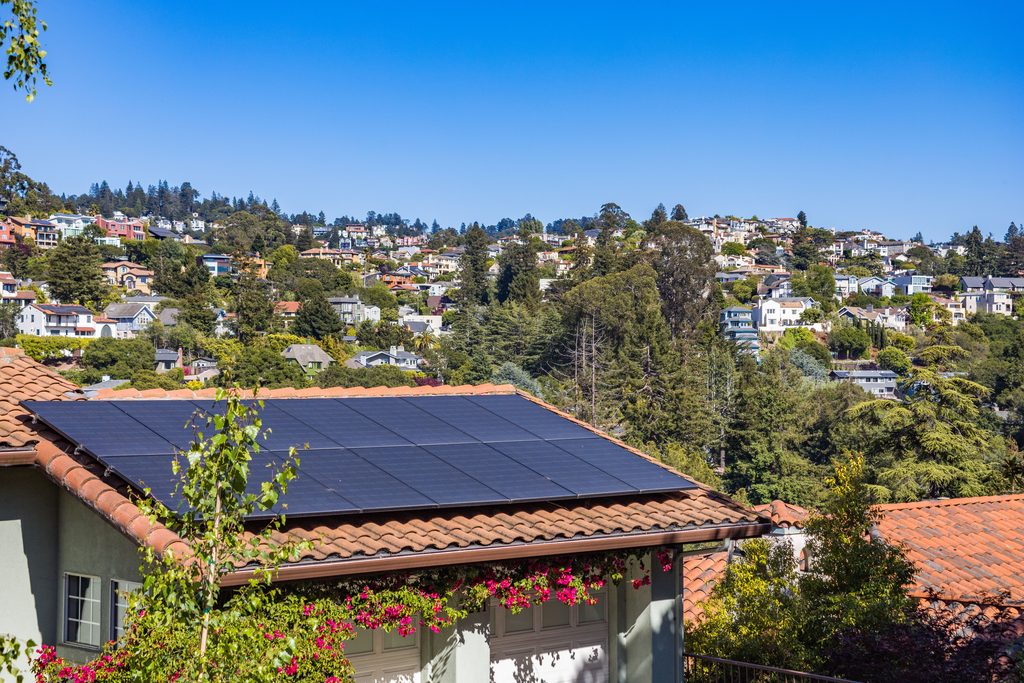
Sometimes. How a home battery is treated often depends on where it’s installed. Many insurers treat a battery attached to your house like part of the home. A detached battery might fall under other structures, which has a lower limit.
Batteries also carry fire and electrical risk, so make sure a licensed pro installs yours. Ask your insurer how it’s treated, and add it to your cost when you update your limit.
Your liability coverage helps if your equipment hurts someone or damages their property. Think of a panel that comes loose in a storm and lands on a neighbor’s fence.
If your panels are leased, the contract may say who’s responsible. This isn’t legal advice, so if you’re unsure what a contract means for you, ask an attorney.
Damaged panels are stressful, but here’s how to file a claim without missing a step.
Thinking about going solar? Run through this first.
 Check HOA (homeowners association) and local permit rules. Your local HOA may have rules about whether or how you can install solar panels.
Tell your insurer before the install starts.
Review your dwelling limit and your deductible.
Confirm your roof is in good shape, and document it.
Read the lease or PPA terms, if you're not buying the system.
Keep all installer paperwork and warranties together.
Going solar doesn’t have to mean a coverage headache. Most owned systems are covered, and the gaps are easy to close once you know where to look.
Start with three things: how your panels are mounted, whether you own them, and if your dwelling limit reflects what they cost. Get those right, and you’re in good shape.
Want to see what your coverage looks like with solar in the picture? Get a quote for Lemonade homeowners insurance.
Usually, yes. Most standard policies cover hail damage to roof-mounted panels, but some apply a separate percentage deductible for wind and hail. Check your deductible before storm season, because it can change how much you get back.
Usually not. The solar company owns leased panels, so your contract decides who insures them. Your homeowners policy still protects your home and roof, and you might need to carry liability coverage. Read your lease for who pays for repairs.
Often, yes, but under other structures coverage instead of dwelling coverage. That limit is usually a percentage of your dwelling limit, and other detached structures share it. If your array is large, you may want to raise the limit or add an endorsement.
It can. Panels raise your home’s replacement cost, so you’ll likely need a higher dwelling limit, which can raise your premium. Roof age, your location, and your insurer’s rules also play a part. The best way to know is to get a quote.
Usually, yes. How it’s covered depends on where the battery is installed. A battery attached to your home may count as part of your dwelling, while a detached one may fall under other structures. Tell your insurer about it and ask how it’s covered.
Usually not. In most states, panels alone aren’t a reason to cancel your policy mid-term, but renewal and pricing rules vary, so let your insurer know before installing.
No. Your policy covers damage to the panels, not the electricity you didn’t make while they were down. Some solar warranties or performance guarantees may help with output, so check what your installer and manufacturer offer.
A few quick words, because we <3 our lawyers: This post is general in nature, and any statement in it doesn’t alter the terms, conditions, exclusions, or limitations of the policies issued, which differ according to your state of residence. You’re encouraged to discuss your specific circumstances with your own professional advisors. The purpose of this post is merely to provide you with info and insights you can use to make such discussions more productive! Naturally, all comments by, or references to, third parties represent their own views, and Lemonade assumes no responsibility for them. Coverage may not be available in all states. Please note that statements about coverages, policy management, claims processes, Giveback, and customer support apply to policies underwritten by Lemonade Insurance Company or Metromile Insurance Company, a Lemonade company, sold by Lemonade Insurance Agency, LLC. The statements do not apply to policies underwritten by other carriers.
Please note: Lemonade articles and other editorial content are meant for educational purposes only, and should not be relied upon instead of professional legal, insurance or financial advice. The content of these educational articles does not alter the terms, conditions, exclusions, or limitations of policies issued by Lemonade, which differ according to your state of residence. While we regularly review previously published content to ensure it is accurate and up-to-date, there may be instances in which legal conditions or policy details have changed since publication. Any hypothetical examples used in Lemonade editorial content are purely expositional. Hypothetical examples do not alter or bind Lemonade to any application of your insurance policy to the particular facts and circumstances of any actual claim.