





You didn’t land on the Treeing walker coonhound by accident. This is a breed people seek out, and for good reason. The speedy coonhound, athletic and nose-driven, and loud, fast, and joyfully independent, they’re a natural fit for active experienced owners and hunters who want an athletic scent hound and can manage their exercise and vocal needs who want an athletic, energetic, and happily independent scent hound for active owners who appreciate hound character. Let’s dig in.
What are the characteristics of a Treeing Walker Coonhound?
Think you know what you’re getting into with a Treeing Walker Coonhound? These scores will either confirm your suspicions or give you something to think about. Either way, good to know now.
Training
| Trait | Score | What does it mean? |
|---|---|---|
| Trainability | 2 out of 5 | Intelligent but scent-focused. Their priorities lie in the environment, not with the handler |
| Obedience | 2 out of 5 | Reliable in low-distraction environments. Recall on a trail is essentially zero |
| Focus | 1 out of 5 | Scent overrides everything outdoors |
| Stubbornness | 4 out of 5 | Independent and nose-driven. They follow trails, not commands |
Friendliness
| Trait | Score | What does it mean? |
|---|---|---|
| Good with family | 4 out of 5 | Friendly, warm, and pack-oriented with their family |
| Good with children | 4 out of 5 | Gentle and good-natured with children |
| Good with strangers | 5 out of 5 | Extremely friendly with people. They lack guarding instinct entirely |
| Good with other dogs | 5 out of 5 | Excellent with other dogs. Pack hounds by nature |
Adaptability
| Trait | Score | What does it mean? |
|---|---|---|
| Apartment living | 1 out of 5 | Not suited to apartment living. Their baying will disturb neighbors and they need space |
| Cold weather | 3 out of 5 | Their coat handles cool weather reasonably well |
| Hot weather | 3 out of 5 | Tolerates moderate heat |
| Routine flexibility | 2 out of 5 | Needs consistent vigorous daily activity and outdoor access |
| First time owner | 2 out of 5 | Better for owners familiar with scent hound temperament |
Physical needs
| Trait | Score | What does it mean? |
|---|---|---|
| Energy level | 5 out of 5 | High energy and excellent endurance. Built for extended hunts |
| Endurance | 5 out of 5 | One of the faster coonhounds with exceptional stamina |
| Exercise needs | 5 out of 5 | Needs at least 60 to 90 minutes of vigorous daily exercise |
| Mental stimulation | 3 out of 5 | Intelligent and trainable in the right context |
| Grooming needs | 2 out of 5 | Short, smooth coat that requires minimal grooming |
Personality
| Trait | Score | What does it mean? |
|---|---|---|
| Playfulness | 4 out of 5 | Playful and enthusiastic. Their joy in physical activity is genuine |
| Affection | 4 out of 5 | Affectionate and warm with their pack |
| Loyalty | 3 out of 5 | Loyal to their group |
| Independence | 4 out of 5 | Independent and nose-driven |
| Alertness | 3 out of 5 | Alert to scents and sounds |
Behavior
| Trait | Score | What does it mean? |
|---|---|---|
| Barking tendency | 5 out of 5 | One of the more vocal hound breeds. Their bay is loud, distinctive, and carries for miles |
| Digging tendency | 2 out of 5 | Low digging tendency |
| Chewing tendency | 2 out of 5 | Light chewing tendency |
| Prey drive | 5 out of 5 | Extreme scent-driven prey drive |
| Guarding instincts | 1 out of 5 | Too friendly to be guard dogs |
What are common health issues of a Treeing Walker Coonhound?
Like all breeds, Treeing Walker Coonhounds are prone to certain health conditions. Here’s what to keep on your radar.
Hip Dysplasia
The hip joint develops abnormally, causing pain and arthritis over time. Treeing Walker Coonhounds are an active breed, so stiffness after exercise or a changed gait are worth catching.
Read more about Hip DysplasiaHypothyroidism
The thyroid gland does not produce enough hormone, slowing the metabolism. In Treeing Walker Coonhounds, signs include weight gain, low energy, and a dull coat. Daily medication helps.
Read more about HypothyroidismEpilepsy
A neurological condition causing recurring seizures, seen in Treeing Walker Coonhounds with some frequency. It often has a genetic component and is managed with daily medication.
Read more about EpilepsyHearing Loss
Treeing Walker Coonhounds can develop hereditary hearing loss, sometimes present from birth. A vet can screen for it early. Knowing sooner helps you adjust training and daily care.
Read more about Hearing LossTorn Cranial Cruciate Ligament
The CCL stabilizes the knee, and active breeds like the Treeing Walker Coonhound are at real risk of tearing it. A sudden rear-leg limp after activity is the most common first sign.
Read more about Torn Cranial Cruciate LigamentWhat are the recommended health tests for Treeing Walker Coonhounds?
Your Treeing Walker Coonhound can’t tell you when something’s off. That’s what these tests are for. Here’s what vets typically recommend for them.
-
 OFA hip evaluation
 -
Ear examination and cleaning at every wellness visit
-
CAER ophthalmologist eye exam
-
Annual weight monitoring
Do Treeing Walker Coonhounds need pet insurance?
We’ll let the numbers do the talking, but spoiler: a lot of Treeing Walker Coonhound owners are really glad they had coverage.
Those numbers aren’t hypotheticals. They’re real claims from real Treeing Walker Coonhound owners in 2025.
The right pet insurance means you’re making decisions based on what your dog needs, not what you can afford.
With Lemonade, you can build a plan around your TWC specifically. Start with accident and illness coverage as your base, then add on what makes sense for your dog, things like physical therapy, dental illness, or behavioral treatment, and skip what doesn’t. Coverage applies to conditions that aren’t pre-existing (AKA, a condition that occurs after your policy is active and your waiting periods have passed), and you’ll know exactly what’s included before you commit. No fine print ambushes, no surprises at claim time.
And when you do need to file? You can do it in the app in minutes. No paperwork, no hold music, no waiting around.
Treeing Walker Coonhounds are worth protecting with proper coverage. Here’s how to do it right.
How much does pet insurance cost?
The cost of your premium is personal. It depends on your TWCs age, your location, and what you add to your plan. That said, here’s a realistic look at what other Treeing Walker Coonhound owners pay with Lemonade:
| Age | Average monthly premium |
|---|---|
| 1 year old | $45-$50 |
| 2 years old | $45-$50 |
| 3 years old | $45-$50 |
| 4 years old | $50-$55 |
| 5 years old | $60-$65 |
| 6 years old | $60-$65 |
| 7 years old | $70-$75 |
Not sure if Lemonade is the right fit for your TWC?
See how we stack up. Compare pet insurance options side by side and find the coverage that fits your Treeing Walker Coonhound and your budget.
History of the Treeing Walker Coonhound
The Treeing Walker Coonhound was developed in the United States in the 19th century, bred specifically for hunting raccoon and other game by tracking on the ground and then treeing the quarry while baying loudly to locate the hunter. The breed traces to English Foxhounds brought to Virginia in the 18th century. Thomas Walker introduced key breeding stock, and the Walker Hound became a distinct type. A stolen dog of unknown breeding known as Tennessee Lead was crossed into Walker Hound lines in the 1800s, producing the speed and drive characteristic of the modern breed. The Treeing Walker Coonhound was recognized as a distinct breed by the UKC in 1945 and by the AKC in 2012. The breed is predominantly used as a working hunting dog throughout the American South and Midwest. Their speed makes them one of the more competitive coonhound breeds in field trials.
Caring for a Treeing Walker Coonhound
Training
Training a Treeing walker coonhound takes patience, but it’s worth the effort. They are scent-driven, independent, and easily distracted by their powerful nose, which means owners need to work hard to compete with their nose and keep them focused during training. Short, high-reward sessions with especially enticing treats and a patient, persistent approach tends to work best, and getting started early makes a real difference.
Whether you’re starting from scratch or leveling up, these are worth the read.
Grooming
Treeing walker coonhounds have a short, dense coat that requires minimal grooming. Weekly brushing with a rubber curry comb or bristle brush is all the coat needs, and the occasional bath keeps them looking their best. Regular ear cleaning is essential as the long, floppy ears are highly prone to moisture and infection.
From nail trims to professional care, here’s everything you need to keep your TWC looking (and feeling) their best.
Exercise and mental stimulation
Treeing walker coonhounds have high energy levels and need 60 to 90 minutes of exercise each day to stay happy and healthy. Scent tracking, running, and fetch are all great ways to burn through that energy. But physical exercise is only half the picture. Treeing walker coonhounds are moderately intelligent dogs, and mental stimulation is just as important as the miles you put in. Without it, they become vocal, destructive, and prone to persistent howling and escape attempts. Puzzle toys, training sessions, and scent work are all solid ways to keep their brain engaged between walks.
Here’s how to build an exercise routine your Treeing walker coonhound will actually love.
Nutrition
Treeing walker coonhounds are medium to large dogs with high energy, so they need a diet to match. Most adults do well on around 1,100 to 1,500 calories a day, spread across two meals. Depending on what you’re feeding them, expect to spend around $50 to $75 a month on food. Not the cheapest line item, but not the most expensive either.
What goes in the bowl is your call, and your vet’s. Kibble, raw, fresh, or a combination: there’s no single right answer. Focus on quality ingredients, the right portions for your dog’s age and activity level, and you’re most of the way there.
Get the full picture on feeding a Treeing walker coonhound here.
Treeing Walker Coonhound costs and adoption
What does it cost to bring home a Treeing Walker Coonhound?
Before your Treeing walker coonhound even sets a paw in your home, there are some one-time costs worth planning for. Here’s what to expect upfront.
| Category | Cost Range | Details |
|---|---|---|
| Adoption (Reputable breeder) | $500-$1,500 | Health testing, vaccinations, early socialization, pedigree |
| Adoption (Rescue/shelter) | $50-$300 | Basic veterinary care, spay/neuter, temperament evaluation |
| Initial veterinary care | $300-$600 | Exam, vaccinations, spay/neuter if needed, microchip |
| Essential supplies | $200-$400 | Crate, bed, leash, collar, food bowls, toys |
| Training classes | $150-$300 | Basic obedience, puppy socialization |
Unexpected costs have a way of showing up in year one more than any other. A starter emergency fund alongside a solid pet insurance plan is the best way to make sure they don’t catch you off guard.
What does it cost to own a Treeing Walker Coonhound each year?
Once you’re past year one, ownership costs settle into a more predictable rhythm. Here’s what most Treeing walker coonhound owners spend annually, though keep in mind these numbers can vary quite a bit depending on where you live, your dog’s individual health needs, and the choices you make along the way.
| Category | Annual cost | Details |
|---|---|---|
| Food and treats | $600-$1,000 | Based on the recommended portion for your Treeing walker coonhound |
| Routine Veterinary Care | $500-$1,000 | Wellness exams, vaccinations, dental care |
| Professional Grooming | $100-$300 | Every Every 8 to 12 weeks, Short smooth coat needs very little professional grooming; weekly brushing and periodic bathing suffice. |
| Toys and Supplies | $200-$400 | Replacement items, mental stimulation toys |
What are popular Treeing Walker Coonhound names?
We’ve crunched the numbers, and found the top 10 most popular names for Treeing walker coonhound we see at Lemonade.
More names where those came from. If none of these are clicking, we’ve done the digging for you. Go find the one that sticks.
Treeing Walker Coonhound puppies
Puppy veterinary needs
The first year matters a lot. What happens between 8 weeks and 12 months shapes who this dog becomes. Here’s what to focus on.
The first few months are the most important window for your puppy’s health. Core vaccines start at 6–8 weeks and continue through 16 weeks. After that, its annual boosters and routine screening as they grow into adults.
It’s a lot to keep track of. That’s why we made it easy.
Puppy socialization
Treeing walker coonhound puppies are athletic, friendly, and built for outdoor pursuits in a way that makes them outstanding hunting companions. That a musical bay and tracking capability that is deeply satisfying for owners who hunt is part of what makes them space, secure fencing, vigorous daily exercise, weekly ear cleaning, and acceptance of hound independence and vocal nature, and it’s also why early socialization matters so much.
Between 8 and 16 weeks, get them in front of as much variety as possible. Different people, animals, sounds, surfaces, and locations. Keep every experience positive. Puppy classes are great for this: supervised, controlled, and full of exactly the kind of novelty a Treeing walker coonhound brain needs to learn that the world is mostly fine.
Where are Treeing Walker Coonhound’s most popular in the United States?
Based on Lemonade’s own policyholder data, Treeing walker coonhounds are most popular in these five states. We’ve also thrown in a few things local pet owners should keep an eye on, so your pup can get out there and explore safely.
1. Virginia
Virginia sits in the heart of Lyme disease country. Ticks are active across the state’s wooded areas and parks for much of the year, and year-round prevention is increasingly recommended by vets. Copperhead snakes are also common throughout the state, especially in wooded neighborhoods and along hiking trails.
2. North Carolina
North Carolina’s warm, humid climate supports year-round flea and tick activity, and the state sees consistent Lyme disease cases, particularly in the Piedmont and mountain regions. Copperhead snakes are also common in wooded and suburban areas, so watching where your dog sniffs around rocks and brush is a good habit.
3. New York
In New York City, street hazards are the main thing to watch. Dropped food, discarded gum containing xylitol, and litter are common ingestion risks on sidewalks and in parks. Upstate and in Long Island, the story shifts to ticks: New York is a Lyme disease hotspot, and black-legged ticks are active from early spring through late fall.
4. Pennsylvania
Pennsylvania is one of the highest-risk states for Lyme disease in the US, with ticks active across the state’s forests, parks, and suburban green spaces. Copperhead snakes are also found in wooded and rocky areas, particularly in the central and eastern parts of the state, so watching where your dog explores is worth the habit.
5. California
Foxtail grass is one of the sneakiest hazards for California dogs. The barbed seeds can embed in paws, ears, and noses from late spring through early fall, so check your dog after any outdoor time. Wildfire smoke is also a real seasonal concern; when air quality alerts are in effect, it’s best to keep walks short and stay indoors as much as possible.
Breed comparison
Already leaning toward a Treeing walker coonhound? These breeds often get compared, here’s a quick snapshot of how they stack up.

Black and Tan Coonhound
Both are athletic, vocal scent hounds. Black and Tan Coonhounds are more laid-back. Treeing Walker Coonhounds are faster, more energetic, and better suited to competitive treeing.
Read more about Black and Tan Coonhound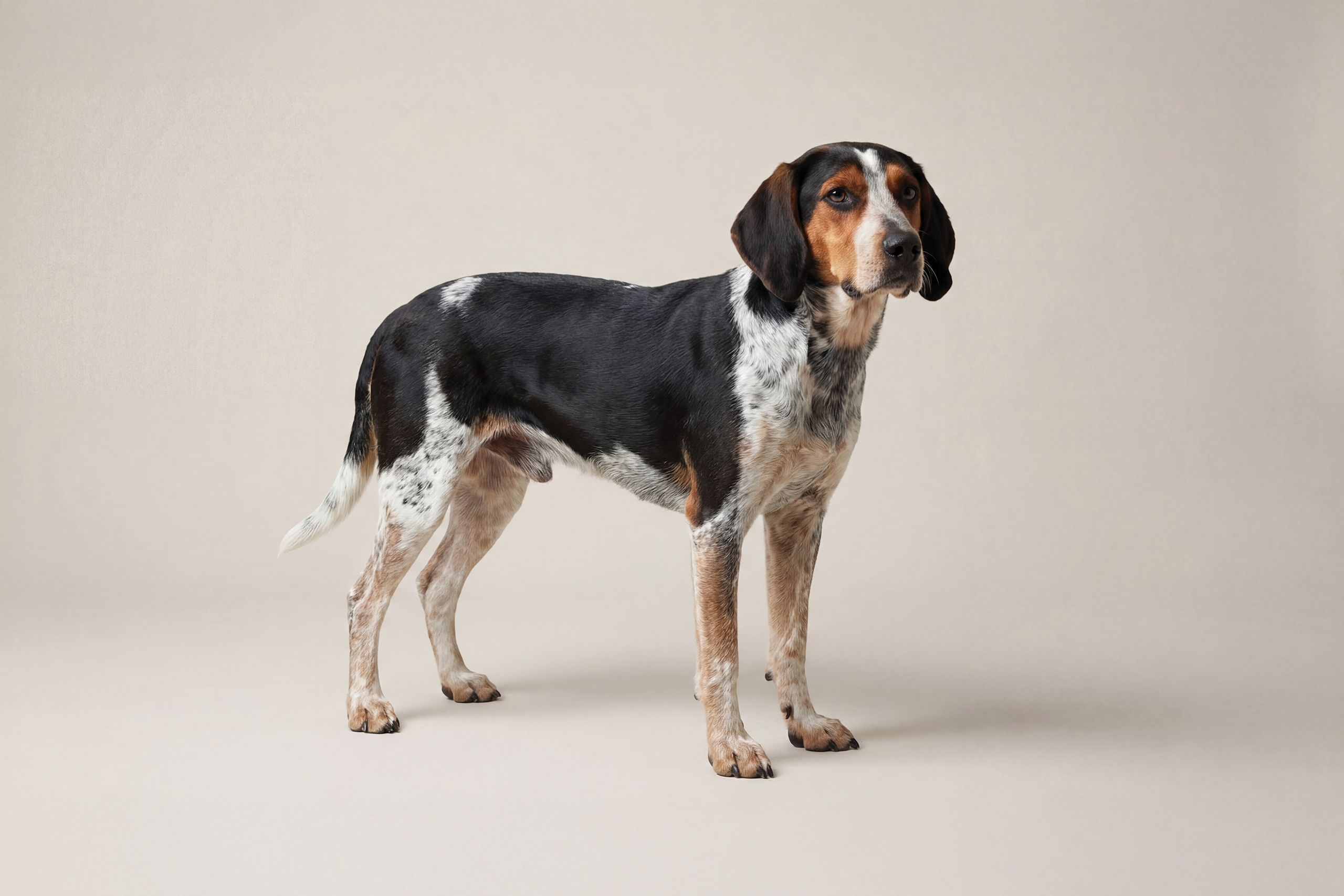
American English Coonhound
Both are fast, athletic treeing hounds. American English Coonhounds are slightly more versatile. Treeing Walker Coonhounds are better known and more widely used for competitive hunting.
Read more about American English Coonhound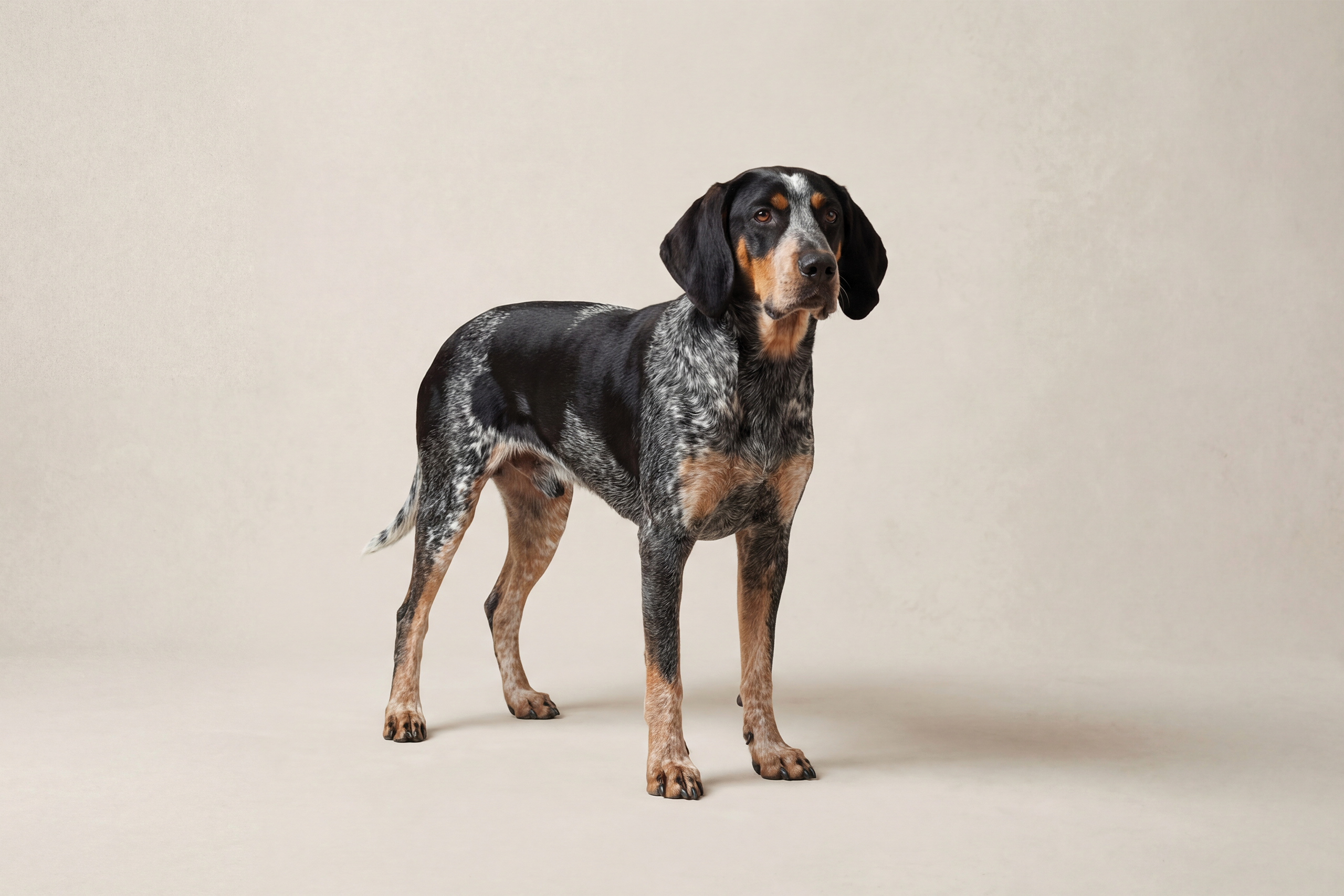
Coonhound
Coonhound is a broader term covering several breeds. Treeing Walker Coonhounds are among the fastest and most widely known. Both share the same vocal, scent-driven, athletic nature.
Read more about Coonhound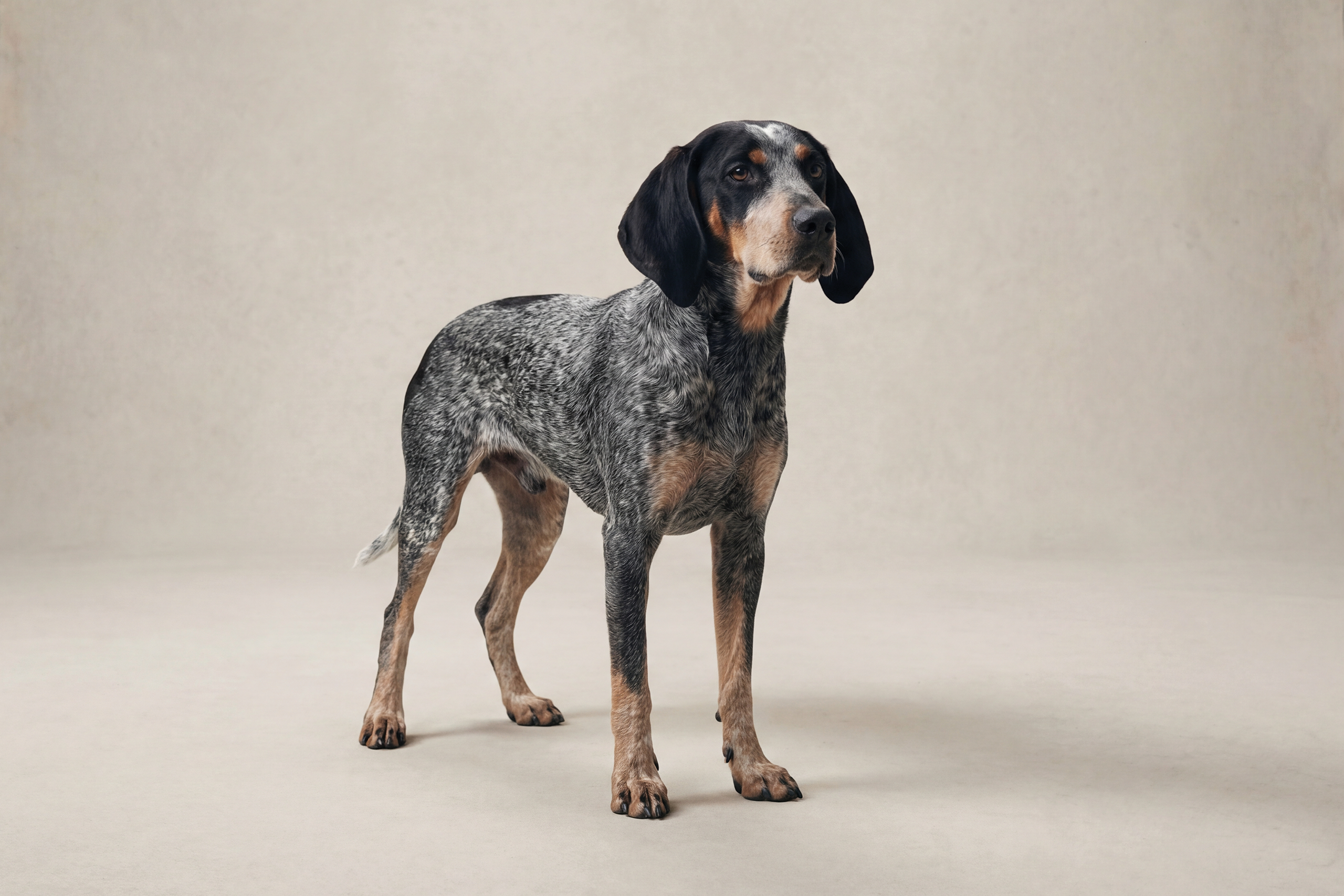
Blue Tick Coonhound
Both are athletic, vocal treeing hounds. Blue Tick Coonhounds are more methodical and cold-nosed. Treeing Walker Coonhounds are faster and better suited to competitive treeing work.
Read more about Blue Tick Coonhound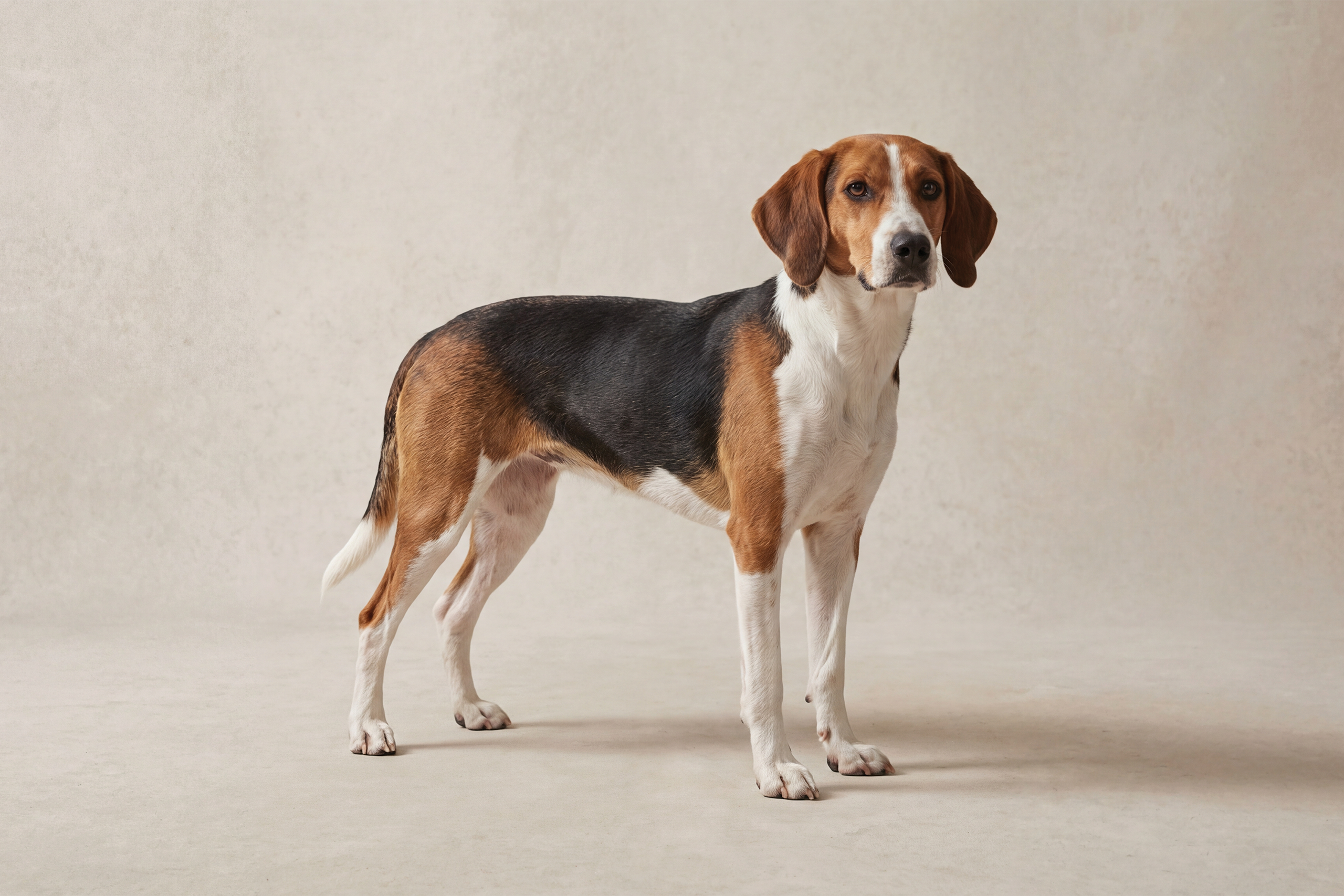
American Foxhound
Both are fast, athletic scent hounds. American Foxhounds are better suited to open-field hunting. Treeing Walker Coonhounds are better suited to treeing and competitive hunt events.
Read more about American FoxhoundIs a Treeing Walker Coonhound right for you?
Treeing walker coonhounds reward the right owner with an athleticism and stamina that makes extended hunting genuinely rewarding and a warm, pack-oriented friendliness that makes them excellent household companions in active settings. They just need space, vigorous daily exercise, secure outdoor areas, weekly ear cleaning, and comfort with loud baying in return. If you’re ready for that, you’re ready for a Treeing walker coonhound. Make sure they’re protected from day one.
A few quick words, because we <3 our lawyers: This post is general in nature, and any statement in it doesn’t alter the terms, conditions, exclusions, or limitations of the policies issued, which differ according to your state of residence. You’re encouraged to discuss your specific circumstances with your own professional advisors. The purpose of this post is merely to provide you with info and insights you can use to make such discussions more productive! Naturally, all comments by, or references to, third parties represent their own views, and Lemonade assumes no responsibility for them. Coverage may not be available in all states. Please note that statements about coverages, policy management, claims processes, Giveback, and customer support apply to policies underwritten by Lemonade Insurance Company or Metromile Insurance Company, a Lemonade company, sold by Lemonade Insurance Agency, LLC. The statements do not apply to policies underwritten by other carriers.
Insurance claim data is based on Lemonade pet insurance claims that were settled and paid in 2025.
Average insurance premium data is based on Lemonade’s internal data and reflects the average premium over the last 12 complete months, accurate as of June 2026.
Top pet names are sourced from Lemonade’s database of pet names associated with submitted quotes and purchased policies.
Top states for each breed are based on the number of active Lemonade pet insurance policies for that breed in each state as of June 2026.