
What Does Renters Insurance Cover in 2026
Renters insurance may cover more than you think.


Renters insurance may cover more than you think.
Renters insurance covers you and your personal property against things like theft, fires, vandalism, windstorms, and more-as well as injuries someone might sustain at your place. It helps provide a bit of peace of mind in an unpredictable world.
However, your policy won’t cover everything that might come your way-damage due to flooding or earthquakes, for instance, is excluded.
But the devil, as they say, is in the details-so how can you know exactly what’s covered and what isn’t by your renters insurance policy?
Your renters insurance policy will cover your personal property against various damages, like theft or fire.
It will also help with additional living expenses in the event that you’re forced out of your home for specific reasons, and can kick in to cover medical or legal bills if someone is injured at your rental (or if you cause accidental damage at someone else’s place).
Let’s take a look at some common scenarios and whether or not they’d fall under your renters insurance coverage:
| Category | Covered by Renters Insurance? |
|---|---|
| Theft | Yes |
| Fire | Yes |
| Vandalism | Yes |
| Water damage | Depends on the cause |
| Hurricanes | Mostly, but not flooding |
| Windstorms | Yes |
| Floods | No |
| Earthquakes | No |
| Property used for commercial purposes | No |
| Appliance breakdown | No, unless you purchase Equipment Breakdown Coverage |
| Your roommate’s stuff | No |
| Damage to or theft of your car | No |
| Damage from pets or pests | No |
| Property damage to the building where you live | No, that’d be covered by your landlord’s insurance |
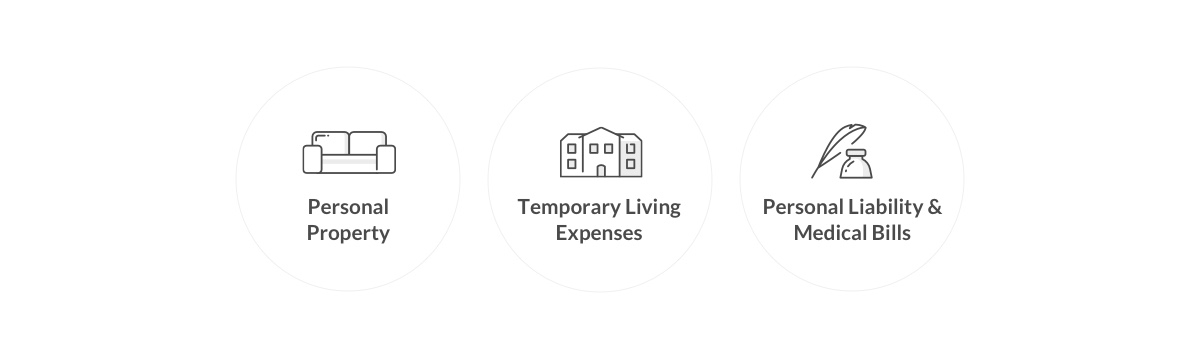
A typical renters insurance policy (also known as an HO4 policy) has three main coverage categories: Personal Property; Temporary Living Expenses (also known as Loss of Use); and Personal Liability & Medical Bills.
What does all that mean, exactly?
Personal property coverage helps you recover the cost of lost or damaged personal belongings if your property is lost, damaged, or destroyed by a covered loss.
Standard policies cover named perils: very not-fun occurrences like kitchen fires, lightning, windstorm, hail, smoke, vandalism, theft (at home or elsewhere), freezing, damage from aircraft or vehicles, and riots, to name a few.
That means that if your clothes, furniture, electronics, collectibles, or jewelry are damaged or destroyed by a named peril, your renters insurance policy can help cover the costs. The same might even go for food loss.
If covered perils cause your place to become unlivable, you might need to hole up in a hotel for a while. The good news is that most renters insurance policies will typically cover these and other expenses under your loss of use coverage, possibly including cash you need to spend on food, laundry, and hotel bills.
Renters insurance coverage extends to instances in which someone gets hurt at your place in an accident-whether that means medical expenses or legal fees from a lawsuit.
It also extends to certain damages that you may cause when you’re away from your home, like if you accidentally smash your friend’s pricey glass coffee table while visiting.
Each category of coverage has its own policy limits, and occasionally sublimits.
For instance, you can choose $10,000 of personal property coverage. If your apartment is robbed and all your belongings are taken, your insurer would compensate you for the loss up to that $10,000 limit (after taking your deductible into account).
Certain types of property typically have additional sublimits, and these may vary depending on what state you live in.
What if you want to boost the coverage you have for certain specific items that are especially valuable? In insurance terms, such additional protection is known as scheduled personal property coverage.
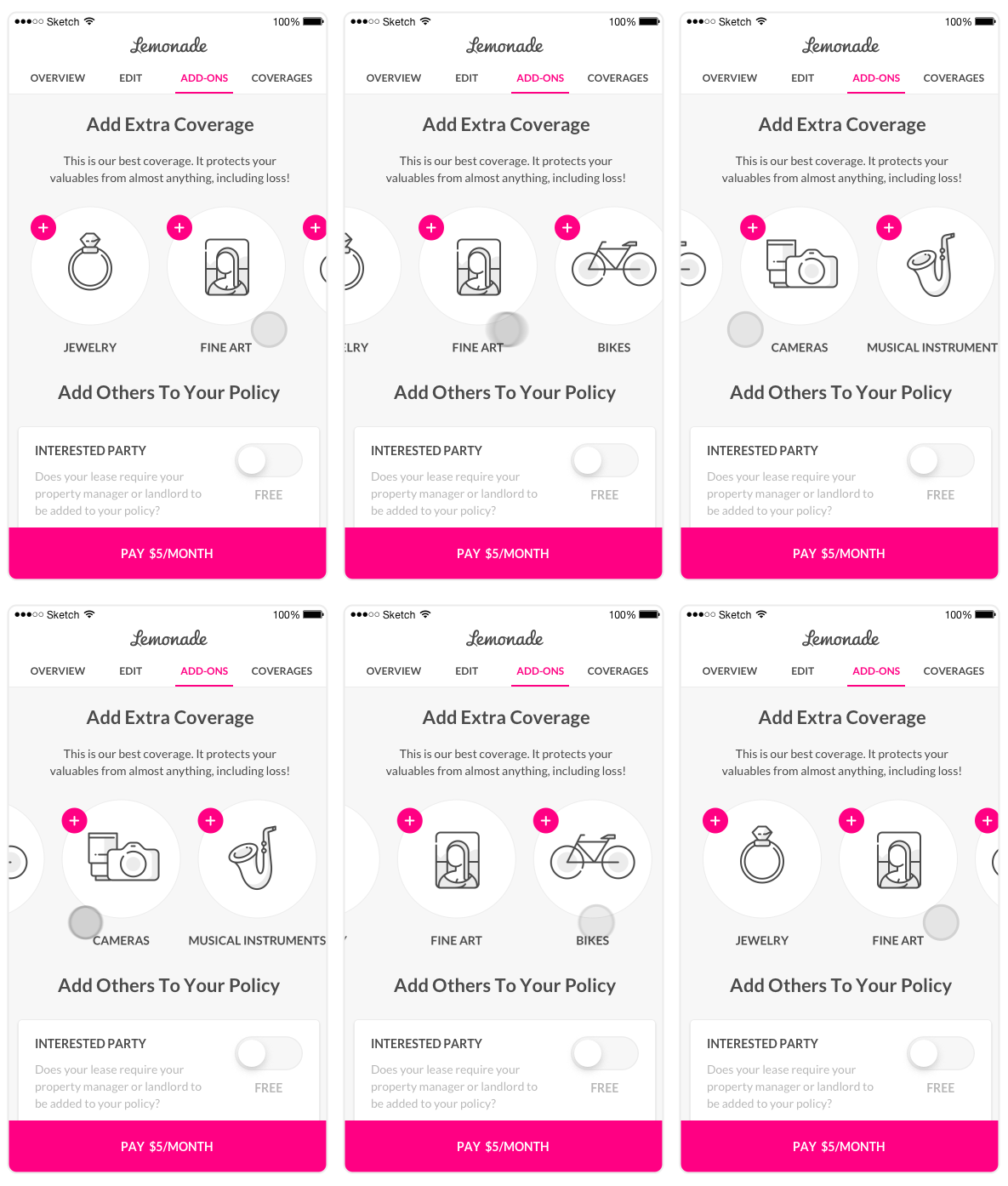
Because “scheduled personal property coverage” is a real mouthful, at Lemonade we simply refer to it as ‘Extra Coverage.’
For an extra charge, can apply to add Extra Coverage to jewelry as well as valuables like bikes, cameras, fine art, and musical instruments.
While these items already enjoy a certain amount of coverage on your base policy, Extra Coverage comes with extra perks:
While these things may need appraisals or other proof of purchase-more on all that here-the process is extremely easy using the Lemonade app.
Renters insurance is pretty awesome, but it’s not a cloak of invincibility. It won’t protect you against every crappy thing that can happen on a daily basis, so it’s good to know what’s not covered by your policy, also known as policy exclusions.
The following things are not covered by renters insurance:
Still not sure what amount of coverage is right for you? Check out our easy guide to how much renters insurance you need.
Car and renters together vary widely by state, driving record, and coverage levels. At Lemonade, renters insurance can start as low as $5/month, and we offer car insurance in select states – check if it’s available where you live. If you’re bundling with another insurer, compare the bundled price to separate policies before assuming you’re saving money. Read the full thread on Reddit
Renters insurance typically covers four things: your personal belongings against named perils (fire, theft, sudden water damage from a burst pipe or appliance overflow, and more), liability protection if someone gets hurt or you accidentally damage property, loss of use coverage if your apartment becomes uninhabitable due to a covered loss, and medical payments to others who are injured at your place. At Lemonade, all four are bundled into one straightforward policy with fast claims and transparent pricing. Read the full thread on Reddit
Renters insurance covers four main things. First, your personal belongings against named perils, typically 15 or 16 covered events depending on your state, including fire, theft, and sudden water damage. Second, liability coverage if you’re responsible for someone’s injury or property damage. Third, medical payments to others if someone gets hurt on your property. Fourth, loss of use coverage if your place becomes uninhabitable due to a covered loss. What it doesn’t cover: the building structure itself. That’s your landlord’s insurance. At Lemonade, all four are bundled into one policy. Read the full thread on Reddit
Yes, they protect against completely different things. Personal property coverage replaces your belongings if they’re stolen or damaged by a named peril. Liability coverage protects you if someone gets hurt in your place or you accidentally damage their property. At Lemonade, all four core coverages, personal property, liability, medical payments to others, and loss of use, are bundled into a single policy. Read the full thread on Reddit
A few quick words, because we <3 our lawyers: This post is general in nature, and any statement in it doesn’t alter the terms, conditions, exclusions, or limitations of policies issued by Lemonade, which differ according to your state of residence. You’re encouraged to discuss your specific circumstances with your own professional advisors. The purpose of this post is merely to provide you with info and insights you can use to make such discussions more productive! Naturally, all comments by, or references to, third parties represent their own views, and Lemonade assumes no responsibility for them. Coverage may not be available in all states.
Share


Please note: Lemonade articles and other editorial content are meant for educational purposes only, and should not be relied upon instead of professional legal, insurance or financial advice. The content of these educational articles does not alter the terms, conditions, exclusions, or limitations of policies issued by Lemonade, which differ according to your state of residence. While we regularly review previously published content to ensure it is accurate and up-to-date, there may be instances in which legal conditions or policy details have changed since publication. Any hypothetical examples used in Lemonade editorial content are purely expositional. Hypothetical examples do not alter or bind Lemonade to any application of your insurance policy to the particular facts and circumstances of any actual claim.