

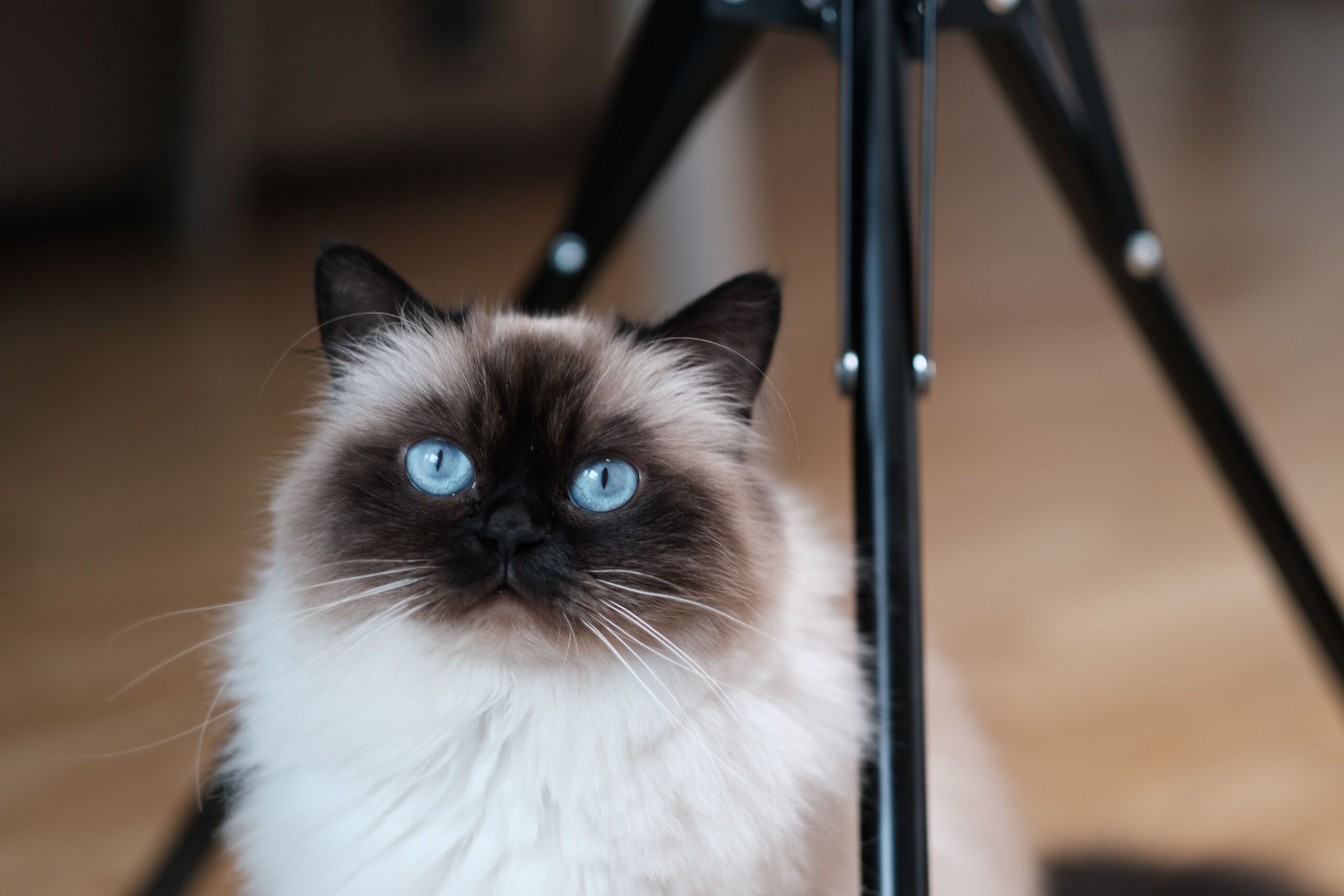
Himalayans are serene, affectionate, and perfectly content living life at a slower pace. They’re also a breed that carries real health considerations, inherited from both their Persian and Siamese lineage, that make consistent veterinary care essential. From their flat-faced airways to their kidneys, eyes, and coat, there’s a lot to stay on top of. The right coverage means you can do that without watching the clock on a vet bill.
 TL;DR
TL;DR
- Himalayans are predisposed to chronic kidney disease, BOAS, progressive retinal atrophy, cataracts, and entropion, several of which are directly linked to their flat facial structure and Persian lineage.
- Lemonade paid out $93K in Himalayan claims last year, with an average payout of $398 per claim.
- A base policy covers diagnostics, medications, and treatments. Add-ons let you build around your Himalayan’s specific risks.
- For this breed, routine vet care and dental coverage are worth serious consideration given their long grooming needs and predisposition to conditions that develop quietly over time.
- The sooner you enroll, the more coverage you have, as pre-existing conditions are not covered.
Why does my Himalayan need pet insurance?
Himalayans are calm, low-energy cats, but their genetics tell a more complex story. Their flat facial structure, inherited from their Persian lineage, creates real airway and eye health challenges. Their Siamese heritage brings its own predispositions. And their tendency toward a sedentary lifestyle can quietly contribute to weight gain and kidney stress over time. None of these conditions are guaranteed, but all of them are worth knowing about before a vet visit catches you off guard.
Chronic kidney disease (CKD)
CKD causes the kidneys to lose their ability to filter waste over time. Himalayans are predisposed due to their Persian lineage, and routine bloodwork is the best way to catch it early.
Learn more about CKDBrachycephalic obstructive airway syndrome (BOAS)
BOAS affects flat-faced cats' airways, causing breathing difficulties. Himalayans inherit their flat facial structure from Persian lineage, making airway health an ongoing priority.
Learn more about BOASProgressive retinal atrophy (PRA)
PRA causes gradual retinal deterioration, leading to vision loss and blindness. Himalayans carry a known genetic risk and should be screened early with an ophthalmic examination.
Learn more about PRACataracts
Cataracts cause clouding of the lens, leading to blurred vision and potential blindness. Himalayans can be predisposed, and regular ophthalmic exams help catch changes early.
Learn more about cataractsEntropion
Entropion causes the eyelid to roll inward, allowing eyelashes to rub against the cornea and cause irritation or injury. Himalayans are prone due to their flat facial structure.
Learn more about entropionYour vet will likely recommend a complete blood count, biochemistry profile, urinalysis, and FIV/FeLV screening at your Himalayan’s annual checkup. For this breed specifically, it’s worth asking about an annual kidney panel. Kidney disease is one of the most common conditions in Himalayans, and catching it early gives you significantly more options for slowing its progression.
How does pet insurance help?
The numbers below aren’t projections. They’re what Himalayan owners actually filed and got back last year.
Behind each of those numbers is a Himalayan owner who had a plan in place when an unexpected accident or illness struck. Here’s what that can look like in practice.
The breathing episode
Pearl, a 4-year-old Himalayan, had always made a little noise when she breathed. Her owner assumed it was just her flat face. Then one warm afternoon, Pearl started breathing with her mouth open and seemed genuinely distressed. An emergency vet visit, a full respiratory workup, and a BOAS diagnosis later, the bill came to $920.
With a $250 deductible, 80% co-insurance, and a $20,000 annual limit:
- Eligible amount: $920
- Apply co-insurance: $920 × 80% = $736
- Subtract deductible: $736 − $250 = $486 reimbursed
- Pearl’s owner pays: $434 out of pocket
With the deductible now met for the year, every eligible claim that follows gets the full 80%.
A few months later
Pearl managed to slip outside briefly during a routine vet visit. A few weeks later her owner noticed weight loss and loose stools. A fecal test confirmed giardia. A course of antiparasitic medication and a follow-up visit later, the bill came to $290.
With the deductible already met:
- Eligible amount: $290
- $290 × 80% = $232 reimbursed
- Pearl’s owner pays: $58 out of pocket
Two claims. One cat. One year. Without coverage: $1,210 out of pocket. With Lemonade: $492.
Pearl is back to her serene self, by the way.
How do I build the perfect plan for my Himalayan?
You’ve seen the risks. You’ve seen what a couple of claims in a single year can look like. Here’s how to build a plan around your cat.
Every Lemonade policy starts with accident and illness coverage as the base. That means diagnostics, medications, and treatments for unexpected accidents and illnesses that aren’t pre-existing and occur after your waiting periods have passed. Waiting periods are the short windows between when your policy starts and when coverage kicks in, just long enough to make sure a condition is genuinely new.
From there, you set your deductible, co-insurance, and annual limit. Your co-insurance is the percentage Lemonade covers of each eligible vet bill. Your deductible is what you pay before reimbursement kicks in. Your annual limit is the most Lemonade will pay out in a policy year. You saw how those three numbers work together in Pearl’s story.
Once your base is set, add what makes sense for your Himalayan and skip what doesn’t.
Routine vet care
Himalayans need consistent annual screening to stay ahead of the conditions they’re prone to, from kidney panels to ophthalmic exams and airway monitoring. A routine care package reimburses you for the preventive visits and tests you’re already doing.
What’s available varies depending on where you live, so the easiest way to see your options is to get a quote.
The visit fee add-on
When your Himalayan sees a vet for an accident or illness, there are typically two costs: the actual treatment, and the exam fee your vet charges for their time. Your base policy covers the treatment. Without this add-on, that exam fee comes straight out of pocket.
Remember Pearl’s breathing episode? That $920 bill included an $85 exam fee. Here’s what the reimbursement looks like with and without the add-on:
| Without visit fee add-on | With visit fee add-on | |
|---|---|---|
| Eligible amount | $835 | $920 |
| Apply co-insurance (80%) | $668 | $736 |
| Subtract deductible ($250) | $418 | $486 |
| You pay | $502 | $434 |
That’s $68 more back in your pocket on a single visit. It’s a small difference on its own, but it can really add up if your cat needs ongoing or repeat care.
This add-on is subject to your base policy’s co-insurance and deductible, and covers exam fees for accident and illness visits only. It doesn’t apply to annual wellness exams, routine preventive care, or anything related to a pre-existing condition.
The physical therapy add-on
Your base policy covers diagnostics and treatment when something goes wrong. This add-on picks up where that leaves off, covering rehabilitation and physical therapy for functionality issues that result from an unexpected accident or illness. Himalayans are low-energy cats, but their tendency toward a sedentary lifestyle and weight gain can put stress on their joints over time. A soft tissue injury or post-surgical recovery can take longer than expected in a breed this inactive.
Take Pearl again. Say she injures a leg and needs surgery to address the damage. Her base policy covers the diagnosis and surgery. Here’s what happens to the rehabilitation bill with and without the add-on:
| Initial treatment | PT without add-on | PT with add-on | |
|---|---|---|---|
| Eligible amount | $1,200 | $0 (PT not covered) | $550 |
| Apply co-insurance (80%) | $960 | N/A | $440 |
| Subtract deductible ($250) | $710 | N/A | Already met |
| You pay | $490 | $550 | $110 |
That’s a $440 difference, just on the recovery. The add-on doesn’t cover alternative treatments like CBD or aromatherapy, or anything related to a pre-existing condition.
Dental coverage
Himalayans are prone to dental disease, and their flat facial structure can contribute to tooth crowding and misalignment that makes dental issues more likely to develop. Lemonade offers two dental add-on options depending on where you live.
Dental illness: Covers treatments, procedures, diagnostics, and medications for dental illness, including extractions, dental surgeries, and conditions like gingivitis and periodontal disease. Subject to your policy’s co-insurance and deductible, with a $1,000 annual limit. Routine cleanings aren’t included here, but may be available through a preventive care package depending on your state.
Dental care: Everything in dental illness, plus routine dental cleanings. Pre-existing dental conditions are covered under this option, and no deductible applies. Also comes with a $1,000 annual limit, and is available to add if your Himalayan is between 0 to 3 years old.
The behavioral conditions add-on
Himalayans are calm and gentle, but they’re sensitive to change. A disrupted routine, a new pet, or a move to a new home can cause a Himalayan to withdraw in ways that are easy to miss given how quiet and low-key they are by nature. Stress-related conditions and behavioral changes can develop quietly in this breed.
This add-on covers diagnostics, vet-recommended treatments, and medications for eligible behavioral conditions, including therapy sessions and specialized training for separation anxiety, phobias, and destructive or aggressive behaviors. Treatment must be administered by a vet or licensed behaviorist, and it’s subject to your base policy’s co-insurance and deductible, with a separate $1,000 annual limit.
General obedience training, pre-existing behavioral conditions, alternative treatments like CBD, and property damage aren’t covered. Visit fees for behavioral appointments fall under the base policy for those with the visit fee add-on.
The end-of-life and remembrance add-on
Nobody wants to think about this one. But losing a pet is one of the hardest things a pet parent goes through, and the practical decisions that come with it shouldn’t have to be made under financial pressure in an already devastating moment.
This add-on covers vet-recommended euthanasia, cremation, and commemorative items, like an urn, framed paw prints, digital photo storage, or even a tattoo. It’s not subject to your base policy’s co-insurance or deductible, has an up to $500 limit, and still provides coverage if euthanasia is vet-recommended as the result of a pre-existing condition.
Funeral or burial costs and preservation services aren’t covered, and like most add-ons, it’s subject to a waiting period that varies by state.
Himalayans live 9 to 15 years and bring a quiet, gentle presence to daily life that becomes deeply familiar. This add-on won’t make that day easier. But it can make it a little less complicated.
How much does pet insurance cost for Himalayan cats?
The cost of your premium is personal. It depends on your cat’s age, your location, and what add-ons you select. One thing worth knowing: the earlier you enroll, the more coverage you have. Conditions that develop after your policy is active and waiting periods have passed are eligible for coverage. Conditions that exist before you enroll aren’t. For a breed with the Himalayan’s health profile, that distinction matters.
| Age | Average monthly premium |
|---|---|
| 1 year old | $20–$25 |
| 2 years old | $20–$25 |
| 3 years old | $20–$25 |
| 4 years old | $20–$25 |
| 5 years old | $25–$30 |
| 6 years old | $30–$35 |
| 7 years old | $35–$40 |
How do I find the best pet insurance for my Himalayan?
Every pet insurance provider covers the basics, but Himalayans have a specific set of needs that go beyond the basics. A breed with airway challenges, kidney predispositions, and ongoing eye health concerns needs a plan built around their actual health profile, not a generic one.
With Lemonade, you’re not choosing from a fixed menu. You’re building a plan around your cat’s actual risk profile, adding routine vet care for a breed that needs consistent annual screening, dental coverage for a breed prone to tooth crowding and decay, and physical therapy for a low-activity cat that can struggle with post-surgical recovery. And when you do need to file a claim, you can do it in the app in minutes.
Don’t just take our word for it. Here’s how we stack up:
Himalayan cats at a glance



A brief history
The Himalayan is the result of a deliberate cross between two of the most popular longhaired breeds in the world, the Persian and the Siamese. American breeders began experimenting with the cross in the 1930s, aiming to produce a cat with the Persian’s plush coat and stocky build and the Siamese’s striking blue eyes and colorpoint markings. The first true Himalayan, combining all of these traits, was produced in the 1950s, and the breed was recognized by the Cat Fanciers Association in 1957. The Himalayan was later reclassified as a division of the Persian breed by the CFA in 1984, a decision that remains controversial among breeders to this day.
What it’s like to live with a Himalayan
Himalayans are calm, gentle, and perfectly content living life at a slower pace. They’re affectionate without being demanding, present without being underfoot, and genuinely happy just being near you in a quiet room. They don’t need a busy household or constant stimulation. What they do need is a consistent routine, a calm environment, and a daily grooming commitment that most owners underestimate. That long, silky coat requires brushing every single day and professional grooming every four to six weeks. Their flat face also needs daily cleaning around the eyes to prevent tear staining. If you can meet those needs, a Himalayan will reward you with years of quiet, gentle companionship that’s hard to match.
Before we go
Himalayans are serene, beautiful, and deeply affectionate companions. They’re also a breed with real health considerations that are worth getting ahead of. Whether you’re already living with one or still thinking about it, the right coverage means you can focus on the quiet moments, not the vet bills.
Himalayan frequently asked questions
Is pet insurance worth it for Himalayan cats?
For most owners, yes. Himalayans are prone to kidney disease, airway conditions, and eye health issues, all of which can be expensive to diagnose and manage over time. Lemonade paid out $93K in Himalayan claims last year, with an average payout of $398 per claim. Having coverage in place before something goes wrong makes a real financial difference.
What health conditions are Himalayan cats most prone to?
Himalayans are commonly predisposed to chronic kidney disease, brachycephalic obstructive airway syndrome, progressive retinal atrophy, cataracts, and entropion. Several of these conditions are directly linked to their flat facial structure and Persian lineage, making consistent annual screening especially important.
When should I get pet insurance for my Himalayan?
As early as possible. Conditions that develop after your policy is active and waiting periods have passed are eligible for coverage. Conditions that exist before you enroll are considered pre-existing and won’t be covered. Getting a plan in place before any health issues arise gives your Himalayan the broadest possible coverage.
Does Lemonade cover breed-specific conditions in Himalayan cats?
Yes, as long as the condition isn’t pre-existing and develops after your waiting periods have passed. That includes conditions Himalayans are prone to, like CKD, BOAS, and entropion. Your base policy covers diagnostics, medications, and treatments, and add-ons let you extend that coverage to dental illness, physical therapy, and more.
Can I get pet insurance for an older Himalayan?
Yes, but keep in mind that any conditions already present before your policy starts won’t be eligible for coverage. Premiums do increase with age, but coverage at any age can still make a meaningful difference on vet bills.
A few quick words, because we <3 our lawyers: This post is general in nature, and any statement in it doesn’t alter the terms, conditions, exclusions, or limitations of the policies issued, which differ according to your state of residence. You’re encouraged to discuss your specific circumstances with your own professional advisors. The purpose of this post is merely to provide you with info and insights you can use to make such discussions more productive! Naturally, all comments by, or references to, third parties represent their own views, and Lemonade assumes no responsibility for them. Coverage may not be available in all states. Please note that statements about coverages, policy management, claims processes, Giveback, and customer support apply to policies underwritten by Lemonade Insurance Company or Metromile Insurance Company, a Lemonade company, sold by Lemonade Insurance Agency, LLC. The statements do not apply to policies underwritten by other carriers. Insurance claim data figures reflect approved accident and illness claims filed by Lemonade Pet policyholders over the trailing 12 months as of June 2026. They are averages across Lemonade’s insured population for this breed, not predictions of future claims or reimbursement for any individual pet. Actual payouts depend on your policy’s limit, deductible, co-insurance, waiting periods, and exclusions, and may not reflect the broader breed population or other insurers’ experience. Average insurance premium data is based on Lemonade’s internal data and reflects the average premium over the last 12 complete months, accurate as of June 2026.