


Whether you’re into hiking at Prophetstown State Park or wait the entire year to attend the Indy500 we can all agree on one thing: When it comes to your homeowners insurance, speed, trust, and empathy matter.
Homeowners insurance financially buffers you, your family, and your property (including your stuff!) against bad things that could do some serious damage to your bank account. If your home is broken into while you’re chilling out at the Bean Blossom Bluegrass Festival, or your neighbor slips and injures themselves on your driveway after a spring BBQ, homeowners insurance has your back.
What does Indiana homeowners insurance cover?
If you live in the Hoosier State, you know that summers are long, warm, humid and wet and the winters are short, very cold, and windy. You’ll want your homeowners insurance coverage to protect you from all sorts of risks that might damage your home, and your wallet.
Your homeowners policy covers six broad categories:
Dwelling
‘Dwelling coverage’ helps pay for damages to the structure of your home. So if your air condenser on the roof leaks and causes your pipes to burst, or a windstorm blows over a tree and damages your home, you’re covered.
Btw homeowners insurance covers your home for 16 different perils (aka bad things) that could happen.
Keep in mind that if one of these perils happens to your stuff outside of your home, you’ll also be covered.
| Fire and lightning | Vandalism | Explosions | Falling objects |
| Freezing | Theft | Smoke | Volcanic eruption |
| Windstorm and hail | Damage by aircraft | Damage by vehicle | Riots and civil unrest |
| Sudden, accidental tearing or cracking | Sudden, accidental water overflow | Damage by short-circuit | Weight of ice, snow, and sleet |
Other Structures
If one of the dangers mentioned above causes damage to your driveway, fence, shed, or other structures on your property, your home insurance can help you out.
Loss of Use
If your place becomes uninhabitable due to covered damages, your ‘loss of use’ coverage can help pay for a temporary place to stay and additional living expenses such as food, laundry, parking, etc.
Personal Property
‘Personal property’ covers your stuff both inside and outside your home. So if your couch is ruined due to a burst pipe or your laptop is swiped at a coffee shop, homeowners insurance has your back.

Liability protection
If your neighbor slips and falls on your driveway, you could be held liable. If someone is injured on your property, or anyone on your policy causes damage to someone else’s property or stuff, your insurance company should have you covered for legal fees and any other payouts.
Medical Protection
If your neighbor needs to go to the hospital because of that slip and fall, your medical payments will kick in. Home insurance covers you if a guest gets injured at your place, or if you accidentally cause injury to someone outside your home.
What are the biggest home insurance risks in Indiana?
Indiana weather keeps homeowners on their toes, and on their toes means on their policy. Here are the risks most likely to affect your home in the Hoosier State.
Tornadoes and severe storms
Indiana averages around 22 tornadoes per year, with southern and central regions hit most often.
Your standard HO3 policy covers:
- Wind and tornado damage to your home’s structure
- Damage to detached garages and other structures on your property
- Temporary housing costs if your home becomes uninhabitable
One thing to check: your dwelling coverage should reflect your home’s full reconstruction cost — not its market value. Tornado damage can be total, and rebuilding is expensive.
💡 Ask your insurer about an inflation guard endorsement to keep your coverage limit current with rising construction costs.
Hail damage
Indiana ranked third in the U.S. for hail events in 2024. Hail can damage your roof, gutters, siding, windows, and HVAC units – and standard homeowners insurance covers it. But the details matter. Some policies settle roof claims at actual cash value (depreciated), not full replacement cost. Others add a separate hail deductible on top of your standard one.
💡 Read your policy’s roof settlement terms before storm season, not after.
Winter weather and ice dams
An ice dam forms when attic heat melts roof snow, which then refreezes at the edge, forcing water under your shingles and into your home. Interior water damage from ice dams is generally covered under dwelling coverage. The cost of physically removing the ice dam itself usually isn’t.
💡 Good attic insulation and roof ventilation reduce ice dam risk, and can lower your premiums over time.
Flooding and water backup
This is the one that surprises people most: standard homeowners insurance does not cover flooding, not from rising rivers, heavy rainfall, or storm-related overflow. Indiana has significant flood-prone areas along the Wabash, White, and Tippecanoe Rivers. If your home is in a FEMA-designated flood zone and you have a federally backed mortgage, a separate flood insurance policy is required through the NFIP or a private insurer.
Water backup, sewer or drain overflow into your home is a different scenario and a separate optional add-on. It’s worth considering, especially if you have a finished basement.
Theft and property crime
Where you live in Indiana affects what you pay. Property crime rates vary widely, Gary and parts of Indianapolis carry higher risk profiles than rural communities, and that’s reflected in your premium. Personal property coverage protects your belongings against theft, both at home and away from it.
How much is home insurance in Indiana?
The average cost of homeowners insurance in Indiana as of 2026 is *$2,639 per year. Your rate depends on several factors like your home’s age, location, and how much coverage you need.
Here’s what Indiana homeowners typically pay in popular cities:
| City in IN | Average annual cost |
|---|---|
| Indianapolis | $3,020 |
| Fort Wayne | $2,269 |
| Evansville | $2,805 |
| Carmel | $2,648 |
| Fishers | $2,757 |
There’s no standard policy price when it comes to homeowners insurance. Your hip college buddy who lives in Broad Ripple will have a totally different price than your cousin who owns a home in Fort Wayne.
What factors impact your home insurance rates?
Location of your home
If you live in a high-risk area for theft, fire, or windstorm for example, your policy will be pricier than it would be if you live in a low-risk area.
Age of dwelling
If your home is brand spanking new, you could get a discount on your homeowners insurance policy. However, old buildings are more likely to have structural issues or problems with the electrical or plumbing systems, which may hike up the price of your insurance a bit.
Protective devices
If you have a fire alarm, for example, you could get a discount on your homeowners insurance. That’s because they’ll allow you to prevent a fire before it’s too late.
Coverage amount
The cost to rebuild your home has a big impact on the price of your policy. If your home is on the large side, or made of expensive materials, your home insurance policy might be a bit pricier.
Deductible
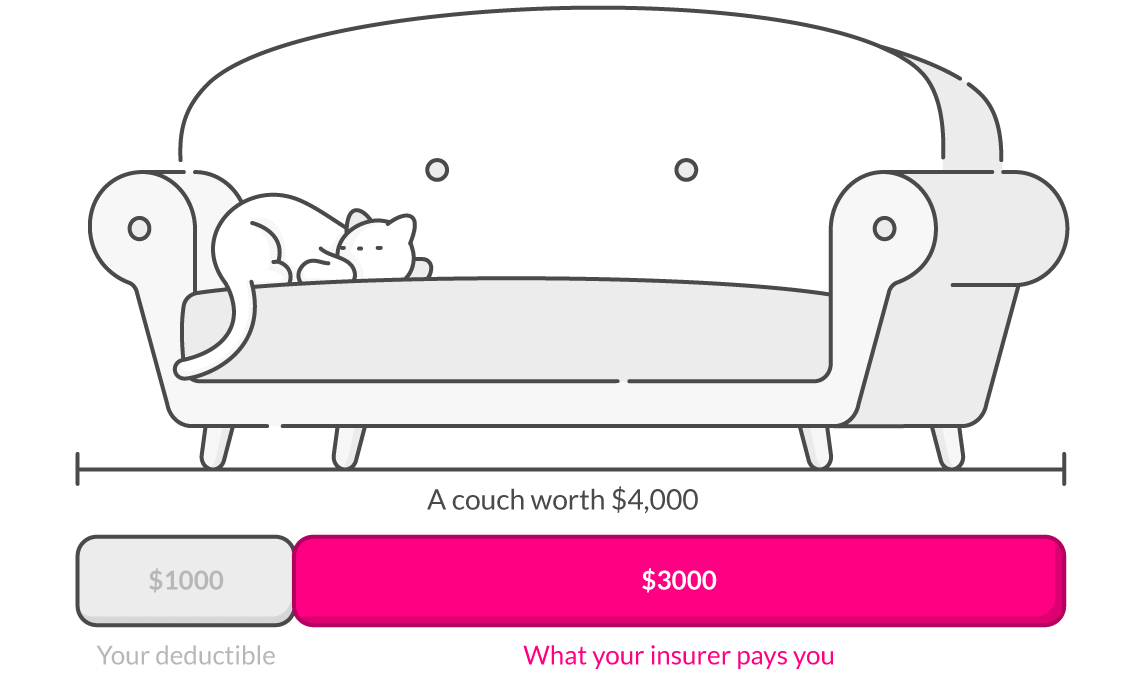
The lower your deductible, the higher your homeowners insurance price. So choose a deductible that makes the most sense for your lifestyle.
Add-Ons
If you get Extra Coverage for your expensive jewelry, or tack on water backup coverage to your policy, your price will go up a bit.
Claims history
If you’ve never filed a claim, you’ll probably have a cheaper homeowners insurance policy than someone who has a history of filing claims.
Why get Lemonade homeowners insurance in Indiana?
Lemonade is powered by tech, so you can get a home insurance policy on the Lemonade app in less than 5 mins – zero paperwork, zero hassle.
If you ever need to file a claim, Lemonade can process them instantly, handling around 30 percent in 3 seconds. Lemonade also does not use brokers, making each policy cheaper than competitors.
Lemonade is built around a simple idea: insurance should take care of people when they need it most, and do some good along the way.
Giveback is at the heart of how Lemonade works. When you get your first policy, you choose a cause you care about, and Lemonade donates to nonprofits supporting those causes. More customers choosing a cause means larger donations to nonprofits supporting it.
Since 2017, we’ve donated over $12M to help build new homes, provide access to clean water, support animal rights, and more. Your policy doesn’t just protect you. It connects your choices to real community support, and helps bring out the best in all of us.
How much home insurance do I need?
When it comes to home insurance, most people know they need it, but make the mistake of purchasing too little. Your home insurance comes with six broad areas of coverage.
We’ll break down how much coverage you need in each category, so you’re properly protected against every scenario. Get more info on how much homeowners insurance you need here.
Dwelling coverage
When it comes to setting a dwelling coverage amount for your home, you don’t want to choose the purchase price or current market value. Instead, choose the amount it would take to rebuild your home (as it was before the damage), known as ‘reconstruction costs.’ This is what your insurer will be reimbursing you for in the worst-case scenario that you have to rebuild.
Personal property coverage
To determine how much personal property coverage you need, choose a limit between 50 – 75 percent of your dwelling coverage amount. If you don’t think this covers all your stuff (including your priciest purchases), look into getting Extra Coverage . Also known as scheduled personal property, this add-on protects expensive items like jewelry, and bicycles, with no deductible.

Loss of use coverage
How much loss of use coverage you need is also based off of dwelling coverage. You should choose an amount that’s around 20-30 percent of your dwelling coverage. Also, take your lifestyle into consideration, as this covers what you’d usually spend on stuff like food, temporary storage of property, moving costs, etc. So if you eat takeout for every meal, you’ll most likely want to select an amount that’s more than someone who buys groceries and prepares their meals.
Personal liability coverage
When choosing personal liability coverage, take into account the total dollar amount of your financial assets, like your home, retirement accounts, investments, etc. So, let’s say you have a boat, two homes, and four cars between you and your wife, you should have significantly higher liability limits than the total worth of your stuff, since you have more assets that you could potentially lose if there is a major liability claim with minimal liability coverage. People with less assets generally can get by with minimum liability coverage.
Medical payments to others coverage
You should generally choose between $1,000 – $5,000, but it really depends on you. Try looking at how often you host and the safety of your home.
Homeowners Insurance in Indiana FAQs
Is homeowners insurance required in Indiana?
Indiana law doesn’t require it, but your mortgage lender almost certainly does. And even without a mortgage, it’s one of the smarter financial decisions you can make as a homeowner.
Does homeowners insurance in Indiana cover tornado damage?
Yes. Standard HO3 policies cover wind and tornado damage to your home, personal property, and other structures on your property. If your home becomes unlivable, loss of use coverage helps with temporary housing and extra expenses. Note that flood damage from storm overflow isn’t included, that needs a separate policy.
What are the different types of homeowners insurance?
Lemonade offers two types of homeowners insurance policies: one for single-family homes, (called HO3, in insurance-speak), and one for condos and co-ops (aka, HO6). There are minor differences between the two, and the right policy for you depends on the type of home you’re looking to insure. While homeowners are responsible for everything on their property (home, garage, fence, etc.), condo owners are only responsible for the outermost walls of their unit, inward.
How can I save on homeowners insurance in Indiana?
Installing a monitored alarm or smoke detectors, raising your deductible, bundling home and auto policies, and maintaining a claim-free history can all lower your rate. Owning a newer or recently renovated home may help too. The biggest savings usually come from making sure your coverage is right-sized, not too much, not too little.
Is flood insurance required in Indiana?
Not by state law, but if your home is in a FEMA-designated Special Flood Hazard Area and you have a federally backed mortgage, your lender will require it. Even outside flood zones, homeowners near the Wabash, White, or Tippecanoe Rivers are smart to consider it.
A few quick words, because we <3 our lawyers: This post is general in nature, and any statement in it doesn’t alter the terms, conditions, exclusions, or limitations of the policies issued, which differ according to your state of residence. You’re encouraged to discuss your specific circumstances with your own professional advisors. The purpose of this post is merely to provide you with info and insights you can use to make such discussions more productive! Naturally, all comments by, or references to, third parties represent their own views, and Lemonade assumes no responsibility for them. Coverage may not be available in all states. Please note that statements about coverages, policy management, claims processes, Giveback, and customer support apply to policies underwritten by Lemonade Insurance Company or Metromile Insurance Company, a Lemonade company, sold by Lemonade Insurance Agency, LLC. The statements do not apply to policies underwritten by other carriers.