

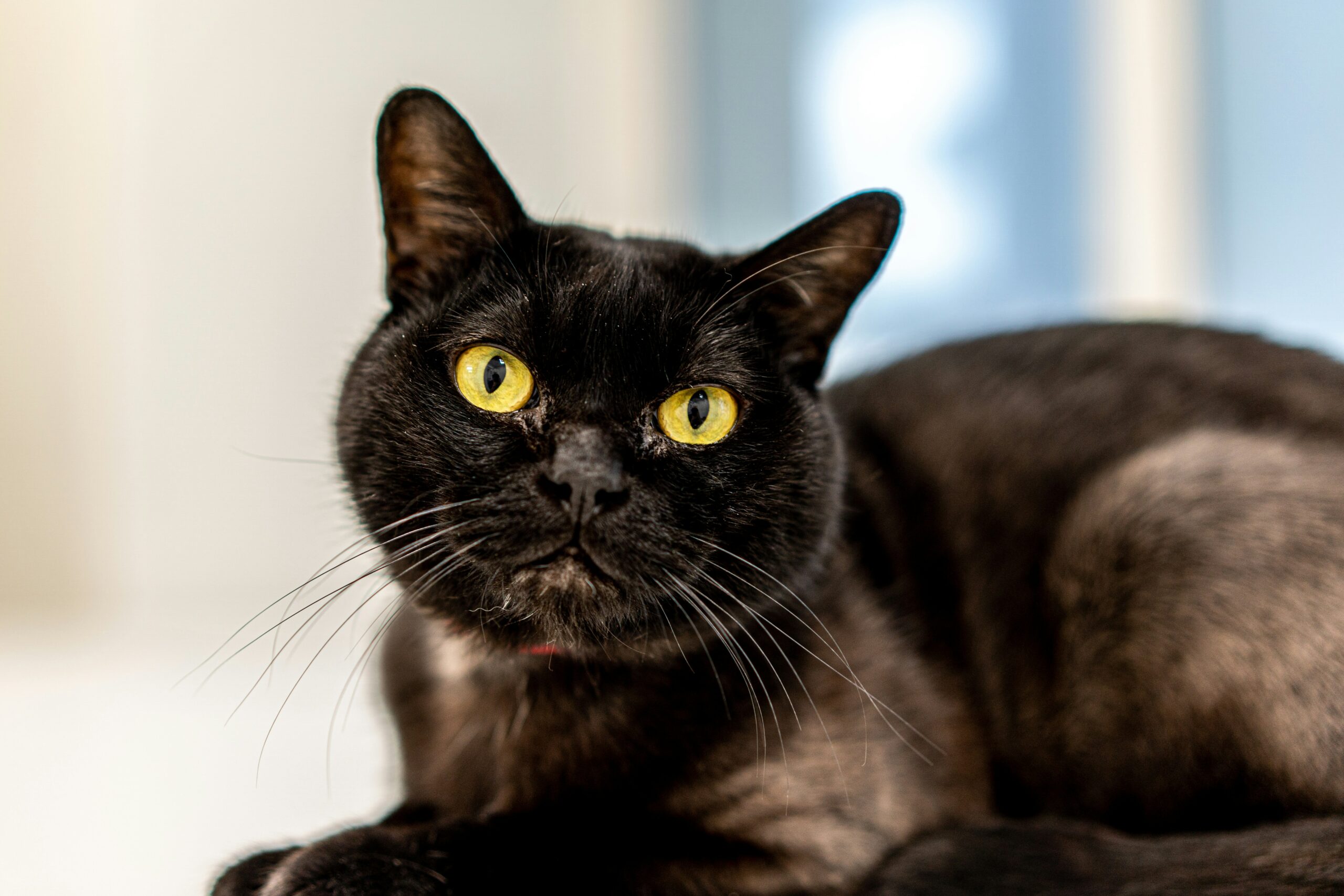



Bombays are affectionate, curious, and built for company. They have the look of a miniature black panther and the personality of a cat that genuinely cannot get enough of you. They’re social, engaged, and almost always within arm’s reach. If you’re an owner who wants an interactive, people-focused cat and a sleek, social companion that thrives on attention and gives it right back, keep reading.
 TL;DR
TL;DR
- Sleek, people-obsessed cats that want to be involved in everything you do. Expect a shadow with copper eyes.
- One of the lowest-maintenance coats in the cat world. A quick weekly brush is all it takes.
- Watch for HCM and respiratory issues. Both have a genetic link to their Burmese ancestry and are worth screening for early.
- Moderate to high energy with a big personality. Without enough interaction, they’ll let you know about it.
- For context: Lemonade paid out $583K in Bombay claims last year.
What are the characteristics of a Bombay?
Bombays look exotic and act like they know it. Here’s how that confidence and affection actually breaks down day to day.
What it’s actually like to live with a Bombay
Living with a Bombay is a little like having a very elegant, very opinionated roommate. They’re affectionate without being frantic about it, social without being overwhelming, and curious about absolutely everything happening in your home. If you open a drawer, they want to see inside. If you sit down, they’re on your lap before you’ve settled. They’re not the cat that watches from a distance. They’re the cat that inserts itself directly into whatever you’re doing.
The flip side is that they don’t do well with being ignored. Bombays were bred for human connection, and they haven’t forgotten it. A Bombay that’s not getting enough interaction will tell you about it, vocally and persistently. If you travel frequently or work long hours without a second pet at home, it’s worth thinking about whether this is the right fit. But if you’re around often and want a cat that actually engages with you, there’s not much better.
What health issues are common in Bombay cats?
Bombays are generally a hardy breed, but their Burmese ancestry and flat facial structure put a few specific conditions on the watchlist. None of them are a guarantee, but all of them are worth knowing about.
Brachycephalic obstructive airway syndrome (BOAS)
BOAS affects flat-faced cats' airways, causing breathing difficulties. Bombays can be prone to mild airway narrowing, so watch for noisy breathing or labored breathing at rest.
Read more about BOASHypertrophic cardiomyopathy (HCM)
HCM thickens the heart muscle, making it harder to pump blood. Bombays share Burmese lineage, which carries a known HCM predisposition, making regular cardiac screening worthwhile.
Read more about HCMGingivitis
Gingivitis is gum inflammation that can progress to periodontal disease if untreated. Bombays can be prone, and regular dental checkups and at-home brushing make a real difference.
Read more about gingivitisFeline asthma
Feline asthma causes airway inflammation and breathing difficulty. Bombays can be prone due to their flat facial structure, and stress or allergens can trigger or worsen episodes.
Read more about feline asthmaFeline chronic gingivostomatitis (FCGS)
FCGS is a severe inflammatory condition affecting the gums and mouth lining. Bombays can be prone, and it often requires ongoing veterinary management to keep it under control.
Read more about FCGSWhat are the recommended health tests for Bombay cats?
Your Bombay can’t tell you when something’s off. That’s what annual health tests are for. Most vets will recommend a complete blood count, biochemistry profile, urinalysis, and FIV/FeLV screening at your cat’s yearly check-up. For Bombays specifically, it’s also worth asking about an annual echocardiogram. HCM is a condition this breed carries a higher risk for through its Burmese lineage, and it can develop silently for years. Catching it early makes a real difference.
Do Bombay cats need pet insurance?
We’ll let the numbers do the talking. But spoiler: a lot of Bombay owners are really glad they had coverage.
Those numbers aren’t hypotheticals. Behind each one is a Bombay owner who filed an accident or illness claim in the last year. Here’s what that can look like in practice.
The night the breathing changed
Koda is a 3-year-old Bombay who had always been a little snuffly. His owner assumed it was just the flat-faced thing. Then one evening, Koda’s breathing became audibly labored at rest. Not a snuffle. Something more. His owner took him in the next morning. The vet diagnosed a mild airway obstruction consistent with BOAS, ran imaging, and completed a full specialist assessment to evaluate severity and map out a management plan. Total bill: $875.
Assuming the full $875 is eligible, here’s what the payout looks like with a $250 deductible, 80% co-insurance, and a $20,000 annual limit:
- Apply the co-insurance to the total eligible amount: $875 x 80% = $700
- Subtract the deductible: $700 – $250 = $450 reimbursed
- Koda’s owner’s out-of-pocket: $425
And because the deductible is now met for the year, every eligible claim that follows gets the full 80%.
The midnight zoomies that went wrong
Koda was mid-zoomie session when he misjudged a jump off the cat tree and landed hard on his front left paw. His owner heard the thud, found him limping, and had him at the vet first thing in the morning. X-rays confirmed a hairline fracture. A splint, pain medication, and a follow-up visit came to $320.
With the deductible already met from the BOAS claim earlier in the year, we only need to apply the co-insurance to the eligible amount. So, $320 x 80% = $256 reimbursed. Koda’s owner pays $64 out of pocket.
Two claims. One cat. One year. Without coverage, that’s $1,195 paid entirely out of pocket. With Lemonade, it’s $489. Koda made a full recovery and has since developed a slightly more cautious relationship with the cat tree.
Coverage that’s built for your cat
With Lemonade, you can build a plan around your Bombay specifically. Start with accident and illness coverage as your base, then add on what makes sense for your cat, things like dental illness, behavioral treatment, or a preventive care package, and skip what doesn’t. Coverage applies to conditions that aren’t pre-existing, meaning a condition that occurs after your policy is active and your waiting periods have passed.
And when you do need to file? You can do it in the app in minutes. No paperwork, no hold music, no waiting around.
Bombays are worth protecting. Here’s how to do it right.
How much does pet insurance cost?
The cost of your premium is personal. It depends on your Bombay’s age, your location, and what add-ons you select. That said, here’s a realistic look at what other Bombay owners pay with Lemonade:
| Age | Average monthly premium |
|---|---|
| 1 year old | $20–$25 |
| 2 years old | $20–$25 |
| 3 years old | $20–$25 |
| 4 years old | $20–$25 |
| 5 years old | $20–$25 |
| 6 years old | $25–$30 |
| 7 years old | $30–$35 |
Not sure if Lemonade is the right fit for your Bombay?
See how we stack up. Compare pet insurance options side by side and find the coverage that fits your cat and your budget.
History of the Bombay
The Bombay is an entirely American creation, and it started with one very specific vision. In the early 1950s, a breeder named Nikki Horner in Louisville, Kentucky set out to develop a domestic cat that looked like a miniature black panther. She began crossing black American Shorthairs with sable Burmese, combining the easygoing nature of the Shorthair with the affectionate, social personality of the Burmese. It took more than a decade of selective breeding before she achieved the look she was after, a jet-black coat, copper eyes, and that distinctive, almost swaying walk.
The CFA accepted the Bombay for registration in 1970, and the breed earned championship status not long after. Horner eventually retired from breeding, satisfied that she had achieved what she set out to create. The Bombay remains a relatively rare breed today, but those who know them are devoted to them. The panther look draws people in. The personality keeps them there.
Caring for a Bombay
Grooming
Bombays are about as low-maintenance as it gets on the grooming front. Their short, close-lying coat needs almost no intervention. A weekly once-over with a chamois cloth or rubber grooming glove keeps it shiny and removes loose hair, and most Bombays actually enjoy the process. No tangles, no mats, no dramatic shedding seasons. If you’ve owned a longhaired breed before, this will feel almost too easy.
Play and enrichment
Bombays are smart, active, and deeply motivated by interaction. They love wand toys, feather teasers, and anything that mimics a hunt. A lot of them will play fetch with genuine enthusiasm and expect you to keep throwing. What they don’t love is being left to their own devices for too long. A bored Bombay gets vocal and persistent about it.
Two solid play sessions a day, a good cat tree, and a rotation of puzzle feeders go a long way. Mental stimulation matters just as much as physical play for this breed. Keep their brain busy and they’re genuinely great company. Leave them understimulated and they’ll find ways to get your attention that you probably won’t enjoy.
Nutrition
Bombays are medium-sized cats with moderate to high energy, and their diet should reflect that. Real animal protein at the center of every meal is non-negotiable. Most adults do well on around 200 to 250 calories a day, split across two meals. Expect to spend around $30 to $60 a month on food depending on what you’re feeding them.
Wet, dry, raw, or a mix all work. Your vet can help you dial in the right approach for your cat’s age and activity level. One thing to watch: Bombays can become less active as they get older and have a tendency to gain weight if portions aren’t managed. Keep meals measured, keep fresh water available, and check in with your vet on weight at annual visits.
Bombay costs and adoption
What does it cost to bring home a Bombay?
Bombays are a relatively rare breed, which affects availability more than price. A reputable breeder will have invested in health testing and socialization, and that’s reflected in what you pay upfront.
| Category | Cost Range | Details |
|---|---|---|
| Adoption (Reputable breeder) | $500 to $1,000 | Health testing, vaccinations, early socialization, pedigree |
| Adoption (Rescue/shelter) | $75 to $150 | Basic veterinary care, spay/neuter, temperament evaluation |
| Initial veterinary care | $200 to $400 | Exam, vaccinations, spay/neuter if needed, microchip |
| Essential supplies | $150 to $300 | Litter box, litter, scratching post, bed, food bowls, toys |
What does it cost to own a Bombay each year?
Once you’re past year one, Bombay ownership is relatively affordable. Their low grooming needs and moderate size keep recurring costs reasonable. The main wildcard, as with most breeds, is health.
| Category | Annual Cost | Details |
|---|---|---|
| Food and treats | $400 to $700 | Based on recommended portions for a Bombay |
| Routine veterinary care | $300 to $500 | Wellness exams, vaccinations, dental care |
| Professional grooming | $100 to $200 | Every 8 to 12 weeks for routine maintenance |
| Litter | $200 to $400 | Based on average litter usage for a Bombay |
| Toys and enrichment | $75 to $150 | Replacement toys, puzzle feeders, scratching posts |
What are popular Bombay names?
We looked at every Bombay insured with Lemonade to find the most popular names. It turns out Bombay owners have a strong preference for names that match the breed’s sleek, dramatic look.
Bombay Kittens
Bombay kittens are not born looking like miniature panthers. They arrive with faint tabby markings that fade as their coat develops, usually by the time they’re a few months old. That glossy, jet-black coat and those copper eyes take time to come in fully. What you bring home as a kitten is a preview. What you end up with is something else entirely.
Kitten veterinary needs
The first year matters a lot for a Bombay kitten. Most kittens begin vaccines around 6 to 8 weeks old, with boosters given every few weeks until about 16 weeks of age. The FVRCP vaccine is a core vaccine, covering feline rhinotracheitis, calicivirus, and panleukopenia, three highly contagious and potentially life-threatening illnesses. Rabies is the other core kitten vaccination, and is required by law in most states regardless of whether your cat lives indoors or out. The feline leukemia virus vaccine is also considered core for all kittens younger than one year of age.
After the first year, it’s annual boosters and routine screening as they grow into adults. For Bombays specifically, it’s worth building cardiac screening into your routine early, given the breed’s known predisposition to HCM through its Burmese lineage. It’s a lot to keep track of. That’s why we made it easy.
Kitten socialization
Bombay kittens are bold and affectionate almost from the start. That confident, people-focused nature is part of what makes them one of the most interactive and devoted cats you can bring home, and it develops earlier than most people expect.
The primary socialization window for kittens occurs from 2 to 7 weeks of age, with a secondary window from 9 weeks to 14 to 16 weeks. For Bombays, early socialization reinforces the outgoing, human-oriented personality the breed is known for. A well-socialized Bombay kitten becomes a cat that’s comfortable with strangers, adaptable to new environments, and genuinely at ease in an active household. Choose a breeder who makes early handling and varied experiences a priority. It pays off for the entire life of the cat.
Once they’re home, keep building on it. Bombays are naturally curious and receptive, but that doesn’t mean you can skip the work. New people, sounds, surfaces, and experiences all help build a confident cat. Keep everything positive, go at your kitten’s pace, and back off if they show signs of stress. The goal is a cat that takes the world in stride, not one that hides from it.
Where are Bombay cats most popular?
We looked at our own policyholder data to find out where Bombay owners are clustered. Spoiler: they’re everywhere, but the five states with the most Bombay policyholders are California, New York, Texas, Florida, and Washington.
Breed comparison
If you’re researching Bombays, chances are a few other breeds have crossed your mind. Here’s a quick side-by-side to help you sort it out.
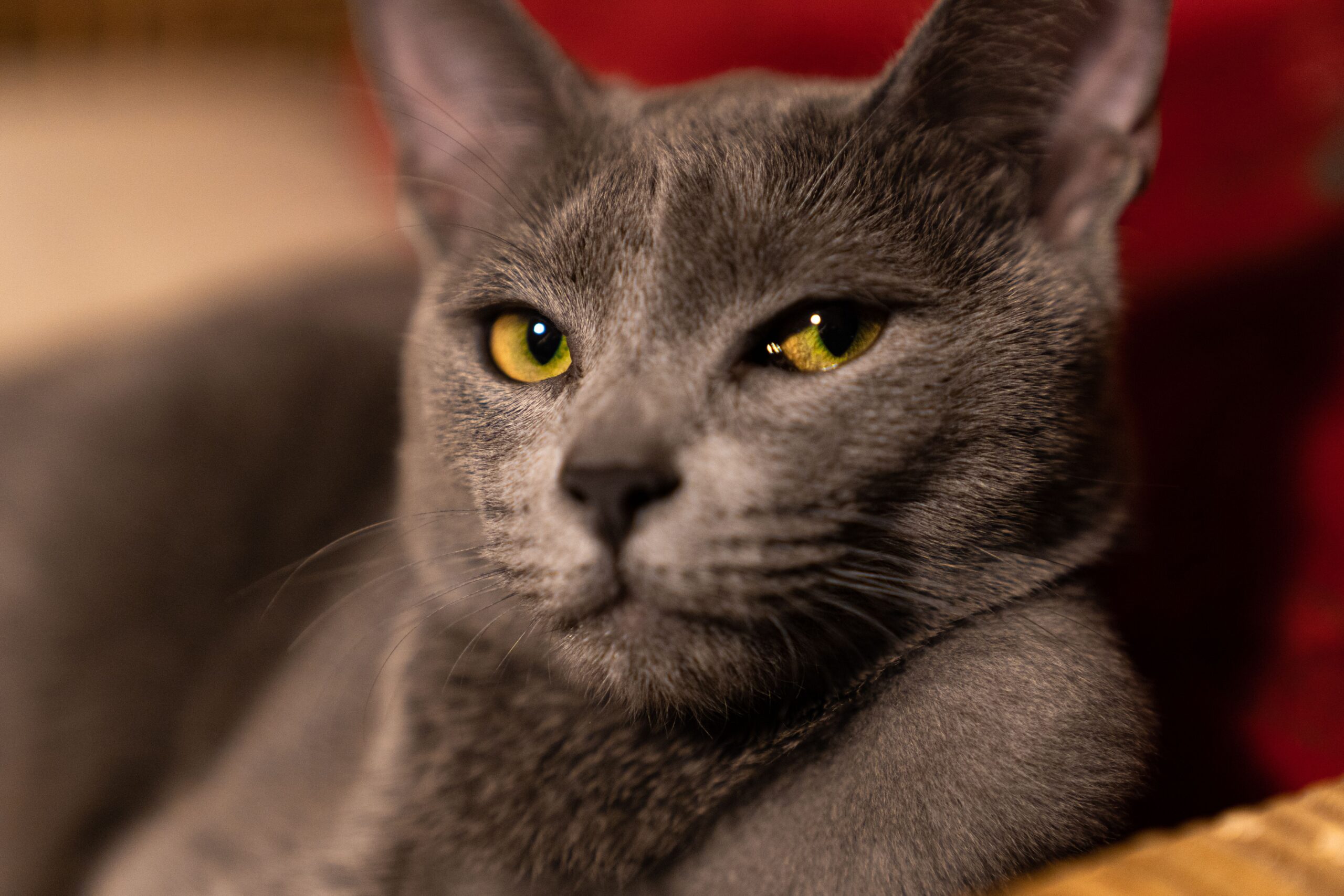
Russian Blue
Both are quiet, loyal, and reserved with strangers. Russian Blues are shorter-coated and slightly more adaptable, while Nebelungs are longhaired and tend to bond even more selectively.
Read more about Russian Blues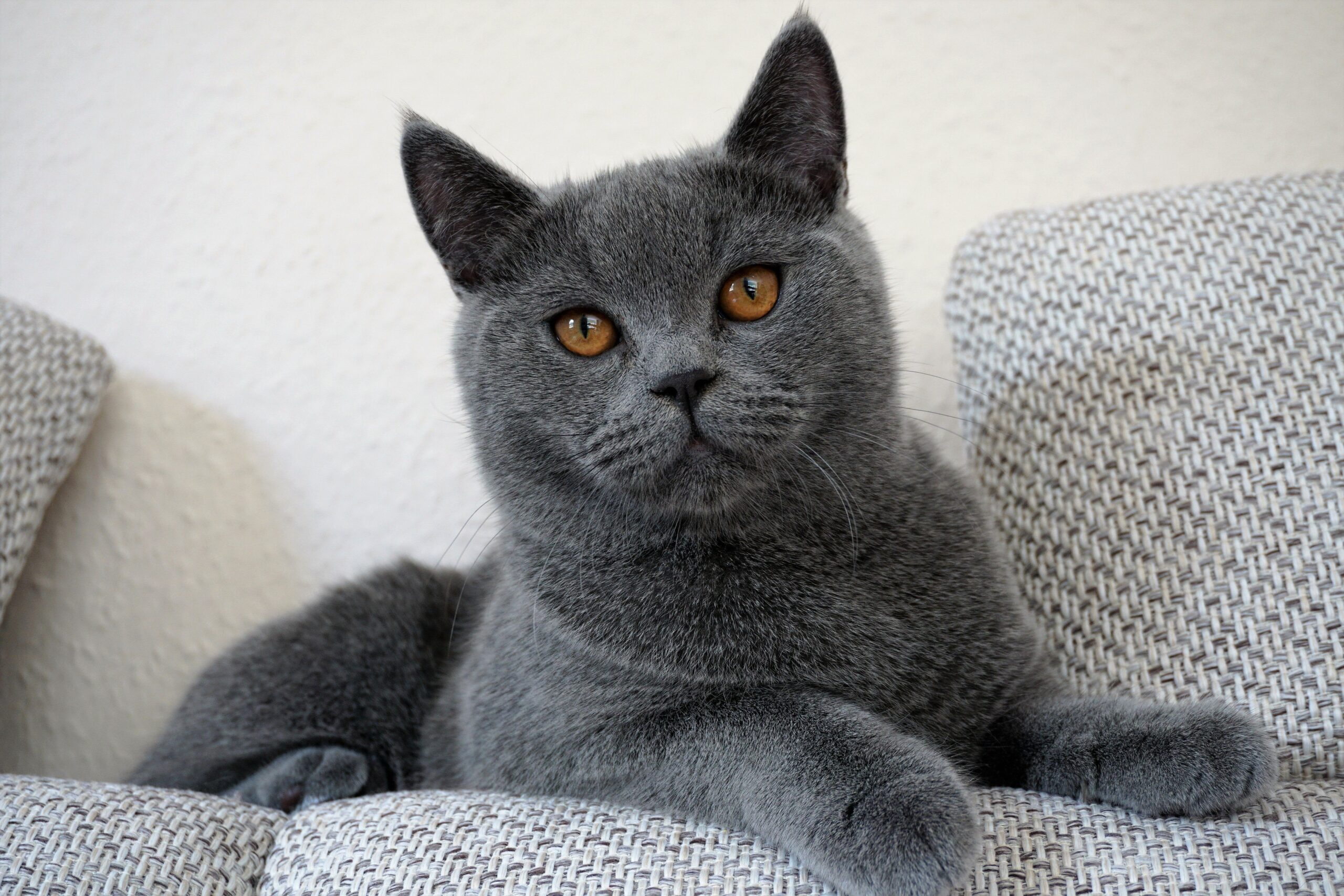
British Shorthair
Both are large, longhaired, and built for cold climates. Norwegian Forest Cats are more independent and self-sufficient, while Maine Coons are more outgoing and social.
Read more about British Shorthairs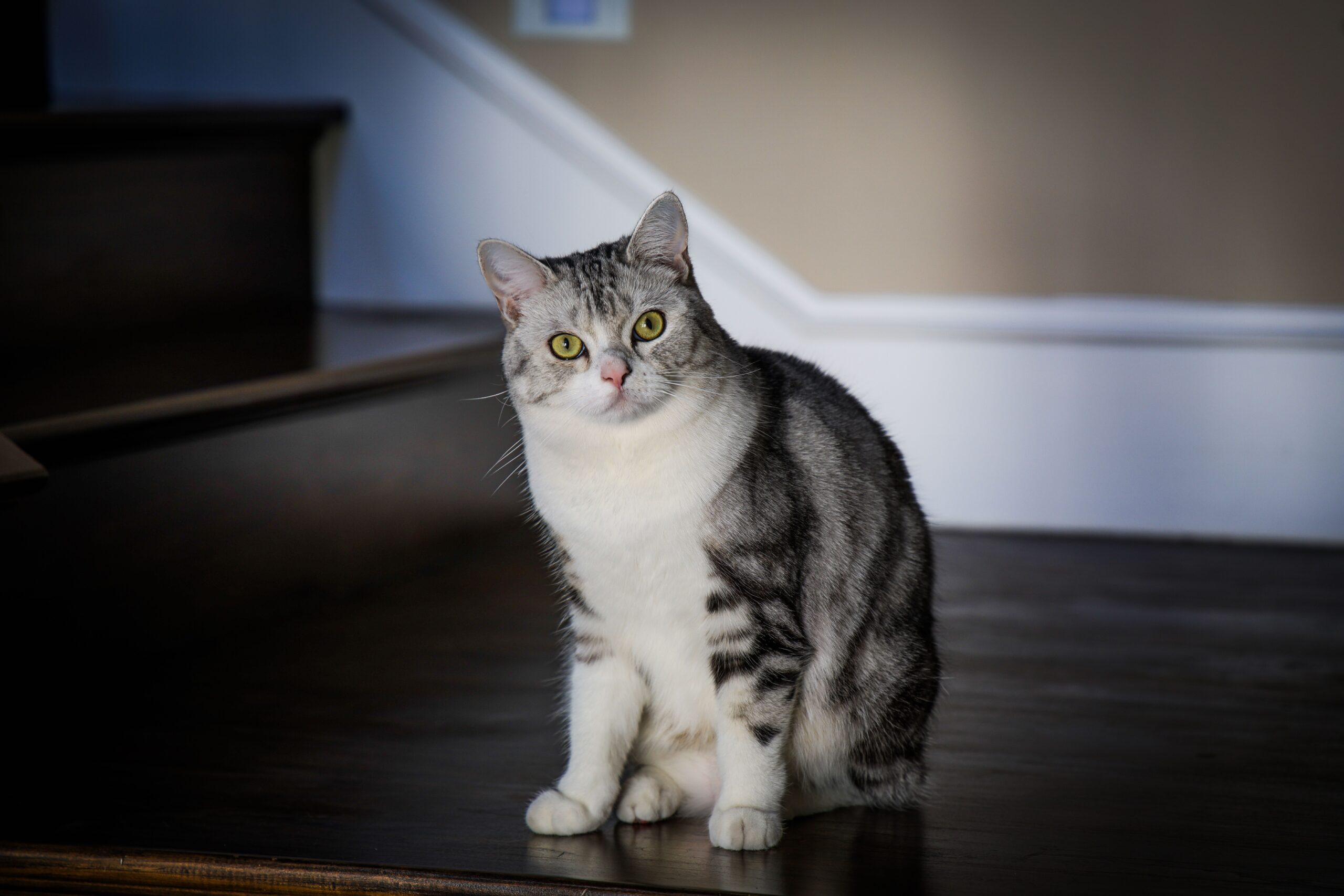
American Shorthair
Both are adaptable and people-friendly. American Shorthairs are more independent and laid-back, while Bombays are more affectionate and active in seeking out attention and interaction.
Read more about American ShorthairsIs a Bombay right for you?
If you’ve made it this far, you already know a Bombay isn’t just a pretty cat. It’s a sleek, affectionate companion that’s always in the middle of whatever you’re doing, and genuinely happier for it. They just need daily interaction, regular play, and an owner who enjoys an engaged, people-focused cat in return. Whether you’re picking your kitten up next week or just starting to think about it, pet insurance is the one thing worth sorting out early. Get a quote today, and focus on the bond, not the bills.
Bombay frequently asked questions
Are Bombay cats good for apartments?
Yes, they’re a great apartment cat. Bombays are adaptable, relatively quiet compared to more vocal breeds, and don’t need outdoor access. What they do need is consistent interaction and enrichment. As long as you’re home often enough to give them attention and play time, they settle into apartment life easily.
Do Bombay cats get along with other pets?
Generally yes. Bombays are social and adaptable, and they tend to do well with other cats and calm dogs. They’re confident enough not to be easily intimidated, which helps. A proper introduction still matters, but this breed is one of the more flexible ones when it comes to multi-pet households.
Are Bombay cats vocal?
More than average. Bombays are chatty when they want something, and they’re not shy about asking for attention. It’s not the constant, loud vocalization of a Siamese, but if they’re bored or want company, you’ll hear about it.
How long do Bombay cats live?
Most Bombays live between 9 and 15 years, with some living longer. Longevity comes down to regular vet visits, weight management, cardiac screening, and keeping them mentally and physically engaged. HCM is the condition most likely to affect lifespan in this breed, which is why early screening matters.
Are Bombay cats rare?
Relatively, yes. Bombays are not as widely available as more common breeds, and finding a reputable breeder may take some time. That rarity is part of what makes them special, but it also means doing your homework before committing to a breeder. Ask about health testing, socialization practices, and whether the breeding cats have been screened for HCM.
Insurance claim data figures reflect approved accident and illness claims filed by Lemonade Pet policyholders over the trailing 12 months as of June 2026. They are averages across Lemonade’s insured population for this breed, not predictions of future claims or reimbursement for any individual pet. Actual payouts depend on your policy’s limit, deductible, co-insurance, waiting periods, and exclusions, and may not reflect the broader breed population or other insurers’ experience. Coverage is not available in every state. Please let me know what you think, thank you! A few quick words, because we <3 our lawyers: This post is general in nature, and any statement in it doesn’t alter the terms, conditions, exclusions, or limitations of the policies issued, which differ according to your state of residence. You’re encouraged to discuss your specific circumstances with your own professional advisors. The purpose of this post is merely to provide you with info and insights you can use to make such discussions more productive! Naturally, all comments by, or references to, third parties represent their own views, and Lemonade assumes no responsibility for them. Coverage may not be available in all states. Please note that statements about coverages, policy management, claims processes, Giveback, and customer support apply to policies underwritten by Lemonade Insurance Company or Metromile Insurance Company, a Lemonade company, sold by Lemonade Insurance Agency, LLC. The statements do not apply to policies underwritten by other carriers. Insurance claim data figures reflect approved accident and illness claims filed by Lemonade Pet policyholders over the trailing 12 months as of June 2026. They are averages across Lemonade’s insured population for this breed, not predictions of future claims or reimbursement for any individual pet. Actual payouts depend on your policy’s limit, deductible, co-insurance, waiting periods, and exclusions, and may not reflect the broader breed population or other insurers’ experience. Average insurance premium data is based on Lemonade’s internal data and reflects the average premium over the last 12 complete months, accurate as of June 2026. Top pet names are sourced from Lemonade’s database of pet names associated with submitted quotes and purchased policies. Top states for each breed are based on the number of active Lemonade pet insurance policies for that breed in each state as of June 2026.