

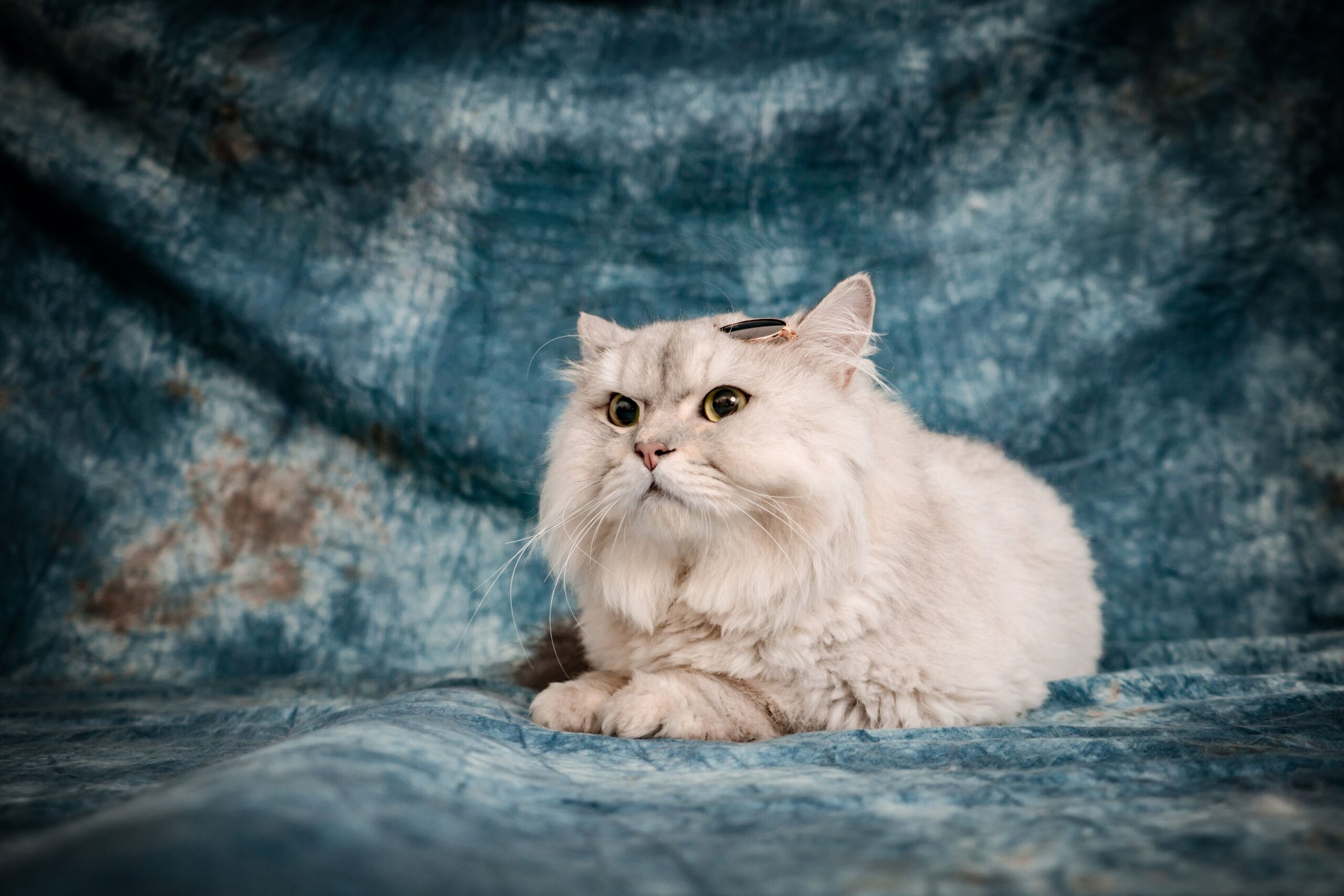



Persians are the definition of a slow-living cat. They’re gentle, quiet, and perfectly content spending an entire afternoon doing absolutely nothing. They don’t demand much. They don’t race around the house. They find a comfortable spot, look beautiful, and let you come to them. If you’re a calm household or a homebody looking for a serene companion who wants a beautiful, low-energy cat that’s perfectly happy doing nothing with you all day, keep reading.
 TL;DR
TL;DR
- Calm, quiet, and completely unbothered. The definition of a low-drama cat.
- Daily grooming is non-negotiable. Their coat mats fast and requires real daily commitment.
- BOAS and kidney disease are the main health concerns. Their flat face creates real breathing limitations, and kidney health needs monitoring as they age.
- Very low energy. They need gentle play, not intense sessions. A bored Persian disengages quietly, not dramatically.
- For context: Lemonade paid out $325K in Persian claims last year.
What are the characteristics of a Persian?
Persians have a reputation for being the most serene cat in any room. Here’s how that actually breaks down across the traits that matter most for daily life.
What it’s actually like to live with a Persian
Persians are not cats that happen to be calm. Calm is the entire personality. They move through a home at their own unhurried pace, choose a spot that suits them, and expect the world to come to them on their terms. They’re affectionate, but not needy. They enjoy being near you, but won’t follow you from room to room demanding attention. For the right owner, that’s exactly the point.
What catches people off guard is the grooming. Nothing about living with a Persian is low-maintenance on that front. Their long, thick, silky coat mats quickly and requires daily brushing without exception. Their flat faces also need regular cleaning around the eyes to manage tear staining. It’s a genuine daily commitment, and it’s worth knowing that before you bring one home. The cat itself is effortless. The coat is not.
What health issues are common in Persian cats?
Persians are a beautiful breed, but that flat face comes with real health implications. Several of their most common conditions are directly linked to their brachycephalic structure. Here’s what every Persian owner should know.
Brachycephalic obstructive airway syndrome (BOAS)
BOAS affects flat-faced cats' airways, causing breathing difficulties. Persians are heavily affected due to their flat facial structure, and airway health requires ongoing monitoring.
Read more about BOASChronic kidney disease (CKD)
CKD causes the kidneys to lose their ability to filter waste over time. Persians are predisposed, and routine bloodwork is the most reliable way to catch kidney decline early.
Read more about CKDProgressive retinal atrophy (PRA)
PRA causes gradual retinal deterioration, leading to vision loss and eventual blindness. Persians carry a known genetic risk and should be screened early with an ophthalmic examination.
Read more about PRAEntropion
Entropion causes the eyelid to roll inward, allowing eyelashes to rub against the cornea and cause irritation or injury. Persians are prone due to their flat facial structure.
Read more about entropionPeriodontal disease
Periodontal disease is a progressive gum and tooth infection. Persians are prone due to their flat facial structure, which can cause teeth crowding and accelerate dental disease.
Read more about periodontal diseaseCataracts
Cataracts cause clouding of the lens, leading to blurred vision and potential blindness. Persians can be predisposed, and regular ophthalmic exams help catch changes early.
Read more about cataractsWhat are the recommended health tests for Persian cats?
Your Persian can’t tell you when something’s off. That’s what annual health tests are for. Most vets will recommend a complete blood count, biochemistry profile, urinalysis, and FIV/FeLV screening at your cat’s yearly check-up. For Persians specifically, it’s worth asking about an annual kidney panel. Kidney disease is a condition this breed is predisposed to, and routine bloodwork is the most reliable way to catch any decline early. Regular ophthalmic exams are also worth building into your annual routine, given the Persian’s known risk for progressive retinal atrophy and eye conditions related to their facial structure.
Do Persian cats need pet insurance?
We’ll let the numbers do the talking. But spoiler: a lot of Persian owners are really glad they had coverage.
Those numbers aren’t hypotheticals. Behind each one is a Persian owner who filed an accident or illness claim in the last year. Here’s what that can look like in practice.
The eye that needed more than drops
Cleo is a 4-year-old Persian whose owner noticed her left eye looking cloudier than usual over the course of a few weeks. At the vet, an ophthalmic exam confirmed early-stage cataracts alongside entropion, a condition where the eyelid rolls inward and the lashes rub against the cornea. Both are conditions Persians are prone to because of their flat facial structure. Diagnosis, imaging, and a treatment plan came to $820.
Assuming the full $820 is eligible, here’s what the payout looks like with a $250 deductible, 80% co-insurance, and a $20,000 annual limit:
- Apply the co-insurance to the total eligible amount: $820 x 80% = $656
- Subtract the deductible: $656 – $250 = $406 reimbursed
- Cleo’s owner’s out-of-pocket: $414
And because the deductible is now met for the year, every eligible claim that follows gets the full 80%.
The breathing episode that changed everything
A few months later, Cleo’s owner noticed her breathing with an audible wheeze at rest. Open-mouth breathing followed shortly after. That’s a medical emergency in a flat-faced cat, and her owner knew it. An emergency vet visit confirmed a BOAS flare requiring immediate intervention. Airway assessment, medication, and supportive care came to $490.
With the deductible already met from the eye claim earlier in the year, we only need to apply the co-insurance to the eligible amount. So, $490 x 80% = $392 reimbursed. Cleo’s owner pays $98 out of pocket.
Two claims. One cat. One year. Without coverage, that’s $1,310 out of pocket. With Lemonade, it’s $512. Cleo is stable, comfortable, and back to her usual spot on the window seat.
Coverage that’s built for your cat
With Lemonade, you can build a plan around your Persian specifically. Start with accident and illness coverage as your base, then add on what makes sense for your cat, things like dental illness, behavioral treatment, or a preventive care package, and skip what doesn’t. Coverage applies to conditions that aren’t pre-existing, meaning a condition that occurs after your policy is active and your waiting periods have passed.
And when you do need to file? You can do it in the app in minutes. No paperwork, no hold music, no waiting around.
Persians are worth protecting. Here’s how to do it right.
How much does pet insurance cost?
The cost of your premium is personal. It depends on your Persian’s age, your location, and what add-ons you select. That said, here’s a realistic look at what other Persian owners pay with Lemonade:
| Age | Average monthly premium |
|---|---|
| 1 year old | $20–$25 |
| 2 years old | $20–$25 |
| 3 years old | $20–$25 |
| 4 years old | $20–$25 |
| 5 years old | $25–$30 |
| 6 years old | $30–$35 |
| 7 years old | $30–$35 |
Not sure if Lemonade is the right fit for your Persian? See how we stack up. Compare pet insurance options side by side and find the coverage that fits your cat and your budget.
History of the Persian
The Persian is one of the oldest and most recognizable cat breeds in the world, and its origins are as storied as its appearance. Longhaired cats believed to have come from Persia, modern-day Iran, were brought to Europe by Italian and French traders in the 1600s, where they quickly became prized companions among European aristocracy. Queen Victoria herself kept Persians, a royal endorsement that only accelerated the breed’s popularity across England and beyond. The Persian was among the stars of the world’s first organized cat show at Crystal Palace in London in 1871, and the Cat Fanciers Association recognized it as a founding member breed in 1906.
What changed significantly over the 20th century was the face. Through selective breeding, the modern Persian developed an increasingly flat facial structure, shifting from the slightly rounded, more moderate look of early show cats to the extremely flat profile that defines the breed today. That change is responsible for much of the Persian’s distinctive appearance, and also for several of its known health challenges. The breed remains one of the most popular in the world, and responsible breeders today are working toward standards that preserve the look while reducing the health burden that comes with extreme brachycephaly.
Caring for a Persian
Grooming
There’s no sugarcoating it: Persians are the most grooming-intensive breed on this list. Their long, thick, silky coat mats quickly and needs brushing every single day without exception. A wide-toothed metal comb works best, working section by section from the roots to the tips, with particular attention to the belly, armpits, and collar area where mats form fastest. Their flat faces also need daily cleaning around the eyes to manage tear staining. Professional grooming every four to six weeks is strongly recommended to keep the coat in good condition between sessions. If you’re not prepared to make grooming a daily habit, a Persian is not the right fit.
Play and Enrichment
Persians have very low energy, and that’s not a problem to solve. It’s just who they are. They enjoy gentle wand toy sessions, batting at soft toys, and watching activity from a comfortable perch. They don’t need intense play, and they won’t ask for it. What they do need is some daily engagement to keep them from simply disengaging altogether. A few short, calm play sessions a day is genuinely enough. The goal with a Persian isn’t a tired cat. It’s a content one.
Nutrition
Persians are medium-sized cats with very low energy, and their diet needs to reflect that. Overfeeding is a real risk with this breed, and extra weight puts additional strain on an already compromised airway. Most adults do well on around 180 to 250 calories a day, split across two meals. Expect to spend around $35 to $65 a month on food.
Real animal protein at the center of every meal is essential. Wet food is often a good choice for Persians, both for its hydration benefits and because some flat-faced cats find it easier to eat than kibble. Your vet can help you find the right balance for your cat’s age and weight. Whatever you choose, measure portions carefully and keep fresh water consistently available.
Persian costs and adoption
What does it cost to bring home a Persian?
Persians are one of the most widely available pedigreed breeds, but quality varies significantly. A reputable breeder will have health-tested their cats and invested in proper socialization. That’s reflected in what you pay, and it’s worth it.
| Category | Cost Range | Details |
|---|---|---|
| Adoption (Reputable breeder) | $1,200 to $2,500 | Health testing, vaccinations, early socialization, pedigree |
| Adoption (Rescue/shelter) | $75 to $150 | Basic veterinary care, spay/neuter, temperament evaluation |
| Initial veterinary care | $200 to $400 | Exam, vaccinations, spay/neuter if needed, microchip |
| Essential supplies | $150 to $300 | Litter box, litter, scratching post, bed, food bowls, toys |
What does it cost to own a Persian each year?
Once you’re past year one, costs are predictable. The grooming line is the one to pay attention to. Professional grooming every four to six weeks adds up, and it’s not really optional for this breed.
| Category | Annual Cost | Details |
|---|---|---|
| Food and treats | $450 to $750 | Based on recommended portions for a Persian |
| Routine veterinary care | $300 to $600 | Wellness exams, vaccinations, dental care |
| Professional grooming | $300 to $600 | Every 4 to 6 weeks for coat maintenance and mat prevention |
| Litter | $200 to $400 | Based on average litter usage for a Persian |
| Toys and enrichment | $50 to $100 | Replacement toys, puzzle feeders, scratching posts |
What are popular Persian names?
We looked at every Persian insured with Lemonade to find the most popular names. Persian owners clearly have a taste for names with a little elegance to them.
Persian Kittens
Persian kittens are born with shorter, fluffier coats that don’t fully develop until around 18 to 24 months of age. The coat you see as a kitten is not the coat you’ll be managing as an adult. Start building a daily grooming routine from week one, while the coat is still manageable. The habits you establish in kittenhood are the ones that make adult grooming sustainable.
Kitten veterinary needs
The first year matters a lot for a Persian kitten. Most kittens begin vaccines around 6 to 8 weeks old, with boosters given every few weeks until about 16 weeks of age. The FVRCP vaccine is a core vaccine, covering feline rhinotracheitis, calicivirus, and panleukopenia, three highly contagious and potentially life-threatening illnesses. Rabies is the other core kitten vaccination, and is required by law in most states regardless of whether your cat lives indoors or out. The feline leukemia virus vaccine is also considered core for all kittens younger than one year of age.
After the first year, it’s annual boosters and routine screening. For Persians specifically, ophthalmic exams and kidney panels should be part of the annual routine from early adulthood. Their brachycephalic structure also makes respiratory monitoring an ongoing part of their care. It’s a lot to keep track of. That’s why we made it easy.
Kitten socialization
Persian kittens are calm and unhurried from the start. That serene, gentle nature is part of what makes them one of the most peaceful and low-key cats you can bring home, and the foundation for it is laid earlier than most people realize.
The primary socialization window for kittens occurs from around 2 to 7 weeks of age, with a secondary window from 9 weeks to 14 to 16 weeks. For Persians, good early socialization matters especially around grooming. A Persian that isn’t introduced to daily brushing, face cleaning, and handling from a very young age can become resistant to it as an adult, and that creates a real problem for a breed that needs it every day. Choose a breeder who handles kittens regularly and introduces them to grooming early. Ask specifically about it.
Once they’re home, keep building on it. Gentle handling, calm environments, and short, positive grooming sessions from day one set the tone for the rest of the cat’s life. Go slowly, keep everything positive, and let your kitten set the pace. A Persian that’s comfortable being handled is a Persian that’s genuinely easy to care for.
Where are Persian cats most popular?
We looked at our own policyholder data to find out where Persian owners are clustered. Spoiler: they’re everywhere, but the five states with the most Persian policyholders are California, New York, Texas, Florida, and Illinois.
Breed comparison
If you’re researching Persians, chances are a few other breeds have crossed your mind. Here’s a quick side-by-side to help you sort it out.
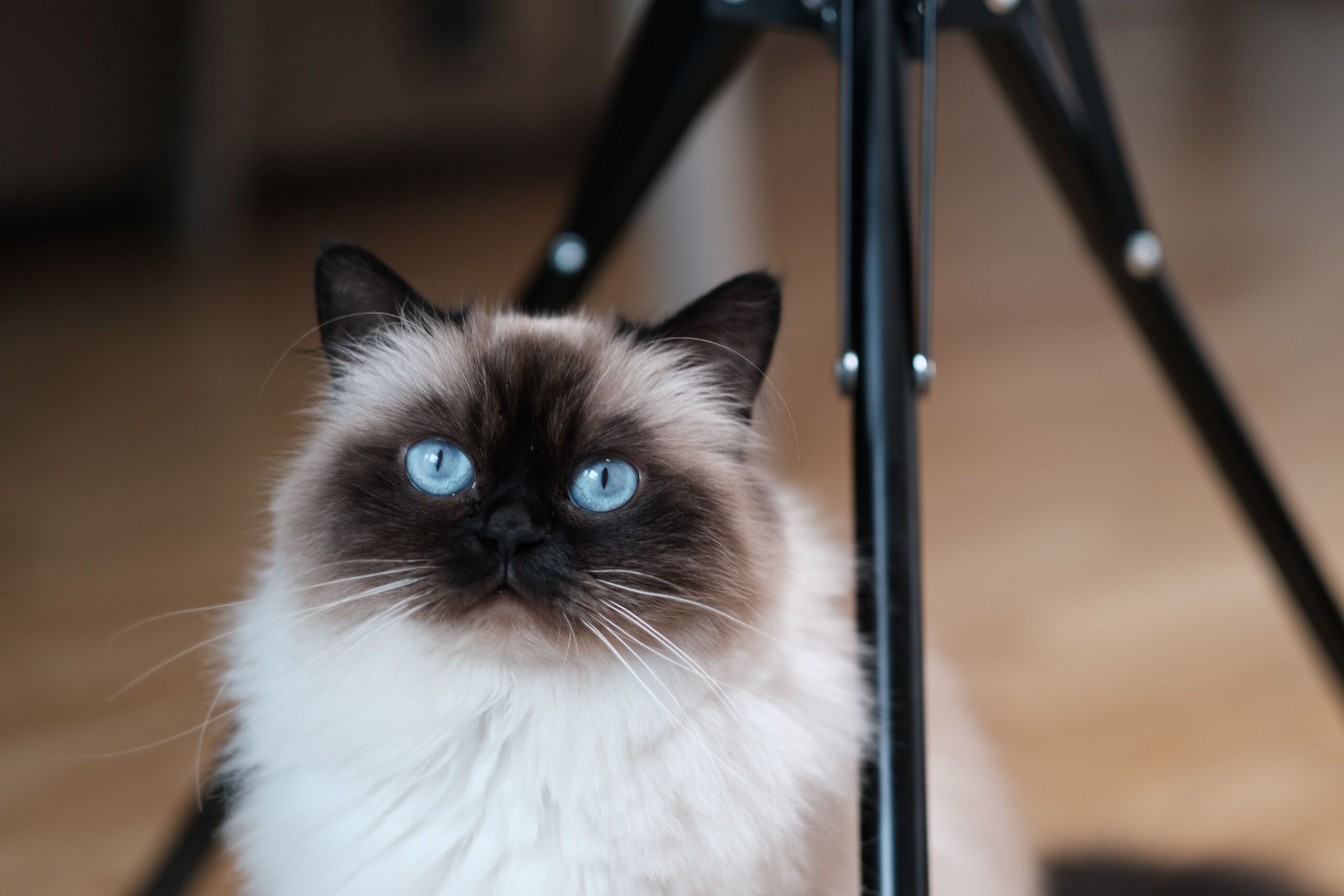
Himalayan
Both are calm, gentle, and built for a quiet home. Himalayans add Siamese-derived blue eyes and colorpoint markings to the Persian's plush coat and serene temperament.
Read more about Himalayans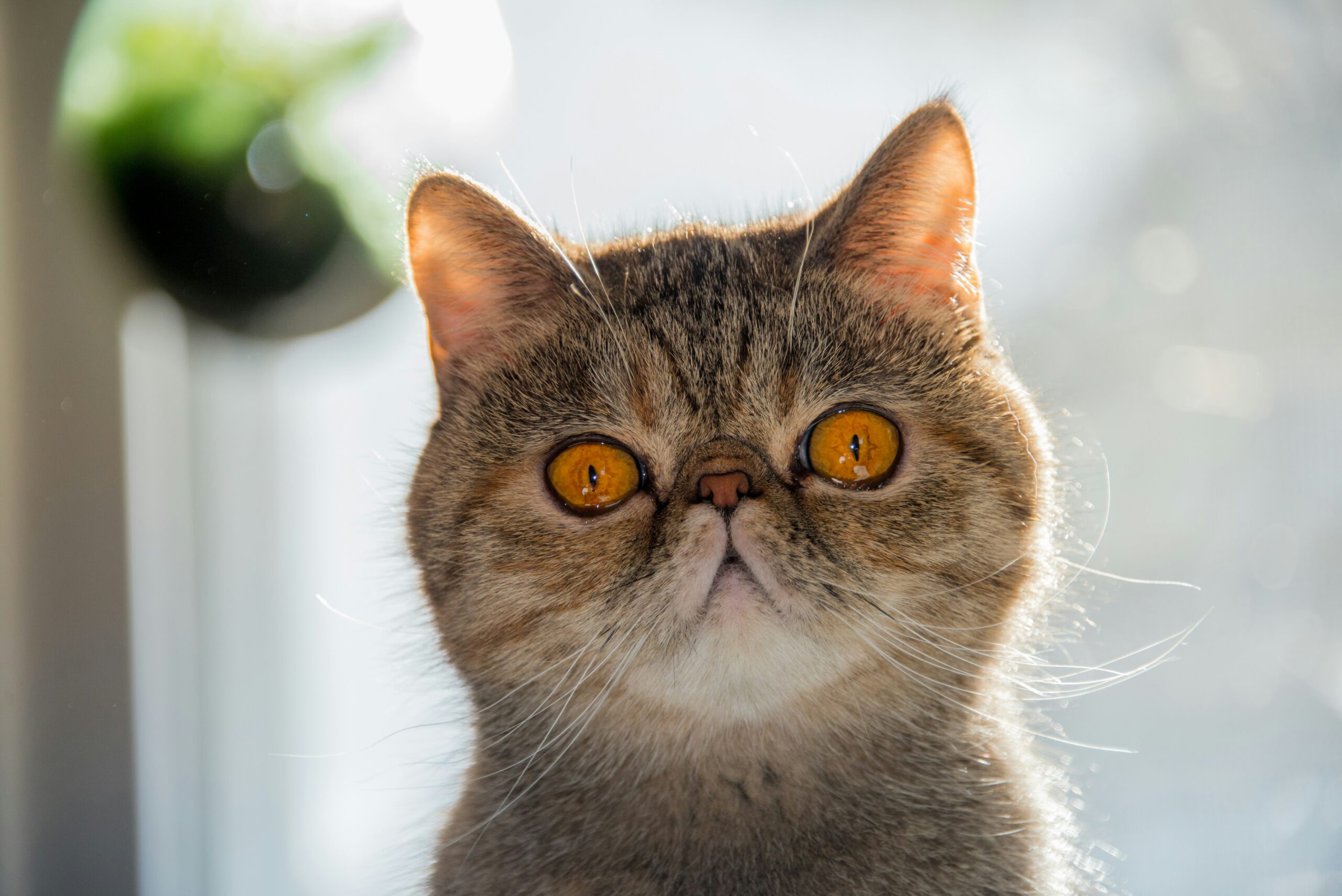
Exotic Shorthair
Both share the same gentle temperament and plush appearance. Persians have a longer coat requiring daily grooming, while Exotic Shorthairs are significantly easier to maintain.
Read more about Exotic Shorthairs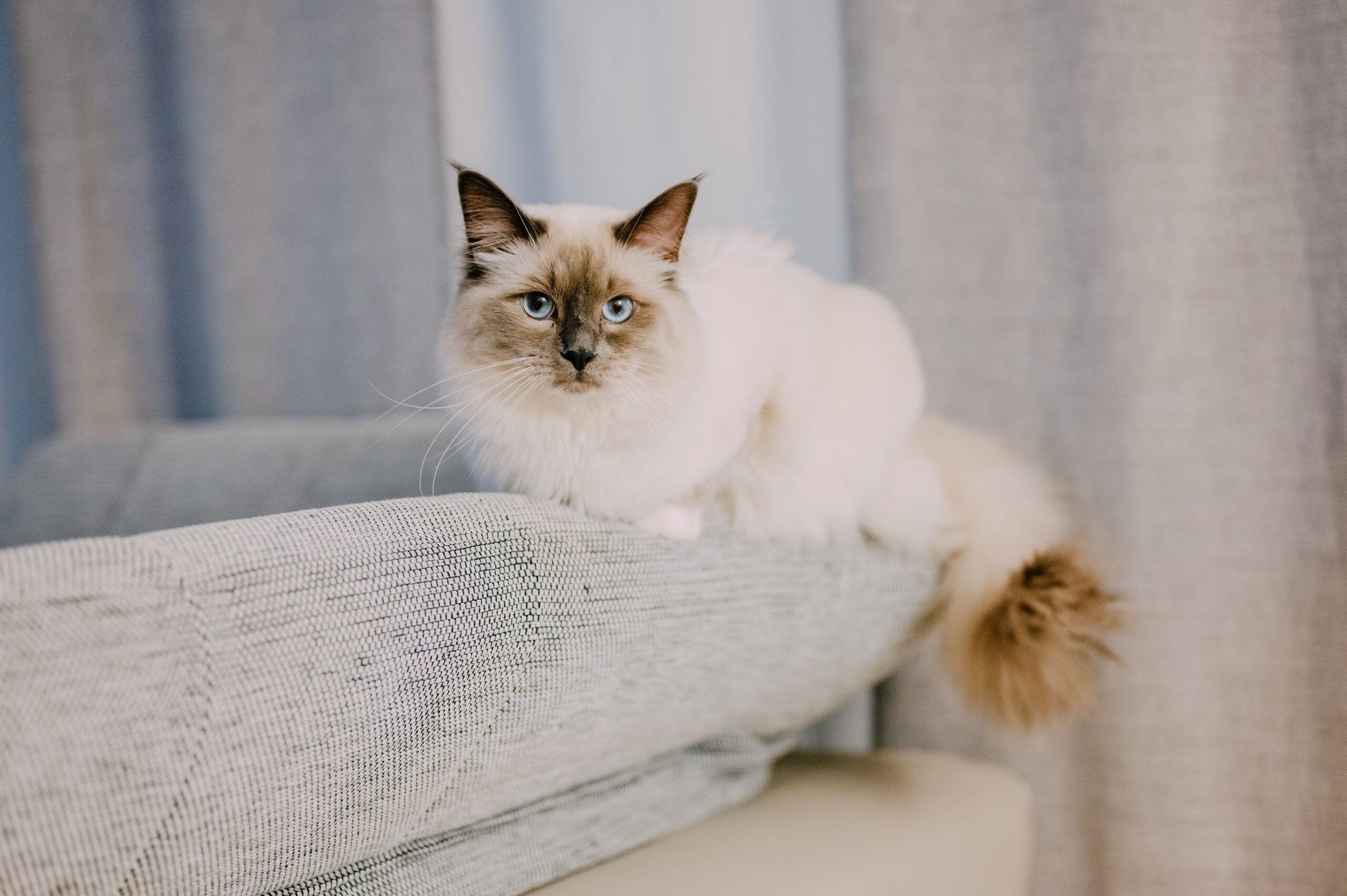
Ragdoll
Both are calm, gentle, and built for a quiet home. Ragdolls are more social and people-dependent, while Persians are more independent and require significantly more daily grooming.
Read more about RagdollsIs a Persian right for you?
If you’ve made it this far, you already know a Persian isn’t a low-effort cat. But for the right owner, they’re a genuinely beautiful companion to share a home with. They offer a serene, calm presence and a cat that’s perfectly happy doing nothing with you all day. They just need a daily grooming commitment, a calm home environment, and an owner who appreciates a quiet, unhurried pace of life in return. Whether you’re picking your kitten up next week or just starting to think about it, pet insurance is the one thing worth sorting out early. Get a quote today, and focus on the beauty, not the bills.
Persian cat frequently asked questions
Are Persians good for apartments?
Yes, one of the best fits. Persians have very low energy and no desire to roam. They’re quiet, non-destructive, and perfectly content in a smaller space as long as they have a comfortable spot and a calm environment. The only apartment consideration is grooming. Daily brushing generates a lot of loose hair, and you’ll want to stay on top of it.
How much grooming do Persians actually need?
Daily. That’s not an exaggeration. Their long, silky coat mats quickly, especially in the high-friction areas like the belly, armpits, and collar. Skip a day and you’ll feel it. Professional grooming every four to six weeks helps reset the coat and manage what daily brushing can’t reach. If you’re not prepared for that commitment, the Exotic Shorthair is worth a look.
Are Persians good with kids?
They can be, with the right kids. Persians are gentle and tolerant, but they don’t love chaos or rough handling. They’re better suited to calm children who understand how to interact gently with a cat than to high-energy households where they’re likely to get overwhelmed. Supervision matters, especially with younger children.
How serious is BOAS in Persians?
It varies. Some Persians have mild symptoms that require monitoring but no intervention. Others develop significant airway obstruction that affects their quality of life and may require surgical correction. The flat face is the underlying cause, and it’s something every prospective Persian owner should understand before committing. If you ever see your Persian breathing with its mouth open, that’s a medical emergency. Get to a vet immediately.
How long do Persians live?
Most Persians live between 12 and 17 years. Getting to the higher end of that range requires consistent vet care, daily grooming, weight management, and early monitoring for kidney disease and eye conditions. Their brachycephalic structure adds complexity to their care, but Persians that are well looked after and kept at a healthy weight tend to live long, comfortable lives.
Insurance claim data figures reflect approved accident and illness claims filed by Lemonade Pet policyholders over the trailing 12 months as of June 2026. They are averages across Lemonade’s insured population for this breed, not predictions of future claims or reimbursement for any individual pet. Actual payouts depend on your policy’s limit, deductible, co-insurance, waiting periods, and exclusions, and may not reflect the broader breed population or other insurers’ experience. Coverage is not available in every state. Please let me know what you think, thank you! A few quick words, because we <3 our lawyers: This post is general in nature, and any statement in it doesn’t alter the terms, conditions, exclusions, or limitations of the policies issued, which differ according to your state of residence. You’re encouraged to discuss your specific circumstances with your own professional advisors. The purpose of this post is merely to provide you with info and insights you can use to make such discussions more productive! Naturally, all comments by, or references to, third parties represent their own views, and Lemonade assumes no responsibility for them. Coverage may not be available in all states. Please note that statements about coverages, policy management, claims processes, Giveback, and customer support apply to policies underwritten by Lemonade Insurance Company or Metromile Insurance Company, a Lemonade company, sold by Lemonade Insurance Agency, LLC. The statements do not apply to policies underwritten by other carriers. Insurance claim data figures reflect approved accident and illness claims filed by Lemonade Pet policyholders over the trailing 12 months as of June 2026. They are averages across Lemonade’s insured population for this breed, not predictions of future claims or reimbursement for any individual pet. Actual payouts depend on your policy’s limit, deductible, co-insurance, waiting periods, and exclusions, and may not reflect the broader breed population or other insurers’ experience. Average insurance premium data is based on Lemonade’s internal data and reflects the average premium over the last 12 complete months, accurate as of June 2026. Top pet names are sourced from Lemonade’s database of pet names associated with submitted quotes and purchased policies. Top states for each breed are based on the number of active Lemonade pet insurance policies for that breed in each state as of June 2026.