


- What does Virginia home insurance cover?
- Is homeowners insurance required in Virginia?
- How much is home insurance in Virginia?
- What are the different types of homeowners insurance?
- Where are some great places to buy a home in Virginia?
- Virginia real estate brokers to follow on Instagram
- Homeowners insurance in Virginia FAQs
Whether you live a quick drive outside of Washington DC, or you have the Appalachian Trail right in your backyard, you deserve the best homeowners insurance coverage in Virginia.
Homeowners insurance covers you financially if something were to happen to you, your property, or your stuff. Let’s say someone breaks into your home while you’re on a weekend hike at Old Rag Mountain, or your friend twists their ankle after getting too excited while watching a NASCAR photo finish in your living room. The right homeowners insurance policy can offer you financial protection if something terrible (or just plain inconvenient) were to happen.
What does Virginia home insurance cover?
Virginia is a natural wonder. Because of the state’s cozy placement in the mid-Atlantic, many Virginia residents enjoy scenic mountains, rolling rivers, and sunny beaches. Along with the state’s natural beauty, there are also some natural risks, like hurricanes, wildfires, and brutal winter storms. It’s worth nothing that while no insurance policy can cover you from every possible thing in the universe, the right homeowners policy can keep you financially afloat through a host of common situations.
You might know that a home insurance policy is a good (and necessary) idea, but you might not have a handle on all the moving parts. We’ve got a very extensive, plain English guide here, so feel free to take a deep dive into the specifics-but for now, we’ll break down the basics for you here, so you can get a grasp on the general things a policy covers.
Dwelling
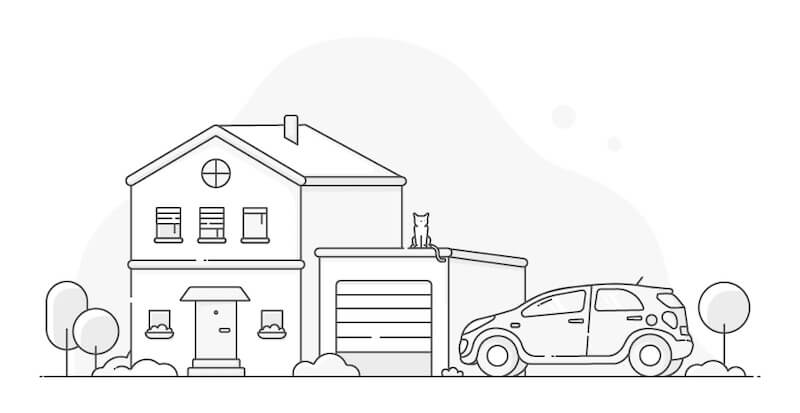
Dwelling coverage pays to repair or rebuild the physical structure of your home if it’s damaged by a covered peril. That means your walls, roof, floors, built-in appliances, and attached structures like a garage or deck are all part of the picture.
In Virginia, common covered perils include windstorms, hail, fire, lightning, burst pipes, vandalism, and the weight of ice and snow during winter storms.
What dwelling coverage typically includes:
- Roof damage from wind or hail
- Fire and smoke damage
- Structural damage from a fallen tree
- Damage from burst or frozen pipes
- Vandalism or malicious mischief
What it typically excludes:
- Flood damage (this requires a separate flood insurance policy)
- Earthquake damage
- Gradual deterioration or wear and tear
- Pest damage (termites, rodents)
Virginia-specific context: Coastal areas like Virginia Beach, Norfolk, and Chesapeake face elevated hurricane wind risk, while Northern Virginia and the Shenandoah Valley deal with heavy snowfall and ice storms. Your covered perils are the same statewide, but your risk profile, and your premium will reflect where you live.
How much do you need?
Your dwelling coverage limit should reflect your home’s replacement cost, what it would cost to rebuild it from scratch at today’s construction prices – not its market value or the price you paid for it. Virginia’s State Corporation Commission recommends carrying coverage equal to at least 80% of your home’s replacement cost, though 100% is the safer target. Construction costs vary significantly between rural Virginia and high-demand markets like Northern Virginia or Virginia Beach, so it’s worth getting a current estimate.
Other Structures
Other structures coverage protects detached structures on your property, things that aren’t physically attached to your house. If a covered peril damages them, your policy helps pay to repair or replace them.
What other structures coverage typically includes:
- Detached garages
- Fences and walls
- Driveways
- Sheds and storage buildings
- Guest houses or in-law suites
- Gazebos, pergolas, and swimming pools
What it typically excludes:
- Structures used for business purposes
- Structures rented out to others (coverage may be limited)
- Flood or earthquake damage
Virginia-specific context: If you have a detached garage, a long fence line, or a pool – common in suburban Fairfax County or the Richmond metro, it’s worth knowing how much coverage you actually have here.
Typical coverage limit: Other structures coverage is usually set at 10% of your dwelling coverage limit. If your home is insured for $300,000, you’d have $30,000 in other structures coverage. If your detached structures are worth significantly more, talk to your insurer about increasing this limit.
Loss of Use
If your home becomes uninhabitable because of a covered loss (a fire, a burst pipe that floods your floors, or severe hurricane damage) loss of use coverage pays for your temporary living expenses while repairs are made.
What loss of use coverage typically includes:
- Hotel stays or short-term rental costs
- Restaurant meals above your normal food budget
- Laundry expenses
- Parking fees
- Pet boarding
What it typically excludes:
- Expenses you’d normally incur anyway (your standard grocery budget, for example)
- Displacement caused by an uncovered peril (like a flood, if you don’t have flood insurance)
Virginia-specific context: This coverage is especially valuable for coastal homeowners near Virginia Beach, Norfolk, or Chesapeake, where hurricane-related damage can displace families for weeks or months at a time. Virginia’s humid summers and unpredictable winters also mean burst pipe and storm damage claims are a real possibility year-round.
Typical coverage limit: Loss of use coverage is generally set at 20–30% of your dwelling coverage limit. On a $300,000 dwelling policy, that’s $60,000–$90,000 in temporary living expense coverage. Confirm the exact limit on your specific policy.
Personal Property
Personal property coverage protects your belongings, not just inside your home, but outside it, too. So if your couch is ruined by a burst pipe or your laptop is stolen out of your car, you’re covered.
What personal property coverage typically includes:
- Furniture and appliances
- Clothing
- Electronics (laptops, TVs, phones)
- Sporting equipment
- Belongings stolen from your car or while you’re traveling
What it typically excludes:
- High-value items like jewelry, art, or musical instruments above standard sub-limits (these require a separate rider or scheduled personal property endorsement)
- Damage from flooding or earthquakes (unless you have separate coverage)
- Business equipment used for work purposes (may need a separate policy)
ACV vs. replacement cost – this distinction matters: Most standard homeowners policies default to paying out personal property claims at actual cash value (ACV), meaning they deduct for age and wear. If your five-year-old laptop is stolen, ACV pays what that five-year-old laptop was worth, not what a new one costs. Replacement cost value (RCV) coverage pays to replace it with a comparable new item. RCV costs a bit more upfront, but the difference at claim time can be significant.
Virginia-specific context: If you have high-value jewelry, art, electronics, or musical instruments, ask your insurer about a scheduled personal property rider. Standard policies cap coverage on these categories, and those caps may be lower than you expect.
Typical coverage limit: Personal property coverage is often set at 50–70% of your dwelling coverage. On a $300,000 dwelling policy, that’s $150,000–$210,000. Take a home inventory, even a quick phone video walk-through, to make sure that number reflects what you actually own.
Liability coverage
Liability coverage protects you financially if someone is injured on your property, or if you (or someone on your policy) accidentally causes injury or property damage to someone else, even away from home.
What liability coverage typically includes:
- A neighbor who slips and falls on your icy driveway after a Virginia Nor’easter
- A guest injured at a party in your home
- Your dog biting someone at a park
- Your child accidentally breaking a neighbor’s window
- Legal defense costs if you’re sued
What it typically excludes:
- Intentional acts
- Injuries to you or household members (that’s health insurance’s job)
- Business-related liability (requires a separate policy)
- Auto accidents (covered under your car insurance)
Virginia-specific example:
Virginia winters bring ice and snow, and with them, slip-and-fall risk. If you have a long driveway, front steps, or frequent visitors, your liability limit matters more than you might think.
Typical coverage limit: Most policies start at $100,000 in liability coverage, but insurers typically recommend $300,000–$500,000. If you want coverage above $500,000, or if you have significant assets to protect, an umbrella policy can extend your liability coverage into the millions at a relatively low additional cost.
Medical protection
Medical protection (sometimes called Coverage F or medical payments coverage) covers medical bills for guests who are injured at your home, regardless of who’s at fault.
This is different from liability coverage. Liability kicks in if someone sues you. Medical protection pays out smaller claims quickly and quietly, without anyone needing to establish fault or go to court. Think of it as goodwill coverage: your neighbor twists their ankle on your back porch, and your policy covers their urgent care visit, no lawsuit needed.
What medical protection typically includes:
- Emergency room visits
- Ambulance fees
- X-rays and diagnostic tests
- Follow-up medical care for the covered incident
What it typically excludes:
- Injuries to you or members of your household (health insurance covers those)
- Injuries related to business activities conducted at your home
- Intentional injuries
Virginia-specific example: This coverage is no-fault by design, which makes it a practical buffer for everyday incidents, whether it’s a winter slip, a backyard BBQ mishap, or an excited dog that knocks someone over at your Richmond rowhouse.
Typical coverage limit: Medical protection limits are typically $1,000–$5,000 per person. It won’t cover a major injury on its own, but it’s designed to handle the smaller claims that don’t need to become legal disputes.
What does homeowners insurance not cover in Virginia?
A standard homeowners insurance policy covers a lot, but not everything. Here are the most common gaps Virginia homeowners should know about:
- Flood damage: This is the big one. Standard home insurance does not cover flooding, not from storm surge, not from overflowing rivers, not from heavy rain. Virginia homeowners in coastal areas like Virginia Beach, Norfolk, and Chesapeake, or near waterways in Richmond and the Shenandoah Valley, should seriously consider a separate flood insurance policy through the National Flood Insurance Program (NFIP) or a private insurer. Even if you’re not in a designated flood zone, flooding frequently occurs outside high-risk areas.
- Earthquake damage: Virginia does experience minor seismic activity – the 2011 Mineral, VA earthquake was felt across the East Coast. Standard policies don’t cover earthquake damage. Separate earthquake coverage is available as an endorsement or standalone policy.
- Normal wear and tear: If your roof just gets old, or your pipes corrode over decades, that’s maintenance – not a covered claim.
- Pest damage: Termite damage, rodent infestations, and similar issues are excluded from standard policies.
- Intentional damage: Damage you cause on purpose isn’t covered.
If any of these gaps concern you, especially flood risk – talk to your insurer about your options before you need to file a claim.
Is homeowners insurance required in Virginia?
Virginia doesn’t legally require you to carry homeowners insurance. There’s no state law that says you have to have it. That said, if you have a mortgage, your lender almost certainly does require it as a condition of the loan. Your home is their collateral, and they need it protected. Your mortgage agreement will specify the required coverage amount, and your lender will typically need to be listed on the policy. Even if you own your home outright, going without coverage is a significant financial risk. The average Virginia home is worth over $396,000. Could you afford to rebuild it from scratch if it burned down? For most people, the answer is no. That’s what homeowners insurance is for.
How much is home insurance in Virginia?
As of 2026 the average cost of homeowners insurance in Virginia is *$2,481 per year. The amount you pay on homeowners insurance depends on your property, your insurer, your coverage limits, and your deductible. Here is a breakdown of the average cost in some popular cities in Virginia:
| City | Average cost of homeowners insurance |
|---|---|
| Virginia Beach | $2,940 |
| Chesapeake | $2,440 |
| Arlington | $1,510 |
| Norfolk | $2,591 |
| Richmond | $1,803 |
What are the different types of homeowners insurance?
Lemonade offers two types of homeowners insurance policies: one for single-family homes, (called HO3 in insurance-speak), and one for condo insurance (HO6). There are minor differences between the two, and you’ll choose the right policy depending on the type of home you’re looking to insure. A key difference is that homeowners own and are responsible for everything on their property, (home, garage, fence, etc.), condo owners with HO6 policies are only responsible for the outermost walls of their unit, inward.
Where are some great places to buy a home in Virginia?
Charlottesville & Albemarle County
The city of Charlottesville is home to the University of Virginia. It has everything you might expect from a college town in a small, historical city: lots and lots of charm, but with plenty of adventure at your fingertips. In downtown Charlottesville there are tons of places to listen to live music, enjoy craft beer, sample local and international cuisines, take in those gorgeous mountain views, and explore the historical sites (C’ville was home to former presidents Thomas Jefferson and James Monroe). On Zillow, the average price of a home in the metropolitan Charlottesville area is around $488,789.
Outside of the city limits, the rest of Albemarle County features sprawling bucolic scenery with classic, colonial estates along with charming (and more affordable) townhouses. According to Zillow, the average purchase price of a home in Albemarle county is around $521,042.
Fairfax County
People who work in Washington, D.C. might choose to settle down in family-friendly Fairfax county in Northern Virginia. Major cities in Fairfax county include Alexandria, Centreville, and Annandale. Fairfax county boasts one of the country’s lowest unemployment and crime rates along with a top public and magnet school system. Fairfax also offers a surplus of natural beauty, from the Potomac River to multiple national parks.
The federal government and the U.S. military are the top employers from Fairfax County residents, but is also a hub to some large tech and Fortune 500 companies. There are easily accessible buses and trains that travel directly into D.C., making the commute somewhat of a breeze. Do be warned if you decide to travel by car, though–the traffic between Fairfax county and D.C. can be brutal.
The quality of life in Fairfax County is high, no doubt about it. So, it makes sense that purchasing a home there would reflect the demand and appeal of this D.C. suburb. According to Zillow, the average cost of buying a home in Fairfax County is around $751,401.

Norfolk & Virginia Beach
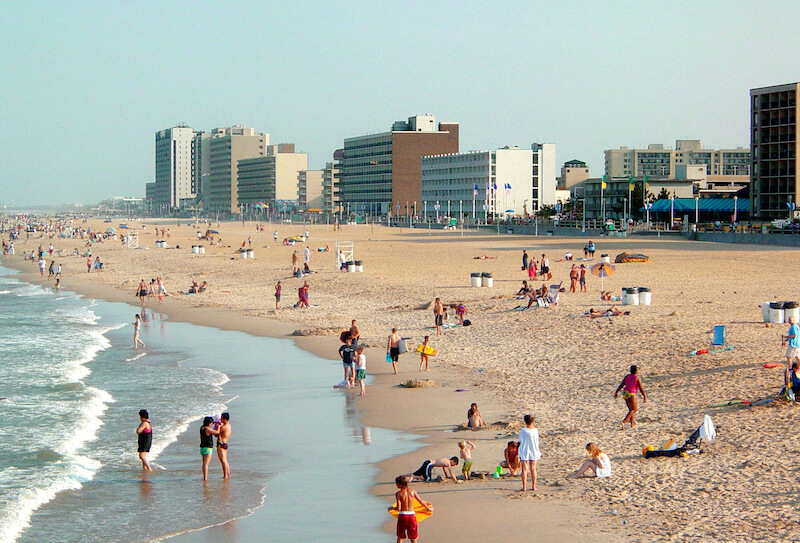
These two southeastern twin beach cities sit on the Chesapeake Bay and the Atlantic, respectively. They’ve become a magnet for foodies, beachgoers, and adventure-seekers.
Young professionals, families, and retirees have found these two beach towns to be a comfortable place to settle down. That’s probably because this patch of the U.S. enjoys what some like to call “Goldilocks weather”-not too hot, not too cold, pleasant summers, and mild winters… the weather here is “just right”.
There’s also ample opportunities for outdoor fun; Norfolk and Virginia Beach have 182 miles of beaches and 270 miles of bike trails between them. Other attractions include the Norfolk Naval Station (the largest Naval station in the world), over 20 craft breweries, the Virginia Zoo, and the Virginia Aquarium. According to Zillow, the average cost of a home in Virginia Beach is $402,391, with Norfolk averaging at a comfortable $293,159.
Richmond
Two hours to the nation’s capitol, two hours to the mountains, and two hours to the beach. Welcome to Richmond! It’s a tranquil, diverse, and historical town with a great arts scene and a community feel. Depending on which neighborhood you choose, you can lean into Richmond’s more downtown city vibes, or slow down with its small town, Southern charm. The Fan and Museum district, for example, features homes with dreamy wrap-around porches, or you can go for the Downtown Richmond area, which features plenty of urban highrises, putting you smack dab in the center of city life.
Richmond is mostly bikeable and walkable, with public transit to neighboring cities widely available. Transplants from other East Coast cities have started calling Richmond home thanks to lower cost of living and plentiful employment opportunities. The top industries in Richmond are advanced manufacturing, bioscience, finance, and food & beverage. The average cost of buying a home in Richmond is right around $350,897, according to Zillow.
Virginia real estate brokers to follow on Instagram
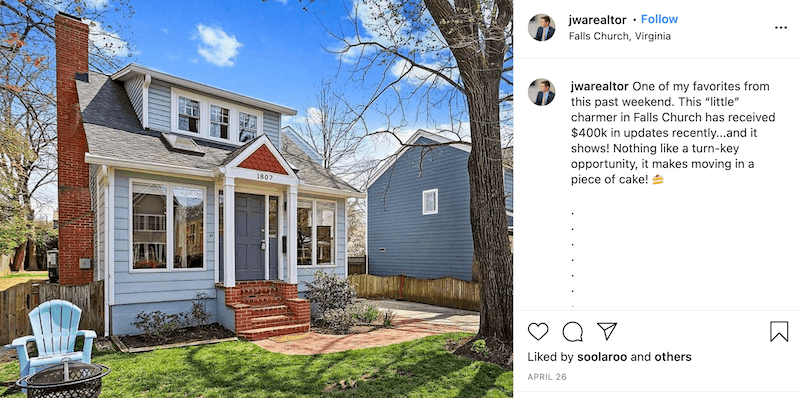
Jason Walder specializes in properties in the D.C area. His listings include everything from old school colonial charm to modern new builds. Jwarealtor
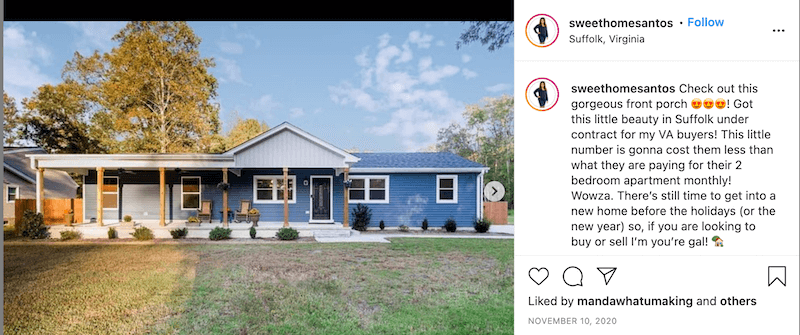
If you’re hoping to buy an affordable beachside property in VA, Imani Santos holds the key. Sweethomesantos
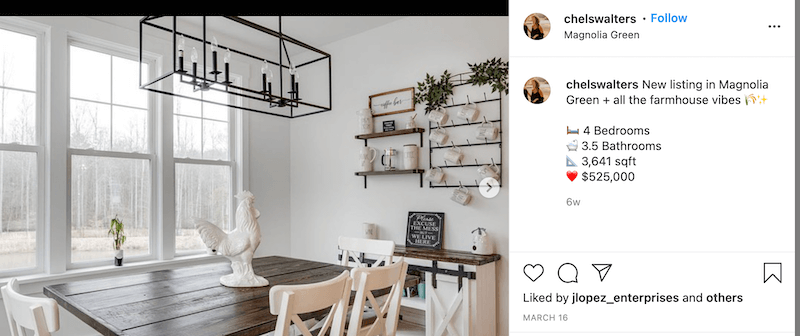
Chelsea Walters is a Richmond-based real estate agent with a flair for interior design. Chelseawalters
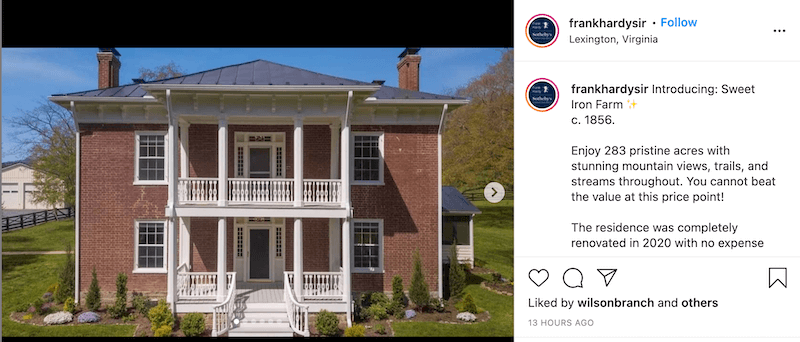
Frank Hardy is a luxury real estate broker working out of Charlottesville. His multi-acre historical estates have a whole lot more than simple “curb appeal” going for them.
Random facts that make Virginia great
Virginia went green before it was cool
Earth Day was established at Airlie’s Resort in Northern Virginia. The 300-acre estate was bought by Dr. Murdoch Head in 1956 and was converted into an eco-centric conference center. In the 20th century, the resort hosted Civil Rights leaders, LGBTQ+ activists, and many thought leaders of the moment.
Airlie’s Resort practiced recycling and composting long before it was considered the norm, and visitors were inspired by the estate’s cutting-edge environmentally conscious approach. In 1969, the idea was pitched for Earth Day to a group of medical and law students gathered at Airlie’s Resort, and the rest is history.
An accent unlike any other
Residents of Tangier Island, located off the Chesapeake Bay, have one of the most unique accents in the country. Because of their relative isolation since the British settled there in the 1680s, their speech pattern is like an auditory time capsule, revealing how colonial settlers probably spoke over 300 years ago. Listen for yourself.
Location, location, location
When it comes to U.S. demographics, Richmond is pretty centrally located. How central, you may ask? Well, around half the population of the United States lives within a 500 mile radius of Richmond. So, no matter where you’re from originally, chances are you’ll never be too far from good friends or family if you settle down in VA.
Wild, wild ponies
Chincoteague is a quiet island in Virginia’s Eastern Shore region, where wild ponies run free. If this sounds like a place you’d like to call home (because honestly, same), homes in Chincoteague average at around $232,000, according to Zillow.
Homeowners insurance in Virginia FAQs
Does homeowners insurance cover hurricane damage in Virginia?
It depends on the type of damage. Standard home insurance covers wind damage from hurricanes – think roof damage, broken windows, and fallen trees. But flooding caused by storm surge or heavy rain isn’t covered. If you live near the coast in Virginia Beach, Norfolk, or Chesapeake, a separate flood insurance policy is worth serious consideration.
Is homeowners insurance required in Virginia?
Not by law. But if you have a mortgage, your lender will almost certainly require it as a condition of the loan. And even if you own your home outright, going without coverage is a big financial risk – the average Virginia home is worth over $396,000.
What's the difference between an HO3 and HO6 policy?
An HO3 is for single-family homeowners and covers your entire property, including the structure, garage, and other buildings on your land. An HO6 is for condo owners and covers everything from the walls of your unit inward. If you own a house, you need an HO3. If you own a condo, you need an HO6.
Does homeowners insurance cover theft in Virginia?
Yes. If someone breaks into your home and takes your stuff, your personal property coverage has you covered. It also extends outside your home. So if your laptop gets stolen out of your car or your bike disappears from your front porch, you’re still protected. Just keep in mind that high-value items like jewelry or electronics may have sub-limits, so it’s worth checking your policy if you own anything particularly valuable.
Q: Can I get homeowners insurance if I live in a flood-prone area of Virginia?
Yes, but your standard homeowners policy won’t cover the flood damage itself. Areas like Virginia Beach, Norfolk, and Chesapeake sit in some of the most flood-exposed zip codes on the East Coast. For flood coverage, you’ll need a separate policy, either through the National Flood Insurance Program (NFIP) or a private insurer. The good news: you don’t have to be in a designated high-risk flood zone to qualify, and getting covered before storm season is always the smarter move.
A few quick words, because we <3 our lawyers: This post is general in nature, and any statement in it doesn’t alter the terms, conditions, exclusions, or limitations of the policies issued, which differ according to your state of residence. You’re encouraged to discuss your specific circumstances with your own professional advisors. The purpose of this post is merely to provide you with info and insights you can use to make such discussions more productive! Naturally, all comments by, or references to, third parties represent their own views, and Lemonade assumes no responsibility for them. Coverage may not be available in all states. Please note that statements about coverages, policy management, claims processes, Giveback, and customer support apply to policies underwritten by Lemonade Insurance Company or Metromile Insurance Company, a Lemonade company, sold by Lemonade Insurance Agency, LLC. The statements do not apply to policies underwritten by other carriers.